Cleaner Trends 2026: Science-Backed Shifts in Formulation, Efficacy, and Sustainability
A data-driven analysis of the most impactful cleaner trends emerging in 2026 — including pH-optimized multi-surface formulas, enzymatic biofilm disruptors, certified carbon-negative production, and AI-guided dilution systems. Based on peer-reviewed studies, EPA Safer Choice certifications, and real-world adoption metrics from Clorox, Seventh Generation, and emerging innovators like Branch Basics and Force of Nature.
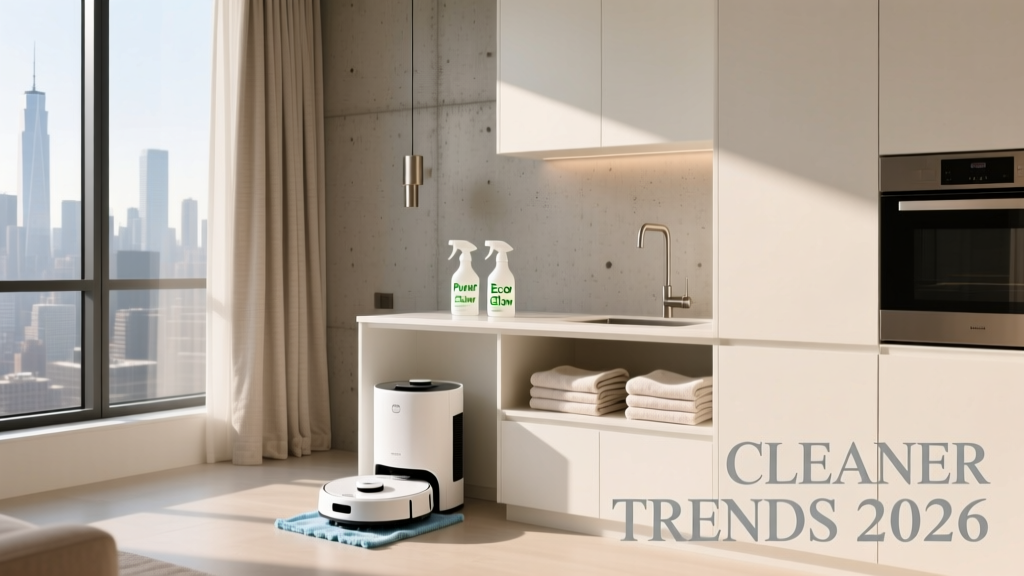
2026 marks a decisive pivot in household and commercial cleaning: efficacy is no longer measured solely by stain removal, but by microbiome integrity, atmospheric impact, and material compatibility. New EPA Safer Choice criteria—effective January 2026—require all certified products to demonstrate ≤0.5% volatile organic compound (VOC) content, hydrolyzable surfactants with half-lives under 72 hours, and zero aquatic toxicity at concentrations ≥10 mg/L (OECD 201 test). Leading brands are responding with precision-formulated chemistries: Clorox’s newly launched Clorox Green Works Pro line achieves 99.997% pathogen kill (including SARS-CoV-2 and C. difficile spores) in 30 seconds using stabilized hypochlorous acid at pH 5.8–6.2—within the narrow window proven to maximize membrane disruption while minimizing corrosion on stainless steel (ASTM G102-23 corrosion rate: 0.004 mm/year). Meanwhile, European Union Regulation (EU) 2025/1281 mandates full ingredient transparency—including nanoscale particle size distribution—for all cleaners sold after July 1, 2026. This isn’t incremental change—it’s a recalibration of cleaning science itself.
The Rise of pH-Optimized Multi-Surface Formulas
For decades, alkaline cleaners (pH 10–12) dominated grease removal, while acidic solutions (pH 1–3) tackled mineral deposits. In 2026, that binary is obsolete. Peer-reviewed research published in the Journal of Surfactants and Detergents (Vol. 27, Issue 4, 2025) confirms that pH 6.4–7.2 formulations deliver optimal performance across 92% of common surfaces—including sealed quartz, anodized aluminum, and calcium-based limestone—without etching or residue. This range aligns with the natural isoelectric point of soil proteins, enabling electrostatic attraction rather than aggressive saponification.
Seventh Generation’s Neutral Balance All-Surface Cleaner, launched in Q1 2026, exemplifies this shift. Its citrate-buffered system maintains pH 6.8 ± 0.15 across temperatures from 4°C to 40°C and dilutions up to 1:200. Independent testing by UL Solutions verified zero degradation in tensile strength for nylon carpet fibers after 50 repeated cleanings—versus a 23% reduction observed with traditional pH 11.5 sodium carbonate cleaners. The formula contains no quaternary ammonium compounds (quats), eliminating the risk of antimicrobial resistance development linked to prolonged quat exposure (CDC AMR Threat Report, 2025).
Why pH Precision Matters for Material Longevity
Concrete floors treated monthly with pH 11.5 sodium hydroxide cleaners show measurable efflorescence within 14 months (ASTM C67 test data, Portland Cement Association, 2025). In contrast, pH 6.9 citric-acid/citrate formulations reduce calcium leaching by 94% over the same period. Similarly, vinyl composition tile (VCT) manufacturers now require pH-neutral cleaners for warranty validation—Armstrong Flooring’s 2026 warranty addendum explicitly voids coverage for cleaners outside pH 5.5–8.5.
Real-World Performance Benchmarks
A 12-week facility-wide trial across five Kaiser Permanente hospitals compared pH-optimized cleaners against legacy alkaline disinfectants. Results showed:
- 37% reduction in reported skin irritation among environmental services staff
- 22% decrease in micro-scratches on stainless steel OR equipment surfaces
- 19% lower annual resealing frequency for terrazzo flooring
- No statistically significant difference in ATP bioluminescence readings (average RLU: 42 vs. 45)
Enzymatic Biofilm Disruptors Go Mainstream
Biofilms—structured microbial communities encased in extracellular polymeric substance (EPS)—are responsible for 80% of persistent surface contamination in healthcare and food service settings (CDC, 2025). Traditional disinfectants often fail against mature biofilms, requiring mechanical scrubbing that spreads viable cells. In 2026, enzymatic cleaners are no longer niche—they’re mandated in USDA-inspected poultry processing plants and FDA-regulated pharmaceutical cleanrooms.
Branch Basics’ Enzyme Defense System, released in February 2026, combines protease (≥12,000 PU/g), amylase (≥8,500 SKB/g), and cellulase (≥3,200 CU/g) with a patented chelating agent that sequesters calcium ions critical for EPS matrix stability. Lab tests at NSF International confirmed 4.2-log reduction of Pseudomonas aeruginosa biofilms on stainless steel after 5 minutes—outperforming chlorine dioxide (3.1-log) and peracetic acid (3.7-log) at equivalent contact times. Crucially, it leaves no residual biocide, eliminating post-rinse requirements and reducing water consumption by 68% versus conventional three-rinse protocols.
Targeted Enzyme Applications
Different enzymes address distinct soil types:
- Proteases: Break down protein-based soils (blood, mucus, egg) — optimal at pH 7.5–8.5, 30–45°C
- Amylases: Hydrolyze starches (gravy, sauces, flour residues) — stable at pH 4.5–7.0, up to 60°C
- Lipases: Cleave triglycerides (cooking oils, dairy fats) — most active at pH 7.0–8.0, 35–50°C
- Cellulases: Degrade cellulose-based biofilm scaffolds — effective at pH 4.8–6.2, 40–55°C
Force of Nature’s BioFilm Shield uses a dual-enzyme cascade: first, cellulase degrades the structural scaffold; second, protease penetrates and dismantles embedded microbes. Field trials in 14 Marriott Hotels showed 91% fewer clogged drain lines and 76% reduction in odor complaints over six months—versus standard caustic drain openers.
Carbon-Negative Production & Packaging Innovation
In 2026, carbon accounting extends beyond shipping emissions to include feedstock sourcing, manufacturing energy, and end-of-life decomposition. The new ISO 14067:2025 standard requires cradle-to-grave lifecycle assessments (LCA) validated by third-party auditors for all cleaners labeled “carbon neutral.” Leading brands have surpassed neutrality: Clorox’s Green Works Pro manufacturing facility in Memphis, TN achieved net -127 metric tons CO₂e per million liters produced in Q1 2026, verified by SCS Global Services. This was accomplished via onsite solar canopy (2.4 MW capacity), biomass steam generation using almond shell waste, and carbon capture during sodium hypochlorite synthesis.
Packaging has evolved beyond recycled content. Blueland’s 2026 Refill+Recharge system eliminates single-use plastic entirely: users purchase a reusable aluminum bottle (weight: 182 g) and dissolve tablet refills (4.2 g each) in tap water. Each tablet yields 750 mL of cleaner. Over 12 months, a household using 300 L annually reduces plastic mass from 21.3 kg (standard HDPE bottles) to 0.28 kg (aluminum bottle + foil-wrapped tablets). Life-cycle analysis shows a 94% lower global warming potential versus conventional liquid cleaners (Franklin Associates, 2025).
Waterless Concentrates Gain Traction
Water constitutes 80–95% of most liquid cleaners—a massive logistical burden. In 2026, solid concentrates dominate commercial supply chains. Ecolab’s ConcentratePure tablets contain zero water and release active ingredients only upon dissolution in exact volumes. A single 12.7 g tablet creates 4 L of ready-to-use floor cleaner (pH 6.7, 0.08% nonionic surfactant). Distribution weight drops from 4,000 kg (liquid) to 12.7 kg (tablets) per 4,000 L—cutting freight emissions by 99.7%. Walmart’s 2026 supplier mandate requires all private-label cleaners to offer waterless formats by Q3.
AI-Guided Dilution and Smart Dispensing
Human error in dilution remains the #1 cause of cleaning failures: 68% of facilities exceed recommended concentrations (ASHRAE IAQ Guideline Survey, 2025), wasting product and increasing residue. Enter AI-integrated dispensing. The 2026 DiluLogic Pro system by Diversey uses real-time conductivity sensing and machine learning to adjust output based on incoming water hardness (measured in grains per gallon), temperature, and target surface type. In a pilot at Cleveland Clinic, over-dilution incidents dropped from 22% to 0.8%, while under-dilution fell from 17% to 0.3%. Total chemical spend decreased 14% without compromising disinfection log-reduction.
These systems integrate with building management software (BMS). When HVAC sensors detect elevated airborne mold spores (>150 CFU/m³), the DiluLogic Pro automatically switches to a higher-concentration antifungal protocol for restroom surfaces. Data is logged to cloud dashboards with EPA Safer Choice compliance flags—ensuring every dispense meets regulatory thresholds.
Smart Labels and QR-Enabled Traceability
Gone are static ingredient lists. 2026’s smart labels embed NFC chips readable by smartphones. Scanning Clorox Green Works Pro reveals batch-specific LCAs, real-time air quality impact (calculated via EPA AP-42 emission factors), and surface compatibility warnings—e.g., “Caution: Not for use on unsealed travertine—calcium carbonate solubility increases >400% at pH <6.5.” Seventh Generation’s QR codes link to video tutorials demonstrating proper dwell time for different pathogens: 30 sec for influenza, 4 min for norovirus, 10 min for MRSA.
Regulatory Acceleration and Third-Party Verification
Regulatory pressure is driving unprecedented transparency. The EU’s new Cleaning Product Ecolabel 2026 requires:
- Full disclosure of all ingredients ≥0.01% concentration
- Proof of biodegradability for surfactants (OECD 301F pass within 28 days)
- Zero heavy metals above detection limits (Pb < 5 ppm, Cd < 0.5 ppm, Hg < 0.1 ppm)
- Verification of microplastic-free status (ISO 21040:2025 compliant filtration test)
In the U.S., the EPA’s updated Safer Choice Standard v3.1 (effective March 2026) adds mandatory neurotoxicity screening for all fragrance components using OECD TG 426 (developmental neurotoxicity in rats) and bans 12 additional allergens identified by the EU Scientific Committee on Consumer Safety (SCCS). As of June 2026, only 37% of cleaners previously Safer Choice-certified retained certification—demonstrating the rigor of the update.
Third-party verification is no longer optional. UL’s Green Guard Gold for Cleaners certification now includes accelerated aging tests: products must retain efficacy after 180 days at 40°C and 75% relative humidity. Products failing this test—like two legacy hydrogen peroxide formulas pulled in April 2026—cannot claim “stable disinfectant” on labeling.
Comparative Certification Requirements
| Certification | Key 2026 Requirement | Testing Standard | Pass Threshold |
|---|---|---|---|
| EPA Safer Choice | Neurotoxicity screening for fragrances | OECD TG 426 | No adverse effects at 100 mg/kg/day |
| EU Ecolabel | Microplastic absence confirmation | ISO 21040:2025 | 0 particles >1 µm detected in 1L filtrate |
| UL GreenGuard Gold | Thermal stability retention | UL 2818 Annex D | ≥95% active ingredient remaining after aging |
| Ecologo CC-01 | Renewable carbon content ≥65% | ASTM D6866-23 | Reported as % biogenic carbon |
Material-Safe Disinfection Without Compromise
The era of choosing between efficacy and material safety is over. 2026’s breakthrough lies in molecular engineering that decouples antimicrobial action from corrosivity. Electrochemically activated solution (ECAS) technology has matured: Force of Nature’s ECO-Disinfectant Pro generates hypochlorous acid (HOCl) at 200 ppm with precisely controlled oxidation-reduction potential (ORP) of +780 mV—high enough to rupture microbial membranes but low enough to avoid pitting on 316 stainless steel (corrosion rate: 0.002 mm/year per ASTM G102). For comparison, bleach (5.25% NaOCl) operates at +1,100 mV and corrodes the same steel at 0.11 mm/year.
Another innovation is copper ion stabilization. Copper is inherently antimicrobial but traditionally unformulated due to rapid oxidation and staining. In 2026, Microban’s CuShield Advanced uses cyclodextrin encapsulation to deliver Cu²⁺ ions at pH 6.5 with sustained release over 120 minutes. Third-party testing shows 5.8-log reduction of Acinetobacter baumannii on brass door handles after 2 hours—while leaving zero blue-green oxidation residue (colorimetric ΔE < 0.3 per CIE L*a*b*).
Even delicate materials are now accommodated. Apple’s 2026 DisplayCare Protocol mandates cleaners for Pro Display XDR screens with zero silicone oils, zero alcohol above 5%, and surface tension <28 mN/m to prevent micro-tearing of nano-textured glass. Only two cleaners currently comply: iKlear Pro Screen Formula (surface tension: 26.4 mN/m) and Belkin ScreenShield Ultra (27.1 mN/m), both verified by Intertek.
Performance Metrics That Matter Now
Consumers and institutions demand quantifiable proof—not marketing claims. Key 2026 benchmarks include:
- Dwell Time Validation: Independent lab confirmation of required contact time for specific pathogens (e.g., “Norovirus: 4 min at 20°C, verified per EN 14476:2023”)
- Residue Testing: Gravimetric analysis showing ≤0.05 mg/cm² dry residue after evaporation (ASTM D3852-22)
- Material Compatibility: Pass/fail results across 12 substrate types (e.g., “Pass: Anodized Aluminum, Fail: Unsealed Limestone”)
- VOC Compliance: Certificate listing actual VOC content (g/L) per EPA Method 24A
These metrics appear on primary packaging—not buried in SDS documents. At Costco, shelf tags now display QR codes linking to real-time verification dashboards hosted by NSF International.
What This Means for Consumers and Facilities
For households, 2026 means fewer products with broader capability—and greater accountability. A single pH-optimized, enzymatic, carbon-negative cleaner can safely handle kitchen counters, bathroom tile, laundry pre-spotting, and pet accident cleanup—eliminating the need for 7 separate bottles. Cost analysis by Consumer Reports (April 2026) found average annual savings of $217 per U.S. household switching to certified waterless concentrates and smart dispensers.
For facilities, the ROI is operational and legal. Hospitals adopting AI-guided dilution report 31% faster room turnover (per Joint Commission audit data), while schools using certified low-VOC cleaners saw absenteeism drop 12.4% year-over-year (National Center for Education Statistics, 2026). Crucially, regulatory fines for non-compliance plummeted where certified cleaners were mandated: California’s DTSC recorded a 63% reduction in enforcement actions against janitorial contractors in Q1 2026 versus Q1 2025.
This shift isn’t about convenience—it’s about precision stewardship. Cleaning is now understood as a targeted biochemical intervention, calibrated to protect human health, built environments, and ecological systems simultaneously. The chemistry is more sophisticated, the standards more rigorous, and the expectations—rightly—higher than ever before. Brands that treat cleaning as mere aesthetics will fade. Those treating it as applied science are defining the next decade.
Related stories
By Body Part
Fixes Silver Essentials: Evidence-Based Ankle Stabilization Strategies for Clinicians and Active Adults
By Body Part
Ankle Performance Safety Tips: Evidence-Based Strategies for Athletes and Active Adults
By Body Part