Barbell Piercing Jewelry: The Ultimate Buying Guide
Discover how to choose the perfect barbell piercing jewelry. Learn about threading, gauge sizes, titanium grades, and top brands for safe healing.

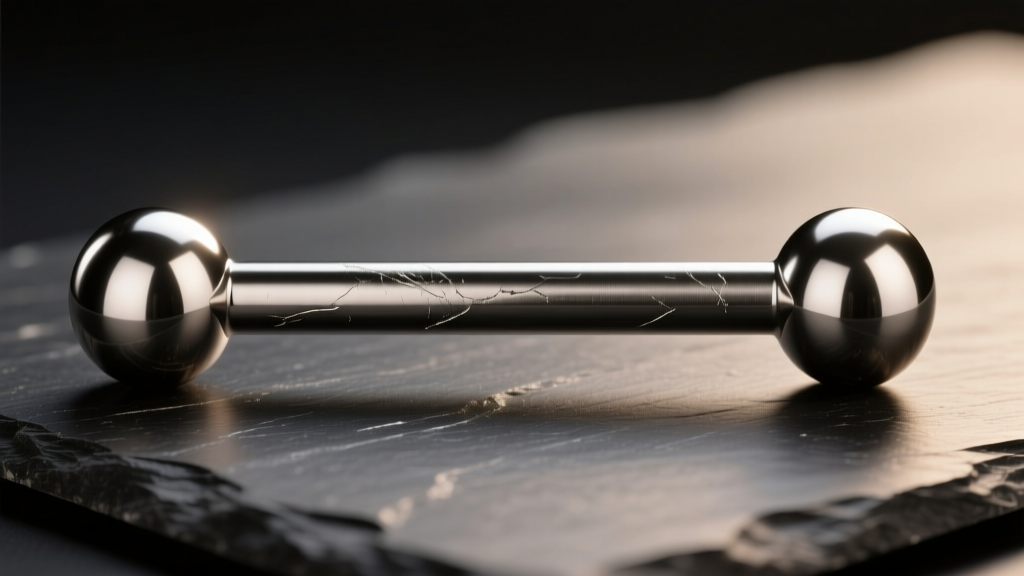
When it comes to body modification, selecting the correct barbell piercing jewelry is not merely an aesthetic choice; it is a critical decision that dictates the health, healing trajectory, and long-term stability of your piercing. Whether you are preparing for a fresh tongue piercing, upgrading a healed nipple piercing, or seeking a custom fit for a rook, the market is flooded with options that range from medically sound to outright hazardous. In this comprehensive 2026 buying guide, we bypass the marketing fluff and dive deep into the metallurgy, mechanical engineering, and anatomical requirements of barbell jewelry. Understanding these specifics will save you from rejection, embedding, and chronic irritation.
The Critical Importance of Threading and Connection Types
The most common point of failure in cheap body jewelry is the threading. When you unscrew the end of a barbell, the mechanism used to attach it interacts directly with your fistula (the piercing channel). According to the Association of Professional Piercers (APP), the threading style is paramount for tissue preservation.
Externally Threaded (Avoid Completely)
External threading means the screw pattern is on the post (the bar) itself. When you push this post through your piercing, the sharp, jagged metal threads scrape and micro-tear the delicate fistula tissue. This introduces bacteria, causes immediate swelling, and can lead to hypertrophic scarring. There is no scenario in modern piercing where externally threaded jewelry is acceptable.
Internally Threaded (The Gold Standard for Screw-In)
In an internally threaded barbell, the post is completely smooth, and the screw is located on the decorative end or the flat back. The smooth post glides through the tissue without causing mechanical trauma. Look for brands that utilize precision-machined internal threading, which ensures a secure fit without the risk of the end unscrewing inside the body.
Threadless / Push-Pin (The Modern Favorite)
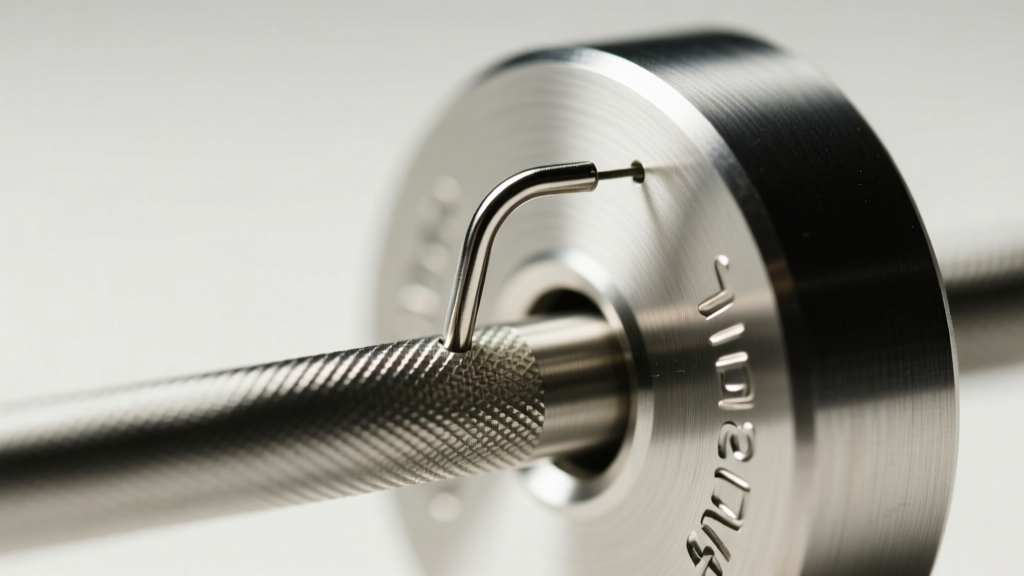
Threadless jewelry relies on tension rather than screws. The decorative end features a small, slightly bent metal pin that inserts into a hollow, smooth post. The tension created by the bent pin holds the jewelry securely in place. Threadless barbells are highly favored by professional piercers because they are incredibly secure, easy to insert without fumbling with tiny screws, and completely smooth on the interior.
Straight, Curved, and Surface: Matching Shape to Anatomy
Barbells are not one-size-fits-all. The curvature of the bar must match the natural contour of the tissue being pierced. Forcing a straight barbell into a curved tissue pocket creates pressure points that can lead to migration or rejection.
Straight Barbells
Straight barbells are designed for piercings that pass through a flat or thick plane of tissue in a perfectly linear fashion. Primary applications: Tongue, nipples, and industrial piercings (which use an extra-long straight barbell to connect two cartilage points). They are also used in specific microdermal anchors as the internal base.
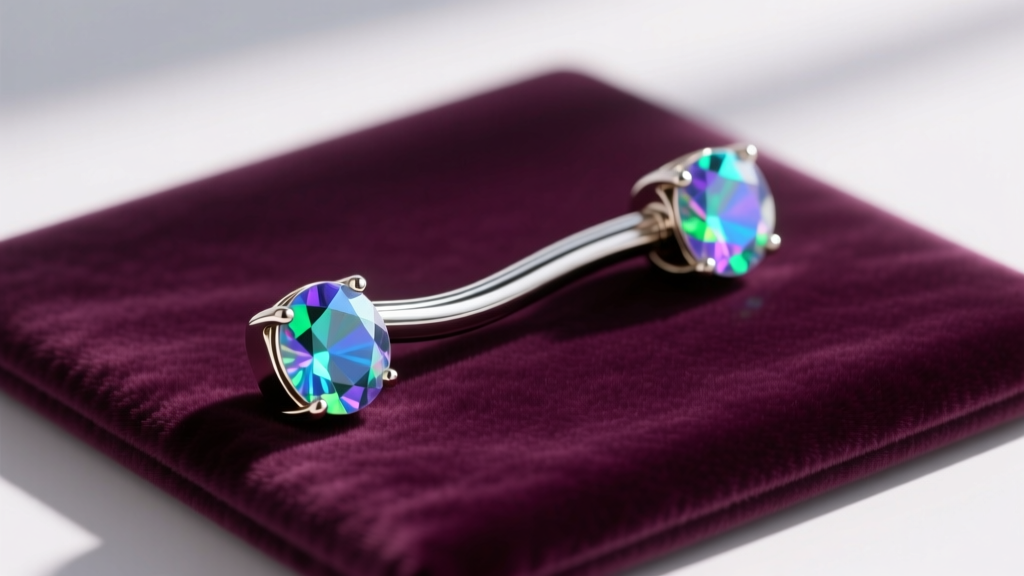
Curved Barbells (Banana Barbells)
These feature a gentle arc, typically measuring between 10mm and 15mm in depth. They accommodate the natural curvature of the body and allow for swelling. Primary applications: Eyebrow, rook, navel (belly button), and vertical labret piercings. Using a straight barbell in a navel piercing, for instance, will cause the ends to dig into the skin when the wearer sits or bends.
Surface Barbells
Surface barbells are shaped like a staple or a squared-off 'U'. They are designed for piercings that enter and exit the skin on the same flat plane, passing under the epidermis. Primary applications: Nape, hip, and sternum surface piercings. The 90-degree angles at the ends prevent the jewelry from pivoting and rejecting through the skin.
Material Grades: What is Actually Safe for Your Body?
The term 'surgical steel' is largely unregulated and often used as a marketing buzzword. When buying barbell piercing jewelry, you must look for specific ASTM (American Society for Testing and Materials) or ISO designations. The APP guidelines for initial piercings strictly outline which materials are biocompatible.
| Material | Standard/Grade | Best For | Nickel Content |
|---|---|---|---|
| Implant-Grade Titanium | ASTM F136 / ISO 5832-3 | Fresh & Healed Piercings | Zero (Hypoallergenic) |
| Niobium | Unalloyed / Reactive | Fresh & Healed Piercings | Zero |
| Surgical Steel | 316L / 316LVM (ASTM F138) | Healed Piercings Only | Contains 8-12% Nickel |
| PTFE / Bioplast | Medical Grade Polymer | MRI Scans / Temporary Use | Zero |
For any new piercing, or if you have sensitive skin, ASTM F136 Titanium (Ti-6Al-4V ELI) is the undisputed champion. It is the exact same alloy used in orthopedic joint replacements and pacemakers. It contains zero nickel, eliminating the risk of contact dermatitis. While 316LVM surgical steel is safe for fully healed piercings, the nickel content makes it a poor choice for fresh wounds or individuals with metal sensitivities.
Sizing Standards: Gauge and Length Requirements
Precision in sizing prevents the dreaded 'cheese-cutter effect' (where a too-thin barbell migrates through the tissue) and embedding (where a too-short barbell is swallowed by swelling). Gauge refers to the thickness of the post, while length is measured from the inside of one end to the inside of the other.
Standard Gauge Dimensions
- 16G (1.2mm): Standard for eyebrows, lips (labret/monroe), ear cartilage (rook, conch), and some navel piercings.
- 14G (1.6mm): The gold standard for tongues, nipples, navels, and industrial piercings. The thicker gauge provides structural integrity and reduces the risk of migration.
- 12G (2.0mm) to 10G (2.5mm): Often utilized for specific surface piercings, nipple piercings requiring heavy support, or stretched lobe transitions.
The Downsizing Protocol
When you receive a fresh tongue or lip piercing, the piercer will install a 'long post' (e.g., 7/8 inch or 1 inch) to accommodate the massive initial swelling that occurs within the first 72 hours. Once the swelling subsides (usually between weeks 2 and 4), you must downsize to a shorter post (e.g., 5/8 inch or 3/8 inch). Failing to downsize a tongue barbell can lead to severe enamel chipping, gum recession, and speech impediments.
Trusted Brands to Look For in 2026
When shopping for high-quality barbells, bypass mall kiosks and unverified online marketplaces. Stick to reputable manufacturers that provide mill certificates proving their metal grades. Top-tier brands include:
- Anatometal: Renowned for flawless internal threading and mirror-polished finishes on ASTM F136 titanium.
- Industrial Strength (IS): Offers incredibly precise threadless and internally threaded options with a massive variety of gemstone settings.
- Neometal: The pioneer of threadless (push-pin) jewelry, offering unparalleled security and ease of use.
- Maria Tash: Excellent for luxury, high-end aesthetic designs, particularly in curved barbells for ear and facial placements.
Aftercare and Maintenance Insights
A high-quality titanium barbell is only half the battle; the other half is your aftercare routine and handling.
Never twist or rotate a barbell in a healing piercing; this tears the fragile fistula tissue and introduces crust and bacteria into the wound. When cleaning, use only sterile 0.9% sodium chloride saline spray. Avoid all alcohol, hydrogen peroxide, and tea tree oils, which cause chemical burns and delay cellular regeneration. Finally, always ensure your hands are thoroughly washed with antimicrobial soap before touching your jewelry ends to check their tightness. Threadless ends rarely come loose, but internally threaded ends should be checked weekly to ensure they remain snug.
By prioritizing ASTM F136 titanium, insisting on threadless or internal threading, and matching the exact barbell shape to your specific anatomy, you guarantee a smooth healing process and a stunning final result. For further verification of safe body jewelry standards, always consult the ASTM International database and your local APP-certified professional piercer.


