Brooch Jewelry Buying Guide: Pin Clasps & Metal Value
Master the art of buying brooch jewelry. Learn to evaluate pin mechanisms, metal hallmarks, and gemstone settings to spot authentic vintage and modern value.

Decoding the Anatomy of High-Quality Brooch Jewelry
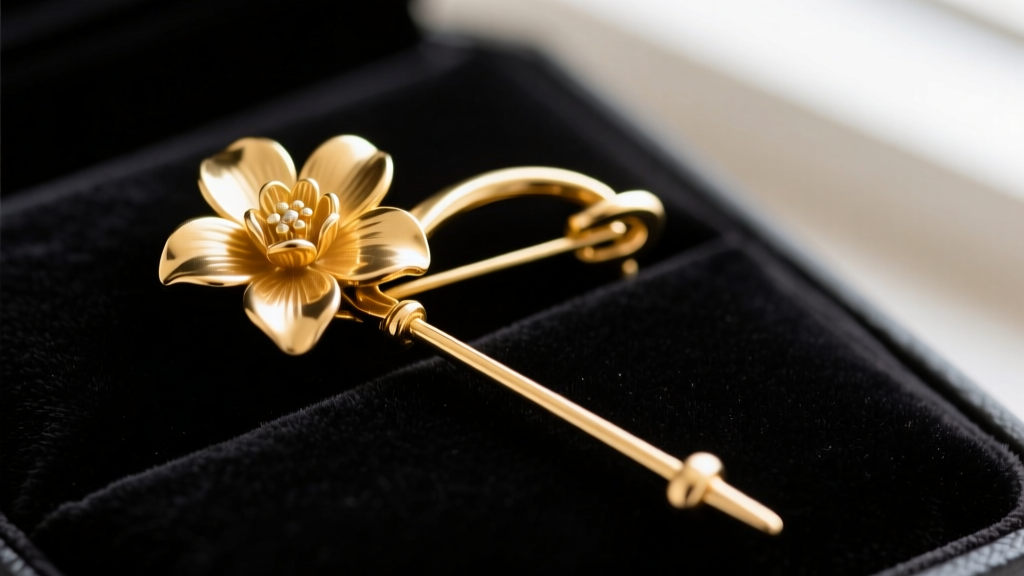
When evaluating brooch jewelry, the untrained eye focuses solely on the face of the piece—the gemstones, the enamel, the sculptural metalwork. However, as any seasoned lapel accessory collector will tell you, the true indicators of quality, age, and structural longevity are found on the reverse side. A brooch is a kinetic piece of jewelry; it must anchor securely to fabric without sagging, tearing, or accidentally detaching. Understanding the mechanical anatomy of a brooch is your first line of defense against overpaying for poorly constructed pieces or misidentifying valuable antiques.
The most critical structural element is the pin stem gauge. Wire gauge dictates the thickness of the metal pin that pierces your garment. For lightweight fashion pieces weighing under 15 grams, a 20-gauge (0.81mm) or 22-gauge (0.64mm) brass or steel stem is standard. However, if you are purchasing heavy, solid gold, or densely paved gemstone brooches exceeding 30 grams, an 18-gauge (1.02mm) or even 16-gauge (1.29mm) stem is mandatory. A mismatch between the brooch's weight and the pin gauge results in "pin droop," where the accessory sags awkwardly on the lapel, and eventually leads to metal fatigue and stem snapping at the solder joint.
Metal Grades and Hallmarks: Separating Vermeil from Plated
The base metal and surface treatment of brooch jewelry dictate both its intrinsic value and its lifespan. In the modern market, distinguishing between flash plating, gold vermeil, and gold-filled materials is essential for accurate appraisal.
Understanding Gold Vermeil vs. Electroplating
Standard gold-plated costume jewelry features a microscopic layer of gold (often less than 0.5 microns) over a base metal like brass or copper. It wears away quickly, especially where the pin clasp creates friction. Gold vermeil, by contrast, is strictly regulated. To be legally classified as vermeil, the piece must have a sterling silver (925) base and a gold layer of at least 2.5 microns thick. In 2026, high-end artisan jewelers frequently push this to 3 or 4 microns for enhanced durability. Always look for the "925" hallmark beneath the gold layer; if the base metal is exposed at the clasp hinges and reveals a yellowish or reddish brass hue, it is not vermeil.
The Durability of Gold-Filled Alloys
Vintage brooch jewelry from the 1930s to the 1960s frequently utilizes gold-filled metal, stamped as "1/20 14k GF." This means that exactly 5% of the total weight of the metal is solid 14k gold, mechanically bonded to a brass core under extreme heat and pressure. Gold-filled brooches are vastly superior to electroplated pieces and can withstand decades of wear without the gold layer peeling or flaking.
Pin Mechanisms: A Timeline for Dating Vintage Pieces
The evolution of the brooch clasp is one of the most reliable methods for dating antique and vintage jewelry. Because safety and security were paramount for expensive lapel accessories, the hardware evolved rapidly during the late 19th and early 20th centuries. According to the Lang Antiques Antique Jewelry University, examining the catch can narrow a piece's origin down to a specific decade.
| Clasp Type | Era of Prominence | Security Level | Common Failure Mode |
|---|---|---|---|
| C-Clasp | Pre-1900s to 1910s | Low | Pin slips out if fabric is thin or movement is heavy |
| Trombone Clasp | 1880s to 1950s (European) | Medium | Friction tube loosens over time, cap detaches |
| Early Safety Catch | 1900s to 1920s | Medium-High | Wire lever bends outward, failing to secure the pin |
| Locking Safety Catch | 1930s to Present | High | Internal spring fatigue in the rolling lever |
If you are examining a piece marketed as an 1880s Victorian antique, but it features a modern locking safety catch with a rolling lever, the clasp has either been replaced (diminishing the antique value) or the piece is a later reproduction. Conversely, a genuine 1950s Mid-Century piece should almost exclusively feature a locking safety catch.
Gemstone Settings and Enamel Techniques
Brooch jewelry offers a wide canvas for lapidary and enameling arts. When buying, you must scrutinize how the materials are secured to the metal framework.
Prong vs. Bezel vs. Adhesive Settings
Fine brooches utilize prong or bezel settings for gemstones. Prongs should be evenly spaced, with the metal folded smoothly over the stone's girdle. Avoid pieces where prongs are snagging on fabric—a sign of poor polishing or impact damage. Bezel settings, where a rim of metal surrounds the stone, are highly secure and ideal for everyday lapel wear. If you are buying vintage rhinestone or paste jewelry, inspect the adhesive. Over decades, hide glue or early epoxies degrade, turning yellow or brittle. Tap the brooch gently; a rattling sound indicates loose stones with failing adhesive.
Evaluating Enamel Work
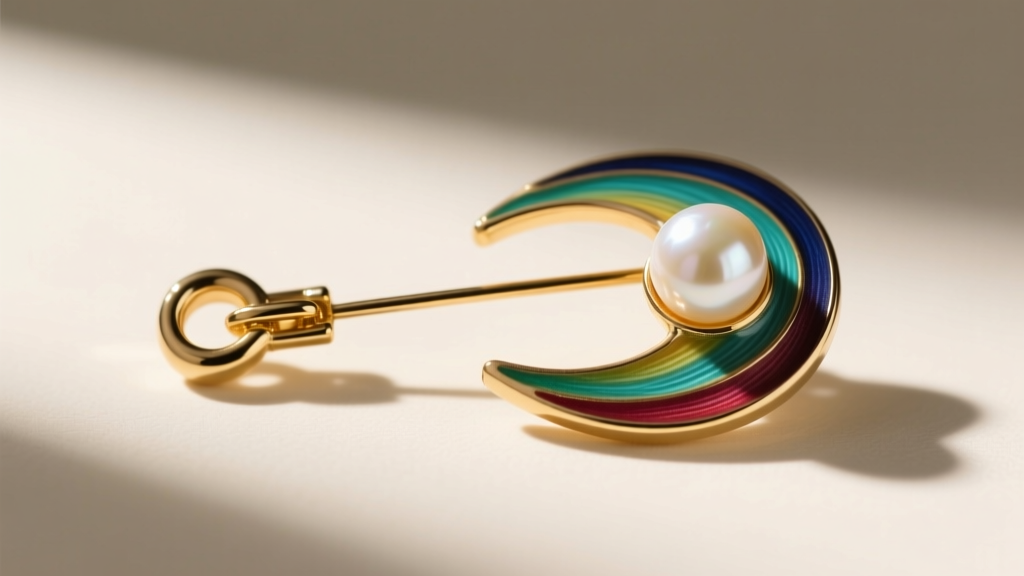
Enamel brooches require specific inspection protocols. Guilloché enamel features translucent glass fused over engine-turned (machine-engraved) metal, creating a mesmerizing moiré pattern. Check for micro-cracks, which occur if the brooch was dropped, as moisture will seep under the glass and oxidize the silver base. Plique-à-jour is a stained-glass technique with no metal backing. It is breathtaking but incredibly fragile. Never buy plique-à-jour brooch jewelry for daily wear; it is strictly for collector display or highly controlled formal events.
Pricing Tiers and Market Realities
The market for brooch jewelry is highly stratified. Understanding these tiers prevents you from paying fine-jewelry prices for mass-market costume pieces.
- Tier 1: Modern Fashion & Costume ($30 - $150): Typically cast from pewter or brass with electroplated finishes and glass/crystal stones. Value is driven entirely by brand name (e.g., modern designer fashion houses) or aesthetic appeal.
- Tier 2: Vintage Unsigned Fine ($400 - $1,800): Solid 14k or 18k gold, or platinum, featuring genuine diamonds and colored gemstones. These lack a designer signature but hold significant intrinsic scrap and gem value. Always verify with the GIA Gem Encyclopedia for stone identification standards.
- Tier 3: Signed Designer & Antique ($3,000 - $50,000+): Pieces by houses like Boucheron, Cartier, Tiffany & Co., or iconic mid-century makers like Trifari and Miriam Haskell. Provenance, original signed hallmarks, and pristine original clasps drive the premium.
The Pre-Purchase Inspection Checklist
Before finalizing any brooch jewelry purchase, run through this physical checklist:
- The Pin Drop Test: Fasten the brooch to a taut piece of scrap fabric. Let it hang vertically. If the bottom edge tilts forward more than 15 degrees, the pin is placed too high on the reverse or the gauge is too thin.
- The Hinge Wiggle: Gently wiggle the pin stem side-to-side at the hinge. A microscopic amount of play is normal for vintage hinges, but excessive lateral movement indicates worn hinge barrels that will require a jeweler's repair.
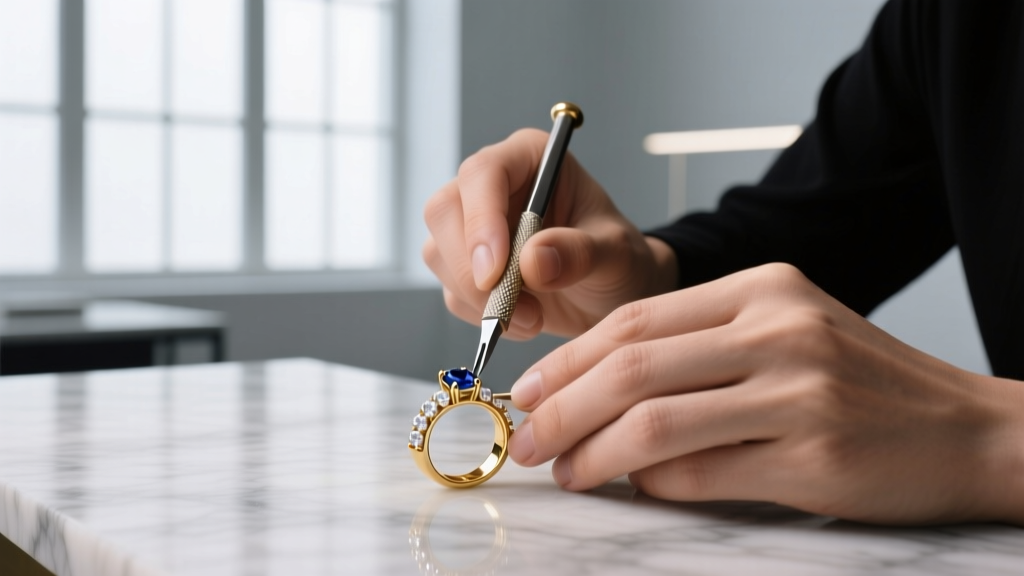
- The Foil-Back Check: If buying antique closed-back gemstones, use a loupe to look for dark, mirror-like discoloration behind the stone. This indicates moisture ingress that has destroyed the silver foil backing, drastically reducing the value.
- The Clasp Tension Test: Open and close the safety catch lever. It should snap shut with a definitive, crisp click. A sluggish lever indicates dirt buildup or a failing internal spring.
By prioritizing structural integrity, metal purity, and historical accuracy in the hardware, you can build a collection of brooch jewelry that is not only visually stunning but mechanically sound and financially secure.