6mm Pearl Earrings: The Beginner's Guide to Timeless Studs
Discover everything about 6mm pearl earrings. Learn how to choose between Akoya and freshwater, pick the right post metal, and care for them.

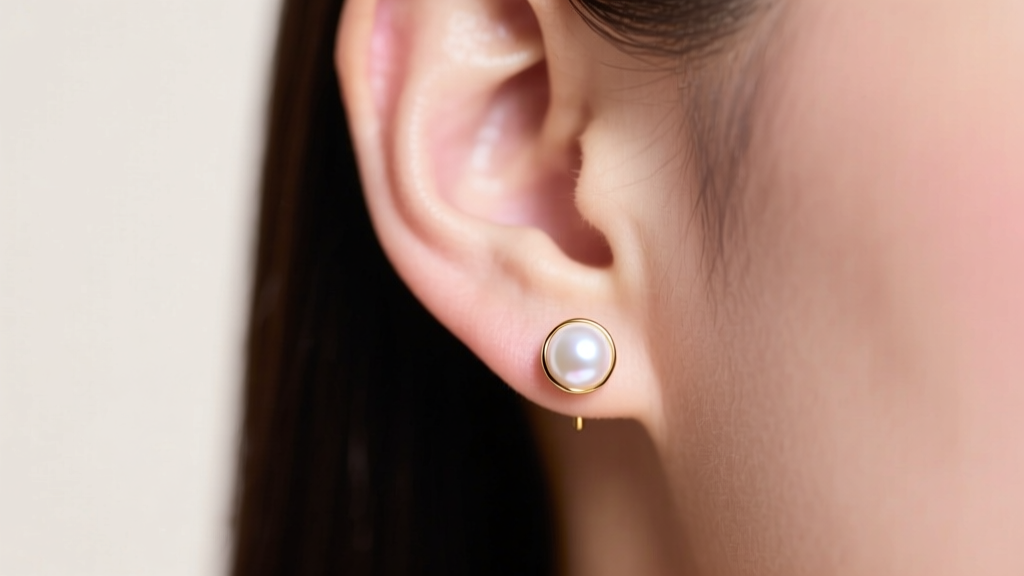
When building a foundational jewelry collection, the 6mm pearl earring is universally recognized by stylists and gemologists as the ultimate anchor piece. Measuring approximately 0.24 inches in diameter, this specific size bridges the gap between barely-there subtlety and bold statement-making. For beginners navigating the complex world of pearl grading, metal alloys, and earring backings, understanding the mechanics of a 6mm stud is the first step toward making an informed, long-lasting investment.
Why 6mm is the "Goldilocks" Size for Pearl Studs
Pearl studs generally range from 3mm to 10mm+. The 6mm size occupies a highly specific functional niche in jewelry design. At 4mm, pearls can appear as mere specks on the earlobe, often getting lost in hair or from a distance. At 8mm and above, the weight of the pearl increases significantly, which can cause the earring to droop forward on the lobe unless supported by specialized backings or heavier gauge posts.
The 6mm pearl offers maximum versatility. It provides enough surface area to showcase the pearl's luster and overtone, yet remains lightweight enough (typically under 0.4 grams per pearl) to sit flush against the earlobe without requiring structural reinforcement. Furthermore, 6mm is the ideal dimension for secondary upper-lobe piercings, offering a proportional look when paired with larger primary studs or hoops.
Decoding Pearl Types: What Are You Actually Buying?
Not all 6mm pearls are created equal. The market is dominated by two primary categories for this size: Freshwater and Akoya. South Sea and Tahitian pearls are rarely found in 6mm sizes, as these oysters typically produce larger gems starting at 8mm. Understanding the distinction between Freshwater and Akoya is critical for setting accurate budget and quality expectations.
| Feature | Freshwater Pearls (6mm) | Akoya Pearls (6mm) | Shell Pearls (Imitation) |
|---|---|---|---|
| Origin | Hyriopsis mussels (mostly China) | Pinctada fucata oysters (Japan/Vietnam) | Coated glass or shell beads |
| Luster | Satiny, soft, diffuse glow | Mirror-like, sharp, high-contrast | Flat, uniform, artificial shine |
| Nacre | Solid nacre (no bead nucleus) | Bead-nucleated (0.2mm - 0.5mm nacre) | N/A (painted coating) |
| Price Range | $30 - $90 | $150 - $450 | $10 - $25 |
| Best For | Everyday wear, budget-conscious buyers | Heirloom quality, formal wear, high luster | Travel, costume jewelry |
According to the Gemological Institute of America (GIA), luster is the most important quality factor for pearls. Akoya pearls are prized for their sharp, mirror-like reflections due to the specific aragonite crystal layering in colder Japanese waters. Freshwater pearls, while slightly less reflective, offer incredible durability because they are composed of solid nacre all the way through, making them less prone to chipping or peeling over decades of wear.
Post Metals, Gauges, and Backings: The Hidden Details
The pearl itself is only half the equation. The metal post and backing dictate the earring's longevity, comfort, and hypoallergenic properties. For sensitive ears, avoiding nickel alloys is non-negotiable.
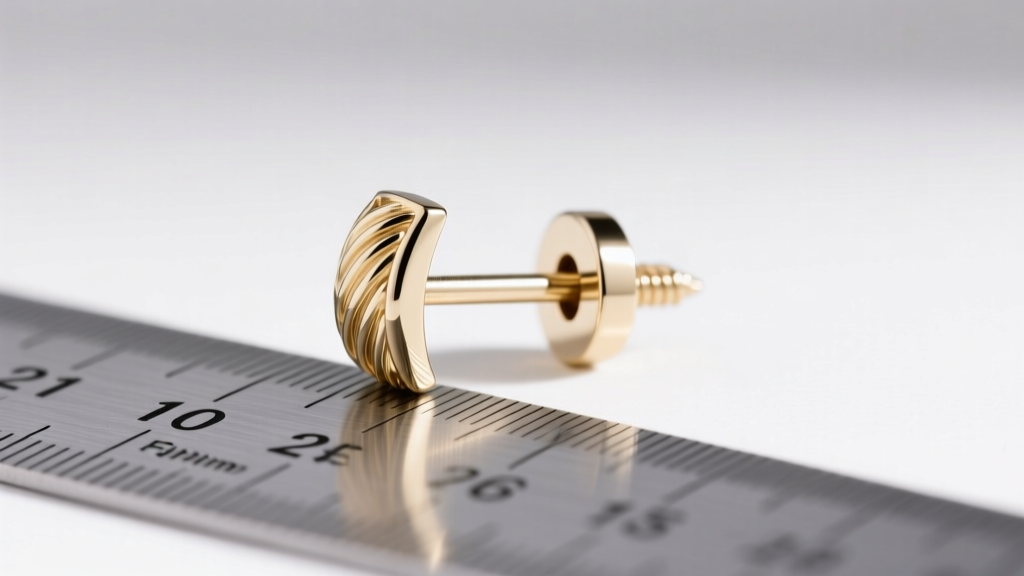
Standard Post Gauges
- 20-Gauge (0.81mm): The industry standard for pearl studs. It is thin enough to slide comfortably through a healed lobe piercing but thick enough to support the weight of a 6mm pearl without bending.
- 18-Gauge (1.02mm): Occasionally used for heavier settings or by individuals whose piercings tend to shrink or migrate. Note that some standard 20g butterfly backings will not fit an 18g post without manual adjustment.
Choosing the Right Metal
Opt for 14k or 18k solid gold, or platinum. Avoid "gold-plated" or "gold-filled" posts for fine pearls, as the plating will eventually wear away, exposing base metals that can cause contact dermatitis. For severe metal allergies, look for posts machined from ASTM F136 implant-grade titanium, which is entirely nickel-free and biocompatible.
Securing the Earring: Backing Types
- Friction (Butterfly) Backs: The most common and economical. However, they can harbor bacteria in their crevices and may loosen over time.
- Screw-Backs: The post is threaded, and the backing screws on. Highly recommended for expensive Akoya pearls to prevent accidental loss.
- La Pousette Backs: A premium locking mechanism featuring tiny spring-loaded pushers. They offer the security of a screw-back with the ease of a friction back, though they add $30-$50 to the final price.
How to Style 6mm Pearl Earrings for Your Face Shape
While 6mm is universally flattering, its visual impact shifts depending on your facial proportions.
- Round Faces: A 6mm stud draws the eye horizontally. To balance a round face, pair your 6mm pearl studs with a v-neckline or elongated pendant necklace to create vertical visual lines.
- Oval Faces: The most balanced face shape. 6mm pearls sit perfectly here without requiring any compensatory styling.
- Square Faces: The soft, spherical curve of a 6mm pearl provides an excellent contrast to strong, angular jawlines, softening the overall profile.
- Heart Faces: Because a heart-shaped face is wider at the forehead and narrow at the chin, 6mm pearls add necessary visual weight to the lower half of the head, balancing the proportions.
Care and Maintenance: Protecting the Nacre
Pearls are organic gemstones, ranking between 2.5 and 4.5 on the Mohs hardness scale. This makes them significantly softer than diamonds (10) or sapphires (9), meaning they are highly susceptible to scratching and chemical degradation.
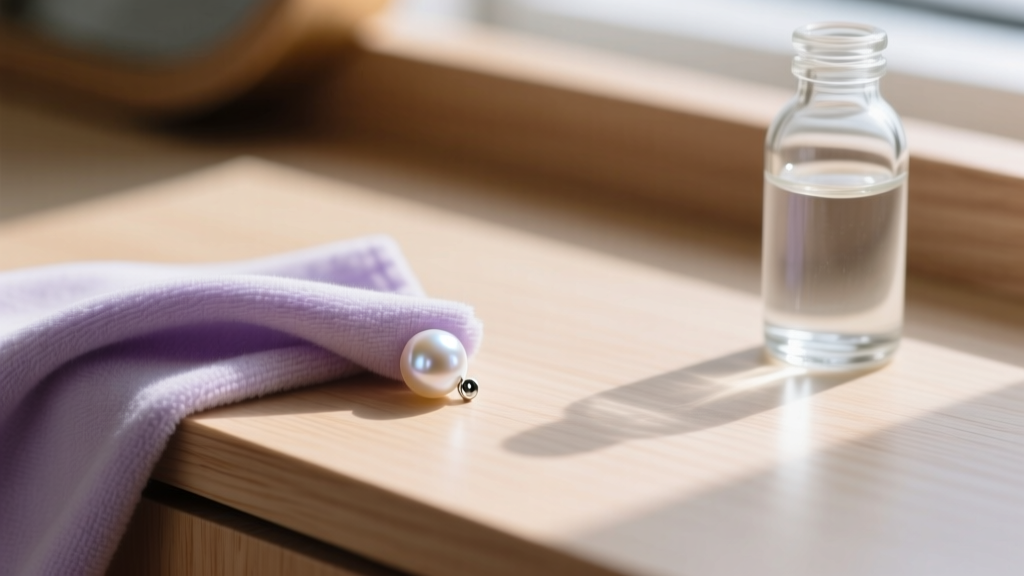
The golden rule of pearl care is "Last On, First Off." Pearls should be the last thing you put on after applying cosmetics, perfumes, and hairsprays, and the first thing you take off when you return home. The alcohol and acids in personal care products can strip the pearl's natural luster and degrade the silk or adhesive used in the setting.
"Never clean pearls with ultrasonic cleaners or steamers. The high-frequency vibrations can shatter the nacre, especially if the pearl has microscopic internal fractures or a thin nacre layer over a bead nucleus."
For routine cleaning, the GIA recommends simply wiping the pearls with a soft, lint-free microfiber cloth after each wear to remove skin oils and sweat. If they become visibly soiled, use a damp cloth with a single drop of mild, pH-neutral soap, and allow them to air dry completely on a flat surface before storing them in a breathable cotton pouch. Never store pearls in airtight plastic bags, as they require a slight amount of ambient moisture to prevent the nacre from cracking or yellowing over time.
Final Verdict: Building Your Core Collection
Investing in a pair of 6mm pearl earrings is an exercise in timeless utility. For beginners on a budget, a high-quality AAA-grade Freshwater pair set in 14k gold offers incredible durability and soft luster for under $100. For those seeking an heirloom piece with sharp, mirror-like reflections, saving for a pair of 6mm Hanadama-certified Akoya pearls with screw-backs will yield a stunning accessory that outlasts seasonal trends. By paying close attention to the post gauge, metal purity, and nacre care, your 6mm pearls will remain a staple of your wardrobe for decades.


