Aspen Leaf Earrings Care: Cleaning & Maintenance Guide
Discover expert tips to clean, polish, and store your aspen leaf earrings. Protect delicate metal veining, vermeil, and enamel from tarnish and damage.

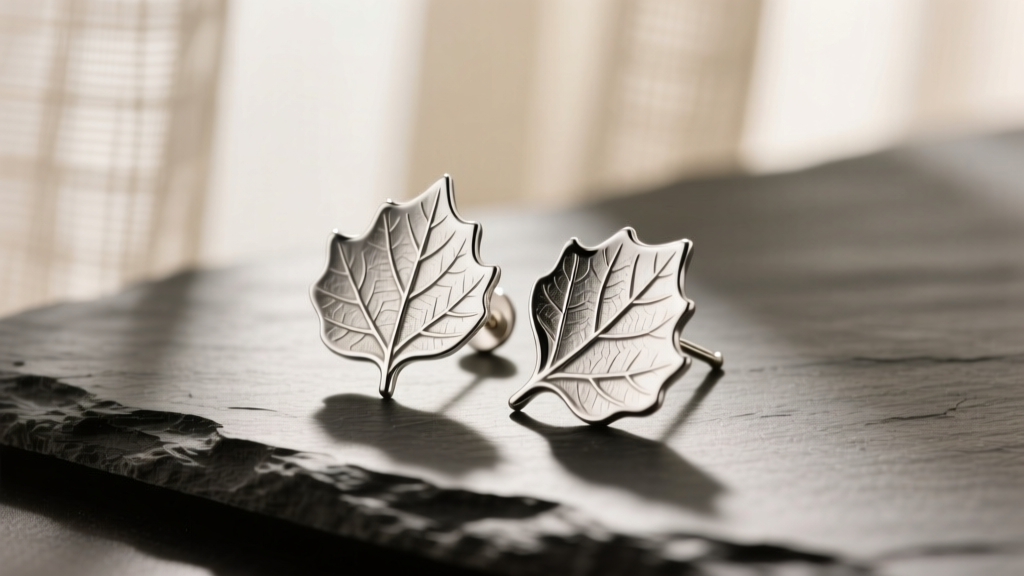
Botanical jewelry has seen a massive resurgence, and aspen leaf earrings remain a standout favorite for their delicate, nature-inspired aesthetics. Whether crafted from solid 925 sterling silver, 14k gold vermeil, or featuring vibrant green enamel accents, these earrings mimic the intricate, fluttering beauty of the quaking aspen tree. However, their defining feature—the deep, textured veining and fragile stems—makes them uniquely challenging to maintain. Standard jewelry cleaning methods can easily strip finishes, bend delicate posts, or trap moisture in the leaf crevices, leading to rapid tarnishing and structural failure.
In this comprehensive guide, we break down the exact protocols for cleaning, polishing, and storing your aspen leaf earrings to ensure they retain their organic luster and structural integrity for years to come.
The Anatomy of Aspen Leaf Earrings: Why They Need Special Care
Unlike smooth geometric studs or simple hoops, aspen leaf earrings are defined by their topography. Most high-quality botanical earrings are created using one of three techniques: die-striking (which stamps the veining into a sheet of metal), lost-wax casting (which captures the exact texture of a real leaf), or electroforming (which builds a copper or silver shell over an actual organic leaf).
Electroformed and cast pieces are particularly porous and fragile. Furthermore, the deep recesses of the leaf veins act as microscopic traps for sebum, dead skin cells, lotions, and environmental pollutants. When tarnish (silver sulfide) forms in these recesses, it creates a dark, stubborn buildup that is difficult to reach without damaging the high-polish edges of the leaf. Additionally, the posts on these earrings are often crafted from 20-gauge (0.81mm) or even 22-gauge (0.64mm) wire to maintain the lightweight, delicate aesthetic, making them highly susceptible to bending during the cleaning process.
Daily Wear and Tear: Common Threats to Botanical Jewelry
Before diving into cleaning, it is crucial to understand what degrades your earrings on a daily basis. The primary culprits include:
- Cosmetics and Hairspray: Aerosolized polymers in hairspray settle into the leaf veining, creating a dull, cloudy film that water alone cannot remove.
- Sebum and Sweat: The natural oils from your skin, combined with the slightly acidic pH of sweat, accelerate the oxidation of sterling silver and can degrade the brass base layer beneath gold vermeil if micro-fissures are present.
- Friction: Wearing aspen leaf dangles with high-collared clothing or scarves can catch the delicate leaf stems, bending the metal or snapping the solder joint where the leaf meets the earring post.
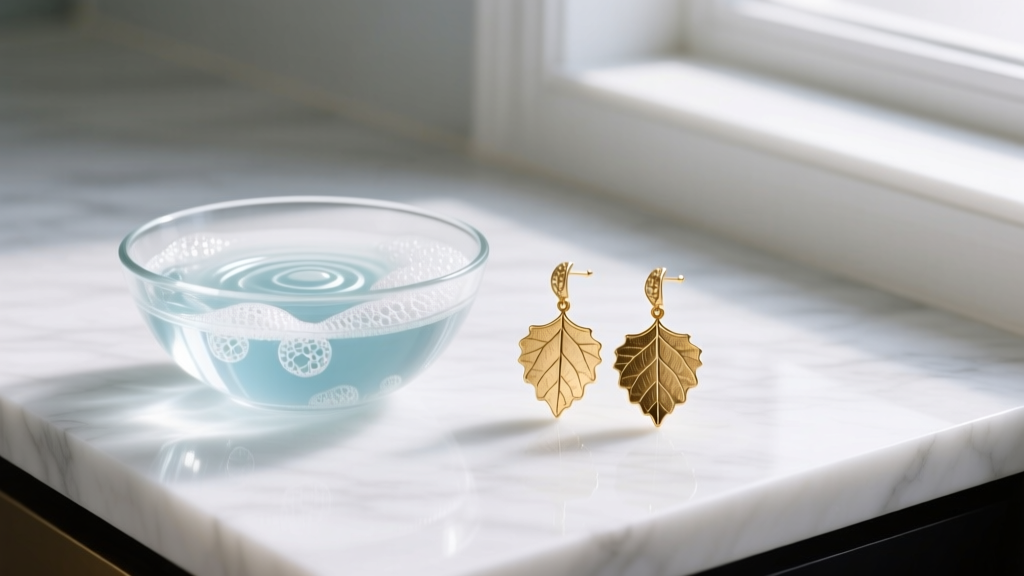
Step-by-Step Cleaning Guide for Textured Metal Leaves
The cleaning method you choose must be dictated by the metal and finish of your specific earrings. According to the Jewelers of America, matching the cleaning agent to the material porosity is the single most important factor in jewelry longevity.
Method 1: The Gentle Soak (For Solid Sterling Silver & Solid Gold)
If your aspen leaf earrings are solid 925 silver or solid 14k/18k gold (with no enamel or gemstone accents), a gentle aqueous cleaning is highly effective.
- Prepare the Solution: Mix a few drops of phosphate-free, mild dish soap (like Dawn) into a bowl of lukewarm distilled water. Avoid tap water, as the chlorine and dissolved minerals can leave spots on high-polish metal.
- Soak Briefly: Submerge the earrings for exactly 3 to 5 minutes. This softens the sebum trapped in the leaf veins.
- Agitate with Care: Using an extra-soft baby toothbrush, gently brush the leaf. Critical Technique: Always brush parallel to the direction of the veins, never in circular motions or perpendicular to the veins. Cross-grain brushing will leave micro-scratches that catch light and dull the finish.
- Rinse and Dry: Rinse under a gentle stream of distilled water. Immediately pat dry with a lint-free microfiber cloth, then use a hairdryer on the 'cool' setting to blast out any remaining moisture trapped in the deepest crevices.
Method 2: The Dry Polish (For Vermeil, Enamel, and Electroformed Pieces)
Gold vermeil (a thick layer of gold over sterling silver, legally required to be at least 2.5 microns thick) and enameled aspen leaves should never be soaked. Water can seep into microscopic gaps and cause the underlying metal to oxidize, leading to blistering or flaking of the gold or enamel.
- Use a dry, untreated jeweler's polishing cloth (such as a Sunshine cloth).
- Gently wipe the raised, high-polish edges of the leaf to remove oils and restore shine.
- Avoid the Veins: Do not aggressively rub the recessed veins. If your silver leaf has an intentional 'oxidized' or 'antiqued' finish in the veins to provide contrast, a polishing cloth will strip this dark patina, leaving the leaf looking flat and unnatural.
Chemical Agents to Avoid at All Costs
Many DIY jewelry cleaning hacks found online are actively destructive to textured botanical earrings. Below is a breakdown of common agents and why they must be avoided.
| Cleaning Agent | Effect on Aspen Leaf Earrings | Verdict |
|---|---|---|
| Baking Soda & Aluminum Foil Bath | Strips all oxidation, ruining the dark contrast in the leaf veins. Can also pit the metal surface. | Avoid |
| Toothpaste | Contains hydrated silica (abrasive). Will permanently scratch high-polish edges and dull vermeil finishes. | Avoid |
| Ultrasonic Cleaners (40kHz) | The intense cavitation bubbles and vibrations can snap delicate 20G stems and shatter electroformed leaves. | Avoid |
| Ammonia-based Cleaners | Highly corrosive to copper alloys; will cause rapid pitting and discoloration of brass-core vermeil pieces. | Avoid |
| Mild Dish Soap & Distilled Water | Safe for solid metals; effectively lifts oils without abrading delicate textures or stripping patinas. | Safe (Solid Metals) |
For pieces featuring gemstone accents—such as peridot or tsavorite garnet, which are frequently used to mimic the green hues of aspen leaves—always consult specific gemological guidelines. The Gemological Institute of America (GIA) warns that many green gemstones are fracture-filled or sensitive to sudden temperature changes, making even warm soapy soaks risky for stone-set botanical pieces.
Proper Storage to Prevent Tarnish and Bent Stems
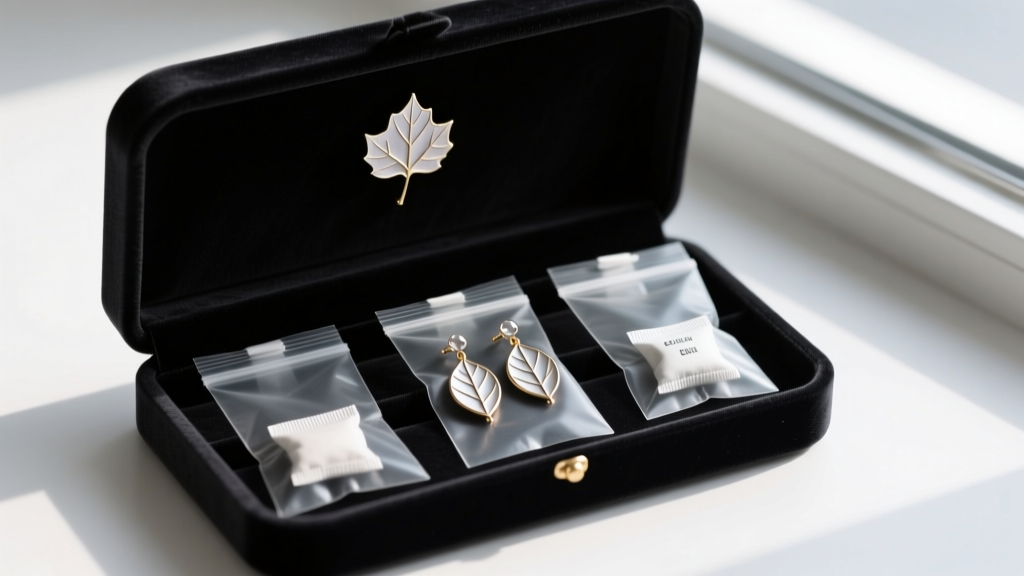
How you store your aspen leaf earrings when they are not being worn is just as critical as how you clean them. Silver tarnishes when it reacts with hydrogen sulfide and moisture in the ambient air. To halt this chemical reaction, implement the following storage protocol:
- Use Polyethylene, Not PVC: Store your earrings in small, zip-top polyethylene bags. Never use PVC (polyvinyl chloride) plastic bags, as PVC off-gasses sulfur and plasticizers that will rapidly accelerate heavy black tarnishing.
- Anti-Tarnish Strips: Place a 3M anti-tarnish strip inside each bag. These strips contain copper-based polymers that absorb airborne sulfides before they can reach your silver.
- Moisture Control: Include a small silica gel desiccant packet in your jewelry box to keep ambient humidity below 40%, drastically slowing the oxidation process.
- Structural Support: Never toss aspen leaf dangles loosely into a jewelry box where they can be crushed. Store them flat in a velvet-lined compartment, or hang them from a dedicated earring tree to ensure the delicate stems bear no weight.
Troubleshooting Common Issues
Even with meticulous care, delicate botanical earrings occasionally require minor repairs. Here is how to handle the two most common issues:
Straightening a Bent Earring Post
If the 20-gauge or 22-gauge post of your aspen leaf earring bends, do not use standard metal pliers to straighten it, as the steel teeth will gouge and weaken the precious metal. Instead, use nylon-jaw pliers. Grip the base of the post firmly near the solder joint, and apply gentle, steady pressure to bend it back to a 90-degree angle. If the post has been bent back and forth multiple times, it may suffer from metal fatigue and snap; in this case, take it to a bench jeweler for a quick laser-welding repair.
Dealing with Stubborn Tarnish in the Veins
If heavy black tarnish has accumulated deep within the leaf veining and a soft brush cannot reach it, use a silver polishing dip (such as Tarn-X) with extreme caution. Dip the earring for no more than 2 to 3 seconds, then immediately neutralize the acid by rinsing thoroughly in a baking soda and water bath, followed by distilled water. Note that this will remove all antiquing, so you may need to have a jeweler re-apply a liver of sulfur patina to restore the leaf's dimensional contrast.
By treating your aspen leaf earrings with the specialized care that their intricate topography demands, you preserve not just the metal, but the organic, lifelike artistry of the design. Consistent, gentle maintenance is the secret to keeping your botanical jewelry blooming season after season.


