How to Choose a Dangling Earring Without Stretching Your Lobes
Learn how to choose a dangling earring that won't stretch your lobes. We cover gauge sizes, weight limits, and safe metals for sensitive ears.

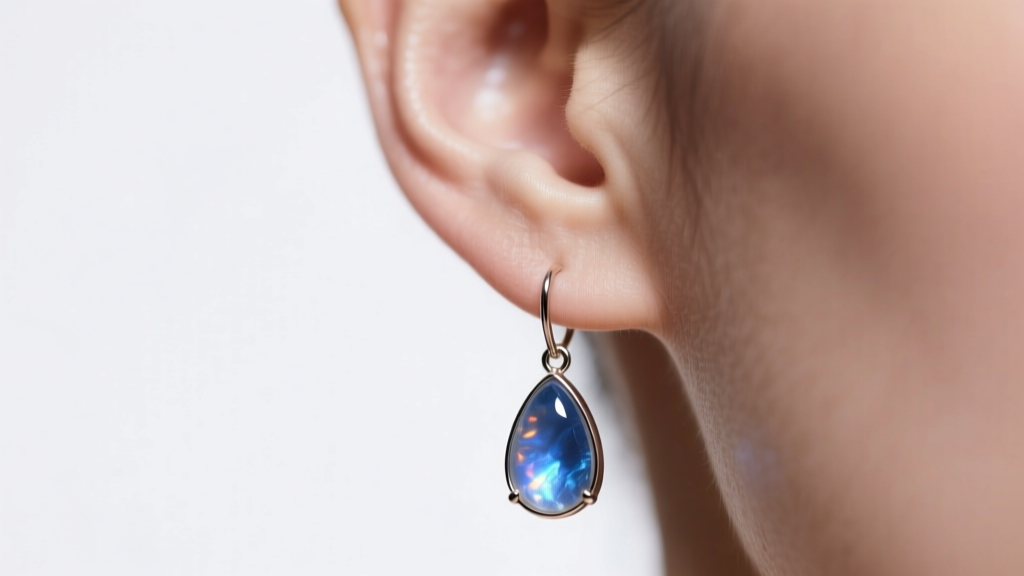
There is nothing quite like the elegant movement of a beautifully crafted dangling earring. They catch the light, frame the jawline, and add a kinetic energy to your look that static studs simply cannot match. However, for beginners and those with delicate earlobes, the wrong dangle can quickly turn from a fashion statement into a painful lesson in physics. If you have ever taken off a pair of long earrings after a few hours only to find your lobes red, tender, or visibly stretched, you have experienced the mechanical stress of improper jewelry sizing.
In this guide, we will break down the exact science of earlobe weight distribution, decode the confusing world of wire gauges, and teach you how to select a dangling earring that prioritizes both style and the long-term health of your piercings.
The Anatomy of Movement: Drop vs. Dangling Earring
Before diving into weight limits, it is crucial to understand the terminology. While often used interchangeably by fast-fashion retailers, jewelers and piercers distinguish between a drop earring and a dangling earring. A drop earring hangs just below the earlobe and remains stationary. A dangling earring, however, features a hinge, jump ring, or chain that allows the bottom portion to swing freely.
This freedom of movement is exactly what makes dangles so appealing, but it also introduces kinetic shear stress. When you walk, turn your head, or catch a breeze, the pendulum effect of a dangle multiplies the downward force exerted on the bottom of your fistula (the piercing channel). A 10-gram dangle in motion can momentarily exert up to 15 grams of localized pressure on a microscopic surface area, which brings us to the infamous "cheese-cutter effect."
The Physics of Lobe Stress: Weight, Gauge, and the Cheese-Cutter Effect
The cheese-cutter effect occurs when a thin wire bearing a heavy load slowly migrates through soft tissue. Think of how a thin wire easily slices through a block of cheese when pressure is applied. If your dangling earring is heavy but the wire passing through your ear is exceptionally thin, the metal will slowly slice downward through your lobe, causing irreversible stretching and migration.
To prevent this, you must match the weight of the earring to the thickness (gauge) of the ear wire. Standard lobe piercings are usually done at 20G (0.81mm) or 18G (1.02mm). While a 20G wire is fine for lightweight studs, it is entirely inadequate for heavy dangles.
Weight-to-Gauge Recommendation Chart
| Earring Weight | Minimum Wire Gauge | Wire Diameter | Recommended Max Wear Time |
|---|---|---|---|
| Under 5 grams | 20G | 0.81 mm | All day (12+ hours) |
| 5 to 10 grams | 18G | 1.02 mm | 8 to 10 hours |
| 10 to 15 grams | 16G | 1.29 mm | 4 to 6 hours |
| Over 15 grams | 14G or Leverback | 1.63 mm | 2 to 3 hours (Special occasions) |
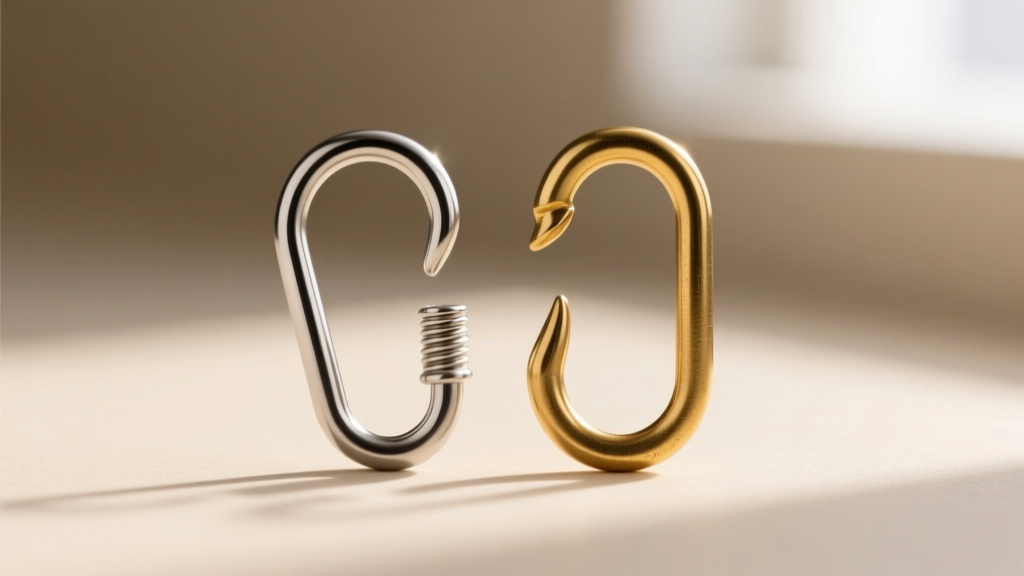
Pro Tip: If you find a heavy dangle you love but it only comes with a thin 20G fishhook wire, you can buy "ear wire converters" or have a local jeweler swap the hook for a thicker, 16G implant-grade titanium leverback.
Metallurgy 101: Safe Metals for Sensitive Lobes
When your lobes are under mechanical stress from a dangling earring, they are also more susceptible to allergic contact dermatitis. Micro-tears in the stretched fistula allow metal ions to enter the bloodstream more easily. According to the American Academy of Dermatology, nickel is the most common culprit for jewelry allergies, yet it is frequently hidden in cheap alloys.
Here is what you need to know about metals when shopping for dangles:
- Implant-Grade Titanium (ASTM F136): The gold standard for sensitive ears. It is entirely nickel-free, highly polished, and lightweight, making it the perfect base metal for heavy dangles.
- 14k or 18k Solid Gold: Excellent for long-term wear. However, ensure it is nickel-free (some white gold alloys use nickel for bleaching). Yellow and rose gold are generally safer bets.
- Niobium: A highly reactive metal that is anodized to create vibrant colors without using dyes or plating. It is hypoallergenic and slightly heavier than titanium.
- "Surgical Steel" (316L): Avoid for heavy dangles. As noted by the Association of Professional Piercers, 316L steel contains up to 10.5% nickel. When combined with the friction and sweat of all-day wear, it can trigger severe reactions in sensitized lobes.
Proportional Styling: Matching Dangles to Face Shapes
Beyond comfort, a dangling earring is a powerful tool for balancing facial proportions. Because dangles draw the eye vertically, they can dramatically alter the perceived shape of your face.
Round Faces
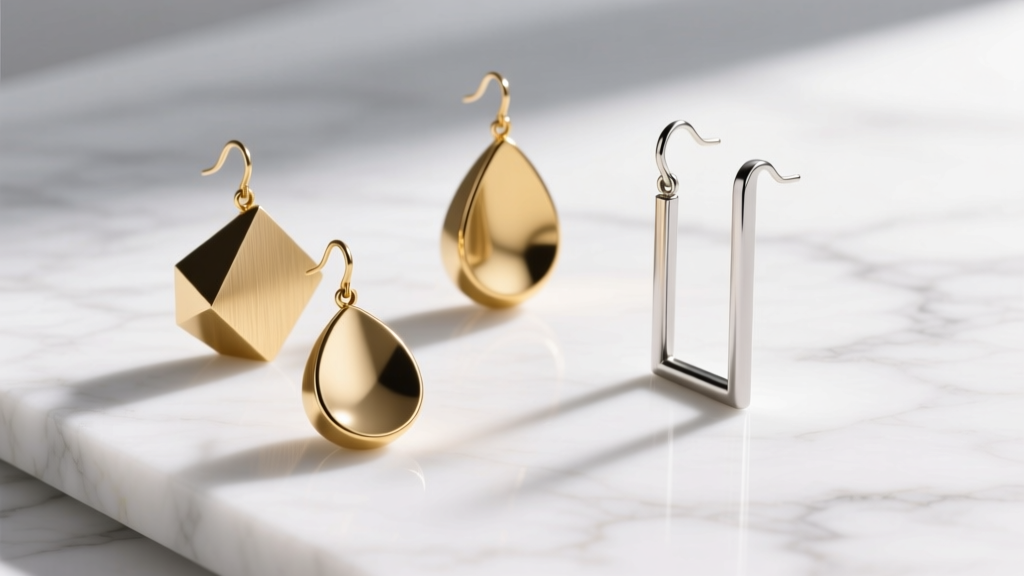
Opt for linear, angular, or geometric dangles. Long, thin chains or rectangular bar drops help elongate the face and add structural contrast to soft, curved features. Avoid large, round hoops or circular chandeliers, which will only emphasize the roundness.
Square Faces
Soften a strong jawline with curved, organic shapes. Teardrop dangles, oval gemstones, and fluid, water-like metal designs draw the eye downward while softening angular features.
Heart-Shaped Faces
Since heart-shaped faces are wider at the forehead and narrow at the chin, choose dangles that are bottom-heavy or flare out at the base. Chandelier styles or inverted triangle dangles add visual weight to the lower half of the face, creating perfect symmetry.
Lobe Recovery and Troubleshooting
Even with the correct gauge and metal, wearing a dangling earring for a 12-hour shift will eventually cause fatigue in the earlobe's connective tissue. If your lobes feel hot, throbbing, or tender to the touch, your body is signaling that the tissue is inflamed.
The Lobe Support Patch Hack
If you must wear heavy statement dangles for an event, invest in medical-grade silicone lobe support patches (often sold under brand names like BlingDots). These adhesive patches stick to the back of your earlobe and feature a reinforced hole for the earring post or wire. They act as a splint, distributing the 15-gram load of your dangle across a 1-centimeter surface area rather than concentrating it on the 1-millimeter fistula. This virtually eliminates the cheese-cutter effect and allows you to wear heavy dangles pain-free.
Post-Wear Recovery Routine
"Treat your earlobes like any other muscle group that has been under strain. After a long day of wearing heavy dangles, gently massage the lobes with pure, cold-pressed jojoba oil to promote blood flow and maintain tissue elasticity."
By understanding the interplay between weight, gauge thickness, and metallurgy, you can confidently build a jewelry collection full of movement and drama—without sacrificing the health and integrity of your piercings. The next time you shop for a dangling earring, check the wire thickness first, and let the magic of kinetic jewelry work in your favor.


