Blue Clip On Earrings: Tension Mechanics & Material Guide
Discover the engineering behind blue clip on earrings. We analyze tension mechanics, sapphire vs enamel materials, and ergonomic comfort for non-pierced ears.

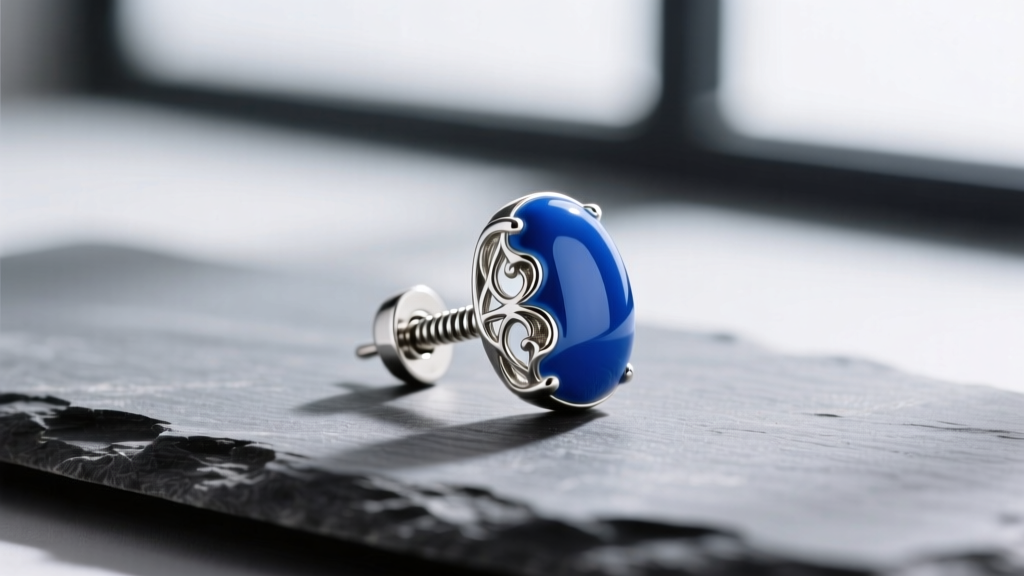
For decades, non-pierced jewelry enthusiasts have endured the painful reality of poorly engineered clasps. However, the modern landscape of non-pierced jewelry has evolved dramatically. Today, high-quality blue clip on earrings represent a intersection of advanced metallurgical engineering, ergonomic design, and exquisite gemology. Whether you are drawn to the deep azure of natural lapis lazuli, the vivid cobalt of fired guilloché enamel, or the brilliant refraction of a blue sapphire, understanding the technical mechanics behind the clasp is just as critical as the aesthetic appeal of the stone. In this expert deep dive, we deconstruct the physics, material science, and anatomical considerations that define premium blue clip-on earrings in 2026.
The Physics of the Clip: Tension vs. Comfort
The primary failure point of any non-pierced earring is the clamping mechanism. The human earlobe is a network of delicate capillaries and nerve endings. When a clip exerts excessive force, it restricts blood flow, leading to localized ischemia—commonly experienced as a throbbing ache after a few hours of wear. Conversely, insufficient tension results in the earring slipping off, risking the loss of valuable materials.
Expert jewelers calibrate premium clip-ons to exert a clamping force between 150 and 250 grams. Forces exceeding 350 grams will almost universally cause discomfort within 45 minutes. To achieve this precise tension, manufacturers utilize three primary mechanisms:
- Spring-Clip (Hinge & Spring): Utilizes a micro-coil spring, typically crafted from 301-grade stainless steel for its high yield strength and fatigue resistance. The spring pushes a padded paddle against the front plate. While secure, the tension is fixed by the factory and cannot be easily adjusted by the wearer.
- Screw-Back: Features a threaded post with an adjustable tension screw. This allows the wearer to micro-calibrate the clamping force to their exact earlobe thickness, making it the gold standard for heavy gemstone drops.
- Paddle-Back (Magnetic Memory): Relies on the tensile memory of the metal alloy itself (often a beryllium-copper blend). The wide, flat paddle distributes pressure over a larger surface area, reducing point-loading on the earlobe.
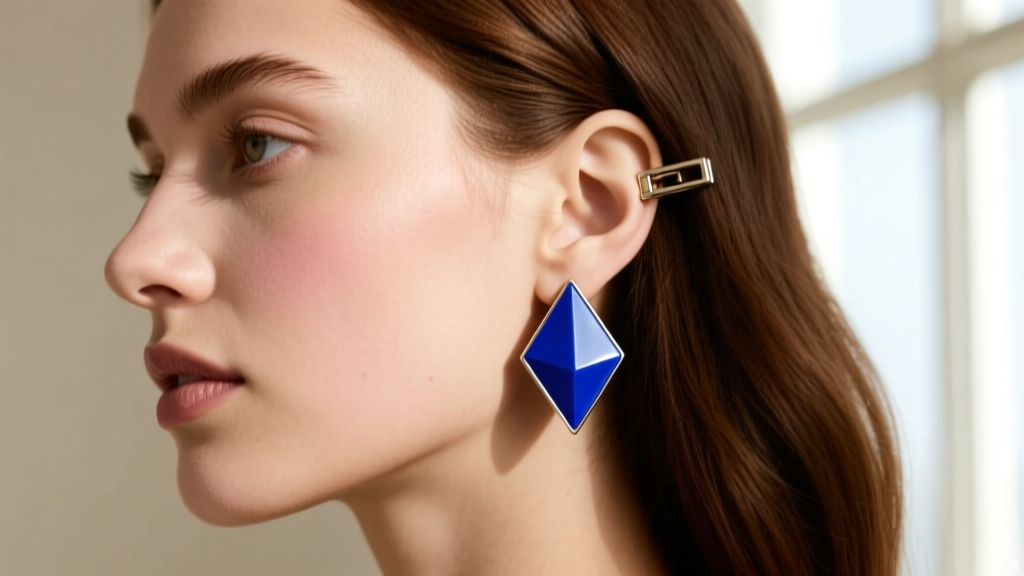
Material Deep Dive: Achieving the Perfect Blue
The color blue in jewelry is achieved through a variety of materials, each with distinct physical properties that directly impact the weight, durability, and overall engineering of the clip-on earring. Because clip-ons must fight gravity without the structural support of a pierced hole, the specific gravity (density) of the blue material is a critical design constraint.
| Material | Mohs Hardness | Specific Gravity (Weight) | Optical Properties & Durability |
|---|---|---|---|
| Blue Sapphire | 9.0 | 3.95 - 4.03 | Exceptional brilliance and scratch resistance. Heavy; requires robust screw-back clasps for drops over 2 carats. |
| Lapis Lazuli | 5.0 - 6.0 | 2.70 - 2.90 | Opaque, matte finish with pyrite inclusions. Porous; degrades if exposed to perfumes or ultrasonic cleaners. |
| Guilloché Enamel | 5.5 (Glass) | 2.20 - 2.50 | Fired glass powder over engine-turned metal. Extremely vivid, lightweight, but highly susceptible to impact chipping. |
| Epoxy Resin | 2.0 - 3.0 | 1.10 - 1.20 | Ultra-lightweight, allowing for oversized statement pieces. Prone to UV yellowing and micro-scratches over time. |
According to the Gemological Institute of America (GIA), when selecting natural stones like sapphire or lapis lazuli for non-pierced settings, jewelers must account for the stone's carat weight relative to the clasp's counter-balance. A 5-carat lapis lazuli drop will cause a standard spring-clip to pivot forward, pulling the top of the earring away from the earlobe and creating an uncomfortable leverage point.
Ergonomic Failures and Contact Dermatitis
Beyond mechanical tension, the metallurgy of the earring pad plays a vital role in long-term wearability. The most common ergonomic failure in vintage and mass-market clip-ons is the use of base metal alloys containing nickel as the primary contact point with the skin. The American Academy of Dermatology (AAD) notes that nickel allergy is the most common cause of allergic contact dermatitis, affecting up to 36% of women. When sweat acts as an electrolyte, it accelerates the leaching of nickel ions from the metal into the skin, resulting in erythema, blistering, and severe itching.
To mitigate this, premium manufacturers in 2026 line the contact paddles of their blue clip on earrings with biocompatible materials. Look for clips featuring:
- Medical-Grade Silicone Pads: Increases friction (preventing slipping) while providing a hypoallergenic barrier.
- Titanium or Niobium Plating: Inert metals that completely eliminate the risk of heavy metal contact dermatitis.
- Micro-Texturing: Laser-etched patterns on the metal paddle that grip the skin's natural microscopic ridges without requiring excessive clamping force.
Styling by Earlobe Anatomy and Thickness
The structural integrity of a clip-on earring relies heavily on the wearer's unique earlobe anatomy. Earlobes generally fall into two categories: attached (thin and flush against the face) and free-hanging (thick and elongated).
For thin, attached lobes, paddle-back clips with a wide surface area are essential. A narrow spring-clip will concentrate the 200g of force onto a tiny millimeter-wide ridge, causing immediate pain. Furthermore, lightweight materials like guilloché enamel or resin are recommended to prevent the earring from dragging the lobe downward. For thick, free-hanging lobes, screw-back mechanisms are superior. The adjustable tension allows the wearer to widen the clasp gap to accommodate the tissue volume, while the structural integrity of a thicker lobe can support the heavier specific gravity of natural blue sapphires or large lapis lazuli cabochons.
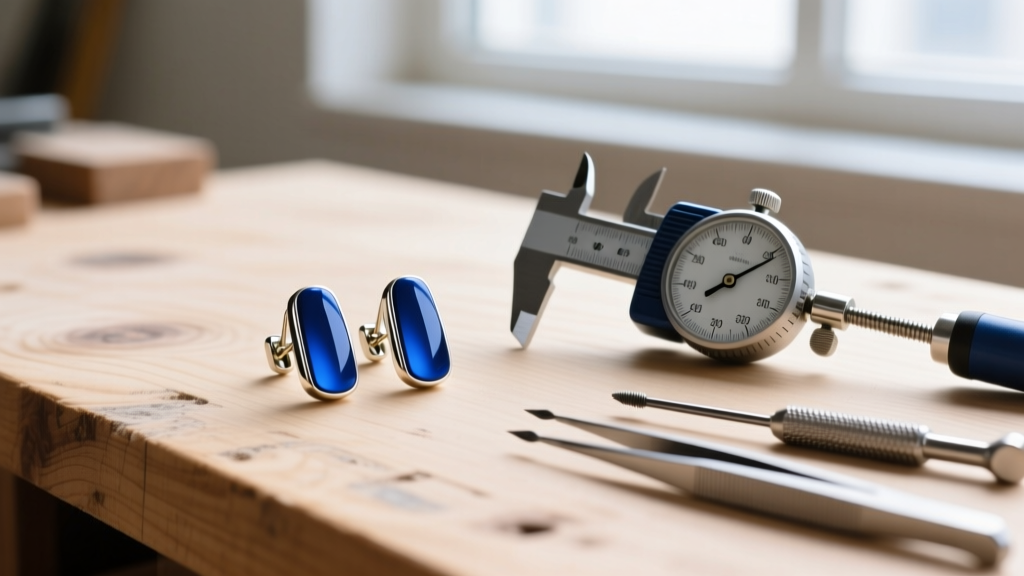
Tension Calibration and Maintenance
Even the finest blue clip on earrings require periodic maintenance. Over time, the repeated opening and closing of a spring-clip will cause metal fatigue, leading to a loss of tension. If your clip-ons begin to slip, you can perform a careful recalibration.
For paddle-backs, place the earring on a soft jeweler's mat. Using your thumbs, apply gentle, even pressure to the outside of the paddle, bending it inward by no more than 1 to 2 millimeters. Test the tension on your earlobe. If it is too tight, gently bend it back. Warning: Never bend the hinge itself, as this will snap the solder joint.
For screw-backs, maintenance involves cleaning the threaded post. Accumulated skin oils and cosmetic residues can strip the micro-threads. Use a soft-bristled brush dipped in isopropyl alcohol to clean the screw mechanism, then apply a microscopic drop of synthetic watch oil to the threads to ensure smooth, precise calibration without cross-threading. By understanding the intersection of material weight, clamping physics, and anatomical variance, you can curate a collection of non-pierced blue earrings that are as comfortable as they are visually striking.


