Value Assessment: Gold Nugget Earrings on Ear Cost & Style
Discover the true value of gold nugget earrings on ear piercings. We break down 2026 pricing, karat weights, and natural vs. cast budgets.

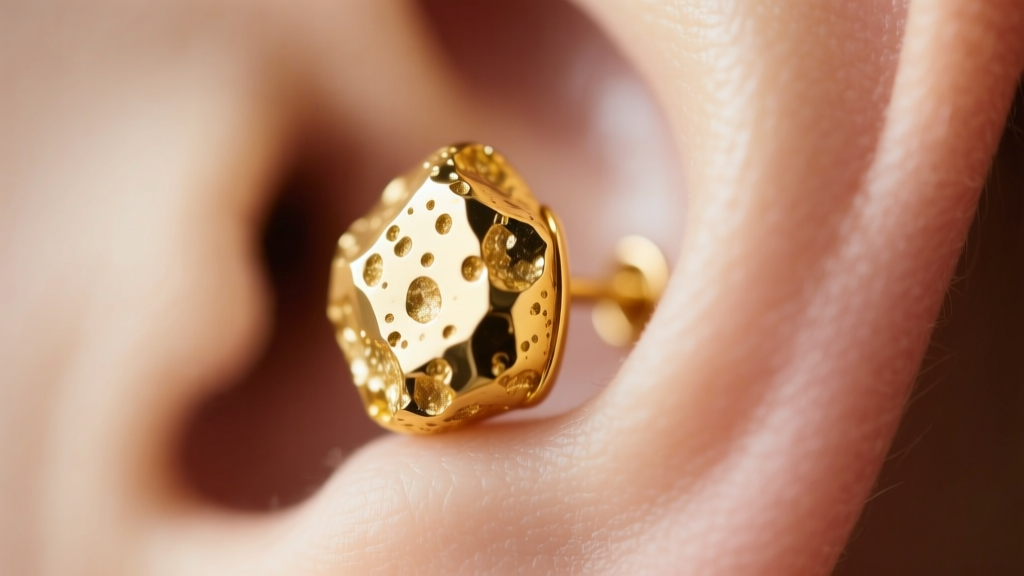
The Economics of Raw Gold Jewelry in 2026
The raw, organic aesthetic of unpolished gold has cemented itself as a staple in modern jewelry, moving far beyond a fleeting trend. But when you start shopping for these unique pieces, the pricing can feel entirely arbitrary. Why does one textured stud cost $300 while a seemingly identical piece commands $850? Evaluating the true cost of gold nugget earrings on ear lobe piercings requires looking past the surface and understanding the metallurgy, sourcing, and labor involved.
Unlike mass-produced geometric studs or cast hoops, nugget jewelry occupies a gray area between fine jewelry and natural specimen collecting. In 2026, with precious metal markets experiencing sustained volatility, understanding the difference between melt value, artisan premiums, and natural scarcity is critical for any buyer. This guide breaks down exactly where your budget goes when you invest in raw gold ear adornments, ensuring you pay for actual value rather than inflated brand markups.
Natural Placer vs. Cast: Where Your Budget Actually Goes
The single biggest factor dictating the price of nugget earrings is their origin. Not all "nuggets" are created equal, and the market is flooded with clever imitations designed to mimic the raw look at a fraction of the cost.
Natural Placer Gold
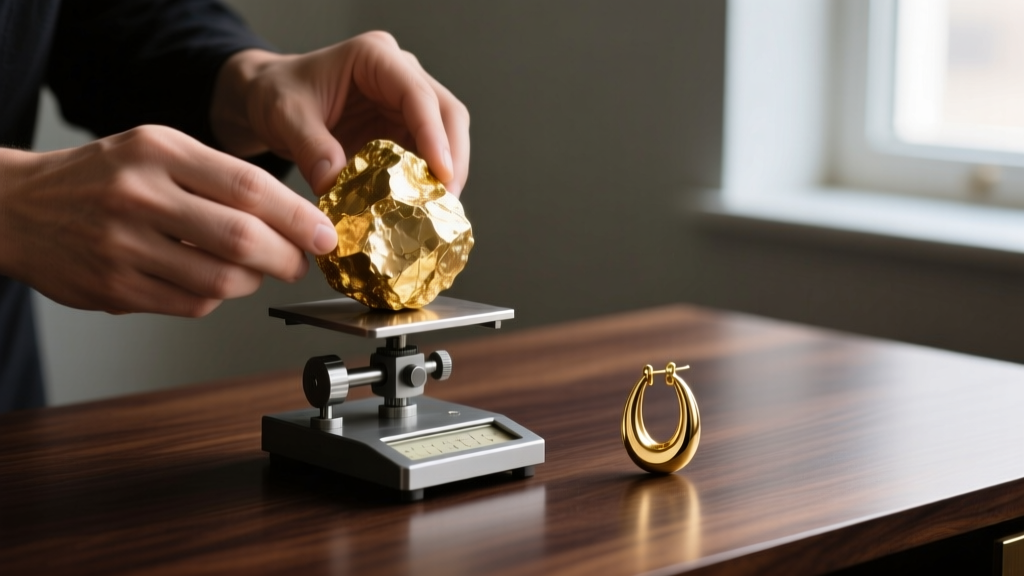
Placer gold is naturally occurring gold that has been eroded from its original vein and deposited in riverbeds or streams. These nuggets are formed by nature, meaning they feature authentic pitting, organic folds, and occasionally inclusions of quartz or silver (electrum). Because they are rare and cannot be manufactured, natural placer nuggets carry a significant "specimen premium." Jewelers must carefully hand-select, clean, and mount them without destroying their natural topology. Expect to pay a 60% to 150% premium over the raw melt value of the gold for genuine placer pieces.
Cast "Nugget" Earrings
Conversely, the vast majority of budget-friendly nugget earrings on the market are cast. A jeweler or manufacturer will carve a wax model (or use 3D resin printing) to mimic the bumpy, irregular shape of a natural nugget, and then use the lost-wax casting method to produce it in gold. While these still contain real gold and hold intrinsic melt value, they lack the scarcity of natural specimens. Cast pieces should be priced much closer to the daily spot price of gold plus a standard labor markup.
Karat Weight Breakdown: Purity vs. Durability
Gold purity drastically alters both the color of the metal and its structural integrity. According to the Gemological Institute of America (GIA), pure 24-karat gold is far too soft for daily wear jewelry, especially for heavy, irregular shapes that can catch on clothing. Here is how the karat weights break down for raw gold earrings:
| Karat | Purity | Color Profile | Durability | Budget Impact |
|---|---|---|---|---|
| 10K | 41.7% | Pale, slightly brassy yellow | Excellent (Highly scratch-resistant) | Lowest cost, highest durability |
| 14K | 58.3% | Warm, classic yellow | Very Good (Industry standard) | Moderate cost, best value balance |
| 18K | 75.0% | Rich, deep yellow | Good (Prone to surface scratching) | Higher cost, premium aesthetic |
| 22K | 91.6% | Intense, buttery orange-yellow | Poor (Bends and dents easily) | Highest cost, collector grade only |
Expert Tip: For natural placer nuggets, 18K to 22K is most common, as placer gold naturally occurs with high silver or copper alloying. For cast nugget earrings intended for daily wear, 14K offers the best compromise between a rich color and the structural rigidity needed to support a heavy, uneven weight distribution.
Sizing, Weight, and Piercing Health
The visual weight of gold nugget earrings on ear cartilage or standard lobes requires careful consideration of your piercing's health. Gold is exceptionally dense. A natural nugget that looks visually small can weigh significantly more than a hollow, oversized hoop.
The Gauge Dilemma
Standard earlobe piercings are typically done at 20-gauge (0.81mm) or 18-gauge (1.02mm). If you hang a 5-gram natural gold nugget from an 18-gauge wire, gravity will immediately begin to stretch the fistula. Over time, this creates the dreaded "cheese cutter effect," where the thin wire slowly migrates downward through the tissue, eventually tearing the lobe.
- Under 2.5 grams: Safe for standard 20G or 18G friction or screw-back posts.
- 2.5 to 4.5 grams: Requires an 16-gauge (1.29mm) or 14-gauge (1.6mm) post, ideally with a secure screw-back or a locking ear wire to prevent loss.
- Over 5.0 grams: Best suited for stretched lobes (10G to 6G) or worn via a heavy-duty French hook that distributes weight across the lower curve of the fistula rather than pulling directly downward.
"Never compromise on the hardware of a heavy raw gold piece. A $600 natural nugget mounted on a flimsy 20-gauge friction back is a lost earring waiting to happen. Always upgrade to custom thick-posts or locking mechanisms."
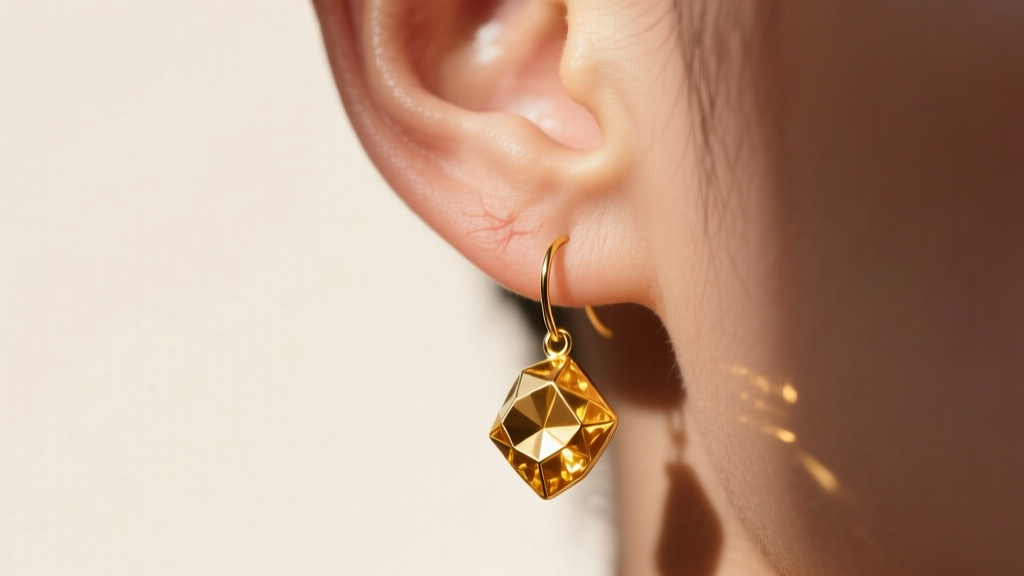
2026 Market Pricing: What to Expect at the Jeweler
To assess value, you must understand the math your jeweler is using. According to live market tracking from Kitco, the spot price of gold continues to dictate the baseline for all precious metal jewelry. Let us break down the expected retail pricing for a standard pair of 3-gram nugget earrings (6 grams total weight) in 2026.
The Pricing Formula
1. Calculate Melt Value: If 24K gold is trading at roughly $85 per gram, 14K gold (58.3% pure) has a melt value of approximately $49.50 per gram. A 6-gram pair has a raw material cost of $297.
2. Add Labor and Fabrication: For cast nuggets, the jeweler adds a fabrication fee for the mold, casting, polishing the post, and setting the hardware. This typically adds $120 to $180.
3. Add Natural Premium (If Applicable): If the nuggets are genuine placer gold, the jeweler applies a specimen multiplier. Sourcing matched pairs of natural nuggets is incredibly difficult, often requiring a 100% to 200% markup on the gold weight.
Expected Retail Ranges (6-Gram Total Weight Pair)
- 10K Cast Nuggets: $250 - $320 (Highly accessible, mass-produced)
- 14K Cast Nuggets: $400 - $550 (Standard boutique pricing)
- 18K Natural Placer Nuggets: $850 - $1,200 (Artisan/Collector pricing)
- 22K Natural Placer Nuggets: $1,300 - $1,800+ (High-karat specimen pricing)
Final Verdict: Maximizing Your Investment
When budgeting for raw gold jewelry, you are ultimately deciding between aesthetic uniformity and natural rarity. If your primary goal is to achieve the raw, textured look while strictly adhering to a budget tied to the daily spot price of gold, opt for 14K cast nuggets from a reputable independent caster. You will get the exact karat weight and organic style without paying the specimen tax.
However, if you view your jewelry as a wearable asset and a conversation piece, investing in natural placer gold is the superior choice. The value of natural nuggets is decoupled from pure melt markets; they appreciate based on scarcity and artisan craftsmanship. Whichever route you choose, always verify the karat stamp, insist on appropriate gauge thicknesses for the weight, and ensure the mounting hardware is engineered to keep your investment securely on your ear for decades to come.


