Expert Care and Cleaning Tips for Dolphin Hoop Earrings
Learn how to safely clean, polish, and store your dolphin hoop earrings. Expert tips to prevent tarnish, protect delicate fins, and maintain shine.

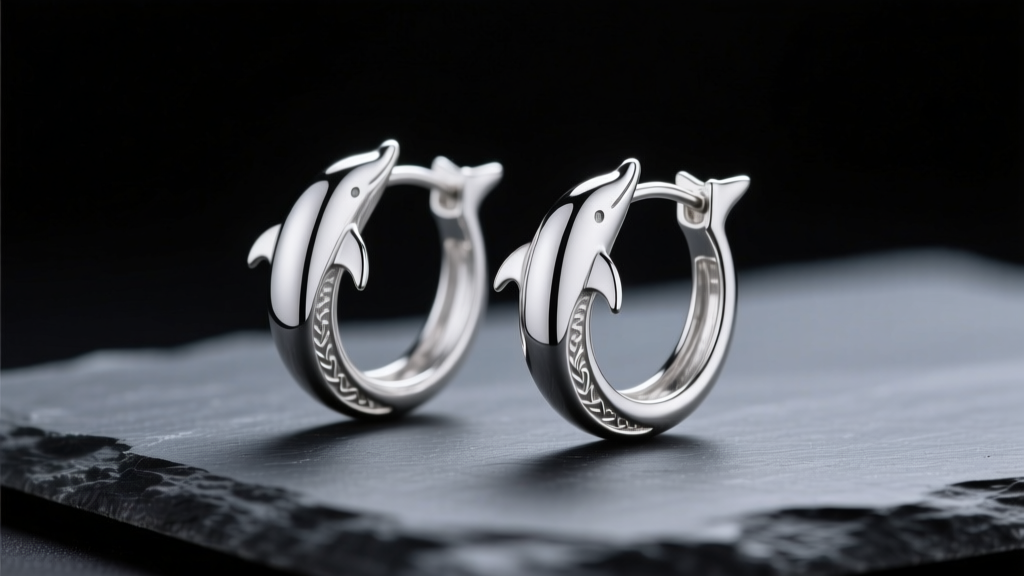
Dolphin hoop earrings are a beloved staple in marine-inspired jewelry collections, combining the playful elegance of ocean life with the timeless versatility of a hoop silhouette. However, the intricate anatomy of a dolphin motif—complete with dorsal fins, tail flukes, and delicate facial features—creates unique maintenance challenges. Standard wiping techniques simply cannot reach the microscopic crevices where sebum, lotion, and environmental pollutants accumulate. As of 2026, with the rise of highly detailed 3D-cast and micro-pave jewelry, understanding the specific metallurgical and structural needs of your earrings is more critical than ever.
Whether your hoops are crafted from oxidized 925 sterling silver, luxurious gold vermeil, or hypoallergenic implant-grade titanium, improper cleaning can strip finishes, loosen gemstone accents, or warp the hoop's tension. This comprehensive guide provides actionable, expert-level protocols to maintain the structural integrity and brilliant shine of your dolphin hoops.
The Unique Maintenance Challenges of Dolphin Hoops
Unlike a standard smooth-surface tube hoop, a dolphin hoop features severe topographical variations. The blowhole, pectoral fins, and the curve where the dolphin's snout meets the clasp are prime traps for dead skin cells and cosmetic residues. Over time, this organic buildup creates an acidic micro-environment that accelerates metal oxidation and dulls the jewelry's luster.
Furthermore, many modern dolphin hoops feature micro-pave cubic zirconia or sapphire accents used to represent the dolphin's eye or water splashes. These tiny stones are often held in place by microscopic prongs or jewelry epoxy. Aggressive polishing or ultrasonic cavitation can easily dislodge these stones, turning a beautiful piece of marine art into a damaged accessory. According to the Gemological Institute of America (GIA), gentle, targeted cleaning is always the safest approach for intricate, stone-accented motifs.
Material-Specific Cleaning Protocols
The first rule of jewelry maintenance is identifying your base metal and finish. A cleaning method that restores sterling silver will instantly ruin gold vermeil. Here is how to approach the three most common materials used for dolphin hoops.
925 Sterling Silver and Oxidation
Sterling silver is an alloy containing 92.5% pure silver and 7.5% copper. It is the copper that reacts with hydrogen sulfide in the air to create silver sulfide—the dark tarnish that plagues unworn jewelry. For solid sterling silver dolphin hoops, you can use a specialized silver polishing cloth (impregnated with jeweler's rouge) on the smooth parts of the hoop. However, never use liquid silver dips (thiourea-based chemicals), as they will strip away intentional antiquing or oxidation that jewelers use to highlight the dolphin's anatomical details.
Gold Vermeil and Plating Preservation
Gold vermeil consists of a thick layer of gold (minimum 2.5 microns) bonded to a sterling silver base. The Jewelers of America explicitly warns against using abrasive polishing cloths or stiff brushes on vermeil, as this will wear through the gold layer and expose the silver beneath. Vermeil dolphin hoops must be cleaned using only the mildest surfactants and ultra-soft brushes to preserve the micron-th plating.
Implant-Grade Titanium and Surgical Steel
Titanium (specifically ASTM F136 implant-grade) is highly inert and virtually immune to tarnish. If your dolphin hoops are titanium, maintenance is less about chemical reactions and more about removing physical oils and hard water spots. Titanium can withstand slightly more vigorous brushing, but care must still be taken around the hoop's hinge and clasp mechanisms.
Step-by-Step Deep Cleaning Routine
For a safe, deep clean that reaches the dorsal fins and snout crevices without damaging the metal or accents, follow this 5-step protocol:
- Prepare the Solution: Mix three drops of mild, phosphate-free dish soap (like Dawn) into a bowl of lukewarm distilled water. Avoid tap water, as chlorine and calcium can leave microscopic hard-water spots on the metal.
- The Soak: Submerge the dolphin hoops for exactly 5 to 10 minutes. This softens trapped sebum and cosmetic waxes without compromising any jewelry adhesives.
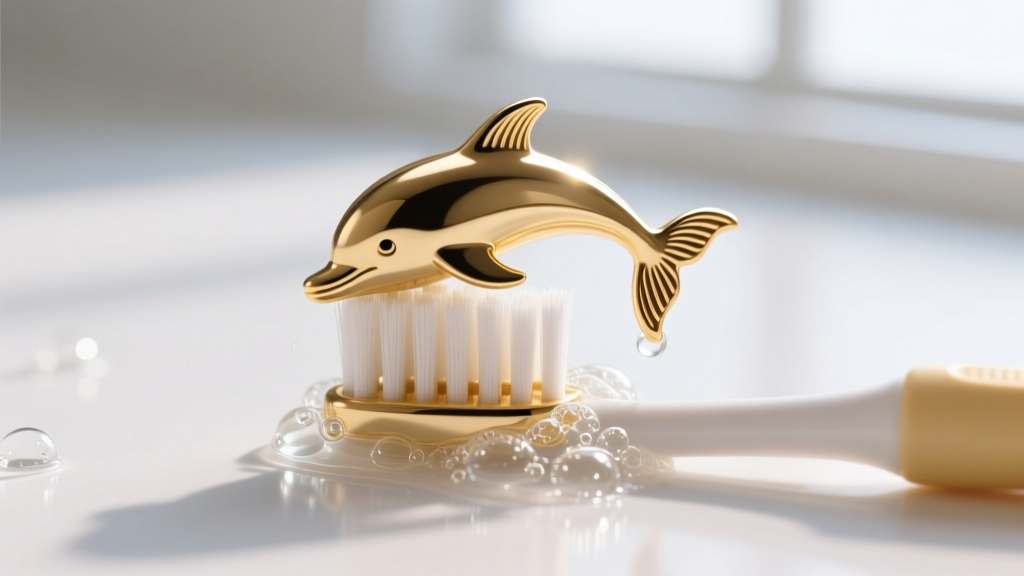
- Targeted Agitation: Using an extra-soft baby toothbrush, gently brush along the grain of the metal. Pay special attention to the underside of the pectoral fins and the clasp joint. Use a wooden toothpick to gently dislodge stubborn debris from the blowhole or eye settings—never use metal needles, which will scratch the finish.
- The Rinse: Rinse thoroughly under a gentle stream of lukewarm distilled water to remove all soap residue.
- Drying: Pat dry with a clean, lint-free microfiber cloth. Use a hair dryer on the 'cool' setting to blow moisture out of the hinge mechanism and clasp gaps, preventing internal rust on steel components.
Structural Integrity: Protecting Clasps and Shapes
Dolphin hoops are structurally vulnerable. The wire gauge used for the post and the hoop body typically ranges from 18-gauge (1.0mm) to 20-gauge (0.8mm). Because the dolphin shape adds weight and uneven tension to the hoop, bending or warping is a common failure mode. Below is a troubleshooting matrix for common structural issues.
| Failure Mode | Primary Cause | Prevention & Solution |
|---|---|---|
| Warped Hoop Silhouette | Sleeping in the earrings or squeezing them into tight jewelry boxes. | Always remove before bed. Gently reshape warped hoops by rolling them around a smooth, wooden dowel of the matching diameter. |
| Loose Hinge / Clicker | Repeatedly forcing the latch-back wire or clicking the hinge open at an angle. | Open clickers by pushing the segment up and away, not sideways. If loose, a jeweler can tighten the tension pin. |
| Bent Ear Post / Wire | Pulling the earring through the piercing at an awkward angle or snagging on sweaters. | Guide the hoop through the lobe slowly. Do not attempt to bend a kinked 18k gold wire back into place; it will snap due to work-hardening. |
| Snagged Dorsal Fin | The fin catching on hair or knit fabrics, pulling the metal outward. | Put dolphin hoops on after styling hair and putting on clothing. Have a jeweler file down any sharp casting seams. |
Proper Storage to Prevent Tarnish and Warping
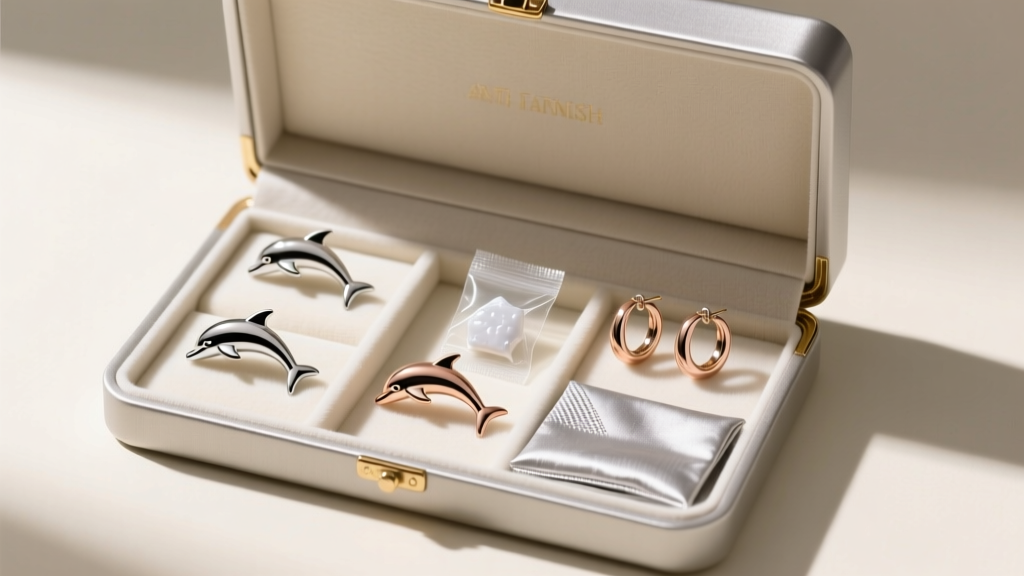
How you store your dolphin hoops is just as important as how you clean them. The Silver Institute notes that humidity and airborne sulfur compounds are the primary catalysts for tarnish. Storing your hoops in a standard open-air jewelry dish guarantees oxidation.
Instead, utilize individual anti-tarnish zip-lock bags made from polyethylene, which do not emit the sulfur gases found in some cheap plastics. For an added layer of protection, place a 3M anti-tarnish strip or a piece of Pacific Silvercloth inside the bag. These materials actively absorb airborne pollutants before they can react with the copper alloy in your sterling silver. Always store the hoops flat and unclasped to relieve tension on the hinge mechanism, ensuring the dolphin maintains its perfect circular silhouette.
What to Avoid: The "Never Do This" List
To preserve the intricate details and metallurgical integrity of your earrings, strictly avoid the following common mistakes:
- Ultrasonic Cleaners: The high-frequency cavitation bubbles generated by ultrasonic machines will easily shake loose micro-pave stones set in the dolphin's eyes or tail, and will strip gold vermeil plating down to the bare silver.
- Tissue Paper and Cotton Swabs: These materials leave behind microscopic lint fibers that become hopelessly tangled in the crevices of the dolphin's fins and the hoop's clasp joint.
- Chemical Exposure: Hairspray, perfume, and chlorine from swimming pools create a corrosive film. Always apply cosmetics and fragrances at least 10 minutes before putting on your earrings.
- Baking Soda Pastes: While a popular DIY internet hack, baking soda is highly abrasive (Mohs hardness of 2.5) and will leave a network of micro-scratches across high-polish gold and silver surfaces, permanently dulling the reflection.
"The longevity of figurative jewelry like dolphin hoops relies entirely on respecting the micro-architecture of the casting. Treat the fins and clasp with the same delicacy you would afford a high-end mechanical watch."
By adhering to these specialized cleaning and storage protocols, your dolphin hoop earrings will retain their oceanic brilliance and structural perfection for decades, remaining a standout piece in your curated jewelry wardrobe.


