Ultimate Care Guide for 1 2 Carat Diamond Stud Earrings
Learn expert cleaning and maintenance tips for 1/2 carat diamond stud earrings. Protect your investment with our deep-dive care guide and prong framework.

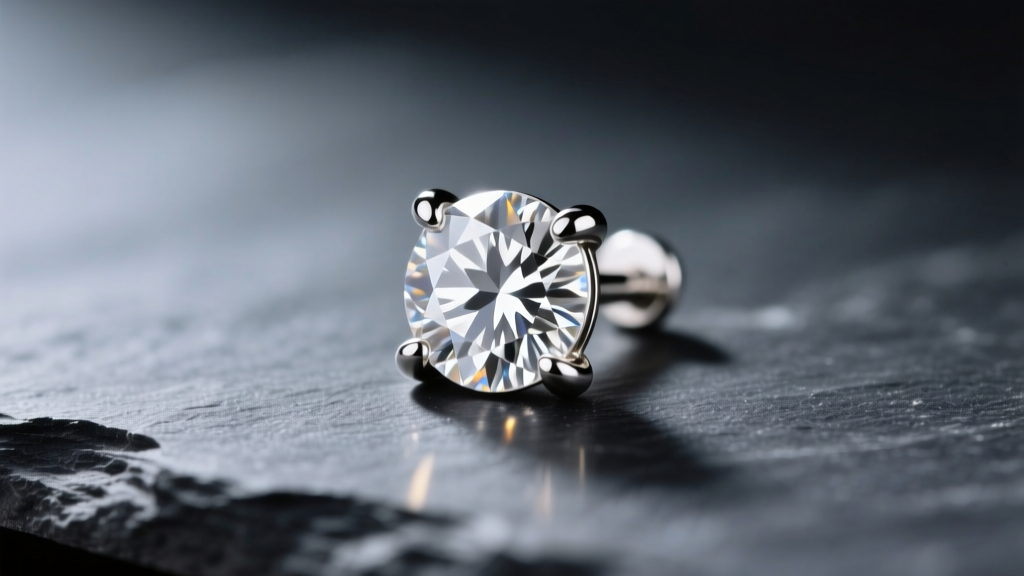
The Anatomy of a 1/2 Carat Diamond Stud: Why Care Matters
When consumers search for 1 2 carat diamond stud earrings, they are almost always referring to the classic 0.50 Carat Total Weight (CTW) pair—meaning each ear wears a 0.25 carat stone. A standard 0.25ct round brilliant diamond measures approximately 4.1mm in diameter and weighs about 0.05 grams. While diamonds rank as a 10 on the Mohs hardness scale, making them highly resistant to scratching, they possess distinct cleavage planes. A sharp impact directly to the girdle (the outer edge of the stone) can cause chipping or fracturing, especially in lightweight basket settings designed to maximize light return.
As we navigate the jewelry market in 2026, the surge in lab-grown diamond availability means more buyers are acquiring higher-clarity stones (VS1/VVS2) in this weight class. Whether your pair is earth-mined or lab-created, the physical maintenance of the precious metal setting and the accumulation of daily oils remain identical. Proper care ensures the stones maintain their optical brilliance and, more importantly, stay securely attached to your earlobes.
Daily Wear and Tear: Failure Modes of Prong Settings
The most common point of failure for diamond studs is not the stone itself, but the prongs holding it. A 0.50 CTW pair is typically set in either a 4-prong or 6-prong martini or basket setting. The metal alloy you choose dictates the wear pattern:
- Platinum (950 Grade): Platinum is dense and malleable. When a platinum prong is struck, it tends to bend or displace rather than snap. However, it can develop a patina over time and requires occasional repolishing.
- 14k White Gold: Harder than platinum due to its alloy mix (usually nickel or palladium), 14k gold resists bending but is more brittle. If a prong catches on a sweater and is pulled, it is more likely to snap or thin out dangerously.
- 18k White Gold: Contains more pure gold, making it softer and more prone to prong wear. It also requires rhodium plating to maintain its bright white color, which wears away over 12 to 18 months of daily use.
Furthermore, the post gauge plays a critical structural role. Standard earring posts are either 20-gauge (0.8mm) or 18-gauge (1.0mm). For a 4.1mm diamond, an 18-gauge post is highly recommended. A thinner 20-gauge post can easily bend during insertion or removal, which transfers torque directly to the basket setting, gradually loosening the prongs over time.
The Professional Cleaning Framework
While at-home cleaning is essential for maintaining sparkle, professional cleaning addresses the microscopic debris that accumulates between the diamond's pavilion and the metal basket. According to the Gemological Institute of America (GIA), professional jewelers utilize specialized equipment that consumers should approach with caution.
| Cleaning Method | Mechanism | Risk Level for 1/2 CTW Studs | Recommended Frequency |
|---|---|---|---|
| Ultrasonic Cleaner | High-frequency sound waves create microscopic bubbles that implode, blasting away dirt. | Medium. Can shake loose stones if prongs are already worn or if the diamond has fracture fillings. | Every 6 months (after prong check) |
| Steam Cleaner | High-pressure, high-temperature steam blows out oils and lotions from under the girdle. | Low. Safe for all natural and lab-grown diamonds in secure settings. | Every 3-6 months |
| Ionic Cleaner | Uses mild electrical currents and a cleaning solution to reduce surface tension. | Very Low. Excellent for dissolving cosmetic buildup without mechanical vibration. | Monthly |
At-Home Maintenance: The Ammonia-Free Soak Method
Many commercial jewelry cleaners rely on ammonia to cut through grease. While ammonia is generally safe for untreated diamonds, it can degrade the rhodium plating on white gold settings faster and is strictly prohibited if your earrings feature any secondary accent stones like pearls or emeralds. For routine maintenance, a gentle, ammonia-free approach is superior.
Step-by-Step Cleaning Routine
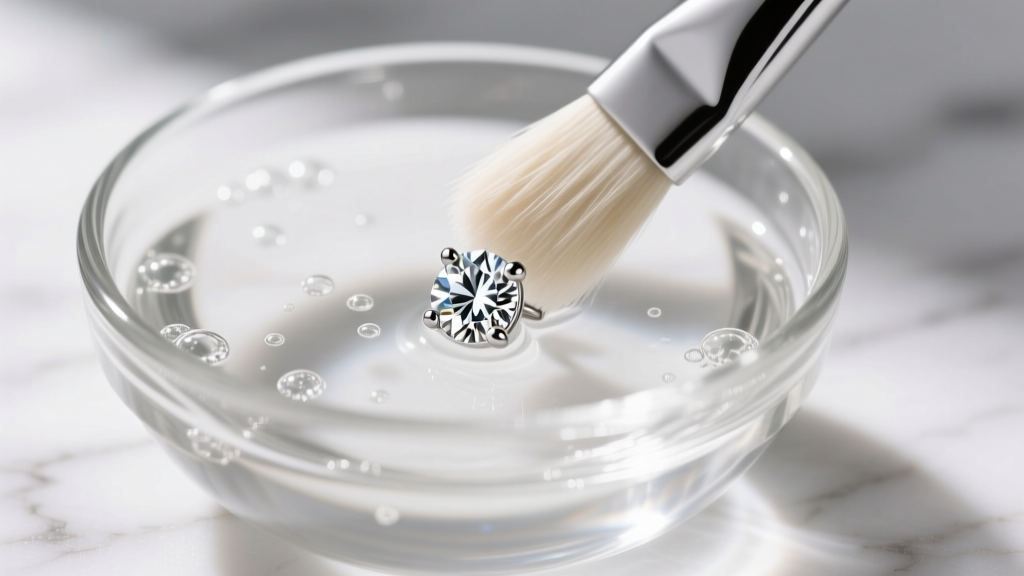
- Preparation: Fill a small glass bowl with warm (not hot) water and add three drops of a mild, lotion-free dish soap (like original Dawn). Avoid soaps with added moisturizers, which leave a cloudy film on the diamond.
- The Soak: Submerge the earrings for 15 to 20 minutes. This softens hardened sebum, dead skin cells, and cosmetic residues trapped in the setting.
- The Agitation: Using a dedicated, ultra-soft baby toothbrush, gently brush the underside of the diamond (the pavilion). This is where 90% of light-blocking grime accumulates. Never use a standard adult toothbrush, as the bristles are too stiff and can scratch the gold alloy.
- The Rinse: Rinse the studs under a gentle stream of lukewarm water. Critical: Always place a mesh strainer over the drain before rinsing to prevent catastrophic loss.
- Drying: Pat dry with a lint-free microfiber cloth. Avoid paper towels, as the wood pulp fibers can snag on microscopic burrs in the metal setting.
Securing the Backs: Friction, Screw, and La Pousette Mechanics
A 0.50 CTW diamond stud pair represents a significant financial investment. In 2026, a high-quality lab-grown pair (F-G color, VS clarity) ranges from $400 to $800, while natural earth-mined equivalents command $1,200 to $2,500. Losing a single earring due to a failed backing is a preventable tragedy. The Federal Trade Commission (FTC) Jewelry Guides emphasize the importance of secure findings in fine jewelry, yet many manufacturers still ship premium studs with cheap friction backs.
- Standard Friction Backs (Butterfly Clutches): Rely on the tension of the metal loops against the post's notch. Over time, the loops stretch out, reducing grip. These are the most common cause of lost earrings.
- Screw Backs: Feature a threaded post and a backing that screws on. While highly secure, they require perfect alignment to avoid cross-threading and damaging the post. They also take longer to put on, which frustrates some daily wearers.
- La Pousette Backs: The gold standard for diamond studs. These feature a mechanical locking mechanism with two small tabs that snap securely into a grooved post. They offer the security of a screw back with the ease of a friction back, and they do not stretch out over time.
If your 1/2 carat studs came with standard friction backs, upgrading to 18k gold or platinum La Pousette backs is a $50 to $120 investment that vastly reduces the risk of loss.
When to See a Jeweler: The 6-Month Prong Check
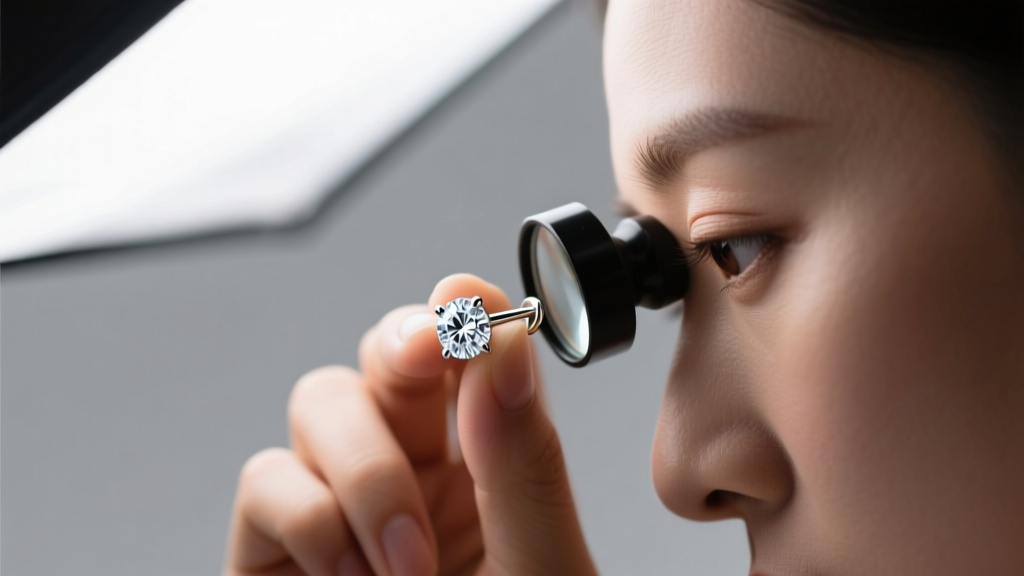
Diamonds are grease magnets. As oils build up under the stone, they not only dull the sparkle but also mask the early warning signs of prong degradation. You should take your earrings to a bench jeweler every six months for a microscopic inspection.
The jeweler will use a 10x triplet loupe to check for 'lifting' (where the prong tip no longer sits flush against the diamond's crown) and 'thinning' (where the metal has worn down due to friction against hair, pillows, and clothing). If a prong has thinned by more than 20%, the jeweler will perform a 'retip,' adding a small bead of matching solder or laser-welding new metal to the tip to secure the stone. Catching a worn prong early costs between $30 and $60; replacing a lost 0.25ct diamond costs exponentially more.


