Cat Hoop Earrings: Material Comparison & Properties
Discover the best metals for cat hoop earrings. Compare durability, weight, and enamel properties to prevent snagging, tarnishing, and lobe stretching.

The Unique Metallurgical Challenges of Feline Jewelry
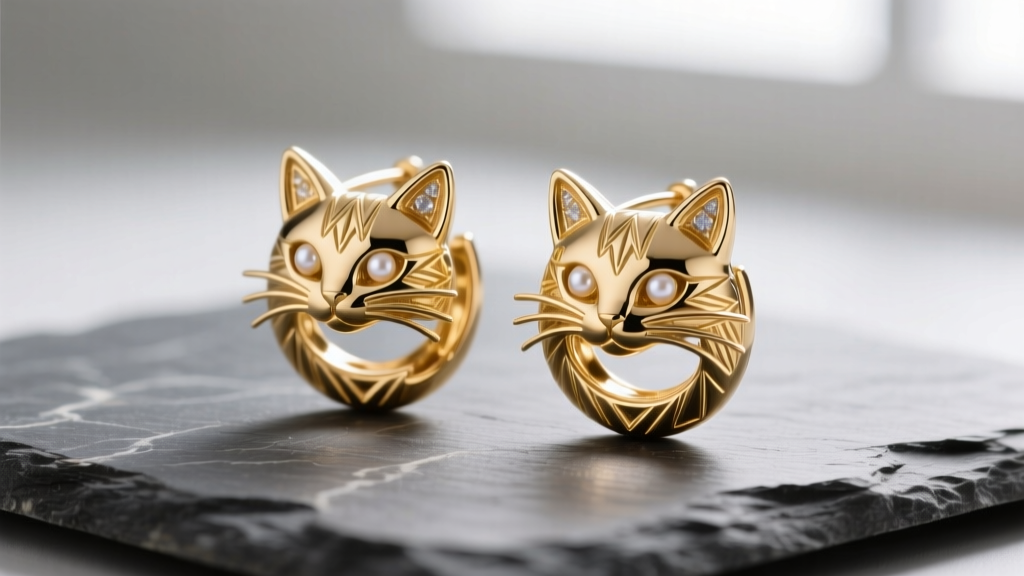
Cat hoop earrings represent a fascinating intersection of whimsical novelty and classic jewelry silhouettes. However, from a metallurgical and structural engineering perspective, feline-shaped hoops present unique challenges that standard circular hoops do not. The protruding elements inherent to cat designs—such as pointed ears, extended whiskers, and curved tails—create structural weak points prone to snagging, bending, and localized stress fractures. Furthermore, the uneven weight distribution of a 3D cat charm or silhouette alters the physics of how the earring interacts with the earlobe or cartilage.
When selecting cat hoop earrings, understanding the specific properties of the base metals, plating techniques, and accent materials is critical. A material that works flawlessly for a simple geometric huggie may fail rapidly when cast into a complex feline shape with deep undercuts and delicate extremities. This guide breaks down the exact material properties, failure modes, and maintenance requirements for cat-themed hoops in 2026.
Core Metals Compared: Durability, Weight, and Hypoallergenic Properties
The base metal dictates the longevity, weight, and biocompatibility of your earrings. Because cat hoops often feature intricate cast details, the metal's flow characteristics during manufacturing and its tensile strength during daily wear are paramount.
| Material | Grade/Standard | Pros for Cat Hoops | Cons & Failure Modes | Avg Price Range |
|---|---|---|---|---|
| Solid 14k Gold | 58.5% Au Alloy | Excellent for intricate casting; highly durable; will not tarnish or rust. | High cost; 14k yellow gold can still scratch on protruding whiskers. | $150 - $450+ |
| Sterling Silver | 925 Ag / 7.5% Cu | Affordable; captures fine details like fur texture well. | Prone to tarnishing in deep crevices; soft metal means thin ears/whiskers bend easily. | $35 - $95 |
| Titanium | ASTM F136 (Ti-6Al-4V) | Ultra-lightweight; 100% hypoallergenic; extremely strong. | Difficult to cast into complex 3D shapes; usually limited to flat laser-cut silhouettes. | $40 - $120 |
| Surgical Steel | 316L Stainless | Very inexpensive; highly resistant to corrosion and scratching. | Heavy, causing lobe fatigue; contains nickel which can trigger contact dermatitis. | $15 - $40 |
| Gold Vermeil | Sterling Silver + 2.5μm Au | Looks like solid gold; better base than brass. | Friction from hair/clothes wears the gold off the cat's nose and ear tips quickly. | $60 - $150 |
For intricate, 3D cast cat hoops, solid 14k gold remains the superior choice. The alloying metals (usually copper and silver/zinc) provide enough hardness to prevent the delicate whiskers from bending out of shape, while retaining the malleability needed for high-detail casting. Conversely, while ASTM F136 titanium is the gold standard for biocompatibility and cartilage health, its high melting point and casting difficulty mean titanium cat hoops are almost exclusively flat, 2D silhouettes or simple tube hoops with a laser-cut cat charm.
The Enamel & Plating Factor: Why Novelty Shapes Fail
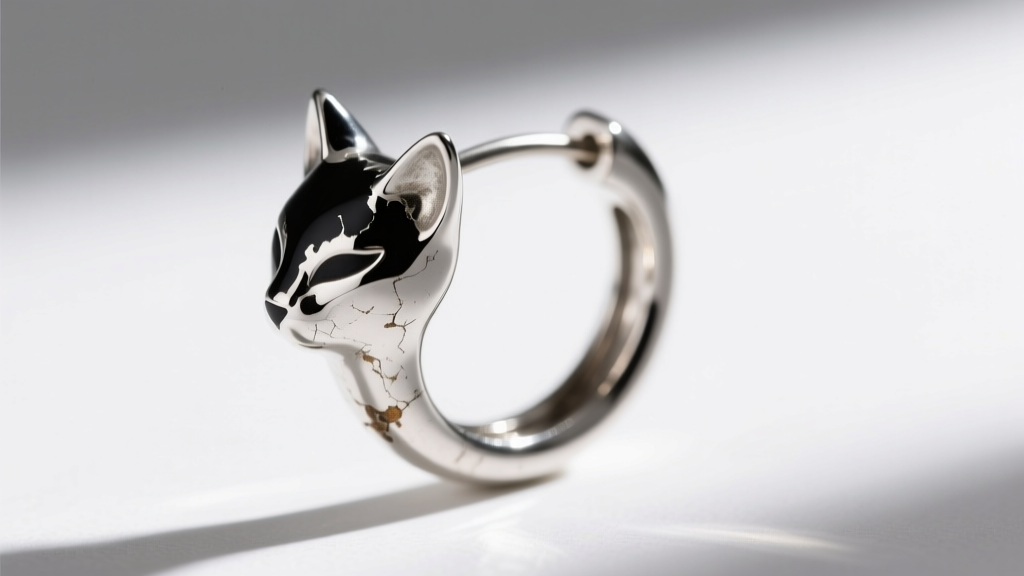
Many cat hoop earrings utilize enamel to create contrast—such as black ear tips, pink noses, or striped tabby patterns. Understanding the difference between enamel types is crucial for predicting the lifespan of the piece.
Cold Enamel (Epoxy Resin) vs. Vitreous Enamel
- Cold Enamel: This is essentially a hardened epoxy resin painted into the metal recesses. It is cheap and allows for vibrant, varied colors. However, it is highly susceptible to chipping. When a cat hoop snags on a sweater or hairbrush, the protruding ears take the brunt of the impact, causing cold enamel to pop out of its setting.
- Vitreous (Kiln-Fired) Enamel: Made from powdered glass fused to the metal at extreme temperatures. It is vastly more durable and scratch-resistant. If a manufacturer uses vitreous enamel on a cat hoop, the color will likely outlast the metal itself, though it can shatter if subjected to severe blunt force.
Plating Wear on High-Friction Zones
If you are buying gold-plated or vermeil cat hoops, be aware of localized friction zones. The nose, ear tips, and tail of a cat design naturally protrude outward, making them the first points of contact with hair, scarves, and hands. Electroplated gold (often less than 0.5 microns thick) will rub off these high points within weeks of daily wear. Always look for heavy gold vermeil (minimum 2.5 microns) or PVD (Physical Vapor Deposition) coatings, which bond at a molecular level and offer vastly superior abrasion resistance on intricate edges.
Weight Distribution & Gauge Sizing for Feline Silhouettes
The physics of a hoop earring changes dramatically when you attach a feline silhouette or a 3D charm. Standard hoops distribute weight evenly around the earlobe. Cat hoops, particularly those with a distinct charm dangling at the bottom or a heavy asymmetrical silhouette, create a "pendulum effect."
The Pendulum Effect and Lobe Stretching
When a heavy cat charm swings on a hoop, it generates kinetic energy that pulls downward and outward on the piercing fistula. Over time, this dynamic load can stretch the earlobe, leading to sagging or even tearing. To mitigate this:
- Opt for Huggies: A cat silhouette integrated directly into a tight-fitting huggie hoop eliminates the pendulum swing, keeping the weight flush against the lobe.
- Check the Charm Jump Ring: If the cat is a charm on a hoop, ensure the jump ring is soldered shut. An unsoldered ring will eventually pull apart under the repetitive swinging motion.
Gauge Sizing: Lobe vs. Cartilage
The thickness of the wire (gauge) must support the weight of the design without bending.
- Standard Lobe (20g - 18g): 20-gauge (0.81mm) wire is too thin for most metal cat silhouettes and will warp. 18-gauge (1.02mm) is the minimum recommended for structural integrity.
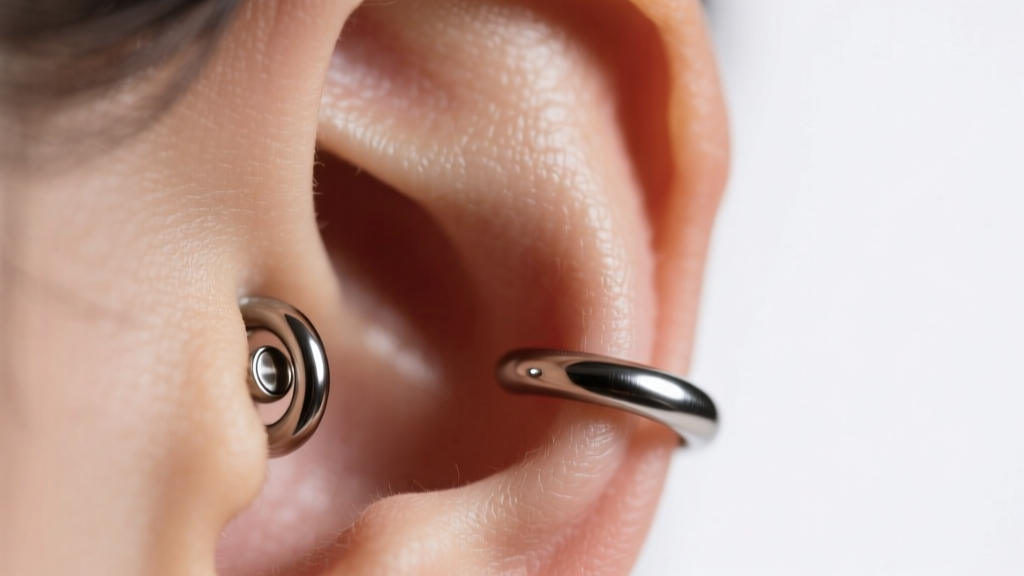
- Cartilage / Helix (16g - 14g): If wearing a cat huggie in the upper cartilage, a 16-gauge (1.29mm) wire is essential. Cartilage is less forgiving than lobe tissue, and a thicker wire prevents the "cheese-cutter effect," where a thin, heavy wire slowly migrates through the piercing channel.
Maintenance: Cleaning Crevices and Preventing Snag Damage
The intricate details that make cat hoop earrings charming—tiny fur textures, whisker grooves, and inner-ear recesses—are exactly where oils, dead skin cells, and environmental pollutants accumulate. This buildup not only dulls the metal but can also harbor bacteria, leading to localized piercing irritation.
Safe Cleaning Protocols by Material
While ultrasonic cleaners are excellent for removing grime from the deep crevices of a solid gold or platinum cat hoop, they are highly destructive to other materials. The high-frequency vibrations will shatter vitreous enamel, shake loose glued-in gemstone eyes, and accelerate the peeling of gold plating on vermeil pieces.
For everyday maintenance of mixed-material cat hoops, use a soft-bristled baby toothbrush dipped in a mild, phosphate-free dish soap and warm water. Gently agitate the bristles along the grain of the metal whiskers and inside the ear recesses. Rinse thoroughly and dry immediately with a microfiber cloth to prevent water spots, which are particularly glaring on highly polished silver surfaces.
Final Verdict: Matching Material to Lifestyle
Choosing the right cat hoop earring requires balancing your aesthetic desires with your daily activities. If you are highly active, frequently wear your hair down, or have a known metal allergy, a flat, 16-gauge ASTM F136 titanium cat huggie with a seamless clicker closure is the most pragmatic, biocompatible choice. For those seeking a luxurious, heirloom-quality piece with intricate 3D detailing and vitreous enamel accents, solid 14k gold is the only metal that will withstand the test of time without tarnishing, plating loss, or structural fatigue. Avoid surgical steel if you have sensitive skin, as the nickel content can trigger severe contact dermatitis, especially when trapped against the skin by a tight-fitting hoop design.


