Circle in Circle Earrings: 2026 Budget & Value Guide
Discover the true value of circle in circle earrings in 2026. Compare prices, materials, and lifespan to find the best budget orbit hoops.

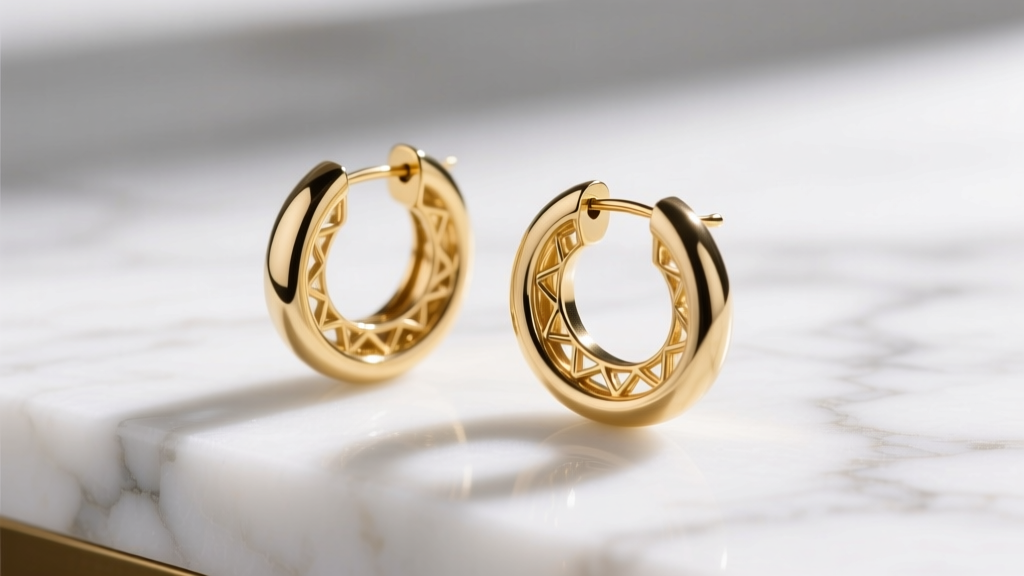
Circle in circle earrings—frequently referred to as orbit earrings, concentric hoops, or double-ring drops—have cemented their place as a staple in modern jewelry wardrobes. By nesting a smaller hoop inside a larger one, designers create a dynamic, kinetic piece that catches the light and frames the face with geometric elegance. However, as we navigate the 2026 jewelry market, the price discrepancy between seemingly identical pairs can be staggering. You might find a pair of concentric orbit hoops for $28 on a fast-fashion marketplace, while a boutique jeweler charges $450 for a nearly identical silhouette.
As a buyer, how do you separate genuine craftsmanship from overpriced costume jewelry? This comprehensive budget and value assessment breaks down the material science, structural engineering, and hidden costs of circle in circle earrings, ensuring you invest your money where it actually counts.
The Structural Anatomy of Concentric Orbit Hoops
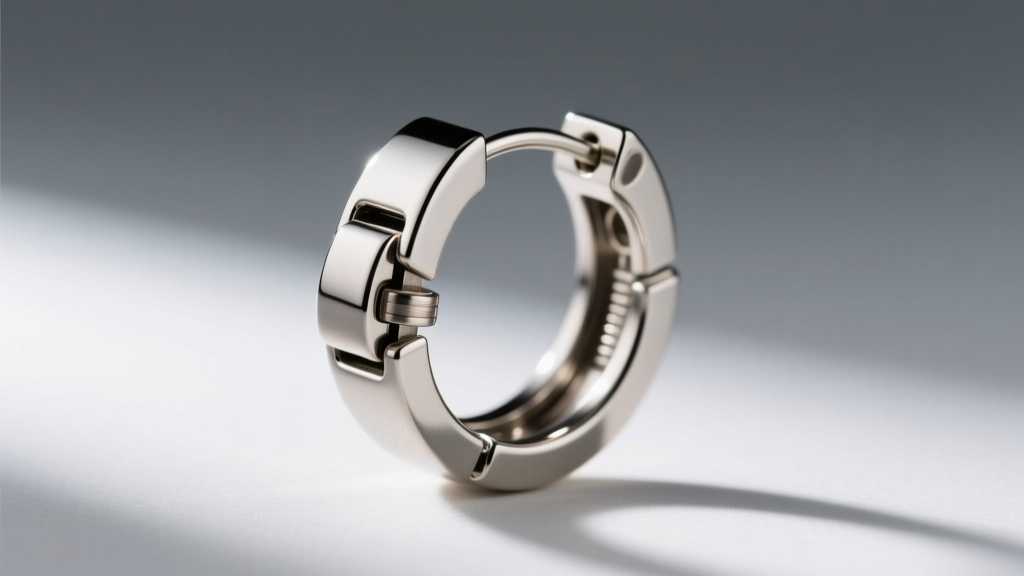
Before assessing price, you must understand the physical mechanics of the design. Unlike a standard continuous hoop, circle in circle earrings require multiple structural junctions. The inner circle must be suspended within the outer circle, which requires either horizontal soldered bars or direct fusion at the top and bottom apexes.
In budget-tier manufacturing, these junctions are often spot-soldered using low-temperature lead-free solder that can become brittle over time. When the earring is dropped or snagged on a sweater, the inner ring acts as a pendulum, placing immense shear stress on these tiny solder joints. Premium jewelers utilize laser welding technology to fuse the concentric rings, creating a joint that is as strong as the parent metal itself.
Furthermore, pay close attention to the wire gauge. The ear post that passes through your lobe should ideally be 18-gauge (1.0mm) or 20-gauge (0.8mm) for standard lobe piercings. However, the structural wire forming the circles should be significantly thicker. A high-value outer ring will use 14-gauge (1.6mm) or 12-gauge (2.0mm) solid wire, while the inner ring uses 16-gauge (1.2mm) wire to reduce weight without sacrificing rigidity.
Material Breakdown: Where Your Money Actually Goes
The primary driver of cost in orbit earrings is the base metal and the finishing process. In 2026, the market is generally segmented into three distinct value tiers.
Tier 1: Surgical Steel & Titanium (The Under $50 Budget)
If your budget is strictly under $50, your best options are 316L surgical stainless steel or ASTM F136 implant-grade titanium. Titanium is exceptionally lightweight, which is a massive advantage for large concentric hoops that might otherwise drag on the earlobe. Steel offers a brilliant, silvery polish that mimics white gold but is highly prone to scratching. At this price point, expect hollow tubing rather than solid wire. Hollow tubing keeps material costs down but will easily dent or crush if you sleep in them.
Tier 2: Gold Vermeil & Plated Brass (The $50–$120 Mid-Range)
This is the most deceptive tier in the jewelry market. You will frequently see "gold-plated" and "gold vermeil" used interchangeably, but they are vastly different. According to the Federal Trade Commission Jewelry Guides, true gold vermeil must consist of a sterling silver base coated with a minimum of 2.5 microns of gold (usually 14k or 18k). Flash-plated brass, on the other hand, may have a gold layer of less than 0.5 microns, which will wear off in a matter of weeks, leaving a green residue on your skin. Always demand proof of a sterling silver base and vermeil thickness when shopping in this bracket.
Tier 3: Solid 14k & 18k Gold (The $250+ Investment)
Solid gold circle in circle earrings are an investment in longevity. 14k gold (58.5% pure gold) is generally the superior choice for concentric hoops because the higher alloy content (mixed with copper, silver, or zinc) provides excellent tensile strength, preventing the inner rings from bending out of shape. 18k gold offers a richer, warmer yellow hue but is softer and more susceptible to warping if the hoops are exceptionally large. Expect to pay anywhere from $250 for delicate, lightweight 14k hoops to over $800 for heavy, solid-wire 18k designs.
2026 Price-to-Value Matrix
To help you contextualize your purchase, we have compiled a value assessment matrix based on current 2026 market averages for standard 25mm concentric hoop designs.
| Material Grade | Avg. Price Range | Expected Lifespan | Maintenance Cost | Value Rating |
|---|---|---|---|---|
| 316L Stainless Steel | $20 - $45 | 2 - 5 Years | $0 | High (Budget) |
| ASTM F136 Titanium | $35 - $60 | Lifetime | $0 | Excellent |
| Brass w/ Flash Plating | $40 - $80 | 3 - 6 Months | High (Replating) | Poor |
| Sterling Silver Vermeil | $75 - $130 | 1 - 3 Years | Medium | Good |
| Solid 14k Gold | $280 - $600 | Lifetime | Low (Polishing) | Excellent (Investment) |
Hidden Costs: Maintenance, Tarnish, and Clasp Failures
When calculating the true cost of ownership for circle in circle earrings, the initial price tag is only half the equation. Concentric designs inherently feature more surface area and more crevices than a simple stud or huggie, making them magnets for lotion buildup, dead skin cells, and environmental tarnish.
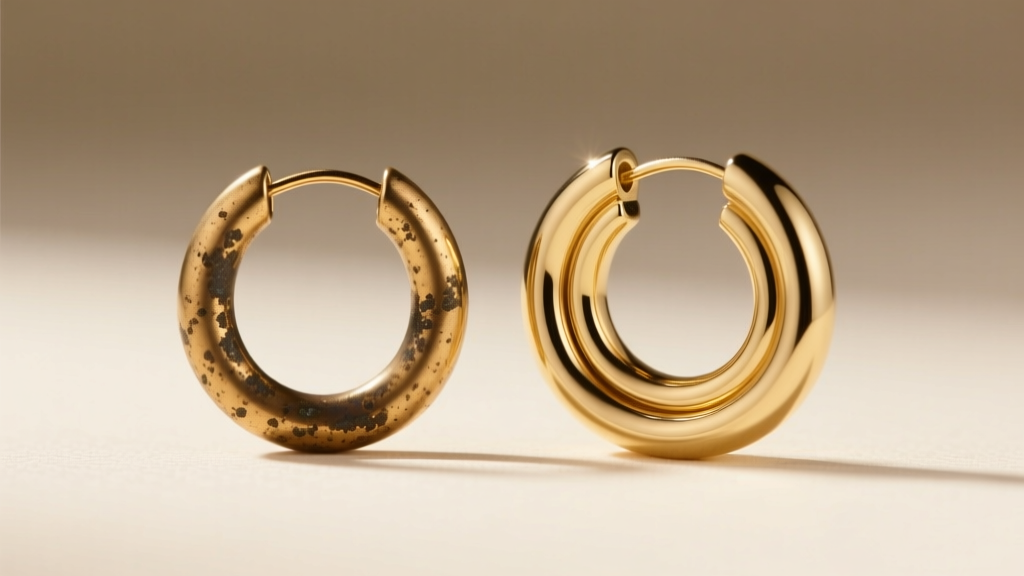
If you opt for sterling silver or silver-based vermeil, regular polishing is mandatory. The friction from a polishing cloth will gradually wear away the 2.5-micron gold layer on vermeil earrings. Once that gold is gone, you are left with a raw silver concentric hoop that will oxidize and turn black if not stored in an anti-tarnish pouch.
Additionally, consider the clasp mechanism. Budget orbit hoops often rely on thin, wire-loop latch backs that bend easily, causing the earring to fall out and get lost. Mid-to-high-tier earrings utilize hinged "clicker" mechanisms or thick, grooved post-and-clutch systems. According to Jewelers of America, replacing a broken clasp or re-tipping a worn post on a complex concentric design can cost between $35 and $85 at a local bench jeweler, completely eroding the savings you thought you got by buying a cheaper pair.
How to Spot Overpriced "Fashion" Orbit Hoops
Not all expensive earrings are high-value. Many mall-brand retailers mark up hollow, brass-based concentric hoops to the $150 range simply because of brand recognition. Here is a practical decision framework to ensure you are not being overcharged:
- The Weight Test: Solid wire feels substantial and cool to the touch. Hollow tubing feels suspiciously light and will warm up to room temperature almost instantly. If a large 30mm gold hoop feels like it weighs nothing, it is likely hollow or heavily alloyed base metal.
- The Sound Test: Gently tap the outer ring with your fingernail. Solid gold or silver produces a dense, high-pitched "ping." Hollow tubing or plated brass produces a dull, muted "clack."
- Hallmark Verification: Look for the stamps on the thickest part of the ear post or the outer ring. "925" indicates sterling silver, "14k" or "585" indicates solid 14k gold. If there is no stamp, or if it simply says "18kGP" (Gold Plated), you are looking at a base metal core that holds zero intrinsic scrap value.
- Examine the Solder Joints: Use your phone's macro lens to zoom in on where the inner circle meets the outer circle. High-quality laser welds are nearly invisible and seamless. Sloppy torch soldering will look like a tiny, lumpy bead of dull metal bridging the gap.
Final Verdict: Allocating Your Jewelry Budget
Circle in circle earrings are a statement of modern geometry, but their complex construction makes them unforgiving to poor manufacturing. If your budget is under $60, bypass gold-plated brass entirely and invest in high-polish 316L steel or implant-grade titanium; you will get a durable, hypoallergenic piece that will last for years. If you are willing to spend between $75 and $130, demand true vermeil over sterling silver, understanding that it is a medium-term fashion piece rather than an heirloom. Finally, if you are allocating $250 or more, insist on solid 14k gold with laser-welded junctions and solid wire construction. By understanding the metallurgy and mechanics behind the orbit trend, you can confidently purchase concentric hoops that offer true aesthetic and financial value.


