How to Clean Red Dangle Earrings: Expert Care Guide
Learn expert techniques to clean and maintain red dangle earrings. Discover safe methods for garnet, ruby, and enamel to prevent damage.

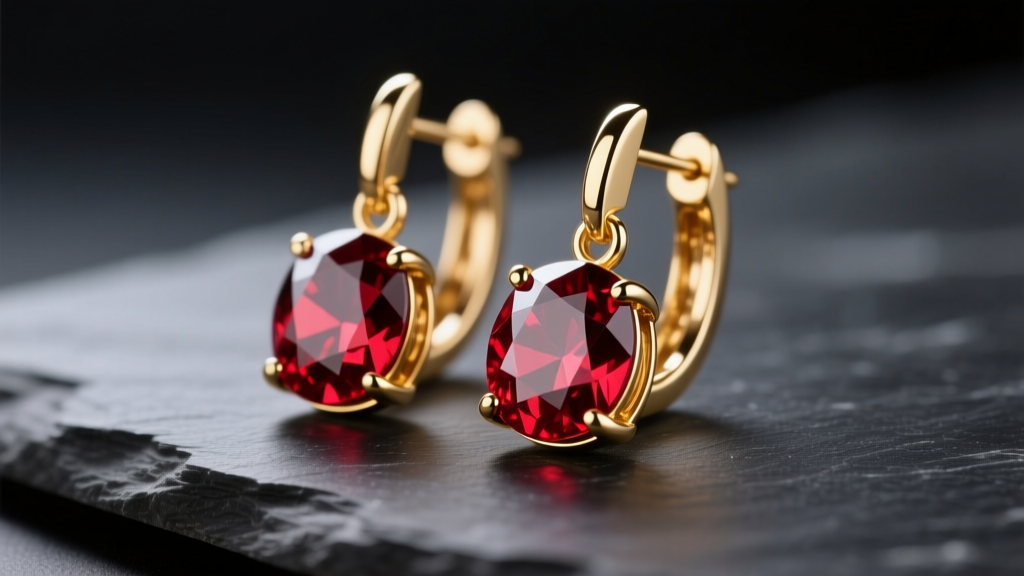
Red dangle earrings are a striking addition to any jewelry collection, offering a bold pop of color and dynamic movement that draws the eye. Whether your pair features deep crimson rubies, fiery garnets, smooth carnelian cabochons, or intricate red enamel work, the combination of vibrant color and dangling mechanics requires a highly specific approach to care and maintenance. Unlike simple studs, dangle earrings are subject to constant kinetic friction, environmental exposure, and a higher risk of mechanical failure. In this comprehensive guide, we break down the exact protocols for cleaning, preserving, and storing your red dangle earrings to ensure they remain vibrant and structurally sound for years to come.
The Mechanical Vulnerability of Dangle Earrings
Before applying any cleaning solutions, it is crucial to understand the structural anatomy of dangle earrings. The defining feature of a dangle is its movement, which relies on connecting components like jump rings, French wire hooks, or leverback hinges. This constant swinging causes micro-abrasions at the connection points. Over time, metals like sterling silver and 14k gold can experience "work-hardening," a metallurgical process where repeated stress makes the wire brittle and prone to snapping.
Furthermore, the center of gravity in a dangle earring puts continuous downward pressure on the ear wire. When cleaning your earrings, you must inspect these mechanical stress points for thinning metal or warped jump rings. A compromised jump ring will not only lead to the loss of the earring but can also create sharp edges that scratch the red gemstone or enamel during the cleaning process.
Identifying Your Red Material: A Gemological Breakdown
The term "red" encompasses a wide variety of materials, each with distinct physical properties, porosity levels, and chemical sensitivities. Applying the wrong cleaning method can permanently cloud a gemstone or melt a synthetic finish. According to the Gemological Institute of America (GIA), understanding your specific stone's Mohs hardness and fracture susceptibility is the first step in safe maintenance.
| Material | Mohs Hardness | Ultrasonic Safe? | Steam Safe? | Recommended Cleaning Agent |
|---|---|---|---|---|
| Natural Ruby | 9.0 | Yes (Usually) | Yes | Mild dish soap, warm water |
| Garnet (Pyrope/Almandine) | 6.5 - 7.5 | No | No | Lukewarm water, soft brush |
| Carnelian (Chalcedony) | 6.5 - 7.0 | No | No | Damp microfiber cloth |
| Red Enamel (Vitreous) | N/A (Glass) | No | No | Dry or barely damp cloth |
| Red Resin / Epoxy | N/A (Polymer) | No | No | Mild soap, avoid alcohol |
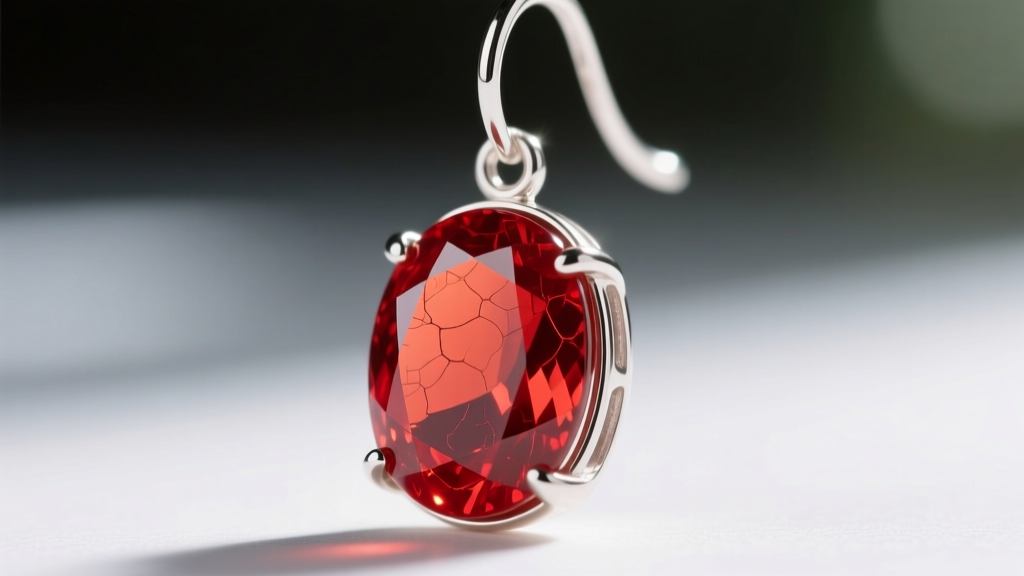
The Danger of Ultrasonic Cleaners
While ultrasonic cleaners are highly effective for diamond and platinum jewelry, they are notoriously destructive for many red stones. Garnets, for example, often contain microscopic internal inclusions. The high-frequency sound waves and heat generated by an ultrasonic bath can cause these inclusions to expand, leading to catastrophic internal fracturing. Similarly, red enamel—which is essentially fused glass powder—can develop micro-cracks or detach entirely from the metal backing when subjected to ultrasonic vibrations.
The Universal Cleaning Protocol for Red Dangles
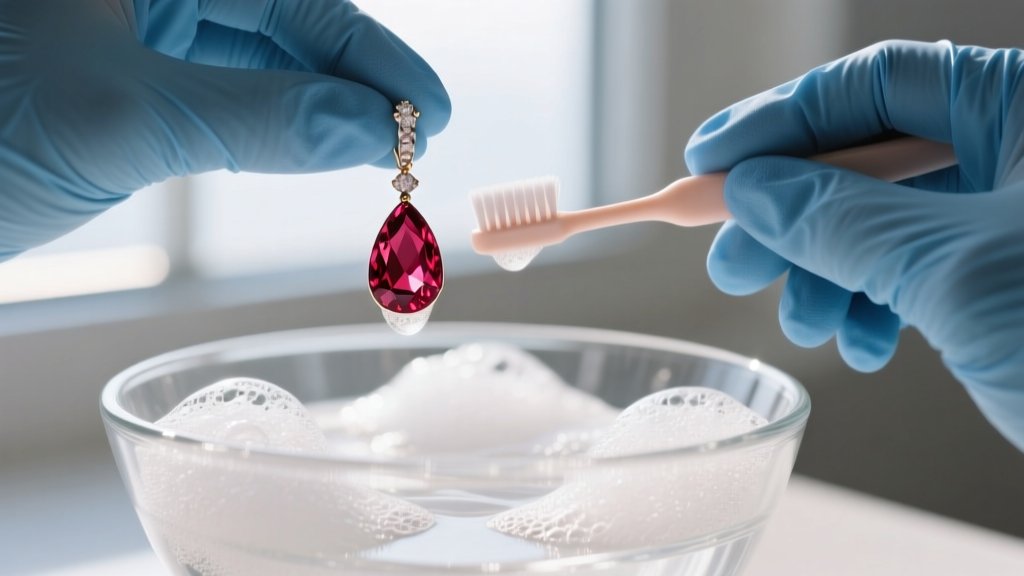
For the vast majority of red dangle earrings, a gentle, manual cleaning approach is the safest and most effective method. Follow this step-by-step protocol to remove sebum, cosmetic residue, and environmental dust without risking damage to the stone or the metalwork.
- Preparation: Line a small glass bowl with a soft microfiber cloth. This prevents the earring from cracking against the hard glass if it slips from your fingers.
- The Solution: Mix three drops of phosphate-free, mild dish soap (like Dawn or Castile soap) into a cup of lukewarm distilled water. Avoid hot water, as sudden temperature changes can cause thermal shock in garnets and carnelian.
- Soaking (With Caveats): Submerge only the metal and hard gemstone (ruby/garnet) parts for 3 to 5 minutes. Never soak porous stones, enamel, or resin.
- Agitation: Using a brand-new, ultra-soft baby toothbrush, gently sweep the bristles across the back of the gemstone and the metal settings. Use a linear motion, not circular, to avoid trapping grit against the stone and scratching it.
- Rinsing: Rinse the earrings under a gentle stream of lukewarm distilled water. Ensure the drain is securely plugged.
- Drying: Pat dry with a lint-free cloth. Use a can of compressed air or a hair dryer on the "cool" setting to blow water out of the intricate settings and hinge mechanisms.
Deep Cleaning Dangle Mechanisms and Hinges
The moving parts of dangle earrings—specifically leverback closures and articulated links—are magnets for dead skin cells, hair products, and lotion buildup. This accumulation not only looks unsightly but can cause the hinge to stiffen or the closure to fail.
To clean a leverback hinge, do not use a metal pin or needle, as this will scratch the gold or silver plating. Instead, use a wooden toothpick or an interdental brush to gently dislodge debris from the hinge crevice. Apply a microscopic drop of mineral oil to the hinge pin using a cotton swab, then open and close the mechanism several times to work the oil in. Wipe away any excess oil immediately to prevent it from attracting more dust.
Common Maintenance Mistakes to Avoid
"The most common cause of irreversible damage to colored jewelry is not physical impact, but chemical exposure from daily grooming routines."
Chemical Exposure and Cosmetics
Hairspray, perfumes, and dry shampoos contain alcohols and aerosolized polymers that coat red gemstones, dulling their refractive index. More critically, if your red dangle earrings feature resin or dyed stones, alcohol-based products can dissolve the finish or strip the dye, leaving you with a pale, patchy stone. Always adhere to the "Last On, First Off" rule: put your earrings on after your hair and makeup are completely dry, and remove them before applying any nighttime skincare products.
Polishing Treated Metals
If your red dangles are set in sterling silver, they will inevitably tarnish due to the copper content reacting with sulfur in the air. However, if the silver is rhodium-plated or features an oxidized (blackened) patina to highlight the design, using a standard silver polishing cloth will strip the finish. Always verify your metal treatment before applying abrasive polishing compounds. For standard 14k or 18k gold, a simple wash is usually sufficient; aggressive polishing will wear away the soft metal over time, thinning the prongs that hold your red stone in place.
Strategic Storage to Prevent Tangling and Tarnish
Because of their elongated shape and moving parts, red dangle earrings are highly susceptible to tangling, which can bend delicate French wires and scratch softer stones like carnelian. Never throw dangle earrings into a communal jewelry box.
Store each pair individually in a soft, anti-tarnish flannel pouch. For leverback or articulated dangles, fasten the closure before storing to prevent the hook from catching on the fabric. If your earrings feature delicate chains that connect the stud to the dangle, thread the chain through a plastic drinking straw before clasping it; this simple physical barrier prevents the chain from knotting. To combat silver tarnish, place a 3M anti-tarnish strip or a piece of Pacific Silvercloth inside the storage compartment, replacing it every six months.
When to Seek Professional Restoration
While routine cleaning can be done at home, certain issues require the expertise of a professional bench jeweler. If you notice that the jump ring connecting the dangle to the ear wire has pulled apart, do not simply squeeze it shut with pliers. A jeweler will solder the jump ring closed, ensuring it never pulls apart again. Furthermore, if your red enamel earrings develop chips or cracks, or if a garnet becomes loose within its prong setting, cease wearing them immediately and consult a specialist. Attempting to clean a loose stone will only accelerate its eventual loss. For more detailed information on professional gemstone maintenance, refer to the GIA Ruby Care and Cleaning Guide.
By understanding the specific material properties of your red gemstones and respecting the mechanical realities of dangle jewelry, you can preserve the brilliance and structural integrity of your favorite pieces for a lifetime.


