Cloud Earrings Value Guide 2026: Budget vs Luxury Picks
Are cloud earrings worth the hype in 2026? We break down pricing tiers, material grades, post gauges, and weight distribution to help you find true value.

The Anatomy of Whimsy: Why Shape Dictates Price
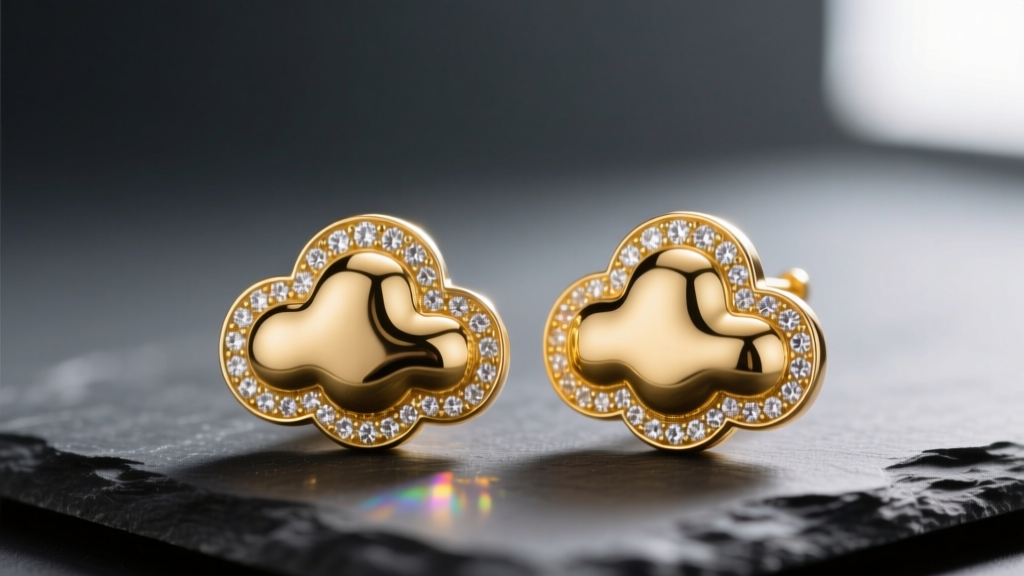
Cloud earrings have dominated the celestial jewelry trend cycle, evolving from flat, stamped charms into fully three-dimensional, puffy sculptures. But as we navigate the 2026 jewelry market, consumers are increasingly asking: are you paying for the design, or are you paying for the structural engineering required to make a cloud sit flat against your earlobe? Unlike geometric studs or simple hoops, a true 3D cloud earring requires significantly more raw material—whether that is precious metal, high-grade enamel, or jeweler's resin. This volumetric demand inherently drives up the base manufacturing cost. When assessing the budget and value of cloud earrings, you must look past the aesthetic and evaluate the metallurgy, the casting method, and the hardware that keeps the piece secure.
2026 Market Pricing Tiers: What You Actually Get
To determine if a pair of cloud earrings is priced fairly, we must segment the market into three distinct tiers. The price discrepancy between a $20 pair and a $200 pair is rarely just a brand markup; it is fundamentally tied to material longevity and skin safety.
| Market Tier | Price Range | Primary Material | Post Gauge & Metal | Expected Lifespan | Value Rating |
|---|---|---|---|---|---|
| Fast Fashion | $12 - $35 | Zinc Alloy / Brass | 22G (0.64mm) Plated | 3 - 6 Months | Poor |
| Demi-Fine | $65 - $180 | 925 Sterling Silver | 20G (0.81mm) Solid | 2 - 5 Years | Excellent |
| Fine Jewelry | $800 - $2,500+ | 14k/18k Solid Gold | 18G (1.02mm) Solid | Lifetime / Heirloom | Good (High Entry) |
For the everyday wearer, the Demi-Fine tier offers the highest return on investment. You secure a hypoallergenic post and a durable base metal without the steep premium of solid gold casting. Fast fashion cloud earrings, while visually identical in online thumbnails, frequently utilize hollow, thin-walled stampings that dent upon impact and expose the wearer to nickel alloys.
The Surface Area Problem: Vermeil vs. Solid Gold
When shopping in the demi-fine space, you will frequently encounter "gold vermeil" cloud earrings. By definition, The Assay Office and international hallmarking standards dictate that gold vermeil must feature a sterling silver base with a gold plating of at least 2.5 microns thick. However, the 3D nature of cloud earrings creates a unique wear-and-tear problem: high surface area. A puffy cloud design features dozens of micro-crevices and convex curves. When you clean your jewelry or simply run your fingers over the textured surface, friction wears away the gold layer on the high points much faster than it would on a flat disc stud. If you are buying gold-toned cloud earrings on a budget, opt for high-quality PVD (Physical Vapor Deposition) coatings over traditional vermeil, as PVD bonds at a molecular level and resists the friction-based fading that plagues puffy jewelry designs.
Hidden Costs: Weight, Gauges, and Earlobe Strain
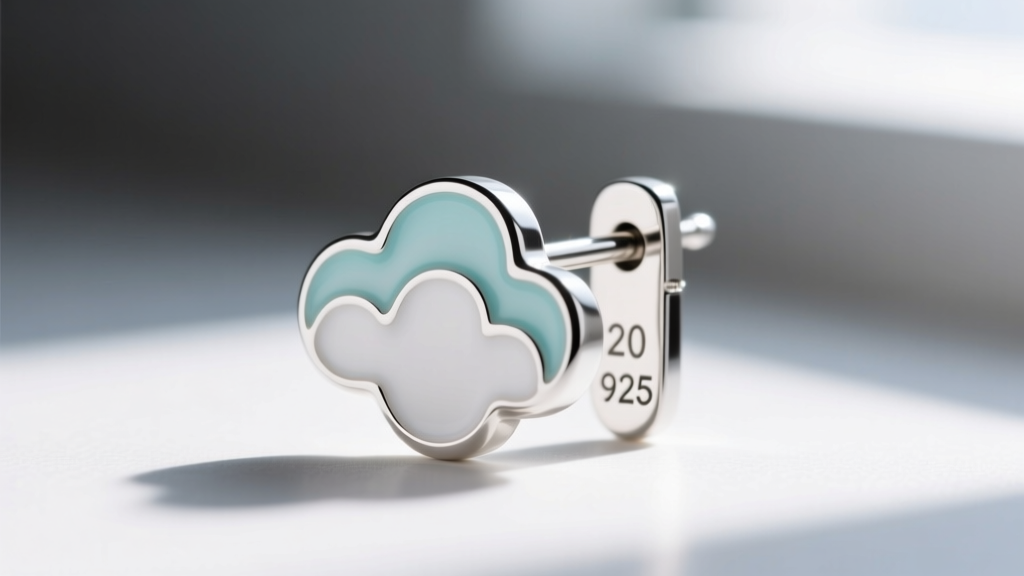
The most overlooked factor in budget jewelry assessment is structural integrity. A solid sterling silver cloud earring measuring 15mm by 12mm can easily weigh between 6 and 9 grams. If a manufacturer attempts to cut costs by soldering a thin, 22-gauge (0.64mm) post onto this heavy body, the post will inevitably bend under the weight, causing the cloud to droop awkwardly or snap off entirely.
Post Gauge Specifications for 3D Cloud Studs
- 22-Gauge (0.64mm): Too thin for 3D clouds. Only acceptable for ultra-lightweight resin or hollow acrylic pieces under 2 grams.
- 20-Gauge (0.81mm): The industry standard for demi-fine silver clouds. Adequate for weights up to 5 grams, provided the earring back is secure.
- 18-Gauge (1.02mm): Mandatory for solid gold or heavy enamel cloud designs exceeding 6 grams. Provides the tensile strength needed to prevent the post from warping.
Best Earring Backs for Voluminous Designs
Standard butterfly friction backs are often insufficient for heavy cloud earrings, as the narrow metal wings can slip down the post groove, leading to lost jewelry. For heavy cloud studs, demand the following hardware:
- La Pousette (Locking) Backs: These feature a spring-loaded mechanism that locks securely behind the earlobe, distributing the weight of the cloud evenly.
- Silicone O-Rings: A budget-friendly hack. Slipping a small silicone disc behind a standard metal clutch increases the surface area against the ear, preventing the heavy cloud from pulling the earlobe downward.
- Screw-Backs: Ideal for cartilage piercings where cloud cuffs or studs are worn, ensuring the piece cannot be snagged and pulled out by hair or clothing.
Health and Allergies: The Nickel Trap in Cheap Alloys
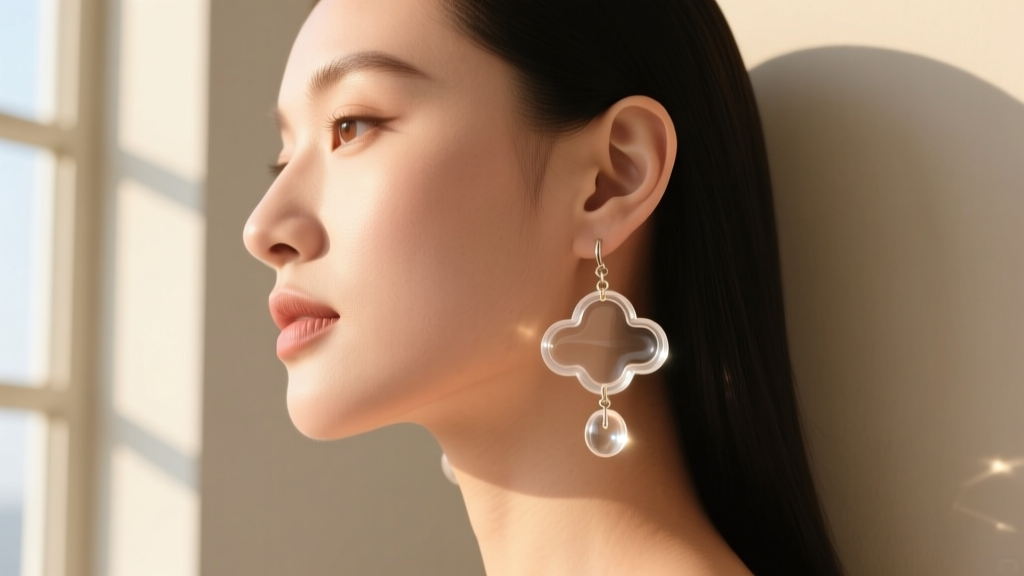
Budget cloud earrings are notorious for triggering contact dermatitis. Because cloud shapes require complex casting molds, cheap manufacturers often use zinc-nickel alloys to ensure the molten metal flows into every crevice of the mold. According to the American Academy of Dermatology, nickel allergy is one of the most common causes of allergic contact dermatitis, and the earlobe is highly susceptible due to the prolonged exposure and micro-abrasions caused by heavy jewelry. When assessing value, a $15 pair of cloud earrings that causes an infection and requires medical treatment is ultimately a poor financial decision. Always verify that the post itself—not just the cloud body—is crafted from implant-grade titanium (ASTM F136) or solid 925 sterling silver.
Brand Value Assessment: Who is Overcharging in 2026?
In the current market, you will find "puffy" or "inflated" cloud designs heavily marked up by trendy Instagram-native brands. These brands often charge $120 to $150 for 18k gold-plated brass cloud earrings. From a strict value perspective, this is a severe overcharge. Gold-plated brass has zero intrinsic melt value and cannot be polished or repaired once the plating wears through the high-friction curves of the cloud shape. Conversely, heritage demi-fine brands and independent jewelers utilizing lost-wax casting in solid 925 silver offer the same visual volume for $60 to $90, with the added benefit of being fully re-polishable and recyclable.
Final Verdict: Maximizing Your Investment
Cloud earrings are a joyful, expressive addition to any jewelry wardrobe, but their 3D geometry demands a higher standard of manufacturing than flat alternatives. To secure the best value in 2026, bypass the fast-fashion alloy tier entirely. Target the $70 to $120 price point, insisting on solid 925 sterling silver or PVD-coated titanium posts with a minimum thickness of 20-gauge. By prioritizing structural hardware and skin-safe metallurgy over fleeting brand hype, you ensure your cloud earrings remain a staple of your collection rather than a tarnished disappointment in the back of your jewelry box.


