The Anatomy of Double Pearl Stud Earrings: A Technical Guide
Explore the technical anatomy of double pearl stud earrings. Learn about pearl grading, post gauges, tension mechanics, and backing security systems.

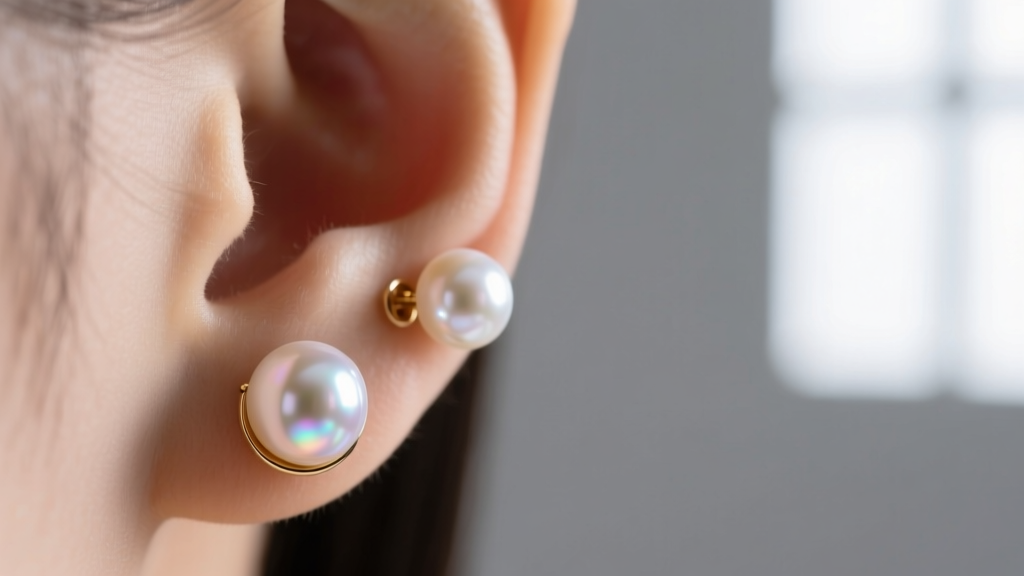
The Engineering of Front-to-Back Pearl Earrings
Double pearl stud earrings represent a fascinating intersection of gemology and micro-mechanical engineering. Unlike traditional stud earrings that rely on a simple butterfly clutch or screw-back behind the earlobe, the double pearl configuration requires a precise friction-fit system that balances security with the structural integrity of the organic gemstones. The front pearl is typically mounted to a metal cup using a specialized jeweler's epoxy, while the back pearl houses a micro-sleeve insert that slides directly onto the earring post.
The success of this mechanism hinges entirely on drill hole tolerances. Pearls are organic and inherently fragile. If the metal or silicone sleeve inserted into the back pearl's drill hole has an inner diameter of 0.82mm, and the earring post is 0.80mm (20-gauge), the backing will slip and fall off. Conversely, if the sleeve is 0.78mm, forcing it onto the post will create radial stress, leading to catastrophic nacre spalling (peeling) around the drill hole. Master jewelers calibrate these sleeves to a tolerance of ±0.01mm to ensure a secure friction fit without compromising the pearl.
Post Gauge and Structural Integrity
While standard diamond studs often utilize 20-gauge (0.81mm) or 22-gauge (0.64mm) posts to minimize the piercing hole, double pearl stud earrings require thicker posts. The added weight of the rear pearl creates a pendulum effect that can bend thinner wires. For optimal structural integrity and to prevent the earring from drooping forward on the earlobe, an 18-gauge (1.02mm) post is the industry standard for premium double pearl designs.
Lobe Thickness and Post Length Calibration
A frequently overlooked variable in the design of double pearl stud earrings is the effective post length. A standard stud earring post measures between 10mm and 12mm. However, a double pearl configuration must account for three distinct spatial zones:
- The Front Setting: Approximately 2mm of the post is consumed by the front pearl's mounting cup and adhesive well.
- The Earlobe: The average human earlobe thickness ranges from 2mm to 5mm, though stretched or heavier lobes can exceed 8mm.
- The Rear Engagement: The back pearl's friction sleeve requires a minimum of 3mm to 4mm of exposed post to achieve adequate surface area for a secure grip.
Consequently, specialized double pearl earring posts are manufactured at 15mm to 18mm in length. Using a standard 11mm post with a double pearl backing will result in insufficient engagement depth, causing the back pearl to detach during routine movements such as brushing hair or removing clothing.
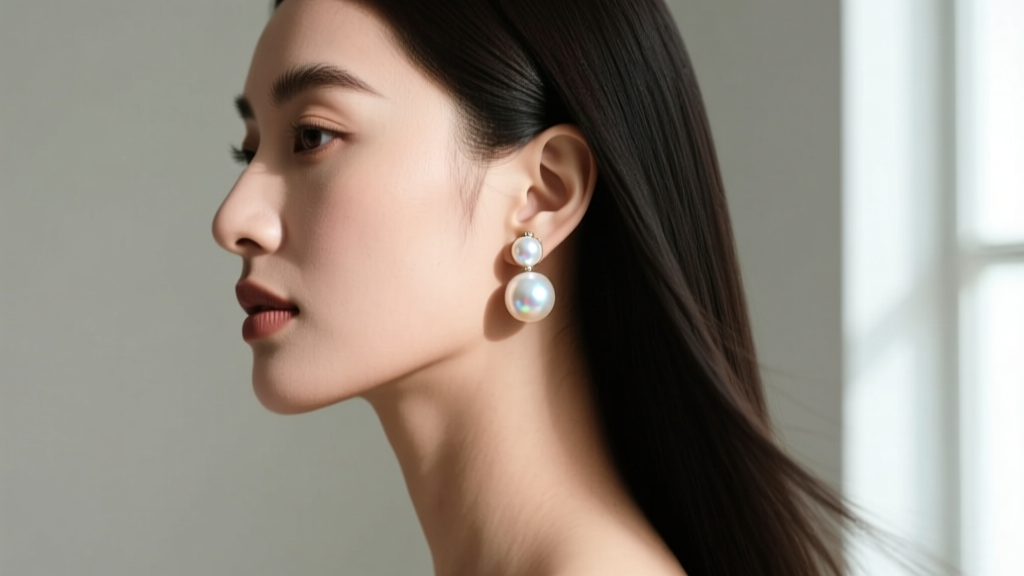
Pearl Grading and Dimensional Ratios
The visual harmony of double pearl stud earrings is dictated by the size differential between the anterior (front) and posterior (back) pearls. According to principles of proportional aesthetics, a 1:1.5 ratio yields the most flattering silhouette. For example, a 6mm front pearl paired with a 9mm back pearl creates a distinct, intentional layered look without the back pearl overwhelming the ear's natural anatomy.
When evaluating the gemological quality of the pearls used in these settings, the GIA Pearl Description System provides the definitive framework. For high-end double pearl earrings, buyers should prioritize the following specifications:
Expert Sourcing Note: Always verify the nacre thickness of Akoya pearls used in double pearl settings. Because the back pearl is subjected to friction and rotational torque when being pushed onto the post, a minimum nacre thickness of 0.4mm is critical. Thin-nacre pearls (often bead-nucleated with only 0.1mm to 0.2mm of nacre) will quickly wear down to the shell bead at the drill hole site.
Matching and Luster
Because the two pearls are separated by the earlobe, exact color matching is less critical than luster matching. A high-luster Akoya front pearl paired with a chalky freshwater back pearl will create a jarring visual disconnect. Ensure both pearls exhibit a sharp, high-contrast reflection (often graded as 'Excellent' or 'Very High' luster) to maintain a cohesive appearance.
Material Science: Post Alloys and Biocompatibility
The post material in double pearl stud earrings must possess high yield strength to resist bending under the dual-pearl weight, while simultaneously meeting strict biocompatibility standards to prevent contact dermatitis. The Mayo Clinic notes that nickel allergy is one of the most common causes of allergic contact dermatitis, making the choice of alloy paramount.
| Post Material | Standard Gauge | Yield Strength | Nickel Content | Best Application |
|---|---|---|---|---|
| Implant-Grade Titanium (ASTM F136) | 18G (1.0mm) | 830 MPa | 0.0% | Hypersensitive skin, heavy back pearls |
| 14k Yellow Gold | 18G (1.0mm) | 250-400 MPa | Trace to 5% | Everyday wear, traditional luxury |
| 18k White Gold | 18G (1.0mm) | 300-450 MPa | 5-15% (Alloy dependent) | High-end Akoya/South Sea pairings |
| Surgical Stainless Steel (316L) | 20G (0.8mm) | 480 MPa | 8-12% | Budget-friendly, non-sensitive lobes |
For clients with known metal sensitivities, ASTM F136 implant-grade titanium is the undisputed choice. It offers superior tensile strength compared to gold alloys, ensuring the longer 15mm posts do not warp over time, while remaining entirely nickel-free.
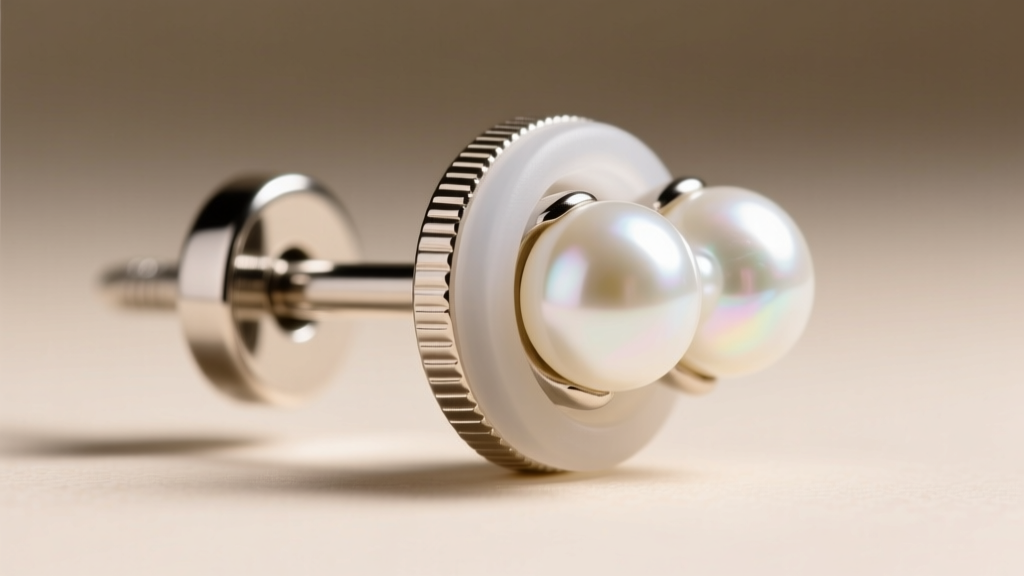
Troubleshooting Common Failure Modes
Even meticulously crafted double pearl stud earrings can experience mechanical failures if not properly maintained or if the underlying components are mismatched. Below are the most common technical failure modes and their solutions:
1. Anterior Drooping
The Issue: The front pearl tilts downward, pointing toward the jawline rather than sitting flush against the earlobe.
The Cause: The post gauge is too thin (e.g., 20G) for the combined weight of the pearls, or the earlobe tissue is too thin to provide a supportive fulcrum.
The Fix: Upgrade to an 18-gauge post or utilize a specialized silicone earring support disc (often called an 'earring lifter') behind the front pearl to distribute the weight across a wider surface area of the earlobe.
2. Sleeve Detachment
The Issue: The metal or silicone insert inside the back pearl becomes dislodged and remains stuck on the earring post.
The Cause: Degradation of the internal epoxy due to exposure to cosmetics, hairspray, or ultrasonic cleaning vibrations.
The Fix: The back pearl must be carefully reamed by a jeweler to remove the old adhesive, and a new friction sleeve must be bonded using a two-part, jewelry-grade cyanoacrylate or UV-cured resin.
3. Nacre Spalling at the Drill Hole
The Issue: Flaking or chipping of the pearl's surface immediately surrounding the hole.
The Cause: Inserting the post at an angle rather than perfectly straight, creating lateral pressure against the fragile edge of the drill hole.
The Fix: Always align the post perpendicular to the back pearl. If spalling has occurred, the pearl cannot be repaired and must be replaced.
Care and Maintenance Protocols
Maintaining double pearl stud earrings requires a departure from standard jewelry cleaning routines. The organic nature of nacre (composed of aragonite platelets and conchiolin) makes it highly susceptible to chemical and mechanical damage.
- Avoid Ultrasonic Cleaners: The high-frequency cavitation bubbles generated by ultrasonic cleaners can fracture the internal structure of the pearl and instantly dissolve the adhesives securing the front cup and rear sleeve.
- Chemical Isolation: Pearls are calcium carbonate and will dissolve upon contact with acids. Always apply perfumes, hairsprays, and acidic skincare products (like Vitamin C serums or AHA/BHA exfoliants) before putting on the earrings.
- Post Lubrication: Over time, the friction fit between the post and the back pearl's sleeve can become stiff due to microscopic debris accumulation. Wipe the post with a microfiber cloth and apply a microscopic layer of cosmetic-grade mineral oil to ensure smooth insertion without stressing the pearl.
By understanding the precise engineering, material science, and gemological standards behind double pearl stud earrings, collectors and everyday wearers can make informed purchasing decisions and ensure their pieces remain secure and pristine for decades.


