Ear Cartilage Piercing Earrings: A 2026 Budget & Value Guide
Discover the true cost of ear cartilage piercing earrings in 2026. We compare budget vs. premium metals, gauge sizes, and healing value to save you money.

Navigating the market for ear cartilage piercing earrings in 2026 requires more than just an eye for aesthetics; it demands a strict understanding of metallurgy, anatomy, and long-term value. With inflation impacting precious metal markets and a flood of low-quality dropshipped jewelry saturating social media, the line between a wise investment and a costly medical mistake has never been thinner. Whether you are curating a constellation helix setup or maintaining a single, stubborn conch piercing, assessing the true budget and value of your jewelry is critical.
In this comprehensive guide, we break down the exact material grades, gauge specifications, and pricing tiers you need to know. We will help you determine where to splurge on lifetime pieces and where to safely save on everyday staples, ensuring your cartilage remains healthy and your wallet intact.
The Hidden Costs of Budget Cartilage Jewelry
When shopping for ear cartilage piercing earrings, the initial price tag is often deceptive. The "cheap tax" in body jewelry is real and frequently manifests as medical bills, lost piercings, and permanent tissue damage. Cartilage is avascular, meaning it lacks a direct blood supply and heals incredibly slowly—often taking 9 to 12 months to fully fistulize.
Inserting a $12 pair of unverified alloy earrings from an online marketplace into a healing or even a mature cartilage piercing introduces severe risks. The primary culprit is nickel exposure. According to the National Institutes of Health (NIH), nickel is the most common contact allergen worldwide. When cheap metals oxidize in the warm, moist environment of a piercing fistula, they release nickel salts, triggering contact dermatitis, hypertrophic scarring, and piercing bumps (granulomas).
The true cost of a "budget" earring isn't $12. It is the $150 dermatologist visit, the cost of saline solutions and emu oil to treat the resulting irritation bump, and the eventual need to repurchase a high-quality replacement once the cheap piece inevitably tarnishes or breaks.
Material Grades Decoded: What You Are Actually Paying For
To accurately assess value, you must look past marketing buzzwords like "hypoallergenic" or "surgical" and demand specific ASTM (American Society for Testing and Materials) certifications. The Association of Professional Piercers (APP) strictly outlines which materials are safe for initial piercings and long-term wear.
Implant-Grade Titanium vs. Surgical Steel
ASTM F136 Implant-Grade Titanium is the undisputed king of value for cartilage piercings. It contains zero nickel, is highly biocompatible, and can be polished to a mirror finish that prevents bacterial adhesion. A high-quality titanium flat-back labret will typically cost between $30 and $50. This is the baseline you should accept for any jewelry touching a healing fistula.
ASTM F138 Surgical Steel, often misleadingly sold as "surgical stainless steel," contains up to 10% nickel. While fine for fully healed earlobes in some individuals, it is a gamble for cartilage. The micro-porosity of lower-grade steel can harbor bacteria, leading to chronic low-grade irritation that stalls the healing process.
The Vermeil and Plated Trap
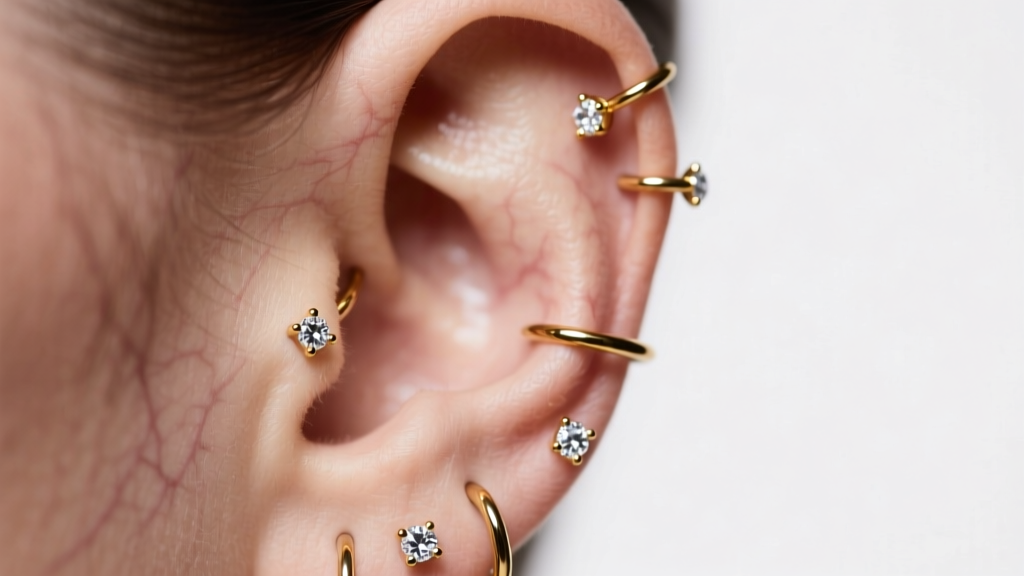
Gold-plated and vermeil (gold over sterling silver) earrings are heavily marketed as affordable luxury. However, for ear cartilage piercing earrings, they are a structural liability. Cartilage piercings experience high friction from hair, pillows, and headphones. This friction wears away the microscopic gold layer, exposing the reactive base metal underneath directly to your tissue. Solid 14k or 18k gold is a non-negotiable investment if you want the aesthetic of gold without the biological risk.
2026 Price Tier Breakdown: Budget, Mid-Range, and Premium
Understanding the current market landscape helps you allocate your jewelry budget effectively. Below is a breakdown of what to expect at different price points in 2026.
| Tier | Price Range (Per Piece) | Material Standard | Best Use Case & Value Assessment |
|---|---|---|---|
| Budget | $15 - $35 | PVD-Coated Steel, Basic 316L | Strictly for fully healed, non-sensitive ears. High cost-per-wear due to eventual coating wear and tarnishing. |
| Mid-Range | $40 - $90 | ASTM F136 Titanium, Threadless | The ultimate value sweet spot. Ideal for initial healing, downsizing, and everyday staple pieces. Lifetime durability. |
| Premium | $100 - $350+ | Solid 14k/18k Gold, Genuine Gems | Heirloom quality. High upfront cost but lowest cost-per-wear over a decade. Best for curated, visible focal points. |
Gauge, Threading, and Post Length: Where Budget Buys Fail
A premium material is useless if the physical engineering of the earring is flawed. Budget manufacturers frequently cut corners on threading and sizing, which directly impacts the health of your cartilage.
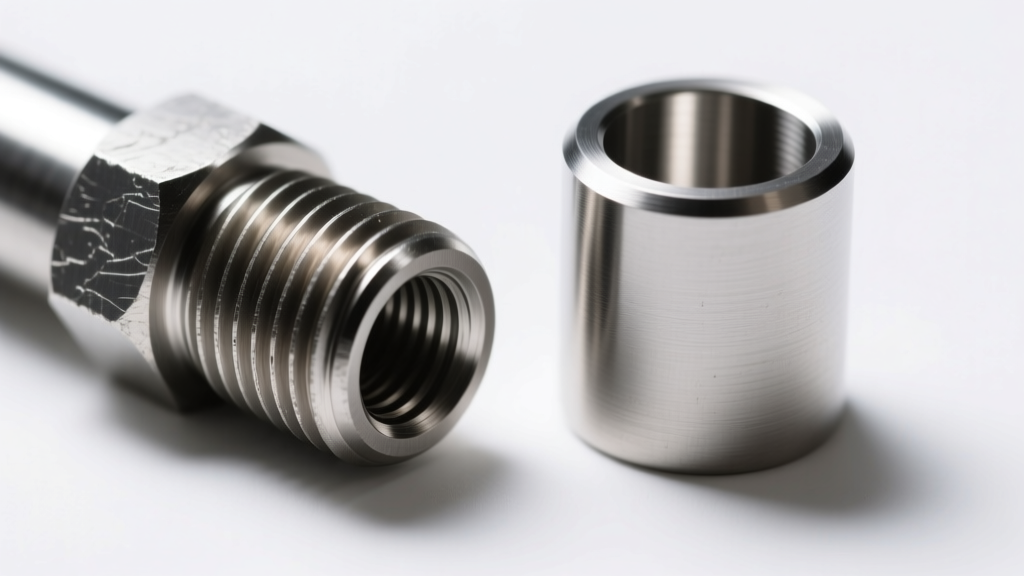
- Threading Mechanics: Never buy externally threaded earrings (where the screw grooves are on the post). Pushing those sharp grooves through a cartilage fistula tears the delicate tissue, causing micro-tears and scar tissue buildup. Always invest in internally threaded or threadless (press-fit) jewelry. Threadless systems, which use a slight bend in the pin for tension, are the 2026 industry standard for security and ease of use.
- Gauge Specifics: The standard gauge for most cartilage piercings (helix, flat, conch) is 16g (1.2mm). Some delicate areas like the rook or daith may use 18g (1.0mm) or 14g (1.6mm). Budget brands often sell flimsy 20g (0.8mm) wires disguised as cartilage hoops; these are too thin and will cause the "cheese-cutter effect," slowly migrating through your cartilage over time.
- Post Length Management: A fresh cartilage piercing requires an 8mm or 10mm post to accommodate edema (swelling). A crucial part of your budget must include a "downsizing" appointment with your piercer at the 8-week mark to swap to a 5mm or 6mm post. Failing to downsize leads to the earring snagging on hair and clothing, perpetuating a cycle of trauma and irritation bumps.
The "Cost Per Wear" Framework for Cartilage Staples
To truly evaluate the budget of ear cartilage piercing earrings, adopt the "Cost Per Wear" (CPW) framework. Cartilage staples—like a simple titanium flat-back or a seamless gold hoop—are worn 24 hours a day, 365 days a year. They rarely come out.
Consider a $20 gold-plated earring that begins to tarnish and cause itching after three months (90 days). Your CPW is $0.22 per day. Now consider a $75 solid 14k gold threadless end that you wear continuously for five years (1,825 days). Your CPW drops to $0.04 per day. The premium piece is mathematically cheaper over time, while also eliminating the risk of allergic reactions and tissue damage.
Final Verdict: Where to Splurge and Where to Save
Mastering your jewelry budget in 2026 is about strategic allocation. Splurge on the initial jewelry used for the piercing itself, ensuring it is ASTM F136 titanium or solid gold from a reputable, APP-affiliated brand. Splurge on focal points, like a diamond-encrusted conch stud or a 14k gold clicker hoop for your helix, as these will last a lifetime and retain material value.
Save by purchasing basic, un-anodized titanium posts in multi-packs from trusted body jewelry wholesalers for your secondary, less visible piercings. Avoid the middle-ground of "mystery metal" online marketplaces entirely. By prioritizing biocompatible materials and precision engineering over fast-fashion aesthetics, you protect your cartilage's structural integrity and ensure your jewelry collection remains a valuable asset rather than a biological liability.


