Gold Twisted Hoop Earrings: Troubleshooting Shape & Tarnish
Learn how to troubleshoot common issues with gold twisted hoop earrings, including reshaping bent wires, fixing clasps, and cleaning deep grooves.

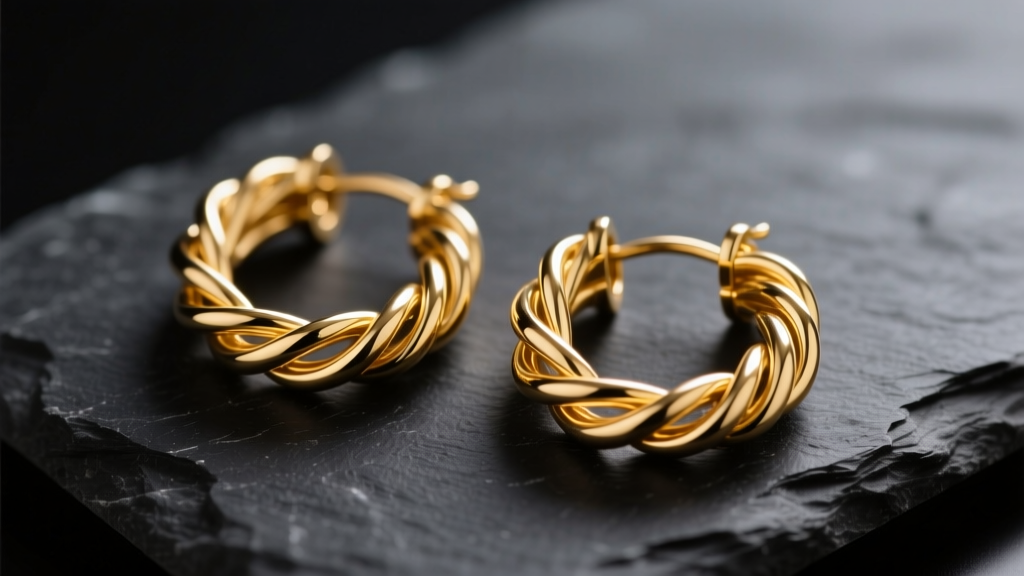
The Structural Vulnerability of Twisted Wire Hoops
As we navigate the jewelry trends of 2026, the demand for heavily textured, rope-style gold twisted hoop earrings has surged. While their helix and cable patterns offer a vintage, light-catching aesthetic, the manufacturing process that creates these twists introduces significant structural vulnerabilities. Unlike smooth, drawn wire, twisted wire undergoes severe torsional stress during production. This mechanical manipulation causes the gold alloy to work-harden prematurely, making the hoop more brittle and prone to snapping at the clasp joints or along the twist valleys if bent incorrectly.
Furthermore, the texture that makes gold twisted hoop earrings so visually appealing acts as a magnet for mechanical snags and chemical tarnish. Troubleshooting these specific failure modes requires an understanding of metallurgy, wire gauges, and specialized jewelry repair techniques. Below, we break down the most common problems associated with twisted hoops and provide actionable, expert-level solutions to restore and maintain them.
Troubleshooting Bent and Misshapen Hoops
The most frequent issue owners face is the hoop losing its perfect circular geometry. Because twisted hoops are typically crafted from 18-gauge (1.02mm) or 20-gauge (0.81mm) wire to keep the overall weight manageable despite the dense texture, they lack the lateral rigidity of a solid, smooth 16-gauge hoop. When a twisted hoop is dropped, sat on, or pulled, it often bends into an oval or develops a sharp kink.
How to Reshape Without Snapping the Wire
Never use standard metal jewelry pliers to reshape a twisted hoop. The steel teeth will crush the delicate helix ridges, permanently ruining the texture and creating weak points where the wire will eventually snap. Instead, follow this professional framework:
- Use a Steel Ring Mandrel: Slide the hoop onto a graduated steel mandrel to the exact millimeter mark of the hoop's original diameter.
- Employ Nylon Jaw Pliers: Gently press the warped sections against the mandrel using nylon-tipped pliers. The nylon distributes the pressure evenly across the twists without flattening the peaks.
- Rotate, Don't Pull: Apply pressure in small, incremental rotations. Because the wire is already work-hardened from the twisting process, pulling it aggressively will cause a stress fracture, usually right next to the soldered clasp joint.
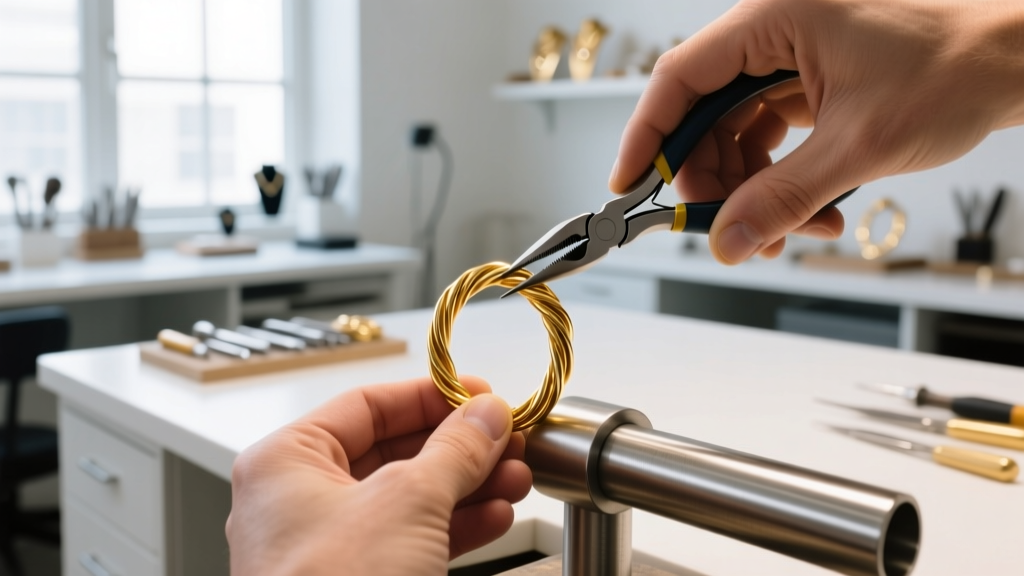
Expert Warning: If your 18k gold twisted hoop feels stiff and resistant to reshaping, stop immediately. 18k gold (75% pure gold) is softer than 14k, but the torsion of the twist makes it highly susceptible to sudden stress fractures. Take it to a jeweler for a low-heat annealing process to relax the metal's crystalline structure before reshaping.
The Snagging Epidemic: Hair and Fabric Catches
Twisted hoops act like microscopic Velcro. The deep valleys between the gold wires easily catch loose hair threads, silk garments, and lace. Over time, this snagging doesn't just cause frustration; it slowly pulls the hoop out of its circular shape and puts immense strain on the earlobe piercing.
Solving the Snag Problem
If your gold twisted hoop earrings are constantly catching, the issue is likely the "pitch" of the twist. A tight, high-frequency twist (many rotations per inch) creates sharper, more pronounced ridges. To mitigate this without altering the design:
- Micro-Polishing the Valleys: A jeweler can use a high-speed flex shaft with a soft bristle brush and jeweler's rouge to gently burnish the sharp edges of the twist valleys, reducing the microscopic burrs left over from the manufacturing die.
- Clear Coat Barrier (Temporary): For severe snagging on specific garments, a microscopic layer of clear, jewelry-safe nail polish applied to the inner curve of the hoop can smooth out the catch points. This must be reapplied every few months.
- Gauge Downsizing: If the snagging is pulling your piercing, consider switching to a lighter, 20-gauge twisted wire rather than a heavy 16-gauge rope. The reduced mass decreases the kinetic pull when a snag occurs.
Clasp Failures: Why Twisted Hoops Fall Out
The uneven weight distribution of a twisted wire puts unique lateral stress on the earring's clasp mechanism. A standard smooth hoop swings freely, but a textured hoop catches air and fabric, creating a lever effect that can slowly bend the hinge pin or warp the saddleback closure.
| Clasp Type | Security Level | Common Failure Mode on Twisted Hoops |
|---|---|---|
| Hinge with Snap Post | Medium | The hollow hinge tube fills with skin oils and debris, preventing the snap post from fully clicking into place. |
| Saddleback (Hinged) | High | The textured wire prevents the saddle from sitting flush against the post, leaving a 1mm gap that catches hair. |
| Clicker (Segment Ring) | Very High | The lateral torque from snags slowly bends the clicker's internal tension wire, causing it to pop open unexpectedly. |
| Endless (Continuous) | Low | The thin tension wire snaps under the torsional stress of the twisted body when opening the hoop. |
The Fix: For twisted hoops, the saddleback clasp is generally the most secure, provided the jeweler files the saddle plate to perfectly match the angle of the twisted wire. If your hinge clasp feels loose, do not squeeze it with pliers; instead, clean the hinge tube with a toothpick and isopropyl alcohol to remove compacted sebum that is blocking the locking mechanism.
Deep Groove Tarnish: Cleaning Without Damage
It is a common misconception that pure gold does not tarnish. However, gold twisted hoop earrings are almost exclusively made from 14k gold (58.5% pure gold, alloyed with copper and silver) or 18k gold. According to the Gemological Institute of America (GIA), the copper and silver alloys in 14k gold are highly susceptible to oxidation, especially when exposed to sulfur compounds in the air and cosmetics.
Because of the deep grooves in the twisted wire, this tarnish (copper oxide) accumulates in the valleys, creating a dark, dirty appearance that makes the earrings look like cheap brass. Standard jewelry polishing cloths are entirely ineffective here, as they only glide over the high peaks of the twist, leaving the dark tarnish trapped in the crevices.

The Ultrasonic & Chemical Cleaning Protocol
To properly restore the luster of tarnished twisted hoops, you must use a combination of chemical action and high-frequency vibration. The Jewelers of America recommends ultrasonic cleaning for intricate gold pieces, provided they do not contain fracture-filled gemstones.
- The Solution: Mix warm distilled water with a few drops of ammonia-free, phosphate-free dish soap. Avoid harsh commercial gold dips, which can strip the alloyed metals from the surface of the twists, leading to a porous, matte finish.
- The Agitation: Submerge the hoops in an ultrasonic cleaner operating at 40kHz for exactly 3 to 5 minutes. The cavitation bubbles will penetrate the deepest valleys of the helix, blasting away oxidized copper and trapped dead skin cells.
- The Manual Assist: Immediately after the ultrasonic bath, use an extra-soft baby toothbrush to gently sweep the grooves while the tarnish is suspended in the soapy water. Rinse with distilled water and dry with a microfiber cloth to prevent water spots.
Preventative Storage Framework
The final step in troubleshooting gold twisted hoop earrings is preventing the damage before it occurs. Never store twisted hoops in a communal jewelry box. The helix texture will inevitably interlock with chains, other hoops, and prongs, leading to severe tangling that requires wire cutters to resolve.
Store each twisted hoop individually in a soft, anti-tarnish flannel pouch. To maintain their circular geometry during travel, thread the hoop through a small piece of rigid foam or a specialized silicone earring holder that supports the entire circumference of the hoop, preventing lateral crushing when placed inside a suitcase or handbag. By respecting the unique metallurgical and structural properties of twisted wire, you can ensure your gold hoops remain pristine, secure, and tangle-free for decades.


