Troubleshooting Gold Onyx Earrings: Fixing Loose Stones & Tarnish
Learn how to troubleshoot common issues with gold onyx earrings, from fixing loose bezel-set stones and cloudy inlays to preventing gold plating tarnish.

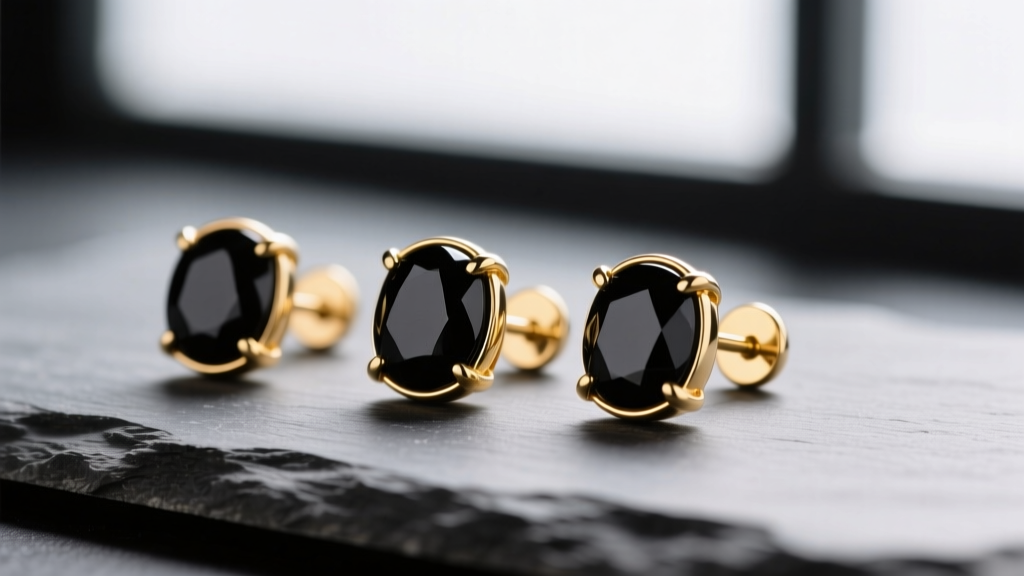
Gold onyx earrings are a staple of sophisticated jewelry collections, offering a striking contrast between the deep, mirror-like black of the stone and the warm luster of gold. However, because most commercial black onyx is actually dyed agate, and many affordable options rely on gold plating rather than solid gold, these earrings are uniquely prone to specific failure modes. Whether you are dealing with a rattling cabochon, a suddenly cloudy stone, or the dreaded "green ear" effect, this comprehensive troubleshooting guide will help you diagnose and repair your gold onyx earrings with professional precision.
The Anatomy of Gold Onyx Earrings: Why They Fail
Before attempting any repairs, it is crucial to understand the materials you are working with. According to the Gemological Institute of America (GIA), natural black onyx is exceedingly rare. The vast majority of black onyx on the market is gray or white agate (a type of chalcedony) that has been treated with a sugar and acid bath to carbonize and turn black. This dyed stone has a Mohs hardness of 6.5 to 7, making it relatively scratch-resistant but vulnerable to chipping if subjected to hard impacts. Furthermore, the dye can be compromised by harsh chemicals, leading to the structural and aesthetic issues detailed below.
Troubleshooting Issue #1: Loose or Rattling Onyx Inlays
A rattling sound when you shake your earring is the first sign of setting failure. Onyx cabochons are typically set in bezels or glued into recessed settings. Over time, temperature fluctuations, minor drops, and the natural oils from your skin can degrade the adhesive or warp the metal housing.
| Setting Type | Common Failure Mode | DIY Fixability |
|---|---|---|
| Bezel (Metal Rim) | Metal rim lifts away from the stone due to impact or thin gauge gold. | Moderate. Requires a bezel roller or pusher to gently burnish the metal back over the stone edge. |
| Recessed/Glue | Factory epoxy degrades; stone pops out or spins. | High. Can be re-adhered at home with the correct jeweler's cement. |
| Prong | Prongs catch on clothing and bend outward, releasing the stone. | Low. Requires specialized pliers and risks chipping the onyx if done improperly. |
How to Secure a Loose Cabochon at Home
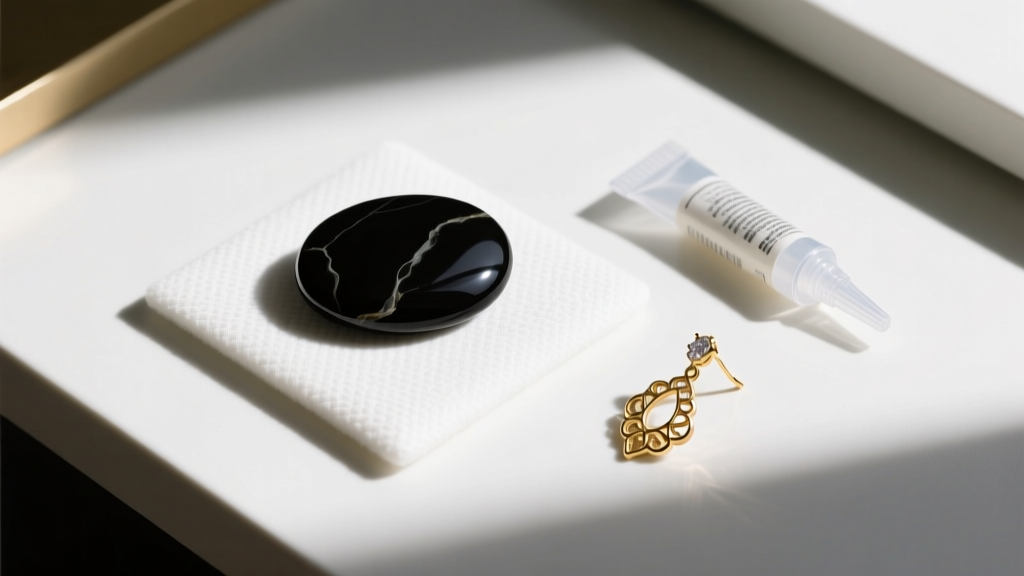
If your onyx is glued into a recessed gold setting, never use cyanoacrylate (Super Glue). Cyanoacrylate degrades quickly when exposed to moisture and skin oils, and it "blooms"—leaving a permanent, frosty white residue on the glossy surface of the onyx. Instead, use a specialized jeweler's adhesive like G-S Hypo Cement for precision application, or a two-part clear jeweler's epoxy for a structural bond. Clean the setting with a cotton swab dipped in isopropyl alcohol to remove old adhesive and skin oils, apply a microscopic drop of epoxy to the center of the recess, and press the stone firmly. Wipe away any squeeze-out immediately with a dry microfiber cloth and let it cure for 24 hours.
Troubleshooting Issue #2: Cloudy, Scratched, or Dull Onyx
If your once-glossy black onyx earrings now look cloudy, splotchy, or dull, the issue is almost always chemical rather than physical. Because commercial black onyx is dyed, exposing it to ultrasonic jewelry cleaners or commercial silver dips is catastrophic. The high-frequency vibrations and harsh chemical baths can leach the black dye out of the porous agate, leaving you with a splotchy, grayish-brown stone. Furthermore, household cleaners containing bleach or ammonia will permanently etch the surface polish.
The Safe Cleaning Protocol for Dyed Onyx
- Step 1: Mix a few drops of pH-neutral dish soap (like Dawn) into a bowl of lukewarm water. Avoid hot water, which can expand the gold setting and loosen the glue.
- Step 2: Dip a baby toothbrush (which has ultra-soft bristles that won't scratch the gold or the stone's polish) into the solution.
- Step 3: Gently brush the back of the earring and the gold setting. Avoid aggressive scrubbing directly on the onyx face.
- Step 4: Rinse quickly under a gentle stream of distilled water (tap water minerals can leave hard water spots on the black surface).
- Step 5: Pat dry immediately with a lint-free microfiber cloth to restore the mirror-like shine.
Troubleshooting Issue #3: Skin Discoloration and "Green Ear"
Waking up with a green or black smudge on your earlobe or behind your ear is a common complaint with gold onyx earrings. This is not an allergic reaction to the gold or the onyx; it is a chemical reaction between your skin's acids and the base metal beneath the gold plating.
Verifying Your Gold Karat and Plating Thickness
Solid 14k or 18k gold will not turn your skin green. If you are experiencing discoloration, your earrings are likely gold-plated or gold vermeil over a brass or copper alloy base. When the microscopic layer of gold wears away from friction and sweat, the exposed copper reacts with oxygen and skin salts to create copper chloride, which shows up as green residue. The Federal Trade Commission (FTC) mandates that for an item to be classified as "gold vermeil," it must have a sterling silver base and a gold plating of at least 2.5 microns. Anything less is considered flash plating, which will wear through to the base metal within weeks of daily wear.
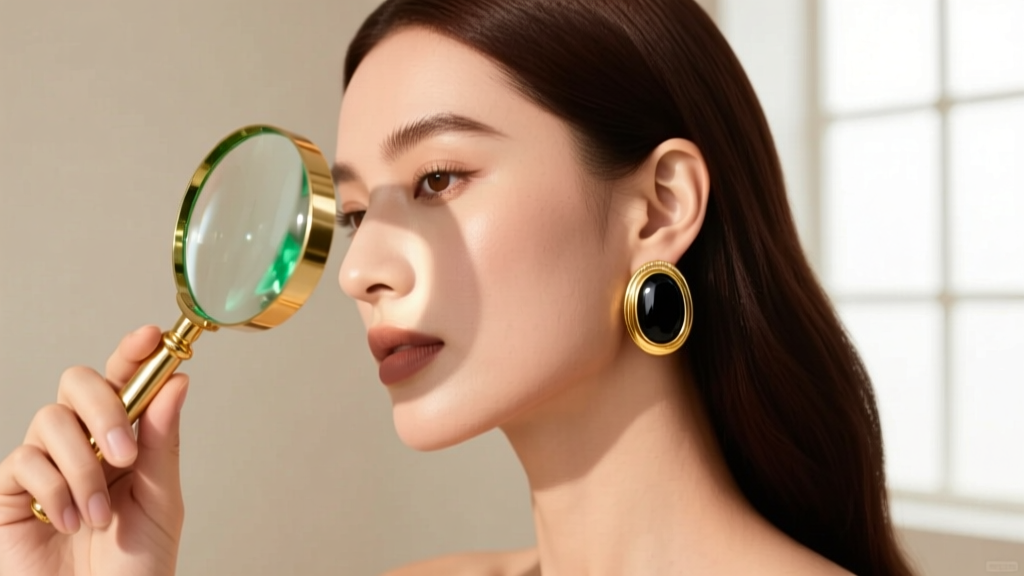
The Fix: If the posts of your gold onyx earrings are turning your skin green, you can temporarily seal the posts by painting them with a thin layer of clear nail polish or a specialized jewelry shield coating. For a permanent solution, take the earrings to a local bench jeweler and have the posts re-tipped or re-plated in rhodium or thick 24k gold.
Preventative Maintenance Checklist
To maximize the lifespan of your gold onyx earrings and prevent these issues from occurring, integrate the following habits into your jewelry care routine:
The "Last On, First Off" Rule: Always put your gold onyx earrings on after applying hairspray, perfume, and lotions. The alcohols and aerosol propellants in these products will dull the onyx polish and accelerate the degradation of gold plating. Remove them first when you get home to minimize exposure to daily environmental pollutants.
- Storage: Store onyx earrings in a soft pouch separate from diamonds or sapphires. While onyx is a 6.5-7 on the Mohs scale, diamonds (10) and sapphires (9) will easily scratch the onyx surface if they rub together in a jewelry box.
- Water Exposure: Never wear gold-plated onyx earrings in the shower, pool, or ocean. Chlorine and saltwater will rapidly strip gold plating and can seep into the microscopic fissures of the dyed agate, altering its color.
- Friction Management: If you wear onyx huggies or hoops, ensure the clicker mechanism is free of debris. A buildup of lotion in the hinge can force the earring open, leading to lost stones.
When to Seek a Professional Jeweler
While DIY adhesive fixes and gentle cleaning can solve 80% of gold onyx earring issues, certain structural failures require professional intervention. If the gold bezel wall is completely worn through, if the earring post has snapped at the solder joint, or if the onyx cabochon has suffered a deep, visible chip, do not attempt a home repair. A professional bench jeweler can laser-weld a broken gold post without applying the heat that would shatter the heat-sensitive dyed agate, and they can source a perfectly matched replacement cabochon to restore the symmetry of your pair.


