Frieren Earrings: Metallurgy, Sizing & Replica Guide
Explore the metallurgy, gauge sizing, and material safety of Frieren earrings. Learn to spot high-quality elven replicas versus cheap alloys.

The Surge in Elven Jewelry Demand
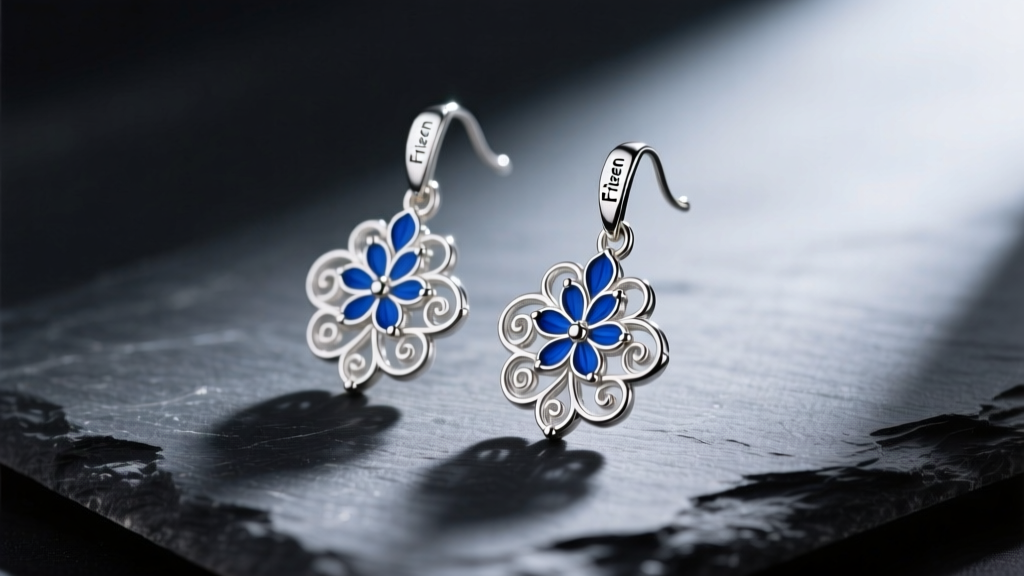
The massive cultural footprint of Frieren: Beyond Journey's End has catalyzed an unprecedented demand for elven-inspired cosplay and everyday jewelry in 2026. Specifically, Frieren earrings—characterized by their delicate, elongated floral motifs, subtle wireframes, and understated gemstone accents—have become a staple for fans and fantasy jewelry collectors alike. However, the transition from 2D anime concept art to 3D wearable metallurgy is fraught with manufacturing shortcuts. As a jewelry specialist, I see countless fans suffer from contact dermatitis, bent posts, and ruined enamel due to poorly engineered replicas. This guide provides an expert metallurgical and structural breakdown of Frieren earrings, equipping you with the technical knowledge to separate heirloom-quality elven replicas from hazardous, mass-produced zinc alloys.
The Anatomy of Elven Jewelry: Translating 2D to 3D
Frieren’s character design relies on subtle elegance. Her earrings are typically depicted as elongated, teardrop, or floral wireframes that suggest a lightweight, almost gravity-defying elven craftsmanship. When jewelry manufacturers attempt to replicate this, they face a fundamental physics problem: 2D art does not account for tensile strength or gravitational pull. A delicate, sweeping wireframe that looks ethereal on screen will easily bend, warp, or snap in the real world if cast in a soft metal or drawn from wire that is too thin.
High-end Frieren earrings solve this structural dilemma by utilizing internal armatures or casting the delicate filigree in rigid, high-tensile alloys. This ensures the silhouette remains intact during daily wear or active cosplay conventions, preventing the heartbreak of a snapped floral stem or a bent teardrop loop.
Material Breakdown: Sterling Silver vs. Zinc Alloy
The most critical point of failure in anime replica jewelry is the base metal. The market is currently flooded with what sellers deceptively label as "Tibetan Silver" or "Antique Silver." In metallurgical terms, these are usually zinc-aluminum alloys heavily laced with nickel to achieve a bright, polished finish before artificial antiquing. According to the National Library of Medicine, nickel is the leading cause of allergic contact dermatitis, a condition that causes severe blistering and hyperpigmentation on the earlobe after prolonged exposure.
When investing in Frieren earrings, you must verify the exact material grade. True 925 sterling silver (92.5% silver, 7.5% copper) offers the best balance of malleability for intricate elven scrollwork and structural durability. For those with severe metal sensitivities, custom jewelers are now offering Frieren-inspired designs cast in ASTM F136 implant-grade titanium, though this requires advanced CNC milling or 3D wax printing due to titanium's exceptionally high melting point.
| Material Grade | Composition | Nickel Content | Expected Lifespan | Market Price (USD) |
|---|---|---|---|---|
| 925 Sterling Silver | 92.5% Ag, 7.5% Cu | None | Lifetime (with care) | $65 - $140 |
| Jeweler's Brass | Cu/Zn alloy, often gold-plated | Trace (if plated poorly) | 2 - 5 Years | $30 - $55 |
| "Tibetan Silver" | Zinc/Aluminum/Copper mix | High (up to 20%) | 6 - 12 Months | $8 - $18 |
| Implant-Grade Titanium | Ti-6Al-4V (ASTM F136) | None | Lifetime | $80 - $160 |
Gauge Sizing and Piercing Compatibility
Beyond the metal composition, the structural integrity of the earring post is paramount. The vast majority of budget Frieren earrings utilize 22-gauge (0.64mm) or even 24-gauge (0.51mm) wire for the post or ear wire. While standard lobe piercings can accommodate these ultra-thin wires, they are highly susceptible to bending when inserting or removing the earring. Furthermore, if the Frieren replica features a heavy drop component, a 22-gauge wire will act as a fulcrum, slowly stretching the piercing hole over time and causing irreversible lobe sagging.
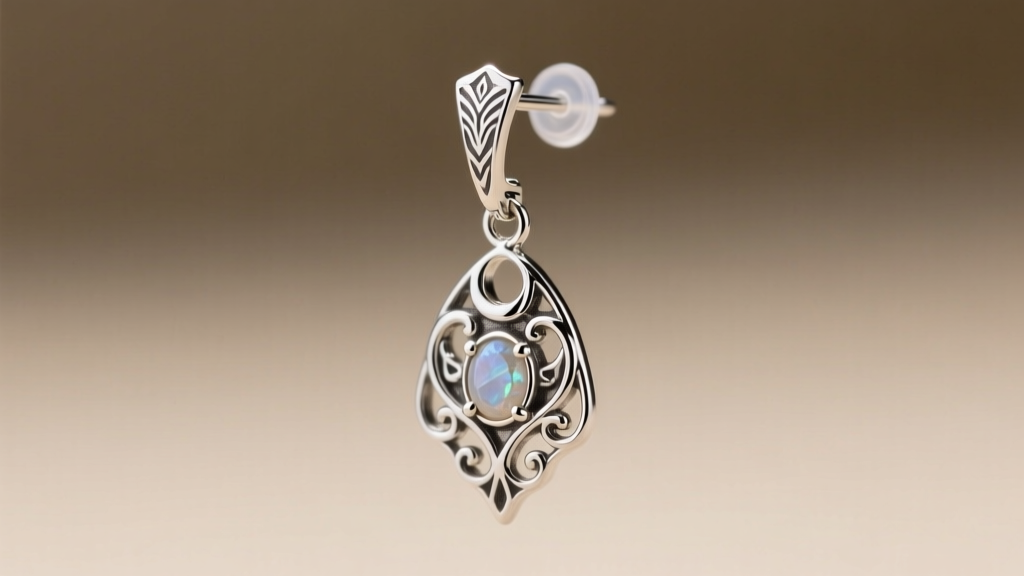
Expert jewelers recommend a minimum of 20-gauge (0.81mm) for standard studs and drops, and 18-gauge (1.02mm) for any Frieren earrings intended for cartilage piercings, such as the helix or tragus. Cartilage tissue is denser and less forgiving; forcing a thin, poorly polished alloy wire through a cartilage fistula can cause micro-tears and subsequent irritation bumps. Always inspect the post under a jeweler's loupe; if you see longitudinal tooling marks or a rough, porous solder joint where the post meets the floral backplate, reject the piece immediately.
Weight Distribution in Drop Earrings
Frieren’s elven heritage is often represented by elongated, dangling jewelry. However, elongated drops shift the center of gravity away from the earlobe. If a replica earring exceeds 12 grams, the standard "butterfly clutch" backing will fail to keep the earring flush against the ear, resulting in the "drooping" effect that ruins the aesthetic and causes lobe fatigue.
To counteract this, high-quality Frieren earring manufacturers employ two mechanical solutions. First, they utilize flat-back labret posts or secure screw-back mechanisms that distribute the clamping force over a wider surface area. Second, they design the top of the earring with a wider surface area that rests against the tragus, acting as a physical lever to keep the drop vertically aligned. For existing heavy replicas, applying a medical-grade silicone earring stabilizer patch behind the lobe is a necessary intervention to prevent permanent tissue stretching.
Enamel Techniques and Gemstone Settings
Many Frieren earring replicas incorporate subtle blue or green accents to mimic the magical aura of the series. The method used to apply this color dictates the jewelry's lifespan. Budget manufacturers use "cold enamel," which is essentially a two-part epoxy resin. While cheap to apply, epoxy resin is highly porous, traps skin oils, and will inevitably yellow or peel within six months of exposure to UV light and cosmetics.
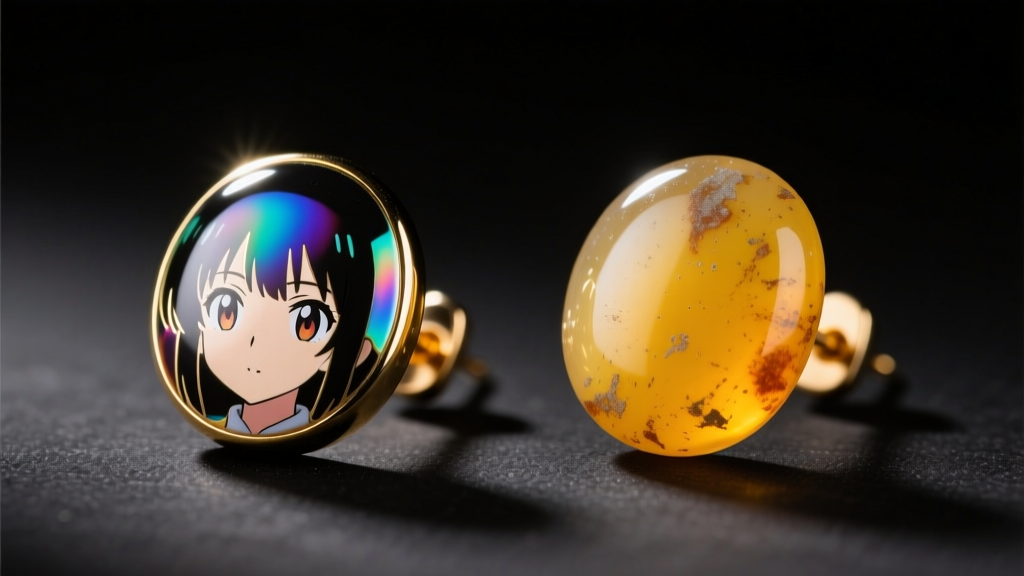
Conversely, premium replicas utilize vitreous enamel (glass enamel), which is fired in a kiln at over 1,400°F. This fuses the glass powder directly to the silver or copper base, creating a scratch-resistant, non-porous finish that will outlast the wearer. When gemstones are involved, avoid replicas that use glued-in acrylic cabochons. Look for prong-set or bezel-set synthetic spinels or cubic zirconia, which offer the optical brilliance of anime-style magic crystals without the cloudiness of glued plastics. For a deeper understanding of how precious metals and stones are evaluated, the Gemological Institute of America (GIA) provides extensive resources on identifying quality settings and metal hallmarks.
Identifying High-Quality Frieren Replicas
When shopping online or at convention artist alleys, use this technical checklist to verify the quality of Frieren earrings before purchasing:
- Hallmark Verification: Look for a laser-etched or stamped "925" or "ASTM F136" mark on the back of the earring post or the main backplate. Avoid pieces marked only with "Tibet" or no mark at all.
- Solder Joint Inspection: The connection point between the post and the earring face should be smooth and flush. Visible lumps of solder indicate poor temperature control during manufacturing, leading to weak structural integrity.
- Stone Setting Evaluation: Gently run a microfiber cloth over any gemstones. If the cloth snags, the prongs are poorly filed and will eventually tear your clothing or hair.
- Weight Testing: Hold the earring in your palm. If it feels surprisingly heavy for its visual size, it is likely cast in dense, cheap zinc alloy rather than lightweight sterling silver or titanium.
Care and Maintenance for Cosplay Jewelry
Even high-grade sterling silver Frieren earrings will tarnish due to the copper content reacting with atmospheric sulfur and human sebum. Because these earrings feature deep, intricate floral crevices, standard polishing cloths cannot reach the recessed areas.
Never use ultrasonic cleaners on Frieren earrings that feature glued stones or cold enamel, as the high-frequency vibrations will shatter the adhesive bond and strip the resin. Instead, use a specialized silver dip solution (thiourea-based) for exactly 10 seconds, followed by an immediate rinse in distilled water and a thorough drying with a microfiber cloth. Store your elven replicas in an airtight anti-tarnish bag with activated charcoal strips to absorb ambient moisture and sulfur compounds. According to the American Academy of Dermatology, keeping jewelry clean and free of oxidized metals is also a primary defense against secondary skin irritations. By following these protocols, you ensure your jewelry remains convention-ready and structurally sound for years to come.


