The Gay Man Earring: 2026 Queer Style & Trend Guide
Explore the 2026 evolution of the gay man earring. Discover queer jewelry trends, asymmetrical cartilage stacks, gauge guides, and styling tips.


For decades, the cultural lexicon surrounding the "gay man earring" was defined by a rigid, covert binary: a single stud in the right ear served as a quiet signal of queer identity in a less accepting era. Today, in 2026, that antiquated code has been entirely dismantled. Queer men's jewelry has transcended covert signaling to become a cornerstone of avant-garde, gender-fluid personal style. The modern gay man earring is no longer about which ear is pierced, but rather how the ear is curated. From asymmetrical cartilage stacks to the juxtaposition of industrial hardware with freshwater pearls, queer aesthetics are currently dictating the bleeding edge of global jewelry trends.
The Death of the "Right Ear" Rule
To understand the 2026 landscape, we must acknowledge the history. In the 1970s and 80s, the right-ear piercing functioned as a vital, albeit risky, signaling mechanism for gay men. It was a sartorial whisper in an era where overt expression could lead to marginalization. However, as queer culture moved into the mainstream and gender norms dissolved, the "left is right, right is wrong" adage became obsolete. According to GQ's comprehensive analysis on men's jewelry, the modern queer aesthetic is defined by maximalism, intentionality, and a deliberate rejection of traditional masculine boundaries. The contemporary gay man earring is an exercise in anatomical styling, treating the ear as a canvas for micro-sculptural expression rather than a simple binary billboard.
2026 Queer Coding: Juxtaposition & Material Science
The prevailing trend in queer ear styling this year relies heavily on visual paradoxes. The aggressive, hyper-masculine hardware of the early 2010s has been replaced by a sophisticated blending of soft and hard elements.
The Pearl and Hardware Paradox
One of the most dominant trends is the pairing of organic, traditionally "feminine" materials with severe, industrial silhouettes. A prime example is the use of 8mm dark freshwater pearls set in 14-gauge ASTM F-136 titanium industrial barbells. This juxtaposition challenges traditional gendered jewelry norms, creating a look that is simultaneously romantic and utilitarian. Stylists are increasingly pairing a delicate 18k gold pearl drop in the lobe with a stark, black-anodized titanium chain linking the helix to the tragus.
Implant-Grade Titanium and Anodization
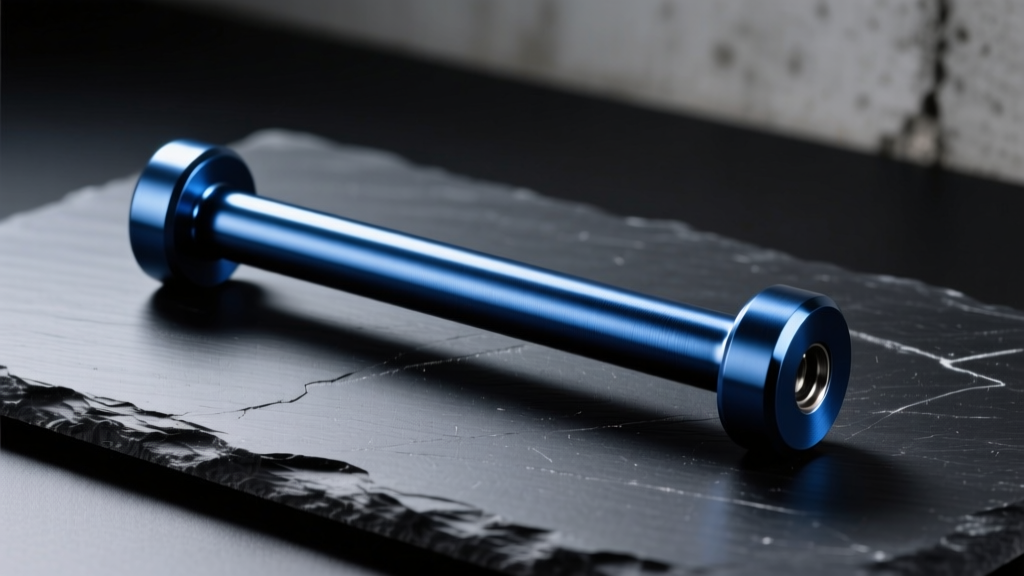
Material integrity is paramount in the queer body-modification community. Surgical steel is largely being abandoned due to its nickel content, which can cause contact dermatitis and complicate healing. The gold standard in 2026 is ASTM F-136 implant-grade titanium. Not only is it entirely nickel-free and hypoallergenic, but it also allows for anodization—an electrochemical process that alters the surface oxide layer to produce vibrant, permanent colors without using dyes or plating. Queer stylists are leveraging anodized titanium in hues of deep violet, oil-slick black, and rose gold to create highly customized, monochromatic ear stacks that match specific fashion palettes. For a deeper understanding of safe materials, the Association of Professional Piercers (APP) provides exhaustive guidelines on why implant-grade metals are non-negotiable for long-term wear.
Curating the Asymmetrical Cartilage Stack
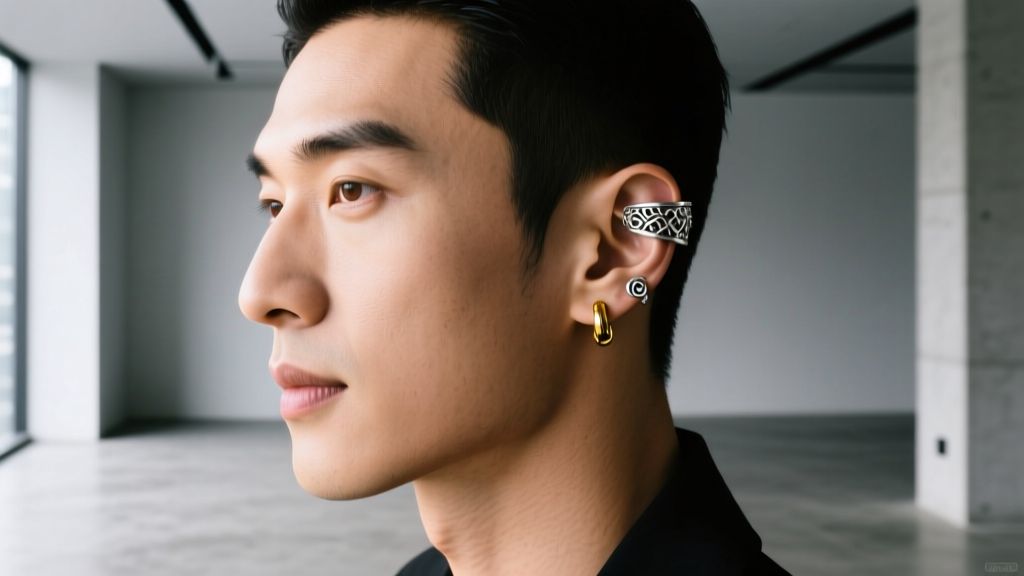
The hallmark of the 2026 gay man earring aesthetic is the asymmetrical stack. Rather than mirroring jewelry on both ears, the modern approach involves heavily curating one ear while leaving the other entirely bare or minimally adorned. This requires a deep understanding of anatomy, gauge sizing, and healing timelines. A poorly planned stack can lead to migration, rejection, or fistula tearing.
When building a stack, the transition from standard lobe gauges to cartilage gauges must be managed carefully. Most standard lobe piercings are done at 18g or 16g, while cartilage piercings (helix, forward helix, tragus) are typically pierced at 16g or 14g to provide structural stability and reduce the "cheese-cutter effect" (where thin jewelry migrates through the tissue under pressure).
| Placement | Standard Gauge | Jewelry Type | Healing Time | Styling Note |
|---|---|---|---|---|
| Standard Lobe | 16g - 14g | Threadless End / Huggie | 6 - 8 Weeks | Use a weighted 14k gold huggie to anchor the visual weight of the stack. |
| Helix | 16g | Flat-back Labret | 6 - 9 Months | Opt for a prong-set 3mm gem to catch light without snagging on hair. |
| Tragus | 16g | Threadless End | 4 - 8 Months | A small 2mm bezel-set diamond provides a subtle, high-end flash. |
| Industrial | 14g | Custom Scaffold Bar | 9 - 12+ Months | Requires precise anatomical alignment; avoid if the ear lacks a prominent ridge. |
| Conch | 16g - 14g | Large Cluster Stud | 6 - 9 Months | The conch can support larger, 8-10mm ornamental ends that act as the stack's centerpiece. |
Non-Commutative Styling: Ear Cuffs & Chains
For those hesitant to commit to permanent cartilage modifications, or for those looking to add temporary density to an existing stack, high-end ear cuffs and chain links are essential tools in the 2026 queer styling arsenal. Modern ear cuffs have evolved far beyond the cheap, easily lost slip-ons of the past. Today's cuffs utilize tension-screw mechanisms and ergonomic molding to grip the helix or scapha securely without piercing.
Chain links are another critical component. A popular configuration involves a threadless 16g stud in the tragus connected via a delicate, 20-gauge 14k gold chain to a standard lobe earring. This creates a draped, architectural effect that moves dynamically with the wearer. As noted in Vogue's coverage of gender-fluid jewelry trends, these interconnected pieces blur the line between body modification and wearable art, allowing for a highly personalized, non-permanent expression of queer identity.
Sourcing & Pricing: Where to Invest
The shift toward high-quality, anatomical jewelry means that the era of buying bulk packs of mystery-metal earrings is over. Building a premium gay man earring stack requires investing in specialized body jewelry brands that prioritize both metallurgy and design.
- BVLA (Body Vision Los Angeles): The undisputed king of high-end body jewelry. Known for their solid 14k and 18k gold threadless ends and precision-set gems. Expect to pay $150 to $400+ for a single decorative end, not including the post.
- Maria Tash: A pioneer in the "curated ear" movement. Her brand offers specialized, angled studs designed specifically to sit flush against the unique contours of the helix and tragus. Pricing ranges from $80 for diamond-accented titanium to over $600 for solid gold pieces.
- Juniper Jewelry: An excellent, more accessible option for high-quality, implant-grade titanium ends with unique, nature-inspired motifs and vibrant synthetic opals. Ends typically range from $35 to $75.
When budgeting for a curated stack, remember to factor in the cost of professional piercing services. A reputable APP-certified piercer will charge between $40 and $80 for the service fee, plus the cost of the initial jewelry. Never compromise on the piercer's expertise; an improperly angled helix piercing will prevent certain jewelry from sitting flush, permanently ruining the aesthetic of your carefully planned stack.
Conclusion
The gay man earring in 2026 is a testament to the liberation of queer style. Unbound by the restrictive codes of the past, today's queer men are treating their ears as dynamic, evolving galleries of self-expression. By prioritizing implant-grade materials, embracing asymmetrical architectures, and mastering the interplay of pearls and hardware, the modern ear stack stands as one of the most potent and sophisticated accessories in contemporary menswear.


