Ginkgo Earrings: Material Comparison & Properties Guide
Discover the best metals for ginkgo earrings. Compare sterling silver, gold, titanium, and brass for durability, detail retention, and sensitive ears.

The Allure of the Ginkgo Leaf in Jewelry Design
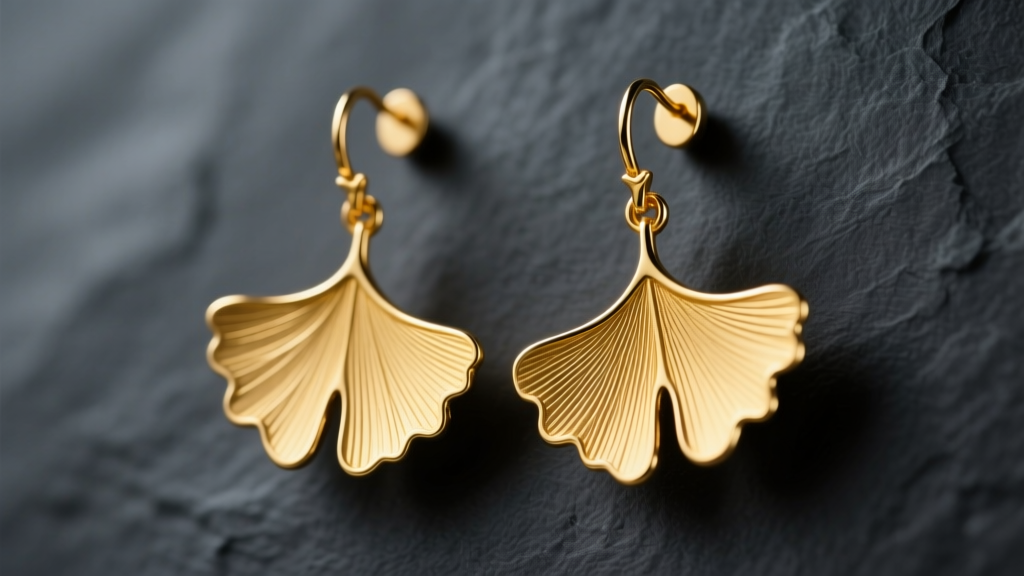
The Ginkgo biloba leaf presents a unique metallurgical challenge for jewelers: its broad, fan-like silhouette requires structural integrity at the stem, while its microscopic dichotomous veining demands high-flow casting alloys to capture the organic texture. When shopping for ginkgo earrings, the material dictates not only the price and color but also how well the intricate leaf veins are preserved over time. According to the GIA Gem Encyclopedia, the physical properties of jewelry metals—such as malleability, hardness, and tarnish resistance—directly impact the longevity of nature-inspired motifs.
Because solid cast ginkgo leaves measuring 30mm x 25mm can weigh upwards of 4.5 grams each, material density is a critical factor. A heavy metal paired with a thin 22-gauge (0.64mm) post will inevitably cause lobe stretching or drooping. In this guide, we break down the exact material properties, manufacturing methods, and care requirements for the most common metals used in ginkgo leaf earrings.
Metal Alloys vs. Alternative Materials: A Deep Dive
Sterling Silver (925) & Argentium 935
Standard 925 sterling silver (92.5% silver, 7.5% copper) is the most common choice for ginkgo earrings due to its excellent casting flow, which captures fine leaf veins beautifully. However, the copper content makes it prone to sulfur-induced tarnishing, which can obscure the micro-veins of the leaf over time. For a superior alternative, look for Argentium 935 silver. By replacing some copper with germanium, Argentium offers a Vickers Hardness (HV) of roughly 95 HV in its annealed state and is highly tarnish-resistant. It maintains the bright, reflective luster needed to highlight the ridges and valleys of a cast ginkgo leaf without requiring frequent chemical polishing.
Solid Gold (14k vs. 18k)
Gold is the premier choice for heirloom-quality ginkgo earrings, but the karat weight drastically alters the physical properties of the piece. 18k gold (75% pure gold) offers a rich, warm yellow that mimics autumn ginkgo leaves perfectly, but its lower hardness (approx. 125 HV) makes thin leaf edges susceptible to bending if dropped. 14k gold (58.5% pure gold), alloyed with copper, silver, and zinc, boasts a higher hardness (approx. 135-140 HV). This makes 14k gold ideal for large, structural ginkgo hoops or dangle earrings where the leaf edges need to resist everyday deformation. Expect to pay between $350 and $850 for a solid 14k pair, depending on the gram weight.
Titanium & Niobium
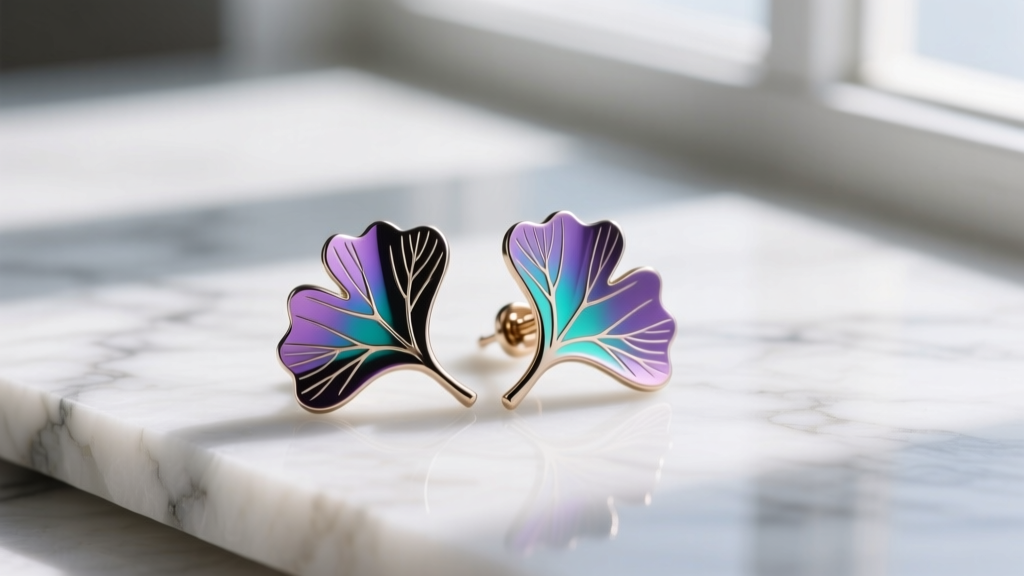
For wearers with severe contact dermatitis or nickel allergies, implant-grade Titanium (Ti 6Al-4V ELI) is the ultimate biocompatible solution. Unlike silver or gold, titanium is rarely cast using traditional lost-wax methods due to its extremely high melting point (1,668°C). Instead, titanium ginkgo earrings are typically CNC machined or laser-cut from sheet metal. This means the leaf veins are usually laser-engraved rather than cast, resulting in a sharper, more geometric interpretation of the ginkgo leaf. Titanium’s ultra-low density (4.43 g/cm³) makes it possible to wear oversized 40mm ginkgo leaf dangles on a standard 20-gauge (0.81mm) post without experiencing lobe fatigue.
Brass, Bronze, and Copper
Base metals like brass (copper and zinc) and bronze (copper and tin) are favored by artisan jewelers for their exceptional fluidity in lost-wax casting. As noted in Rio Grande's metallurgical guides, brass captures microscopic textures better than almost any precious metal. However, raw brass reacts with the skin's natural acids, often leaving a harmless but unsightly green patina on the earlobe. If you choose brass ginkgo earrings, ensure they feature an e-coating (electrophoretic deposition) or a thick rhodium flash plating to create a barrier between the copper alloys and your skin.
Material Properties Comparison Chart
| Material | Density (g/cm³) | Hardness (Vickers) | Casting Detail Retention | Hypoallergenic | Avg. Price Range (Pair) |
|---|---|---|---|---|---|
| 14k Yellow Gold | 13.0 | 135 HV | Excellent | Yes (usually) | $350 - $850 |
| Argentium 935 Silver | 10.3 | 95 HV | Superior | Yes | $80 - $160 |
| Grade 23 Titanium | 4.43 | 310 HV | Poor (Requires Engraving) | Yes (Implant Grade) | $45 - $110 |
| Jeweler's Brass | 8.5 | 100 HV | Superior | No (Contains Copper/Zinc) | $25 - $60 |
Casting vs. Stamping: How Manufacturing Affects Material Choice
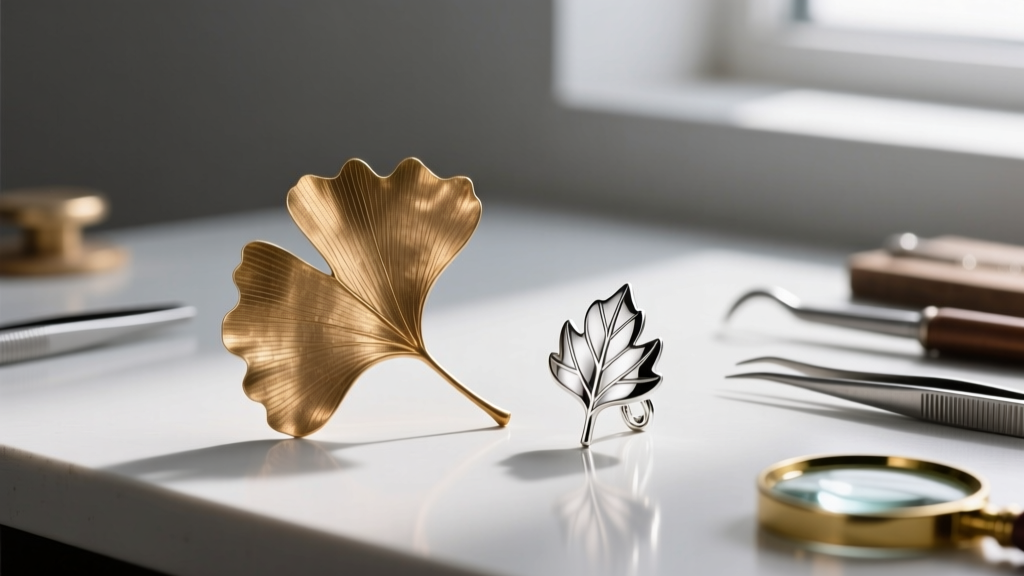
The manufacturing technique heavily influences which material is used for ginkgo earrings. Lost-wax casting is the standard for 3D, sculptural ginkgo leaves. The jeweler carves a wax model, encases it in investment plaster, burns out the wax, and injects molten metal. This method requires metals with low melting points and high fluidity, making silver, gold, and brass the undisputed champions of cast leaf jewelry.
Conversely, die-striking or stamping is used for flat, lightweight ginkgo leaf studs. A sheet of metal is placed under a high-tonnage press and stamped with a steel die. This process work-hardens the metal, increasing its tensile strength. Stamping is highly effective for 14k gold and sterling silver sheets, allowing for mass production of ultra-thin (0.5mm) ginkgo leaves that are incredibly lightweight, requiring only a standard 20-gauge friction post.
Care and Maintenance by Material
Maintaining the intricate veining of your ginkgo earrings requires material-specific care routines:
- Sterling Silver: Avoid liquid silver dips, which can strip the oxidized patina often used to highlight the leaf veins. Instead, use a treated polishing cloth and gently rub along the grain of the veins to avoid flattening the texture.
- Solid Gold: Clean with a solution of warm water and a few drops of mild dish soap. Use a baby-soft toothbrush to dislodge sebum and lotion trapped in the microscopic dichotomous veins of the leaf.
- Titanium: Highly resistant to chemicals, titanium can be cleaned with isopropyl alcohol. However, if your titanium ginkgo earrings are anodized (colored via electricity), avoid ultrasonic cleaners, as the cavitation can strip the anodized oxide layer.
- Brass/Bronze: To remove natural oxidation, apply a paste of lemon juice and baking soda, let it sit for three minutes, and rinse thoroughly. Always dry completely to prevent water spotting.
Final Verdict: Choosing Your Perfect Ginkgo Leaf
Selecting the right material for your ginkgo earrings depends entirely on your lifestyle and biological needs. If you demand heirloom-level detail and have the budget, 14k or 18k solid gold offers unmatched prestige and longevity. For everyday wearers who want brilliant detail retention without the high price tag, Argentium silver is the smartest precious metal investment. Finally, if you suffer from severe metal sensitivities or prefer ultra-lightweight, oversized statement pieces, laser-cut titanium provides a modern, indestructible alternative to traditional casting.


