The 2026 Trend Guide to Gold Cat Earrings & Styling
Discover the 2026 trends for gold cat earrings. Explore material grades, face-shape styling, and expert picks for feline-inspired ear aesthetics.

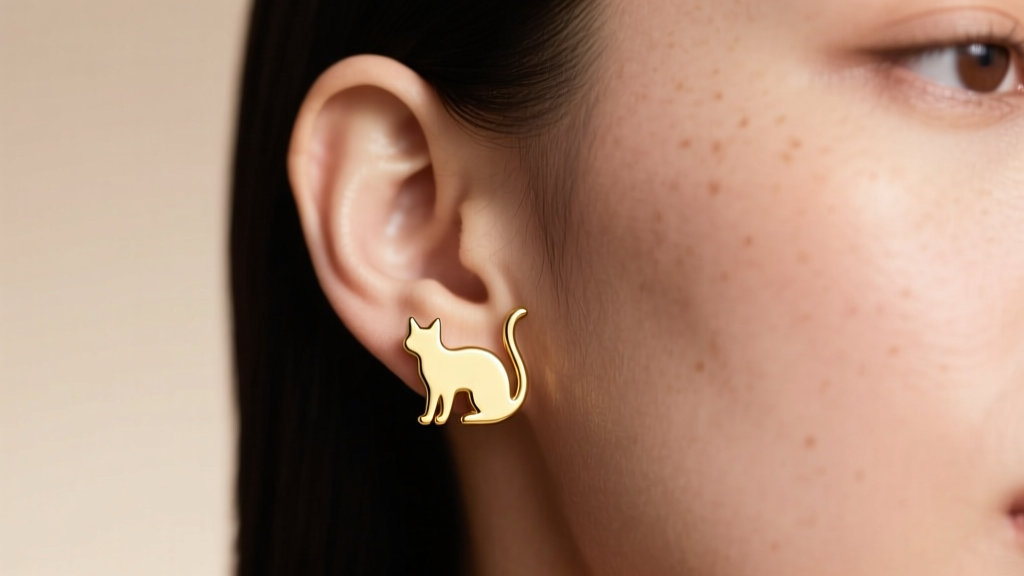
The Evolution of Feline Jewelry: Why Gold Cat Earrings Dominate 2026
The jewelry landscape has shifted dramatically over the last few years. While the early 2020s were defined by chunky chains and minimalist geometric hoops, 2026 has ushered in the era of "curated whimsy." At the forefront of this movement are gold cat earrings. No longer relegated to novelty shops or children's jewelry boxes, feline-inspired ear aesthetics have been elevated by high-end designers and independent artisans alike. Today, gold cat earrings represent a sophisticated blend of personal expression and luxury craftsmanship. Whether you are drawn to the sleek lines of a Siamese silhouette or the playful charm of a sleeping tabby, understanding the nuances of metal purity, gauge sizing, and structural integrity is essential for building a high-quality collection.
According to market analysts, the demand for animal motifs in fine jewelry has surged, driven by a cultural shift toward pet-centric lifestyles and personalized storytelling through accessories. However, buying gold cat earrings requires more than just picking a cute design. The intricate nature of feline features—whiskers, tails, and pointed ears—presents unique engineering challenges for jewelers. In this comprehensive 2026 style guide, we break down everything you need to know about selecting, styling, and maintaining premium gold cat earrings.
Material Breakdown: 14K vs. 18K Gold in Feline Silhouettes
When shopping for gold cat earrings, the karat weight of the metal is not just a matter of color and price; it is a critical factor in the durability of the design. Pure gold (24K) is far too soft for jewelry, so it is alloyed with metals like copper, silver, and zinc. The resulting hardness is measured on the Vickers scale (HV), and this directly impacts how well a cat earring will hold its shape over time.
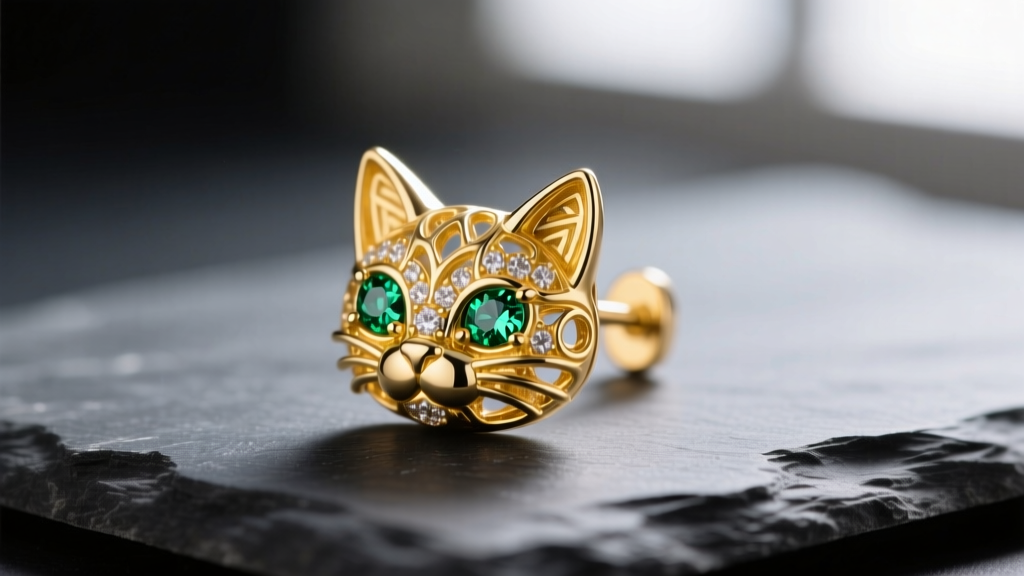
For designs featuring delicate elements like protruding tails, intricate wire-wrapped whiskers, or thin ear tips, 14K gold is structurally superior. With a Vickers hardness of approximately 160 HV, 14K gold resists bending and snapping far better than its higher-karat counterparts. Conversely, 18K gold (75% pure gold, ~125 HV) offers a richer, more saturated yellow hue but is noticeably softer. If you prefer 18K gold, opt for solid, chunky cat silhouettes or sleeping cat crescents where there are no fragile, protruding appendages to catch on clothing or hair.
| Gold Alloy | Purity | Vickers Hardness | Best Cat Motif Style | Avg. Price Range (Studs) |
|---|---|---|---|---|
| 10K Gold | 41.7% | ~200 HV | Ultra-thin whiskers, wire-wrapped outlines | $40 - $90 |
| 14K Gold | 58.3% | ~160 HV | Articulated tails, delicate cast silhouettes | $120 - $350 |
| 18K Gold | 75.0% | ~125 HV | Solid chunky castings, bezel-set gemstone eyes | $400 - $1,200+ |
As noted by the Gemological Institute of America (GIA), understanding the alloy composition is vital for consumers seeking longevity in their fine jewelry, especially for pieces with high-relief details like animal motifs.
Face Shape & Placement: Styling Feline Studs and Dangles
The versatility of gold cat earrings lies in their ability to be adapted to various face shapes through strategic styling. The visual weight of the earring can either balance or exaggerate your natural bone structure.
Styling by Face Shape
- Round Faces: Opt for angular, geometric cat designs. Origami-style gold cat studs with sharp, straight lines help elongate the face and add structural contrast to soft curves. Avoid perfectly circular sleeping cat motifs, which can emphasize roundness.
- Square Faces: Soften a strong jawline with curved, flowing designs. A 14K gold dangle earring featuring a cat with a gracefully curving tail, or a smooth, sleeping crescent cat huggie, will draw the eye downward and soften angular features.
- Heart-Shaped Faces: Balance a narrower chin with bottom-heavy designs. Drop earrings where the gold cat is positioned at the bottom of a delicate chain add visual weight to the lower half of the face.
- Oval Faces: The universal shape. You can effortlessly pull off asymmetrical trends, such as wearing a stretching cat stud on one lobe and a sitting cat ear cuff on the opposite helix.
Lobe vs. Cartilage Placement and Gauge Sizing
Placement is just as crucial as the design. Standard lobe piercings typically accommodate 20-gauge (0.8mm) or 18-gauge (1.0mm) posts. Most high-quality gold cat studs are crafted with 18G posts to provide enough structural support for the weight of the metal motif without bending the post. However, if you are looking to incorporate feline jewelry into your cartilage curation, you must pay strict attention to gauge sizes.
Helix and tragus piercings are generally pierced at 16-gauge (1.2mm) or 18-gauge. Many mass-produced novelty cat earrings utilize flimsy 22G posts that will irritate cartilage and cause migration. For cartilage placements, we highly recommend purchasing a 16G or 18G titanium flat-back labret and swapping the front for a threadless or internally threaded 14K gold cat top. This ensures medical-grade safety for the piercing channel while allowing you to wear your preferred gold motif.
2026 Design Trends: From Minimalist Outlines to Gemstone Eyes
The design language for gold cat earrings has matured significantly. In 2026, we are seeing a departure from hyper-realistic, heavily detailed castings in favor of stylized, modern interpretations.
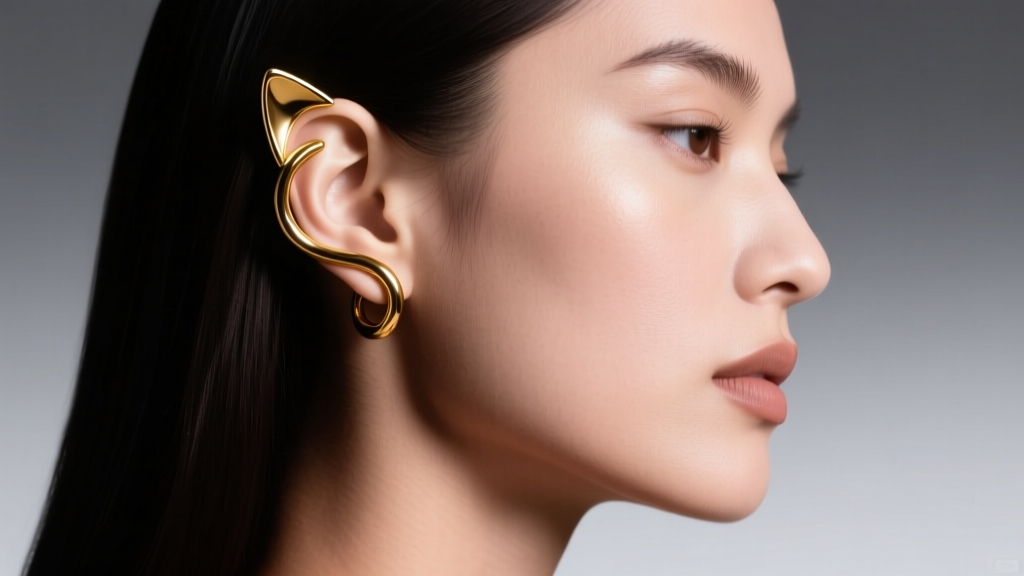
Top 3 Feline Ear Trends for 2026
- The Negative Space Outline: Instead of a solid gold casting, designers are using continuous 14K gold wire to create the mere outline of a cat's face or body. This "ghost" effect is incredibly lightweight, making it ideal for multi-piercing lobes where heavy earrings would cause stretching and discomfort.
- Tsavorite and Emerald Eyes: Adding a pop of color to yellow or rose gold is a massive trend. Jewelers are setting 1mm to 1.5mm Tsavorite garnets or lab-grown emeralds into the eyes of gold cat studs. Tsavorite is particularly favored for its brilliant green hue and excellent durability (Mohs hardness of 7.5-8), making it resistant to the scratches that softer stones like opal would suffer in such a small setting.
- Kinetic Articulation: High-end artisans are introducing moving parts into their designs. Imagine a gold cat stud where the tail is attached via a microscopic jump ring, allowing it to sway gently with your movements. This adds a dynamic, lifelike quality to the jewelry.
Care and Maintenance for Intricate Gold Pet Motifs
The very details that make gold cat earrings charming—tiny ears, textured fur finishes, and recessed gemstone eyes—also make them magnets for dirt, lotion, and sebum buildup. Proper maintenance is required to keep the gold luminous and the settings secure.
According to care guidelines published by Jewelers of America, ultrasonic cleaners are highly effective for plain gold but can be disastrous for jewelry with micro-pavé or fracture-filled gemstones. If your gold cat earrings feature emerald eyes, never use an ultrasonic cleaner; the high-frequency vibrations can shatter the stone or strip its oil treatments.
"When cleaning intricate animal motifs, avoid harsh chemical dips. Instead, use a few drops of mild, phosphate-free dish soap in warm water. Soak the earrings for ten minutes, then gently agitate the crevices around the cat's ears and tail using a soft-bristled infant toothbrush. Rinse thoroughly and dry with a lint-free microfiber cloth to prevent water spots on the high-polish areas."
Furthermore, always store your gold cat earrings in individual soft pouches. The pointed ears and protruding tails of feline silhouettes are notorious for scratching softer gold pieces or getting tangled in chain necklaces. By treating these pieces with the respect their craftsmanship demands, your gold cat earrings will remain a staple of your curated ear aesthetic for decades to come.


