Golden Earring Radar Love Lyrics & The Ultimate Gold Jewelry Care Guide
Searching for golden earring radar love lyrics? Tune into our expert guide on cleaning, maintaining, and protecting your precious gold earrings.

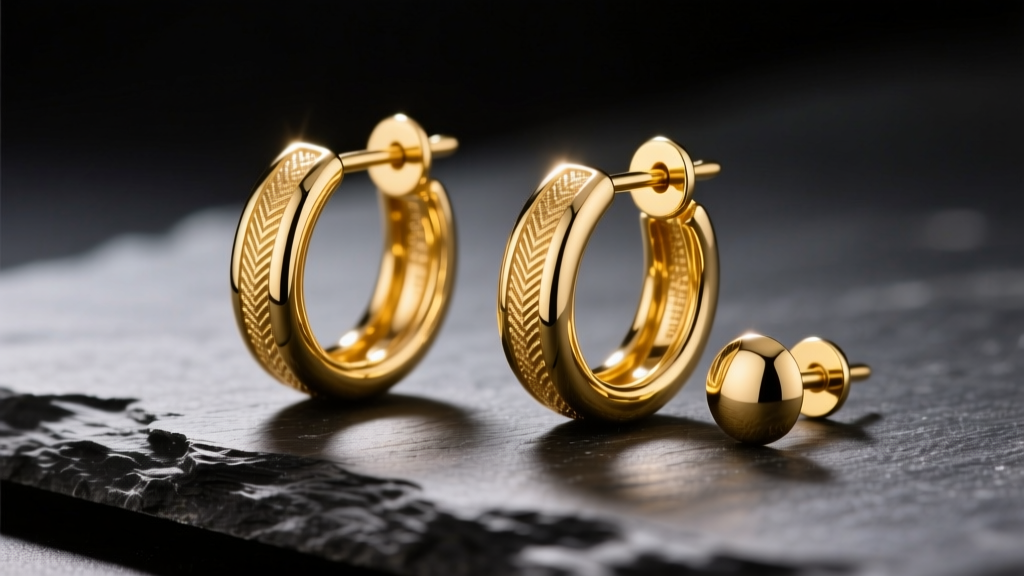
While thousands of music fans type golden earring radar love lyrics into search engines every month looking for the iconic 1973 classic rock anthem by the Dutch band Golden Earring, our focus at Jewel Style Radar is on a different kind of treasure: actual golden earrings. Whether you are rocking vintage 14k gold hoops, modern 18k gold huggies, or delicate cartilage studs, your fine jewelry requires its own kind of 'radar love'—a meticulous, scientifically grounded care routine to maintain its structural integrity and brilliant luster.
Gold is a noble metal, meaning it resists corrosion and oxidation better than almost any other element on the periodic table. However, the gold used in earrings is rarely pure. To understand how to properly clean and maintain your earrings, you must first understand the metallurgy of your specific pieces and the environmental hazards they face daily.
The Metallurgy of Your Gold Earrings: 14K vs. 18K vs. 22K
Pure 24-karat gold is exceptionally soft—so soft that it can be bent with your bare hands and is entirely unsuitable for secure earring posts or clasps. To create durable jewelry, gold is alloyed with other metals like copper, silver, zinc, and sometimes nickel or palladium. These alloy metals dictate the color, strength, and specific care requirements of your earrings.
| Karat | Gold Purity | Common Alloy Metals | Durability & Care Profile |
|---|---|---|---|
| 14K Gold | 58.5% | Copper, Silver, Zinc | Highly durable. Resists scratching. Requires standard cleaning; copper content can react to highly acidic sweat. |
| 18K Gold | 75.0% | Copper, Silver, Palladium | Softer, richer color. Prone to micro-scratches. Requires gentle polishing and careful storage. |
| 22K Gold | 91.6% | Silver, Copper | Very soft. Rarely used for structural posts. Susceptible to bending and denting; handle with extreme care. |
According to the Gemological Institute of America (GIA), the alloy metals in 14k and 18k gold are what actually cause tarnishing or discoloration over time, not the gold itself. When copper and zinc are exposed to sulfur in the air, chlorine in pools, or the natural acids in your skin, they can develop a dull film that requires targeted cleaning.
The Daily 'Radar' Routine: Preventative Maintenance
The best cleaning method is the one you never have to use. By establishing a daily 'radar' for environmental hazards, you can drastically reduce the need for deep cleaning and protect the finish of your gold earrings.
- The 'Last On, First Off' Rule: Always put your gold earrings on after applying hairspray, perfume, lotions, and makeup. The alcohol and aerosolized chemicals in cosmetics can leave a cloudy film on gold and degrade the polish.
- Chlorine is the Enemy: Never wear gold earrings in swimming pools or hot tubs. Chlorine reacts violently with the alloy metals in 14k and 18k gold, leading to a phenomenon called 'stress corrosion cracking,' which can cause earring posts to snap cleanly in half.
- Sweat and Acidity: If you wear gold hoops during heavy workouts, wipe them down with a damp microfiber cloth immediately afterward. The lactic acid and salts in sweat can dull the alloy metals over time.
Deep Cleaning Protocols for Gold Studs and Hoops
When your earrings lose their brilliance, it is usually due to a buildup of dead skin cells, sebum, and environmental dust trapped behind the settings and along the earring posts. Follow this professional-grade cleaning protocol to restore their factory shine.
Step-by-Step Cleaning Guide
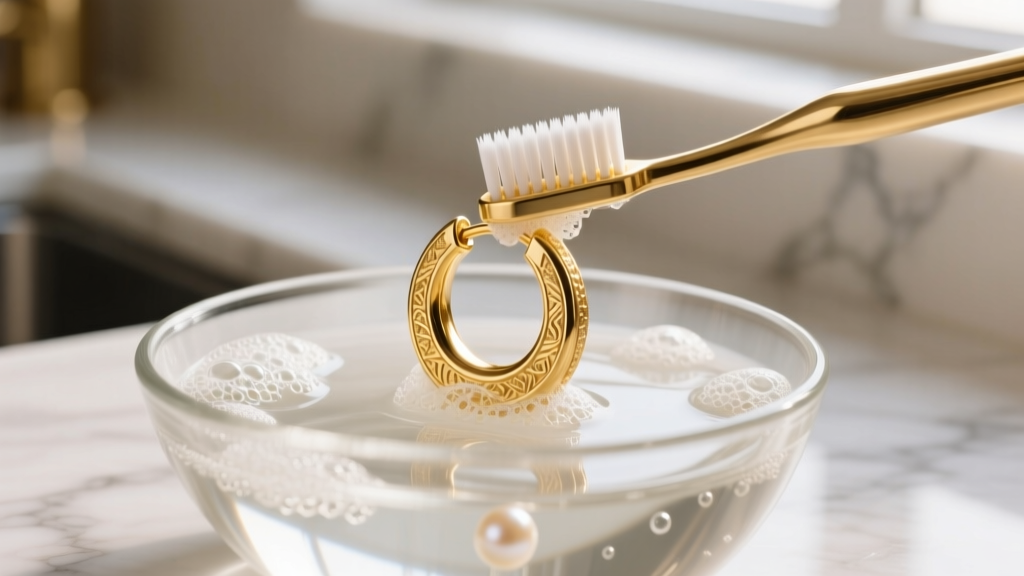
- Prepare the Solution: Mix one cup of lukewarm (not hot) distilled water with three drops of mild, phosphate-free dish soap (original blue Dawn is the industry standard among jewelers). Avoid harsh detergents or antibacterial soaps that contain moisturizing beads.
- The Soak: Submerge your gold earrings in the solution for 15 to 20 minutes. This softens hardened sebum and cosmetic residue without damaging the metal.
- Agitation: Using a brand-new, extra-soft baby toothbrush, gently brush the earrings. Pay special attention to the back of the settings, the hinge mechanisms of hoops, and the threading on earring posts. Never use stiff-bristled brushes, as they can leave micro-scratches on high-polish 18k gold.
- The Rinse: Rinse the earrings thoroughly under a gentle stream of lukewarm water. Ensure the drain is plugged or use a mesh strainer to prevent losing small studs.
- Drying: Pat dry with a lint-free microfiber cloth. Avoid paper towels or tissues, as the wood pulp fibers can cause microscopic abrasions on polished gold surfaces.
Gemstone Warnings: When to Avoid Ultrasonic Cleaners
Many jewelry owners invest in at-home ultrasonic cleaners, which use high-frequency sound waves to create microscopic cavitation bubbles that blast dirt out of crevices. While ultrasonics are fantastic for cleaning plain gold hoops or diamond studs, they are highly destructive to certain gemstones often set in gold earrings.
Jewelers of America explicitly warns against using ultrasonic cleaners on fracture-filled stones or porous gems. If your gold earrings feature emeralds (which are typically treated with cedar oil or resins), opals (which contain up to 20% water), pearls, or turquoise, the ultrasonic vibrations will shatter the stones or boil out their chemical treatments, leaving them dull and fractured. For gemstone-set gold earrings, stick strictly to the manual soapy soak method outlined above.
Cartilage vs. Lobe: Hardware and Healing Considerations
Caring for gold earrings changes significantly when you move from standard lobe piercings to cartilage placements like helixes, tragi, or conches. Cartilage tissue is dense, avascular, and highly prone to irritation, making the hardware design and metal grade critical.
Gauge Sizes and Threading
Standard lobe studs are typically 20-gauge (0.81mm) or 18-gauge (1.02mm) with friction backs or butterfly clutches. However, cartilage jewelry requires thicker, more stable hardware to prevent the 'cheese-cutter effect,' where thin metal migrates through the tissue. Cartilage hoops and huggies are usually 16-gauge (1.2mm) or 14-gauge (1.6mm).
When cleaning the posts of cartilage jewelry, the threading style matters immensely:
- Externally Threaded: The screw threads are on the post itself. These are notorious for harboring bacteria in the grooves and causing micro-tears in the fistula (the piercing channel) during insertion. They require rigorous brushing with a soft toothbrush to ensure no biofilm remains in the threads.
- Internally Threaded & Threadless: The threading is on the decorative end, or the jewelry uses a push-pin tension fit. These are vastly superior for cartilage health, as the smooth post glides through the tissue without causing trauma. They are also significantly easier to sanitize.
For fresh or healing cartilage piercings, solid 14k or 18k gold is acceptable only if it is alloyed for biocompatibility (nickel-free). However, the Association of Professional Piercers (APP) recommends implant-grade titanium (ASTM F-136) for the initial healing phase, as even high-karat gold can cause allergic reactions in open wounds due to copper or zinc alloys. Once fully healed, gold is perfectly safe and can be maintained with standard saline sprays and mild soap.
Polishing and Long-Term Storage
Over time, 18k and 22k gold earrings will inevitably accumulate fine surface scratches from daily wear. To restore a mirror-like finish, use a jeweler's rouge-impregnated polishing cloth (such as a Sunshine cloth). Rub the cloth gently in one direction; never use a circular motion, as this can create visible swirl marks on the metal.
Pro Storage Tip: Never toss your gold earrings into a communal jewelry box. Gold is easily scratched by harder gemstones like diamonds, sapphires, and rubies. Store each pair in individual soft flannel pouches or acid-free tissue paper to prevent metal-on-metal friction and environmental oxidation.
Ultimately, whether you are a fan of classic rock lyrics or simply a devotee of fine jewelry, treating your gold earrings with respect and scientific precision ensures they will remain a radiant part of your personal style for decades to come.


