Harper Murray Earring Stack: A Material Properties Guide
Master the Harper Murray earring stack with our 2026 metallurgical guide to titanium, gold karats, vermeil, and galvanic reactions.

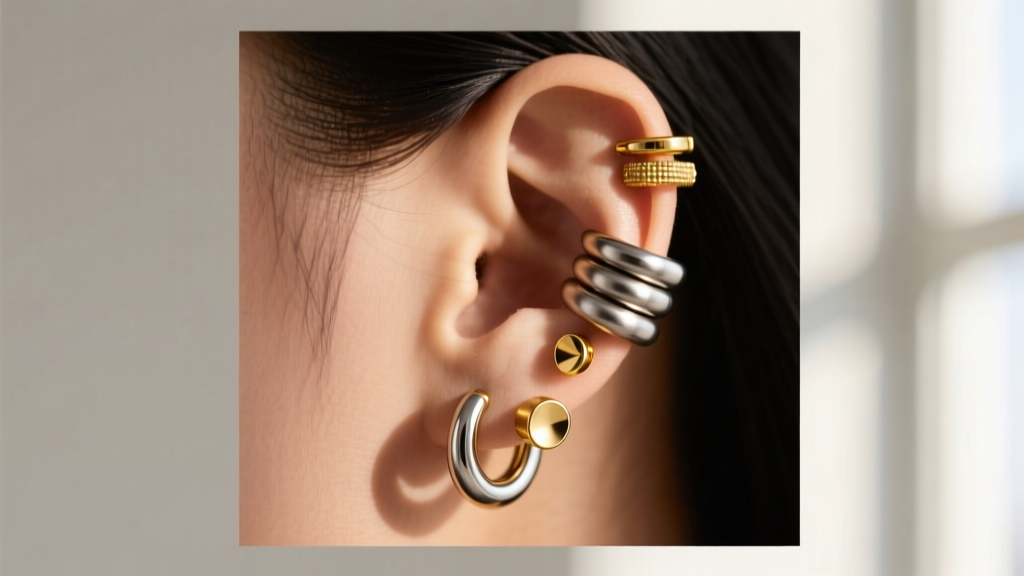
The modern curated ear is an exercise in architectural balance, and the Harper Murray earring stack has become the definitive benchmark for this aesthetic in 2026. Characterized by a deliberate mix of chunky huggies, delicate chain drops, and structural cartilage cuffs, this specific stacking style relies heavily on visual weight distribution. However, the true foundation of any high-end ear stack is not just the silhouette—it is the metallurgical integrity of the pieces involved. When you are housing five to nine pieces of jewelry in a single ear, material properties dictate not only the longevity of the jewelry but the biological response of your tissue.
Building a resilient, irritation-free stack requires a deep understanding of metal alloys, galvanic reactions, and threading mechanics. Below, we deconstruct the material science required to execute a flawless, long-lasting ear stack.
The Core Materials in a Curated Ear Stack
To achieve the layered look of a Harper Murray earring stack without triggering contact dermatitis or premature tarnishing, you must strategically assign materials based on their specific anatomical placement. Cartilage tissue reacts vastly differently to metal friction than the fleshy earlobe.
Implant-Grade Titanium (The Cartilage Foundation)
For any helix, conch, or tragus piercing, ASTM F136 implant-grade titanium is the undisputed standard. Unlike commercial "surgical steel," which contains up to 10% nickel, true implant-grade titanium is entirely nickel-free and biocompatible. According to the Association of Professional Piercers (APP), the surface finish of polished titanium resists bacterial biofilm buildup far better than porous alternatives. In a dense stack where hair and headphones frequently snag on cartilage pieces, titanium's high strength-to-weight ratio ensures that delicate 16-gauge hoops will not warp or snap under pressure.
Solid 14k vs. 18k Gold (The Lobe Anchor)
Gold is the traditional anchor for lobe piercings, but the karat weight dramatically alters its physical properties. The Gemological Institute of America (GIA) notes that pure 24k gold is far too soft for body jewelry. Therefore, it is alloyed with copper, silver, and zinc.
- 14k Gold (58.5% Gold): Offers a higher Vickers hardness rating, making it highly resistant to scratching and ideal for the internal threading of flat-back labrets that endure daily friction.
- 18k Gold (75% Gold): Yields a richer, warmer color but is metallurgically softer. It is best reserved for low-friction areas like standard lobe studs or decorative chain drops where structural stress is minimal.
Gold Vermeil vs. Standard Plating (The Accent Pieces)
To achieve the mixed-texture aesthetic of a Harper Murray earring stack on a budget, many turn to gold vermeil. By FTC guidelines, true vermeil must consist of a sterling silver base plated with a minimum of 2.5 microns of 10k, 14k, or 18k gold. Standard gold-plated brass, by contrast, often features less than 0.5 microns of gold and will rapidly oxidize when exposed to the sebum and sweat of a multi-piercing environment. Vermeil is acceptable for healed lobe huggies but should never be used in unhealed or tight cartilage piercings due to the eventual wear of the gold layer exposing the underlying silver to moisture.
Material Property Comparison Matrix
When selecting pieces for your stack, refer to this metallurgical matrix to ensure you are matching the material to the correct piercing environment.
| Material | Nickel Content | Tarnish Resistance | Best Piercing Placement | 2026 Avg. Price Range |
|---|---|---|---|---|
| ASTM F136 Titanium | 0% (Nickel-Free) | Exceptional | Helix, Conch, Tragus, Daith | $40 - $120 |
| Solid 14k Gold | Trace (Alloy dependent) | High | Standard Lobes, Upper Lobes | $150 - $400 |
| Solid 18k Gold | Trace (Alloy dependent) | High | Healed Lobes (Low friction) | $250 - $600+ |
| Gold Vermeil | 0% (Sterling Base) | Moderate (Wears over time) | Healed Lobe Huggies, Dangles | $45 - $110 |
| Surgical Steel (316L) | 8% - 10% | Moderate | Not recommended for stacks | $15 - $35 |
Galvanic Reactions: Why Mixed-Metal Stacks Fail
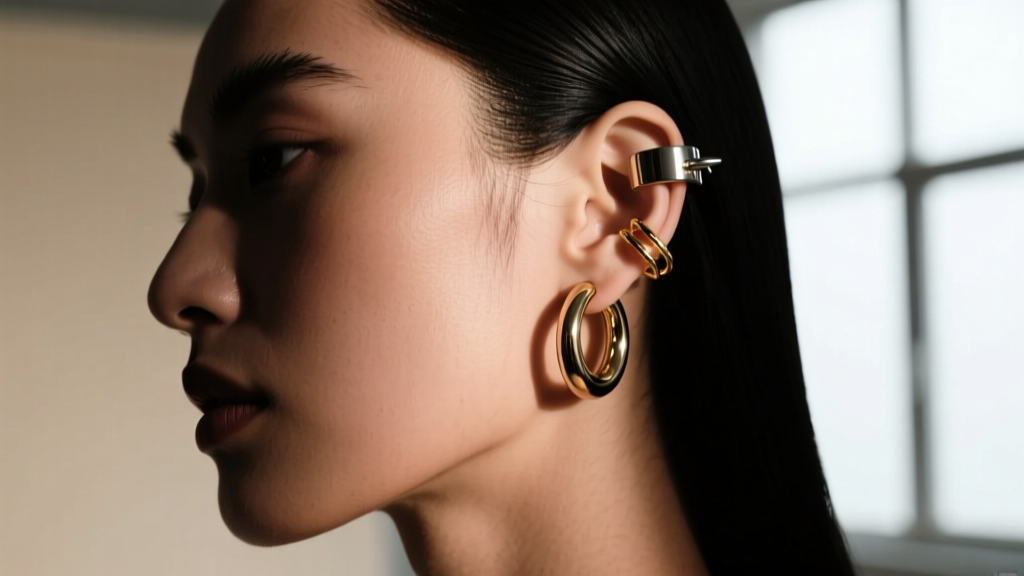
A signature element of the Harper Murray earring stack is the intentional mixing of metal tones—pairing yellow gold lobe chains with silver or titanium cartilage cuffs. While visually striking, this practice introduces the risk of galvanic corrosion.
Galvanic corrosion occurs when two dissimilar metals come into physical contact in the presence of an electrolyte. Human sweat and natural ear sebum act as highly effective electrolytes. If a sterling silver huggie constantly rubs against a 14k gold chain drop, the less "noble" metal (silver) will act as an anode and corrode at an accelerated rate, leaving dark oxidation marks on your skin and degrading the jewelry.
Expert Troubleshooting: To safely mix metals in a dense stack, ensure there is a physical gap between the pieces. Use solid gold or titanium spacer beads on chains, and opt for anodized titanium (which can be colored to look like gold or rose gold without introducing a dissimilar metal alloy) to bridge the aesthetic gap without triggering a galvanic cell.
Gauge Sizing and Threading Mechanics
The structural integrity of your stack is heavily reliant on gauge sizing and threading types. A common failure mode in curated ears is the migration or tearing of piercings due to improper post thickness.
The Gauge Standard
- 20-Gauge (0.81mm): Standard for delicate lobe wires and lightweight chain drops. Too thin for cartilage; will cause the "cheese-cutter effect" under pressure.
- 18-Gauge (1.0mm): The versatile middle ground. Ideal for upper lobes, snug huggies, and standard helix hoops.
- 16-Gauge (1.2mm): The mandatory standard for conch, tragus, and daith piercings. Provides the structural rigidity required to prevent rejection and migration.
Internal vs. External Threading
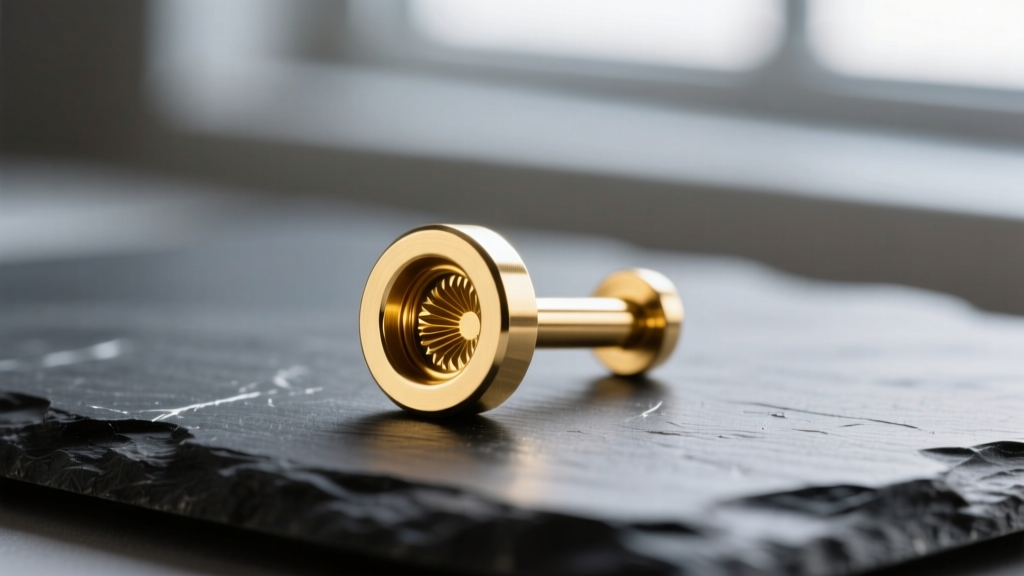
For any flat-back labrets used in a Harper Murray earring stack, internally threaded or threadless (push-pin) jewelry is non-negotiable. Externally threaded posts feature screw threads on the bar itself, which must pass through the delicate fistula (piercing channel) every time the jewelry is changed, causing micro-tears and scar tissue buildup. Internally threaded posts, where the screw is on the decorative end, feature a smooth, polished bar that glides through the tissue without causing trauma. High-end manufacturers like BVLA and Maria Tash exclusively utilize internal threading or precision tension-fit threadless systems for this exact reason.
Maintenance and Longevity of Your Stack
Even the highest quality ASTM F136 titanium and 14k gold require specific maintenance protocols to maintain their luster and prevent biological buildup in a dense stacking environment.
- Ultrasonic Cleaning: Once a month, remove your stack and place the jewelry in an ultrasonic cleaner with a mild, ammonia-free jewelry solution. This dislodges sebum and dead skin cells trapped in the crevices of huggie hinges and chain links.
- Friction Backs vs. Flat Backs: Retire all traditional butterfly friction backs. They trap moisture against the rear of the earlobe, leading to localized dermatitis. Replace them with 14k gold or titanium flat-back labrets that sit flush against the skin.
- Moisture Control: The most common cause of irritation bumps in a cartilage stack is trapped moisture after showering. Use a hair dryer on the "cool" setting to thoroughly dry the rear of your ear stack immediately after washing.
Ultimately, executing a flawless Harper Murray earring stack is an investment in both aesthetic design and material science. By respecting the biological realities of your tissue and the metallurgical properties of your jewelry, you ensure that your curated ear remains a timeless, irritation-free statement piece for years to come.