Hawaii Flower Earrings Buying Guide: Materials & Styles
Discover our expert buying guide for hawaii flower earrings. Learn about metal grades, enamel types, and botanical accuracy for fine jewelry.

The evolution of tropical jewelry has transformed hawaii flower earrings from mass-produced tourist souvenirs into highly sought-after pieces of fine, heirloom-quality jewelry. In 2026, discerning buyers are looking beyond the gift shop, seeking pieces that honor the botanical accuracy of island flora while utilizing premium metallurgy and advanced enameling techniques. Whether you are investing in a pair of daily-wear studs or a statement pair of dangles for a destination wedding, understanding the structural and material nuances of these earrings is critical.
This comprehensive buying guide breaks down the exact specifications, material grades, and mechanical features you must evaluate before purchasing floral-inspired island jewelry.
Botanical Accuracy: Decoding the Blossoms
True artisan jewelers do not simply cast a generic five-petal shape; they replicate the specific anatomical features of native and naturalized Hawaiian flora. When evaluating high-end hawaii flower earrings, look for these distinct botanical markers:
Plumeria (Frangipani)
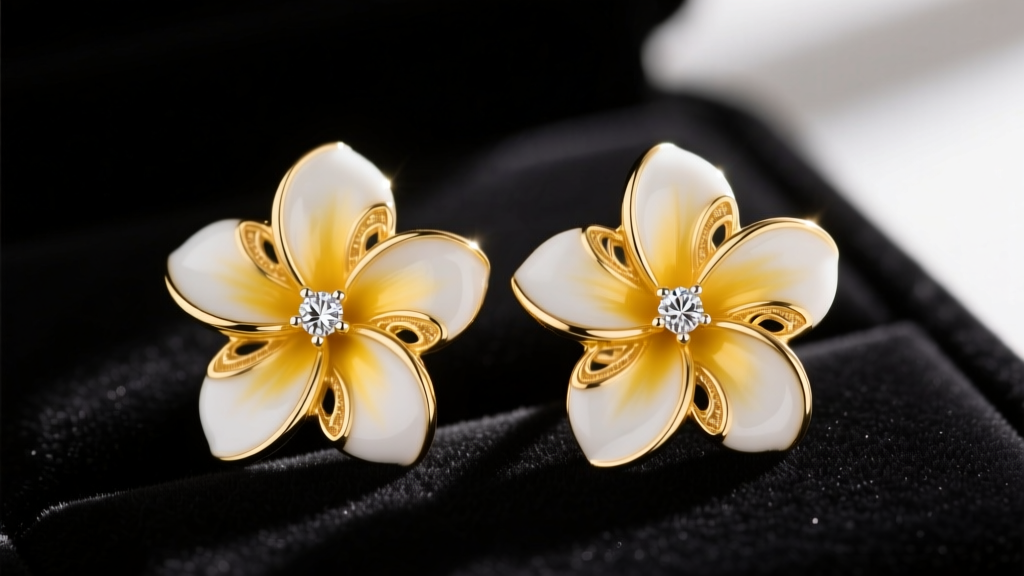
The plumeria is the most iconic motif in island jewelry. A botanically accurate plumeria casting will feature five overlapping petals with a distinct 'pinwheel' asymmetry. The center should exhibit a subtle gradient, often achieved through a yellow-to-white enamel transition or a central diamond accent representing the flower's throat. Cheap castings often feature symmetrical, flat petals lacking the organic twist of the real bloom.
Hibiscus
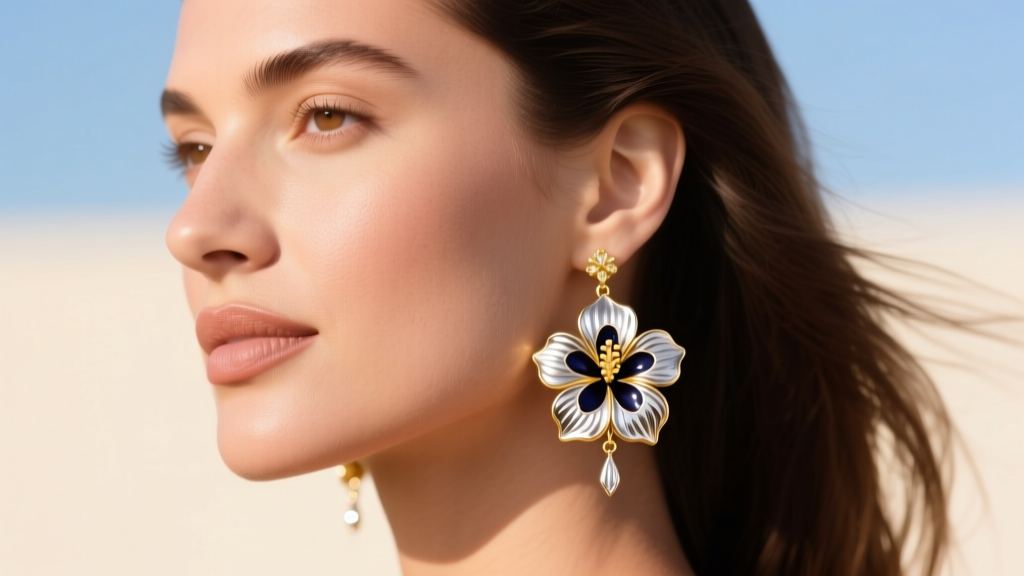
As the state flower, the hibiscus requires intricate metalwork to capture its ruffled petal edges and prominent, pollen-dusted stamen. Fine jewelers will use micro-pavé settings along the stamen or employ black rhodium plating to create depth and contrast against yellow gold. If the stamen is missing or rendered as a simple metal bead, the piece is likely a low-tier fashion casting.
Orchid and Pikake
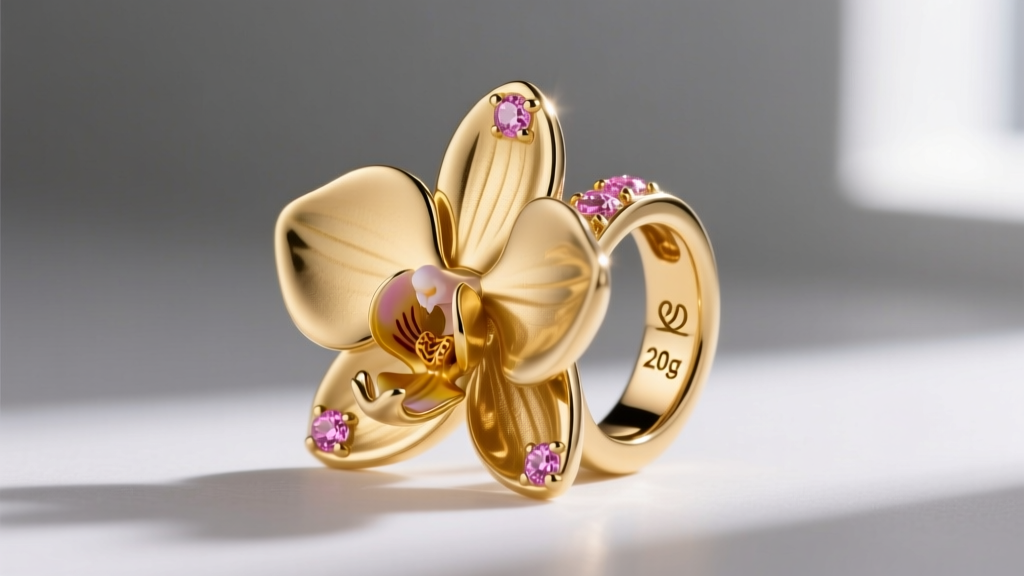
Orchid earrings demand complex, multi-level casting to capture the distinctive 'lip' (labellum) of the petal. Pikake (jasmine) is typically rendered in clusters of small, four-petaled buds, requiring precise soldering to ensure the delicate stems do not snap under tension.
Material Grades: What Separates Heirloom from Souvenir
The humid, salt-heavy air of tropical climates is notoriously harsh on jewelry. The base metal of your hawaii flower earrings dictates not only the price but the longevity of the piece. According to the Federal Trade Commission Jewelry Guides, precious metal stamping must be strictly accurate, making hallmark verification your first step in authentication.
| Metal Grade | Composition | Durability & Climate Resistance | Best Use Case |
|---|---|---|---|
| 14k Yellow Gold | 58.5% Pure Gold | Highly durable, excellent tarnish resistance. Ideal for daily wear in humid environments. | Everyday studs, huggies, and active lifestyle dangles. |
| 18k Yellow Gold | 75% Pure Gold | Richer, deeper yellow hue but softer. More prone to micro-scratches but holds intricate detail beautifully. | Heirloom pieces, special occasion dangles, and ear cuffs. |
| 925 Sterling Silver | 92.5% Silver, 7.5% Copper | Prone to rapid oxidation and tarnishing in salty, humid air unless heavily rhodium-plated. | Budget-friendly fashion pieces; requires rigorous maintenance. |
| Gold Vermeil | Silver base with 2.5μm+ 10k/14k Gold | Moderate durability. The gold layer will eventually wear through on high-friction areas like posts and clasps. | Occasional wear; not recommended for daily tropical use. |
For buyers seeking the authentic warmth of traditional island jewelry, 14k or 18k solid yellow gold remains the undisputed standard. Avoid gold-plated brass or copper alloys, as the underlying base metals will react with sweat and humidity, causing skin discoloration and structural degradation.
The Art of Enamel: Cold Paint vs. Vitreous Firing
Color is what brings floral jewelry to life, but not all color applications are created equal. The enamel work on hawaii flower earrings is a primary indicator of the piece's manufacturing pedigree.
Cold Enamel (Epoxy Resin)
Often found in mid-tier and fashion jewelry, cold enamel is essentially a hardened, tinted epoxy resin. It is poured into the metal recesses and cured at room temperature. While it offers vibrant, opaque colors, it is highly susceptible to scratching, chipping, and yellowing when exposed to prolonged UV light and tropical heat. Over a span of three to five years, cold enamel in white plumeria centers will inevitably develop a dull, yellowish tint.
Vitreous Enamel (Glass Firing)
Heirloom-quality floral earrings utilize vitreous enamel, which is finely ground glass fused to the metal substrate in a kiln at temperatures exceeding 1,400°F (760°C). This process creates a chemical bond between the glass and the gold or silver. Vitreous enamel is impervious to UV fading, highly scratch-resistant, and possesses a translucent depth that mimics the delicate tissue of real flower petals. When inspecting a piece, look for the glass-like luster and smooth, continuous surface that characterizes true fired enamel.
Sizing, Gauges, and Backing Mechanics
The structural integrity of the earring post and backing is frequently overlooked by buyers focused solely on the frontal design. A poorly engineered post will cause discomfort, while an inadequate backing risks the loss of a valuable asset.
Post Gauge Specifications
- 20-Gauge (0.81mm): The industry standard for lightweight studs and small huggies. It fits comfortably through standard lobe piercings without causing stretching.
- 18-Gauge (1.02mm): Required for heavier dangle earrings or large floral hoops. The thicker wire prevents the earring from drooping forward, ensuring the flower motif remains perfectly upright and visible.
- 16-Gauge (1.29mm): Occasionally used for cartilage placements or heavy, oversized statement pieces designed for stretched lobes.
Securing the Bloom: Backing Types
For fine gold and diamond-accented hawaii flower earrings, standard friction backs (butterfly clasps) are insufficient. The tension springs in friction backs wear out, leading to lost earrings. Instead, demand La Pousette (screw) backs or jumbo silicone disc backers with locking mechanisms. For heavy floral dangles, ensure the earring features an Omega clip or a lever-back closure with a secondary safety catch to distribute the weight evenly across the earlobe.
Gemstone Accents and Authenticity
Modern interpretations of tropical floral jewelry frequently incorporate gemstones to represent dew drops or the flower's reproductive centers. When diamonds are used in the center of a plumeria or along the stamen of a hibiscus, they are typically melee stones (under 0.15 carats).
Always request documentation for gemstone accents. The Gemological Institute of America (GIA) provides extensive resources on diamond grading, and reputable jewelers will disclose whether the melee stones are natural, lab-grown, or simulated (CZ). For colored accents, pink sapphires (representing orchids) and tsavorite garnets (representing leaves and stems) are premium choices that offer exceptional hardness (9 and 7.5 on the Mohs scale, respectively) compared to softer, easily scratched stones like opal or pearl.
Price Tiers: Setting Realistic Expectations
Understanding the market pricing for hawaii flower earrings protects you from both overpaying for fashion jewelry disguised as fine jewelry and underestimating the cost of true artisanal work.
The Maker's Mark: Authentic Hawaiian heirloom and fine floral jewelry will always bear a registered maker's mark (hallmark) alongside the metal purity stamp (e.g., '14K'). An unmarked piece claiming to be solid gold is a major red flag.
- Fashion Tier ($30 - $120): Sterling silver or gold-plated brass. Cold enamel, cubic zirconia accents, and mass-produced die-struck or 3D-printed resin castings. Expect a lifespan of 1-3 years with regular wear.
- Mid-Tier / Artisan ($250 - $800): Solid 10k or 14k gold. Hand-finished castings with vitreous enamel or high-quality synthetic spinel. Friction backs or standard lever-backs. Excellent for daily wear and meaningful gifts.
- Heirloom / Fine Jewelry ($1,200 - $5,000+): Solid 18k gold or platinum. Custom, botanically accurate hand-carved waxes. Vitreous guilloché enamel, natural VS-clarity melee diamonds, and precision screw-backs. These pieces are designed to be passed down through generations.
Care and Maintenance for Tropical Climates
To preserve the intricate details and vibrant colors of your floral earrings, a strict maintenance regimen is required, especially if you live in or frequently visit coastal areas.
- Rinse After Exposure: Saltwater and chlorinated pool water are highly corrosive. Rinse your earrings in distilled water immediately after swimming.
- Ultrasonic Warnings: While ultrasonic cleaners are excellent for bare diamond and gold jewelry, never place enameled hawaii flower earrings in an ultrasonic bath. The high-frequency vibrations can cause microscopic fractures in both cold and vitreous enamel, leading to catastrophic chipping.
- Proper Storage: Store floral studs and dangles in individual anti-tarnish cloth pouches. The overlapping petals of floral designs are prone to scratching if tossed loosely into a jewelry box alongside harder gemstones like diamonds or sapphires.
By prioritizing botanical accuracy, demanding solid metallurgical standards, and understanding the mechanics of fine jewelry construction, you can acquire hawaii flower earrings that are not merely decorative, but enduring works of wearable art.


