A Step-by-Step Guide to Hoop Earrings Guys Can Wear Daily
Discover how to select, size, and maintain hoop earrings guys can wear daily. Learn gauge metrics, metal grades, and face-shape styling tips.


Why Most Men Buy the Wrong Hoop Earrings
Selecting the correct wire thickness and inner diameter prevents tissue migration and ensures the hardware sits flush against the male jawline. The market is flooded with poorly sized accessories, leaving many men frustrated by snagging, irritation, and awkward proportions. As of 2026, the trend has shifted heavily toward minimalist, flush-fitting huggies and seamless clickers over oversized statement hoops. This guide breaks down the exact metrics you need to buy, wear, and maintain hoop earrings guys actually want to keep in their ears.
Step 1: Determine Your Exact Gauge (Wire Thickness)
The gauge refers to the thickness of the metal wire that passes through your piercing. Wearing a wire that is too thin for your piercing hole can cause the "cheese cutter effect," where the heavy hoop slowly migrates downward through the earlobe tissue.
- 20 Gauge (0.81mm): Standard for basic fashion earrings, but generally too thin for men's daily-wear hoops as it lacks structural durability.
- 18 Gauge (1.02mm): The most common size for standard male lobe piercings. Ideal for lightweight huggies and small hoops.
- 16 Gauge (1.29mm): Standard for cartilage (helix/tragus) and slightly thicker lobes. Offers excellent durability for active lifestyles.
- 14 Gauge (1.63mm) to 10 Gauge (2.5mm): Reserved for stretched lobes or heavy-gauge cartilage piercings.
Pro Tip: If you are unsure of your gauge, visit a professional piercer to have them measure your current jewelry with a digital caliper. Guessing your gauge is the fastest way to waste money on hardware that will not fit.
Step 2: Measure the Inner Diameter (The Sizing Secret)
The inner diameter (ID) dictates how the hoop sits on your ear. A common mistake is buying a hoop based on its outer diameter, which includes the thickness of the metal and results in a much tighter fit than expected. Below is the sizing framework for male ear anatomy.
| Inner Diameter | Style Category | Best Placement & Fit | Average Price Range |
|---|---|---|---|
| 8mm - 9mm | Huggie / Snug | Helix, Tragus, or thick upper lobes. Sits flush against the skin. | $25 - $50 |
| 10mm | Classic Standard | Standard earlobe. Leaves a 1-2mm gap between the lobe and the metal. | $30 - $60 |
| 12mm | Slight Drop | Earlobe. Creates a visible, relaxed drop. Great for streetwear aesthetics. | $35 - $75 |
| 15mm+ | Statement | Lower earlobe. Requires stretched or highly elastic tissue to avoid tearing. | $40 - $120+ |
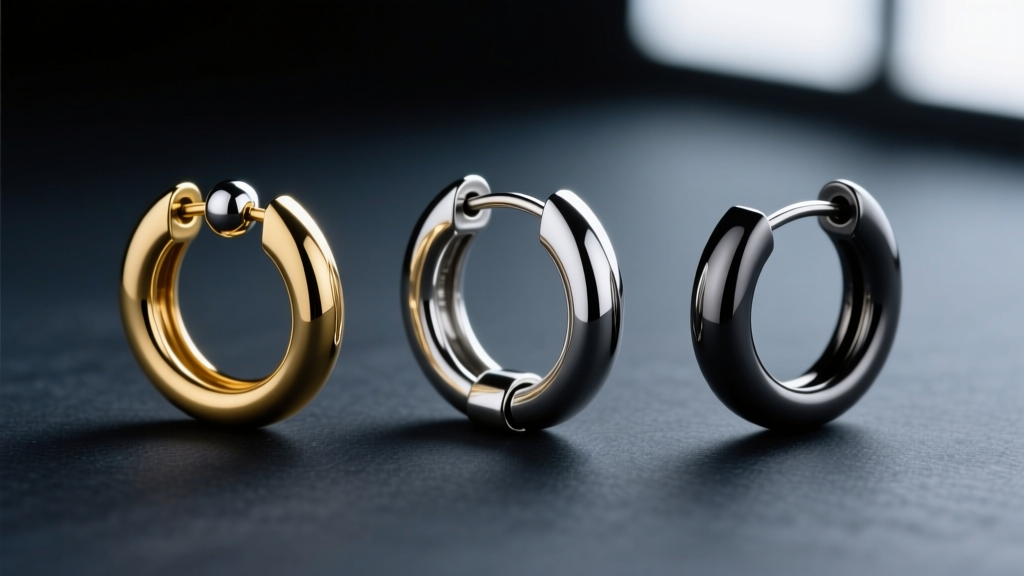
Step 3: Choose a Secure Closure Mechanism
The closure type dictates both your security and your daily convenience. According to the Association of Professional Piercers (APP), threadless or internally threaded mechanisms are vastly superior to external threads, which can tear the fistula (the piercing channel) during insertion.
Captive Bead Rings (CBR)
The classic tension-fit ring. While highly secure once closed, CBRs require specialized ring-opening pliers to insert and remove. Failure mode: Dropping the 3mm tension bead down a sink drain during a 6 AM bathroom change.
Hinged Segment Rings
Features a microscopic hinge and a snap closure. Extremely easy to put on, making them the most popular choice for beginners. Failure mode: Cheap manufacturing can cause the hinge pin to shear off under lateral pressure (like sleeping on a hard pillow), leaving the earring permanently stuck in your ear.
Seamless Clickers
The gold standard for 2026. They feature a hidden hinge and a flush-click closure that is virtually invisible. They offer the security of a CBR with the ease of a hinged ring, making them perfect for daily wear.
Step 4: Select the Right Metal Grade
Men's skin chemistry and higher sweat production demand hypoallergenic metals. Avoid anything labeled simply as "surgical steel" or "hypoallergenic" without a metallurgical breakdown, as these often contain nickel.
Material Rule of Thumb: If the jewelry is not explicitly marked as ASTM F136 Implant-Grade Titanium, Niobium, or 14k/18k Solid Gold, do not put it in a fresh or easily irritated piercing.
For guys who work with their hands or frequent the gym, PVD-coated titanium (which provides a matte black or gold finish over a titanium core) is the most scratch-resistant option available. Expect to pay a premium ($60-$90) for authentic PVD coatings from reputable brands like BVLA or Maria Tash.
Step 5: Match the Hoop Profile to Your Face Shape
Earrings act as visual anchors for the face. Choosing the right silhouette can balance your natural bone structure.
- Square Jawline: Opt for round, medium-diameter hoops (10mm-12mm) in softer metals like yellow gold to contrast and soften sharp, angular features.
- Round Face: Choose thicker, slightly geometric or flattened huggies (8mm-10mm) in darker metals like black titanium or oxidized silver to add structural definition.
- Oval Face: Highly versatile. You can easily pull off everything from tight 8mm clickers to relaxed 14mm drop hoops.
- Diamond/Heart Face: Stick to smaller, unobtrusive huggies that sit tight to the lobe, avoiding heavy drops that exaggerate a narrow chin.

Step 6: Daily Maintenance and Troubleshooting
Even the highest-quality titanium will accumulate sebum, dead skin cells, and environmental grit. A proper maintenance routine prevents contact dermatitis and foul odors.
The 60-Second Cleaning Routine
- Remove the hoop once a week (if using a hinged or clicker closure).
- Soak the jewelry in a small cup of sterile saline solution or warm water with a drop of mild, fragrance-free antibacterial soap for 5 minutes.
- Use a soft-bristled baby toothbrush to gently scrub the inside of the wire and the closure hinge.
- Rinse with distilled water and dry completely with a microfiber cloth before reinserting.
Never use rubbing alcohol or hydrogen peroxide on your piercings or jewelry. As noted by the Mayo Clinic, harsh chemicals can strip the skin's natural lipid barrier and accelerate the degradation of lower-grade metal alloys, increasing the risk of severe allergic reactions.
Troubleshooting Snagging
If your hoop constantly catches on hoodie strings or towel loops, your inner diameter is too large. Downsize by 2mm. If you refuse to downsize, switch from a standard round wire to a flat-back or oval-wire hoop, which presents a lower profile against the neck and collar.


