How to Style, Clean, and Protect Turquoise Blue Earrings
Learn how to authenticate, clean, and style turquoise blue earrings. Expert tips on gauge sizes, bezel settings, and safe washing methods.

The Unique Mineralogy of Turquoise in Jewelry
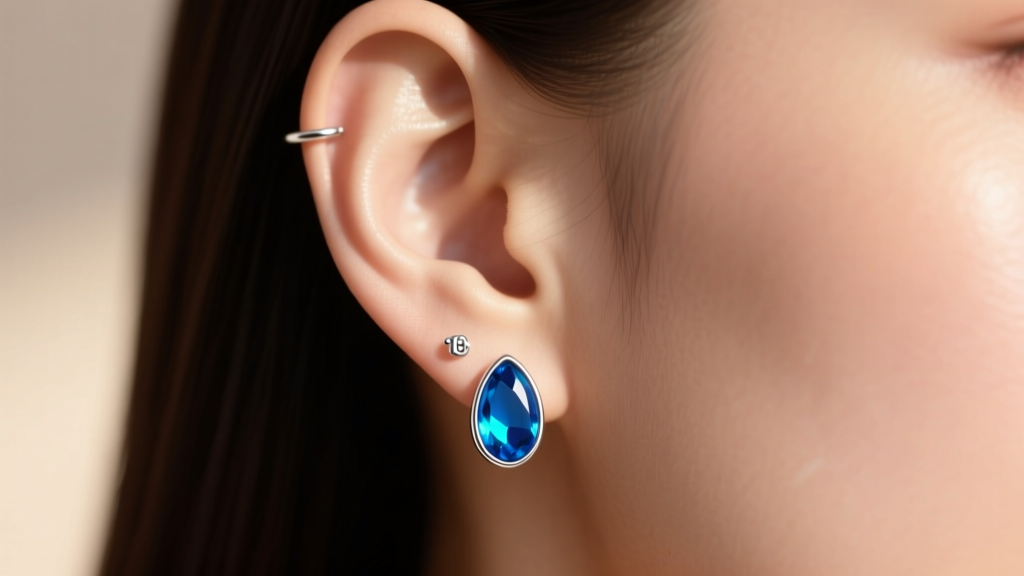
As we navigate the jewelry landscape in 2026, the demand for ethically sourced and naturally vibrant gemstones continues to surge. Among the most coveted of these are turquoise blue earrings, prized for their striking, opaque color and rich historical significance. But before you can properly care for or style these pieces, you must understand the mineralogy of the stone itself. Turquoise is a hydrous phosphate of copper and aluminum. It is the presence of copper that yields the highly sought-after sky-blue or robin's-egg-blue hues, while higher iron content shifts the color toward green.
On the Mohs scale of mineral hardness, turquoise ranks between 5 and 6. To put this in perspective, it is significantly softer than a diamond (10) or a sapphire (9), and even softer than quartz (7). This relative softness, combined with its natural porosity, means that turquoise blue earrings require a highly specific approach to daily wear, cleaning, and long-term storage. Treating them like standard diamond or cubic zirconia jewelry will quickly lead to discoloration, chipping, or structural failure.
Step 1: Authenticating and Grading Your Stones
The market is flooded with turquoise imitations, ranging from dyed howlite and magnesite to entirely synthetic ceramics. When investing in high-quality turquoise blue earrings, authentication is your first critical step. According to the Gemological Institute of America (GIA), natural turquoise is rarely perfect; it often features a 'matrix'—the remnants of the host rock in which it formed.
Understanding Matrix and Origin
- Sleeping Beauty Turquoise: Mined in Arizona, this variety is famous for its solid, uniform sky-blue color with little to no matrix. It is highly prized for classic stud earrings.
- Kingman Turquoise: Also from Arizona, Kingman stones typically feature a striking black or brown spiderweb matrix. These are ideal for statement dangle earrings where the matrix adds visual depth.
- Persian Turquoise: Historically sourced from Iran, this turquoise is renowned for its pure, intense blue color and lack of matrix, though genuine antique Persian pieces are rare and command premium prices.
The Acetone Test for Dyes
If you suspect your turquoise blue earrings might be dyed howlite, you can perform a cautious acetone test. Dip a cotton swab in pure acetone (nail polish remover) and gently rub an inconspicuous area of the stone, such as the back or the edge near the setting. If the swab picks up blue pigment, the stone is dyed. Note that this test will not detect the Zachery treatment, a proprietary method that enhances turquoise without introducing polymers or dyes, which requires advanced spectroscopic testing by a gemologist.
Step 2: Selecting the Proper Setting and Gauge
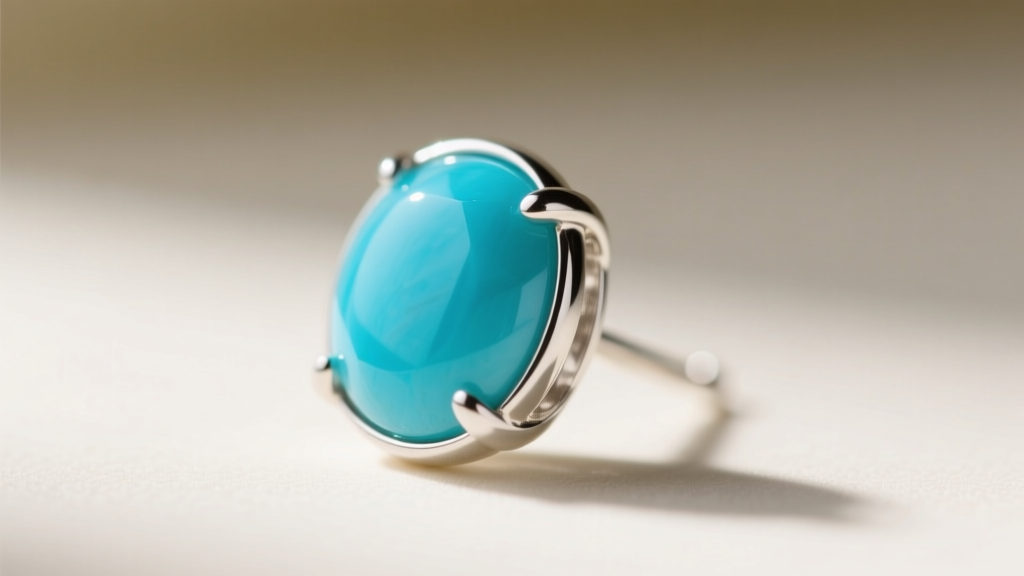
Because turquoise is soft and prone to chipping along its edges, the metal setting is not just an aesthetic choice—it is a protective necessity. Furthermore, the weight of the stone dictates the required wire gauge for the earring hook or post.
Setting Types Compared
| Setting Type | Protection Level | Best Application | Risk Factors |
|---|---|---|---|
| Full Bezel | High | High-value, soft natural turquoise | Can hide the outer edge matrix patterns |
| Prong | Low | Stabilized or synthetic stones only | Exposed edges are highly susceptible to chipping |
| Half-Bezel | Medium | Modern geometric or minimalist designs | Partial exposure requires careful handling |
Wire Gauge Recommendations
Standard lobe piercings are typically done at 20-gauge (0.81mm) or 18-gauge (1.02mm). However, turquoise is a dense, relatively heavy stone. If you are purchasing turquoise blue earrings in a dangle or drop style, the weight of the stone can cause a thin 20-gauge wire to bend, warp, or slowly stretch your earlobe over time. For any turquoise drop earring exceeding 5 grams, insist on an 18-gauge or even a 16-gauge (1.29mm) ear wire. This provides the structural integrity needed to support the stone comfortably without compromising the piercing.
Step 3: The Safe Cleaning Protocol
The most common way jewelry owners ruin turquoise is through improper cleaning. Turquoise is highly porous and will readily absorb chemicals, oils, and even water if left submerged. The Jewelers of America strictly advises against using commercial jewelry dips on porous gemstones.
Never subject turquoise blue earrings to ultrasonic or steam cleaners. The high-frequency vibrations will fracture the porous stone, and the intense heat will melt or cloud the stabilization resins used in most modern turquoise.
Step-by-Step Washing Guide
- Prepare a Mild Solution: Mix a few drops of phosphate-free, fragrance-free dish soap into a bowl of lukewarm (never hot) water.
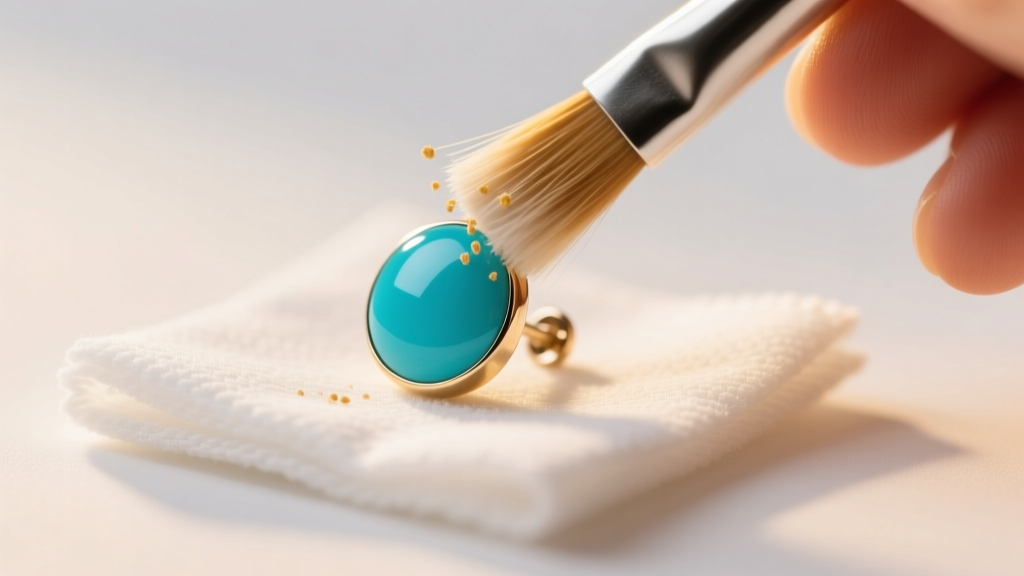
- Dampen, Do Not Soak: Dip a soft-bristled baby toothbrush or a dedicated jewelry brush into the solution. Shake off excess water so the brush is merely damp.
- Gently Agitate: Lightly brush the surface of the turquoise and the metal setting. Avoid pressing hard, as turquoise can scratch easily.
- Rinse Quickly: Hold the earring under a gentle stream of lukewarm water for no more than two seconds to remove soap residue.
- Dry Immediately: Pat the stone and metal completely dry with a clean, lint-free microfiber cloth. Allow it to air dry fully in a well-ventilated area before storing.
Step 4: Styling Turquoise Blue Earrings for Your Face Shape
Beyond their mineralogical fascination, turquoise blue earrings are a powerful styling tool. The vivid, opaque blue acts as a neutral pop of color that bridges the gap between casual bohemian aesthetics and refined, high-fashion looks. Here is how to pair specific earring silhouettes with your face shape for optimal visual balance.
Face Shape Pairings
- Round Faces: Opt for elongated turquoise dangles or linear drop earrings. The vertical lines draw the eye downward, creating the illusion of a longer, more oval facial structure. Avoid large, circular turquoise hoops which will only emphasize the roundness of the face.
- Square Faces: Soften a strong jawline with curved silhouettes. Turquoise huggies, medium-sized hoops with turquoise inlays, or rounded drop earrings work beautifully to offset angular features.
- Heart-Shaped Faces: Balance a wider forehead and narrower chin with chandelier earrings or teardrop-shaped turquoise drops that add visual weight to the lower half of the face.
- Oval Faces: This versatile shape can pull off almost any style, from delicate turquoise studs to dramatic, oversized geometric statement pieces. Let the outfit dictate the scale.
Long-Term Storage and Maintenance
How you store your turquoise blue earrings when they are not on your ears is just as important as how you clean them. Because turquoise is easily scratched by harder gemstones, it should never be tossed into a communal jewelry box alongside diamonds, sapphires, or even quartz.
Store each pair in its own soft flannel or microfiber pouch. Furthermore, if your earrings are set in sterling silver, the silver will naturally tarnish when exposed to sulfur and humidity in the air. To combat this without using harsh chemical silver polishes (which can damage the turquoise), place a 3M anti-tarnish strip inside the storage pouch. These strips absorb airborne sulfur compounds, keeping the silver bezels and hooks bright and polished while leaving the turquoise completely untouched.
A Note on Cosmetics and Perfumes
Always follow the golden rule of jewelry application: 'Last on, first off.' Apply your perfumes, hairsprays, lotions, and makeup before putting on your turquoise blue earrings. The alcohol and oils in cosmetics can seep into the porous stone, causing permanent dullness or shifting the vibrant blue color to a muddy green over time. By treating your turquoise with the respect its unique mineralogy demands, you ensure these stunning pieces remain vibrant heirlooms for decades to come.


