How to Sterilize an Earring: The Ultimate Buyer Guide
Learn how to sterilize an earring safely. This buyer's guide covers autoclave-safe metals, gemstone limits, and pre-sterilized packaging tips.
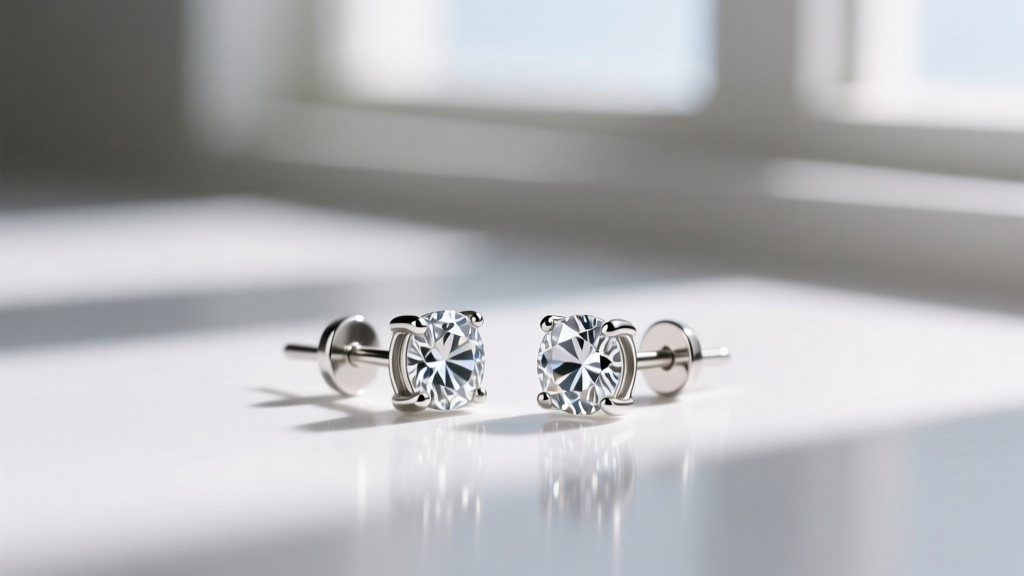
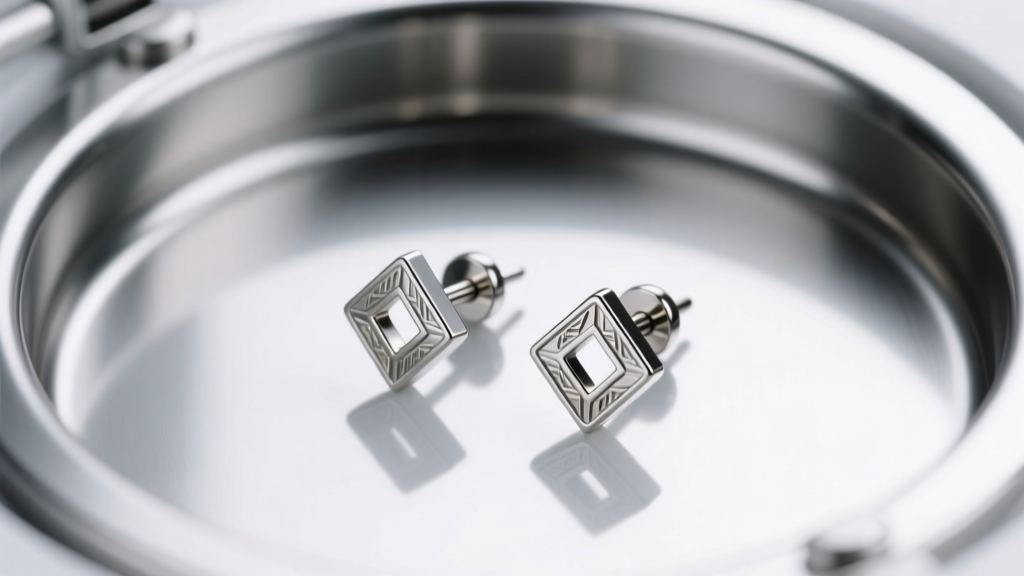
When building a high-quality earring collection, especially for fresh piercings, stretched lobes, or sensitive cartilage placements, aesthetics are only half the equation. The other half is hygiene. Understanding how to sterilize an earring properly is a critical skill that directly influences what you should and shouldn't buy. In 2026, with home autoclaves and professional-grade ultrasonic cleaners becoming more accessible to consumers, the line between studio-grade hygiene and at-home care has blurred. However, not all jewelry survives the sterilization process. This comprehensive buyer’s guide will teach you how to evaluate earrings based on their material composition, structural integrity, and gemstone settings to ensure they can withstand true sterilization methods without degrading.
Why Material Choice Dictates Sterilization
True sterilization—the complete destruction of all microbial life, including bacterial spores—requires extreme conditions. According to the Centers for Disease Control and Prevention (CDC), steam sterilization (autoclaving) typically requires temperatures of 121°C (250°F) at 15 PSI of pressure for 20 to 30 minutes. If you buy earrings made from porous materials, low-melt-point alloys, or plated metals, these conditions will warp, melt, or strip the jewelry. Therefore, knowing how to sterilize an earring starts long before the cleaning process; it starts at the point of purchase.
For any earring you intend to autoclave or boil, you must look for solid, implant-grade metals. The Association of Professional Piercers (APP) strictly recommends ASTM F136 titanium, ASTM F138 stainless steel (for healed piercings only), niobium, and solid 14k or 18k gold. Avoid anything labeled "surgical steel" without an ASTM certification, as this is a marketing term that often masks inferior alloys containing high levels of nickel, which can oxidize and pit under high heat and moisture.
The Material Matrix: What Survives the Heat?
Before adding a piece to your cart, cross-reference its material with the sterilization compatibility matrix below. This framework will save you from ruining expensive jewelry or, worse, introducing compromised metals into a healing fistula.
| Material | Autoclave Safe? | Boil Safe? | Chemical Safe? | Buyer Notes & Limitations |
|---|---|---|---|---|
| Implant-Grade Titanium (ASTM F136) | Yes | Yes | Yes | The gold standard. Will not oxidize, tarnish, or warp under any sterilization method. |
| Niobium | Yes | Yes | Yes | Highly biocompatible. Note: Anodized colors may shift slightly if exposed to harsh chemicals post-autoclave. |
| Solid 14k/18k Yellow Gold | Yes | Yes | Yes | Must be nickel-free. High heat is safe, but repeated boiling can dull high-polish finishes over time. |
| Solid White Gold | Caution | Caution | Yes | Often alloyed with nickel or palladium. Rhodium plating may strip in an autoclave, exposing the base alloy. |
| Sterling Silver (925) | No | No | Yes | High heat and moisture cause rapid oxidation (tarnishing). Never autoclave or boil sterling silver. |
| Gold Plated / Vermeil | No | No | No | Heat and friction will strip the plating. Only clean with mild soap or specialized chemical wipes. |
| Acrylic / Bioplast | No | No | Caution | Will melt in an autoclave and warp in boiling water. Degrades when exposed to alcohol. |
Step-by-Step: How to Sterilize an Earring at Home
If you have purchased autoclave-safe metals, you must still prep the jewelry correctly. You cannot sterilize dirty jewelry; organic debris like sebum and dead skin cells create a shield that steam and chemicals cannot penetrate. Always use an ultrasonic cleaner (35-40 kHz frequency) with a mild enzymatic detergent for 5 minutes before attempting sterilization.
Method 1: Pressure Steam (The Autoclave)
For true sterilization, a Class B or Class N home autoclave is required. Place your pre-cleaned, dry titanium or niobium earrings into a medical-grade sterilization pouch with a chemical indicator strip. Run a standard cycle at 121°C (250°F) for 20 minutes. The indicator strip will change color (usually from blue to brown/black) to confirm the jewelry has been exposed to the correct parameters. This method is mandatory if you are buying earrings for a brand-new, unhealed piercing.
Method 2: Boiling Water (Thermal Disinfection)
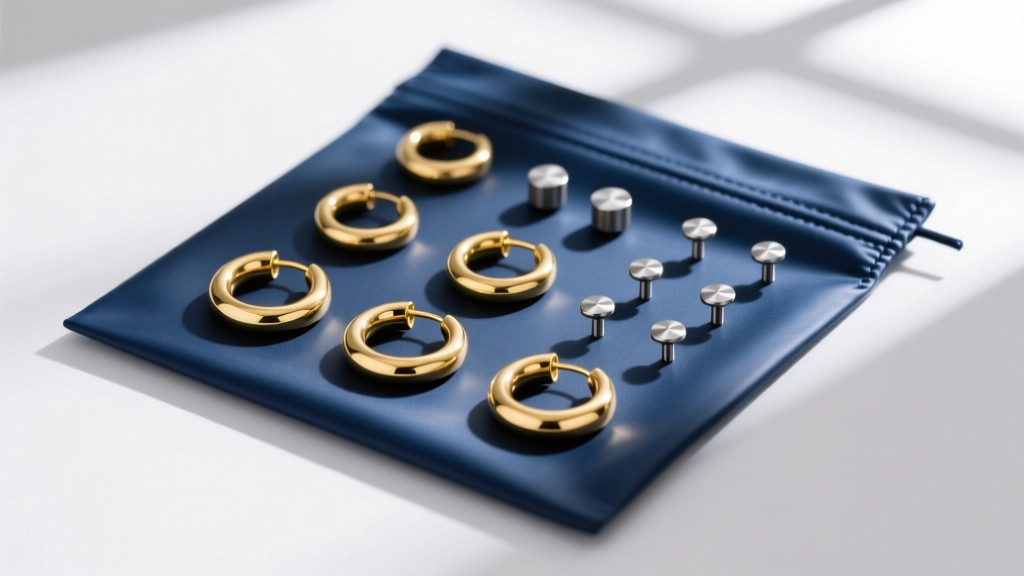
If you lack an autoclave but have solid titanium, platinum, or glass earrings, boiling is an acceptable thermal disinfection method for healed piercings. Bring distilled water to a rolling boil (100°C / 212°F). Submerge the earrings for exactly 10 minutes. Do not exceed this time, as prolonged boiling can degrade the structural integrity of certain synthetic gemstones. Remove with sterilized silicone-tipped tongs and let them air dry on a sterile gauze pad.
Method 3: Chemical Disinfection (For Delicate Pieces)
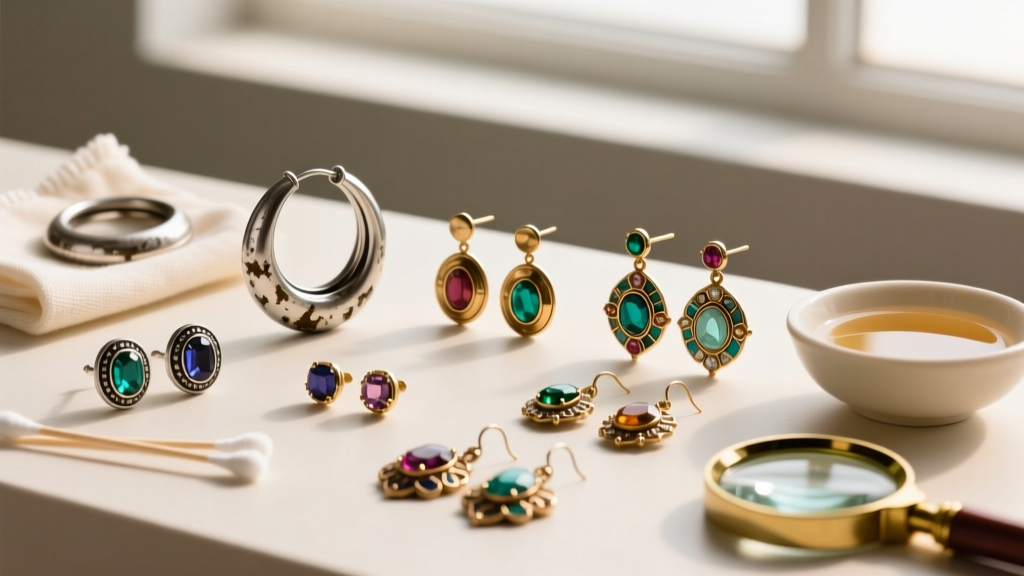
If you bought sterling silver, gold-plated, or delicate vintage earrings, heat is out of the question. Instead, use a 70% isopropyl alcohol solution. Contrary to popular belief, 70% is more effective than 91% because the higher water content slows evaporation, allowing the alcohol time to penetrate bacterial cell walls. Submerge the earrings for 5 minutes, then rinse with distilled water. Note that this is disinfection, not sterilization, and should only be used on jewelry destined for fully healed, healthy earlobes.
Gemstones, Settings, and Hidden Failure Points
The metal is only half the battle. When evaluating how to sterilize an earring featuring gemstones, you must consider the Mohs hardness scale, thermal shock resistance, and setting mechanics.
Expert Warning: Never autoclave or boil earrings featuring organic gems (pearls, amber, coral, tortoiseshell) or heavily included stones (emeralds, opals, turquoise). The rapid temperature changes will cause microscopic fractures to expand, shattering the stone or melting the organic material entirely.
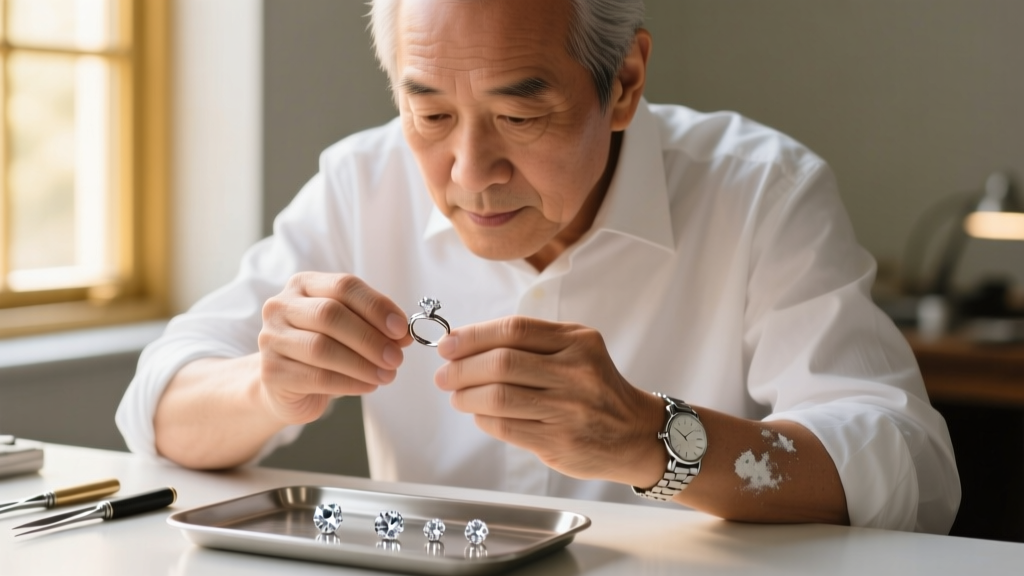
Instead, look for earrings featuring lab-grown sapphires, cubic zirconia, or synthetic spinel. These stones are created in high-heat environments and can easily withstand the 121°C of an autoclave or the 100°C of a rolling boil. Furthermore, scrutinize the setting. Avoid any earring where the stone is held in place by jewelry adhesives or epoxy. Heat will soften the glue, causing the gemstone to fall out. Always buy pieces with mechanical settings—such as prong, bezel, or channel settings—where the metal is physically manipulated to hold the stone in place.
Buying Pre-Sterilized vs. Bulk Earrings
If you are buying earrings for a fresh cartilage piercing (like a daith, rook, or conch), the safest route is to purchase pre-sterilized jewelry. High-end brands like Intrinsic Body, Neometal, and Body Vision Los Angeles (BVL) sell individual pieces sealed in medical-grade blister packs that have been sterilized via gamma radiation or ethylene oxide gas. When buying these, check the packaging for an intact seal and a valid expiration date (usually 3 to 5 years from the manufacturing date). If the pouch is punctured or the indicator strip has changed color prematurely, the sterile field is compromised, and you must re-sterilize the piece yourself before use.
The 2026 Buyer’s Checklist for Sterilization-Ready Earrings
Before you click "checkout" on your next pair of studs, hoops, or huggies, run them through this quick E-E-A-T verified checklist:
- Material Verification: Is it explicitly listed as ASTM F136 Titanium, Niobium, or solid 14k/18k Gold? (Reject "surgical steel" without an ASTM code).
- Surface Finish: Is the mirror polish free of microscopic scratches? (Scratches harbor bacteria that steam struggles to penetrate).
- Gemstone Check: Are the stones synthetic/lab-grown and mechanically set without glue?
- Threading Type: If buying internally threaded or threadless labrets, do the pins fit snugly? (Autoclave pressure can sometimes force loose threadless pins apart if not secured properly in a cassette).
- Packaging: If claiming to be pre-sterilized, is it in a sealed pouch with a visible, un-triggered chemical indicator strip?
By prioritizing sterilization compatibility during the buying process, you protect your investment and your body. High-quality, autoclave-safe earrings may carry a higher initial price tag—typically ranging from $30 to $80 per piece for premium titanium and gold—but their ability to withstand rigorous cleaning protocols makes them infinitely more cost-effective and safer than replacing cheap, plated alternatives that degrade after a single chemical soak.