How to Wear Screw Back Earrings: The Ultimate Buying & Fit Guide
Learn how to wear screw back earrings safely. Our buying guide covers thread types, gauge sizes, hypoallergenic metals, and troubleshooting stuck backs.

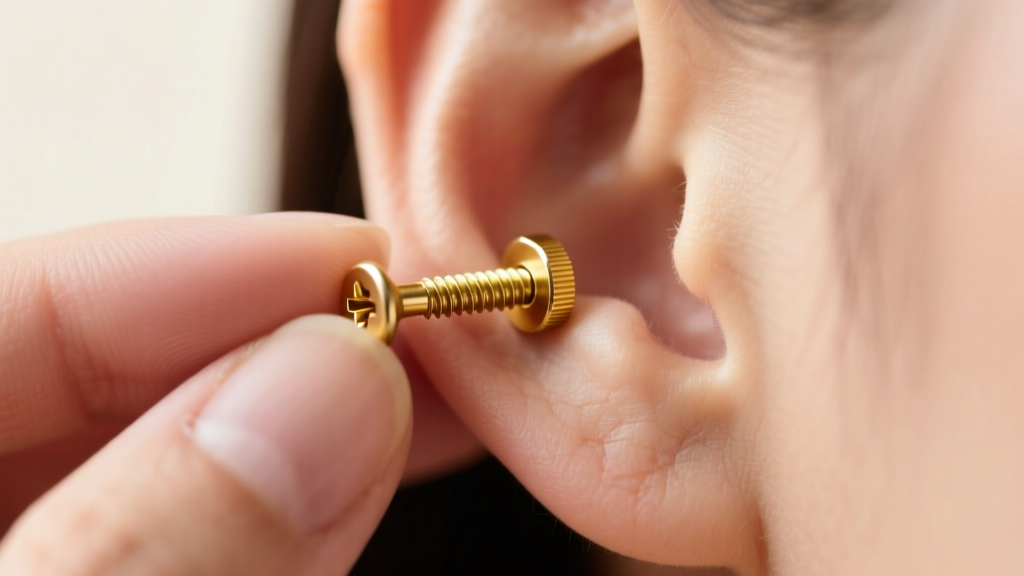
Screw back earrings are the gold standard for security, comfort, and peace of mind. Whether you are investing in high-carat diamond studs, shopping for active children, or seeking a reliable option for cartilage piercings, understanding the mechanics of threaded jewelry is essential. Unlike traditional friction backs (butterfly clutches) that rely on easily degraded tension, screw backs utilize rotational torque to lock the backing in place. However, not all threaded earrings are created equal. In this comprehensive guide, we break down exactly what to look for when buying screw back earrings, the critical differences in threading types, and step-by-step instructions on how to wear screw back earrings without damaging your piercing or the jewelry itself.
Why Choose Screw Backs Over Friction Backs?
The primary reason jewelers and professional piercers recommend screw back earrings is security. Friction backs rely on a metal clutch gripping a grooved post. Over time, the metal fatigues, the grooves wear down, and the earring can slip off during sleep or physical activity. Screw backs, conversely, create a continuous mechanical lock. They are also significantly more comfortable for sleeping, as the backing is typically a smooth, flat disc or a rounded nut that does not dig into the neck or behind the ear.
| Feature | Friction Backs (Butterfly) | Screw Backs (Threaded) | Threadless (Push-Pin) |
|---|---|---|---|
| Security Level | Low to Medium | Very High | High |
| Sleep Comfort | Poor (prongs dig in) | Excellent (smooth backing) | Excellent (flat backing) |
| Risk of Loss | High over time | Near Zero | Low |
| Average Price Range | $20 - $150 | $150 - $2,500+ | $80 - $500+ |
The Buying Guide: Specs That Actually Matter
When shopping for threaded earrings, you must look beyond the gemstone and evaluate the structural specifications. Buying the wrong gauge or thread type can lead to irritation, torn fistulas, or stripped jewelry.
1. Gauge Size and Post Length
The gauge refers to the thickness of the post. For standard earlobe piercings done with a gun or standard needle, 20G (0.81mm) or 18G (1.02mm) is standard. However, if you are buying for cartilage (helix, tragus, conch) or a professionally pierced lobe, you will likely need 16G (1.29mm) or 14G (1.63mm). Post length is equally critical. A standard lobe post is 6mm (1/4 inch), but thicker lobes require 8mm (5/16 inch) to prevent the backing from compressing the tissue and cutting off circulation.
2. Material Grades and Hypoallergenic Standards
Because screw backs sit flush against the skin and trap moisture near the threads, material purity is non-negotiable. According to the American Academy of Dermatology, nickel contact dermatitis is one of the most common causes of jewelry-related skin reactions. Always opt for 14k or 18k solid gold that is explicitly alloyed without nickel, or implant-grade titanium. The Association of Professional Piercers (APP) strictly recommends ASTM F136 implant-grade titanium for its biocompatibility and resistance to corrosion, making it the ultimate choice for sensitive ears and fresh piercings.
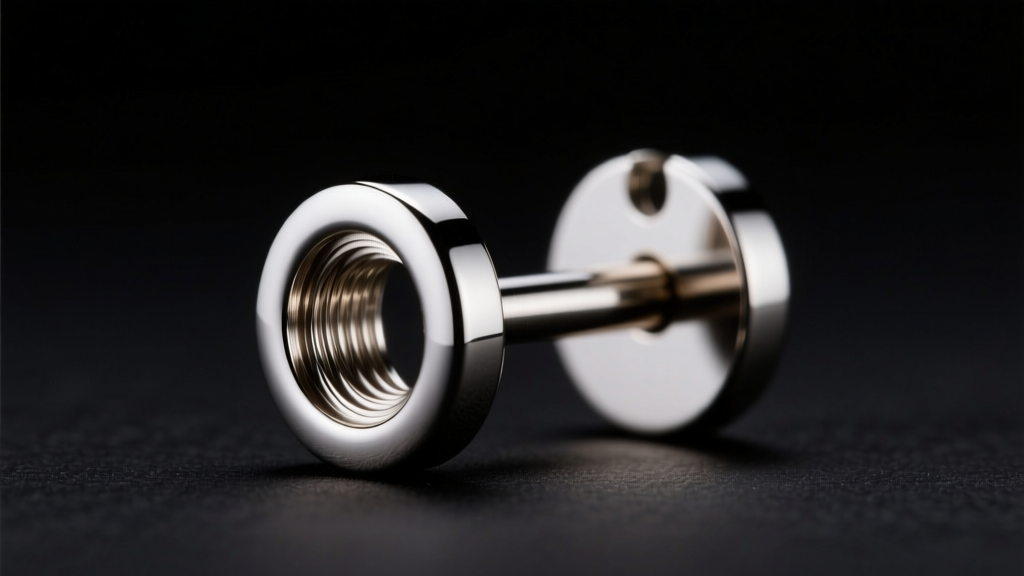
3. External vs. Internal Threading
This is the most crucial E-E-A-T distinction in threaded jewelry. Externally threaded earrings have the screw pattern carved into the post itself. When you push this post through your ear, the sharp threads scrape and micro-tear the delicate fistula (the skin tunnel of the piercing). Internally threaded earrings feature a smooth post with a threaded hole at the end; the backing or decorative end has a smooth pin that screws into the post. Always buy internally threaded screw backs for cartilage and high-end lobe studs to preserve your piercing health.
Step-by-Step: How to Wear Screw Back Earrings Correctly
Knowing how to wear screw back earrings properly prevents cross-threading, which occurs when the backing is forced on at an angle, permanently stripping the metal. Follow this exact mechanical process:
- Cleanse and Dry: Wash your hands and ensure the earring post and backing are completely dry. Moisture can cause the threads to bind or harbor bacteria.
- Insert the Post: Gently slide the smooth post through the piercing from the front. Do not twist or force it.
- Align the Backing: Bring the threaded backing up to the post. Hold the front of the earring completely still with your thumb and index finger.
- The Reverse Turn: Before tightening, gently turn the backing counter-clockwise (left) until you feel a tiny 'click' or drop. This indicates the threads are perfectly aligned.
- Tighten Clockwise: Once aligned, turn clockwise (right) until the backing is snug against the earlobe. Stop when you feel resistance; do not overtighten, as this can cause tissue necrosis or make removal impossible without tools.
Troubleshooting: Stuck Backings and Gunk Buildup
Even the best-maintained screw back earrings can encounter mechanical issues. Here is how to handle them without ruining your jewelry.
Dealing with a Stuck or Stripped Backing
If a backing will not unscrew, never use metal pliers, which will scratch the gold or titanium. Instead, put on a pair of textured nitrile or rubber gloves. The rubber provides immense grip and friction, allowing you to break the torque seal with a gentle twist. If the backing is stuck due to dried sebum or soap, soak the earlobe in a warm saline solution for five minutes to dissolve the biological glue before trying again.

Cleaning the Threads
The threads on a screw back earring act as a magnet for dead skin cells, lotion, and sebum. If left uncleaned, this buildup will prevent the backing from screwing on smoothly and can cause foul odors. Once a week, use a soft-bristled jewelry brush or a clean, unused makeup brush with a drop of mild, fragrance-free liquid soap to gently scrub the threads. Rinse with distilled water and dry with a microfiber cloth. Avoid ultrasonic cleaners for threaded pieces unless the manufacturer explicitly states it is safe, as high-frequency vibrations can sometimes loosen gemstone settings.
Premium Brand Recommendations
If you are ready to invest in high-quality threaded jewelry, look for brands that specialize in precision machining. Maria Tash is renowned for their internally threaded ends and precision-cut 18k gold posts, ideal for both lobes and cartilage. For pure, unadorned implant-grade titanium screw backs, Anatometal and BVLA (though BVLA is famous for threadless, their threaded options are industry benchmarks) offer unparalleled thread smoothness and metallurgical safety. For traditional diamond studs with classic external-thread screw backs, Brilliant Earth and Blue Nile provide secure, high-carat options with reliable nut-and-post mechanisms.
Ultimately, mastering how to wear screw back earrings is about respecting the mechanics of the jewelry and the biology of your piercing. By prioritizing internal threading, correct gauge sizing, and biocompatible materials, you ensure your earrings remain secure, comfortable, and beautiful for a lifetime.


