Huge Diamond Earrings: A Technical Guide to Settings & Backs
Discover the engineering, gemology, and structural requirements for huge diamond earrings. Learn about heavy-duty backs and clarity grades.

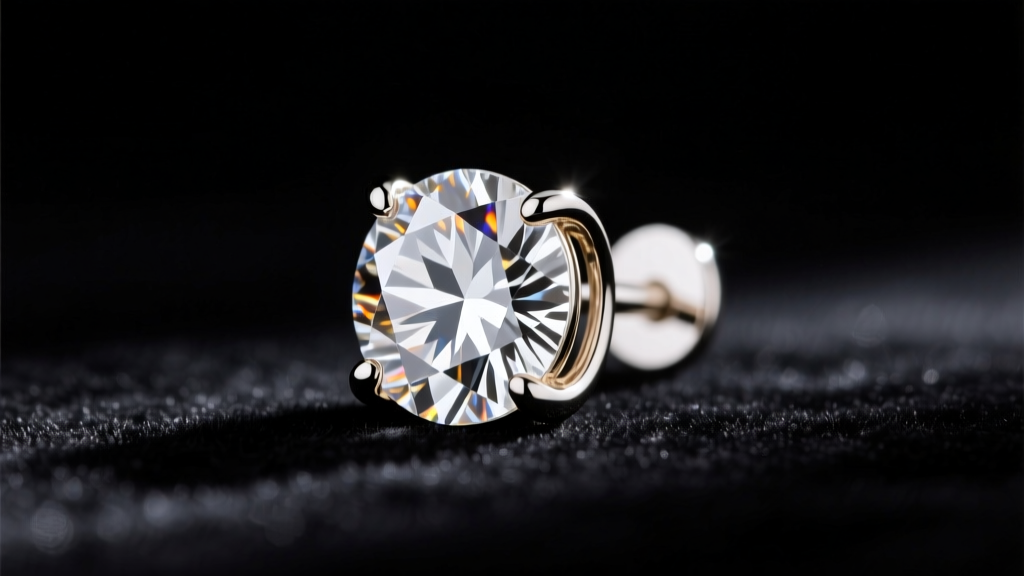
When collectors, investors, and enthusiasts begin searching for huge diamond earrings, the conversation almost exclusively revolves around the Four Cs: carat weight, color, clarity, and cut. However, from an engineering and structural perspective, the primary challenge of oversized diamond studs—generally defined in the fine jewelry trade as exceeding 3.00 Carat Total Weight (CTW) and pushing into the 5.00 to 10.00+ CTW range for high-net-worth acquisitions—is managing gravitational torque on the human earlobe. In 2026, as lab-grown diamonds make massive carat weights more accessible to a broader market, understanding the mechanical realities of wearing heavy stones is more critical than ever. This deep dive explores the metallurgy, gemological compromises, and structural architecture required to safely and elegantly wear huge diamond earrings.
The Physics of Weight: Lobe Tension and Post Gauges
The human earlobe is primarily composed of adipose tissue and collagen, lacking the rigid cartilage structure found in the upper ear. When you mount a 4-carat diamond (which can weigh upwards of 1.6 grams per ear) onto a standard earring post, you create a lever arm that exerts continuous downward and outward rotational force. Over time, this kinetic stress leads to tissue elongation, commonly referred to as the 'cheese-cutter effect,' where the post slowly migrates downward through the piercing tract.
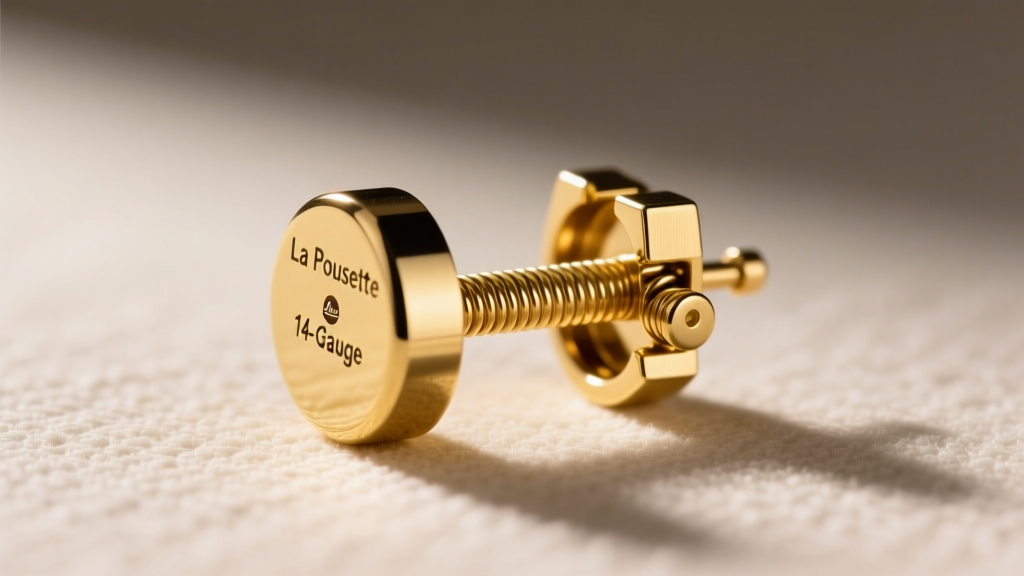
To counteract this, the jewelry industry utilizes specific post gauges. Standard fashion earrings typically use 20-gauge (0.81mm) or 18-gauge (1.02mm) posts. For huge diamond earrings, these gauges are structurally insufficient; they will bend under the weight of the stone, causing the diamond to tilt forward and rest against the cheek rather than facing outward. Master jewelers mandate a minimum of 16-gauge (1.29mm) for stones up to 3.00 CTW, and 14-gauge (1.63mm) for anything exceeding 4.00 CTW. The thicker post not only resists bending but also distributes the sheer force across a wider surface area of the piercing tract, significantly reducing the rate of tissue stretching.
Gemological Compromises in High-Carat Stones
As diamond surface area increases, the optical behavior of the stone changes dramatically. Large table facets act as expansive windows into the interior of the diamond. In a 0.50-carat stone, an SI1 (Slightly Included) grade might appear entirely eye-clean because the facets are small and refract light in complex, scattered patterns. In a 3.00-carat diamond, that exact same SI1 inclusion is magnified by the sheer surface area of the table facet, often becoming visible to the naked eye.
According to the GIA Clarity Scale, the baseline requirements for eye-cleanliness must shift upward as carat weight increases. Furthermore, color saturation becomes more apparent in larger volumes of carbon. A faint yellow tint (K or L color) that is imperceptible in a small melee diamond will manifest as a distinct warm hue in a massive 5-carat stone.
| Total Carat Weight (CTW) | Minimum Clarity for Eye-Cleanliness | Recommended Color Grade | Fluorescence Tolerance |
|---|---|---|---|
| 2.00 - 3.00 CTW | VS2 - SI1 | H - I | Faint / Medium Blue |
| 3.00 - 5.00 CTW | VS1 - VS2 | G - H | None / Faint |
| 5.00+ CTW | VVS2 - VS1 | D - F | None (Strict) |
Setting Architecture: Center of Gravity and Prong Metallurgy
The setting is the mechanical interface between the diamond and the post. The most common setting for diamond studs is the Martini setting, characterized by three prongs and a V-shaped base. While elegant and lightweight, the Martini setting elevates the diamond's pavilion high above the earlobe. For huge diamond earrings, this high center of gravity creates a pendulum effect, exacerbating the forward droop.
For oversized stones, a four-prong basket setting is the industry standard. The basket features a wider, flatter base that sits closer to the post, significantly lowering the center of gravity and allowing the diamond to sit flush against the earlobe. Some specialized basket settings also incorporate a 'hollow back' or 'comfort back' design, where the metal base is domed outward to contour to the shape of the earlobe, providing a wider footprint for weight distribution.
'When setting a 4-carat diamond, we aren't just holding a stone; we are engineering a suspension system. The prongs must be drawn from heavy-gauge platinum or 18k white gold, and the gallery wire must be thick enough to absorb lateral impacts without transferring that shock to the diamond's girdle.' — Master Bench Jeweler
Bezel settings offer the ultimate security for active wearers, wrapping a continuous ribbon of metal around the diamond's girdle. However, bezels obscure approximately 15% of the stone's edge and can reduce light return if not precision-machined. For huge diamond earrings where maximum brilliance is the primary goal, a reinforced basket with six prongs (a hexagonal setting) offers the optimal compromise between security, light performance, and weight distribution.
The Critical Role of Earring Backs and Support Systems
The most structurally sound post and setting will fail if the earring back cannot withstand the kinetic energy generated by everyday movement. A simple nod of the head generates enough momentum to dislodge a heavy earring secured by a standard friction back (butterfly back). For huge diamond earrings, friction backs are considered a severe liability.
- La Pousette Backs: The gold standard for heavy earrings. These mechanical backs utilize an internal spring-loaded locking mechanism that clicks securely into a precision-milled groove on the post. They require two hands to depress the side tabs for removal, making accidental loss virtually impossible.
- Screw Backs: These feature a threaded post and a backing that screws on. While highly secure, they require exact alignment to thread properly, and cross-threading can damage the post. They are best suited for patients with high dexterity.
- Omega Clips (For Drops): If the huge diamond earrings are designed as drops or chandeliers, a hinged Omega clip provides a wide, hugging grip on the earlobe, distributing the weight across the entire lobe rather than just the piercing hole.
- Silicone Support Discs: Products like BlingWraps or jumbo silicone earring pillows are placed between the earlobe and the earring back. They act as shock absorbers and widen the surface area on the back of the ear, preventing the heavy metal back from digging into the skin and causing necrosis or discomfort.
Pricing Tiers and Market Realities for Oversized Stones
The pricing of diamonds is not linear; it is exponential, dictated by the rarity of large rough crystals. As you cross specific weight thresholds (known in the trade as 'magic sizes'), the price per carat jumps dramatically. When sourcing huge diamond earrings, buyers must understand these tiers to evaluate market value accurately.
A matched pair of 1.00-carat diamonds (2.00 CTW) might cost $8,000 per carat. However, finding a perfectly matched pair of 2.50-carat diamonds (5.00 CTW) with identical color, clarity, and cut proportions is exponentially more difficult. Consequently, the price per carat for that 5.00 CTW pair might leap to $25,000 per carat or more, especially in the natural diamond market. In 2026, the proliferation of high-quality lab-grown diamonds has disrupted this pricing model, allowing collectors to acquire massive 8.00+ CTW pairs for a fraction of the natural equivalent, though the secondary market liquidity for lab-grown stones remains a point of contention among traditional investors.
Maintenance, Prong Wear, and Diagnostic Protocols
According to Jewelers of America, fine jewelry requires rigorous maintenance, but this is amplified for oversized pieces. The sheer mass of huge diamond earrings means that every time the earring shifts, the prongs absorb significant mechanical stress. Over time, this leads to metal fatigue, prong lifting, and rhodium depletion on white gold alloys.

Owners of huge diamond earrings must adhere to a strict diagnostic protocol:
- Bi-Annual Loupe Inspections: Every six months, a jeweler must inspect the prongs under 10x magnification to check for 'girdle gaps' (where the metal has pulled away from the diamond) and ensure the prong tips are not worn flat.
- Ultrasonic Caution: While ultrasonic cleaners are standard for diamond jewelry, huge diamonds with fracture fillings or laser drill holes can shatter or degrade under high-frequency vibrations. Always verify the stone's GIA report for clarity enhancements before ultrasonic cleaning.
- Post Straightening and Re-tipping: Even 14-gauge posts can slowly warp over years of wear. A bench jeweler can anneal, straighten, and re-harden the post, while re-tipping worn prongs with laser welding ensures the stone remains secure without subjecting the massive diamond to the thermal shock of a traditional jeweler's torch.
Ultimately, investing in huge diamond earrings is an exercise in balancing breathtaking optical performance with rigorous mechanical engineering. By prioritizing correct post gauges, low-profile basket settings, and mechanical locking backs, wearers can ensure their monumental stones remain secure, comfortable, and perfectly positioned for a lifetime of wear.


