How Long After Lobe Piercing Can You Change Earrings: A Gift Guide
Discover how long after lobe piercing can you change earrings, plus a curated gift guide of hypoallergenic studs and hoops for every healing stage.

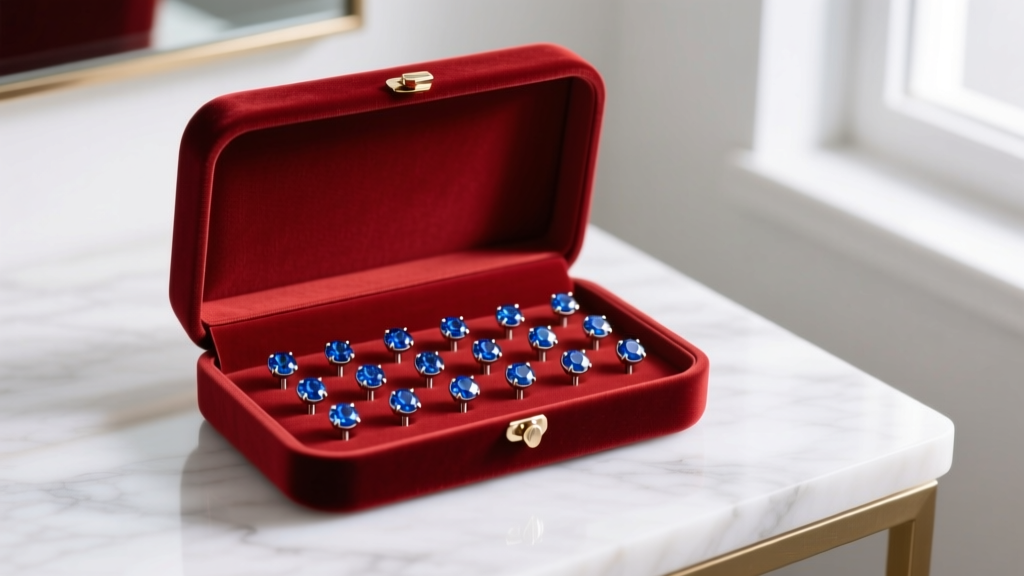
The Art of Gifting Piercing Jewelry: Beyond the Aesthetics
Gifting fine jewelry is a timeless gesture, but when your recipient has recently had their earlobes pierced, the stakes are significantly higher. The intersection of body modification and fine jewelry requires a deep understanding of anatomy, metallurgy, and healing timelines. When shopping for a newly pierced friend, partner, or family member, the most frequent and critical question we encounter is: how long after lobe piercing can you change earrings?
The short answer is that while the surface may appear healed in a few weeks, the internal fistula (the tube of skin that forms around the jewelry) takes much longer to mature. According to the Association of Professional Piercers (APP), standard earlobe piercings require a minimum of 6 to 8 weeks before any initial jewelry exchange, but true stabilization can take 3 to 6 months. Gifting the wrong material or style too early can lead to contact dermatitis, migration, or severe infection.
This comprehensive guide breaks down the exact healing timeline and pairs each stage with safe, luxurious, and highly specific gift ideas that prioritize both aesthetic beauty and anatomical health.
Stage 1: The Initial Healing Phase (Weeks 1-8)
During the first two months, the lobe is essentially an open wound. The body is actively building the fistula, and any disruption can cause trauma bumps or rejection. If you are buying a gift for someone in this stage, do not buy them jewelry to wear immediately. Instead, gift them high-end upgrades that they can transition into once their piercer gives the green light at the 8-week mark.
Material Grades That Prevent Rejection
When selecting initial jewelry, the metallurgy is non-negotiable. Avoid "surgical steel" or "stainless steel" at all costs, as these contain nickel, a primary allergen that causes weeping and irritation in fresh piercings. The American Academy of Dermatology notes that nickel allergies can develop at any age, making nickel-free metals a mandatory choice for gifts.
- ASTM F-136 Implant-Grade Titanium: The gold standard for fresh piercings. It is completely nickel-free, lightweight, and biocompatible.
- 14k or 18k Solid Gold (Nickel-Free): Must be solid, not plated or filled. Brands like BVLA and Maria Tavares use high-polish, nickel-free gold alloys specifically milled for body jewelry.
- Niobium: A highly reactive metal that is anodized to create vibrant colors without the use of toxic dyes or plating.
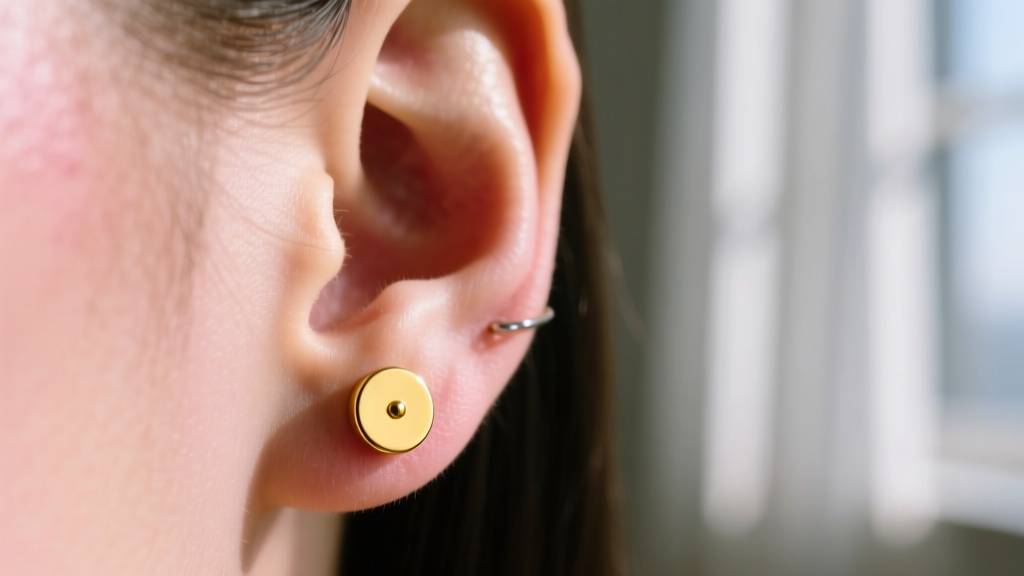
The Mechanics: Threadless and Internally Threaded
A premium gift isn't just about the metal; it's about the engineering. Never gift externally threaded jewelry (where the screw pattern is on the post), as the sharp threads will tear the delicate healing fistula upon insertion. Instead, look for:
- Internally Threaded: The screw pattern is on the inside of the decorative end, and the post is completely smooth.
- Threadless (Push-Pin): The decorative end has a slightly bent pin that pushes into the hollow post, creating tension. This is the preferred method for high-end piercing studios in 2026, as it is secure and requires no twisting.
Stage 2: The Transitional Downsizing Phase (Months 2-4)
Between months two and four, the initial swelling has subsided, but the fistula is still fragile. The most common mistake people make during this phase is leaving the initial, extra-long post in the ear. This long post can snag on hair and clothing, causing the piercing to heal at a crooked angle. This phase is all about "downsizing" to a shorter post.
Gift Idea: The Downsizing Appointment & New Ends
The ultimate, highly thoughtful gift for this stage is a gift certificate to a reputable, APP-certified piercing studio for a "downsize and upgrade" appointment. You can purchase a pair of high-quality threadless ends (the decorative front) in a 3mm or 4mm size, which is perfect for lobes.
Pricing Guide for Premium Ends:
- Plain Titanium/Gold Beads: $35 - $60
- Synthetic Opals (e.g., Zirconia): $45 - $85
- Genuine Gemstones (Sapphires, Diamonds): $120 - $350+
Stage 3: Fully Healed & Ready for Statement Pieces (Months 4-6+)
Once the 4-to-6-month mark has passed, the lobe is generally fully healed and ready for heavier, more complex jewelry styles. This is where your gift options expand dramatically into hoops, huggies, dangles, and ear cuffs.
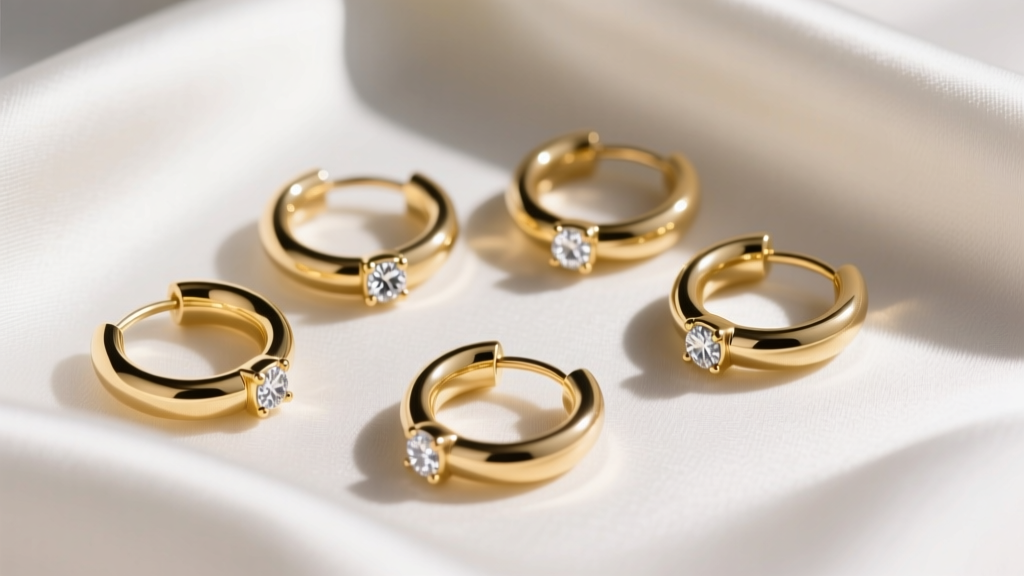
Upgrading to Hoops, Huggies, and Dangles
When gifting hoops for newly healed lobes, the diameter is critical. A hoop that is too tight will put pressure on the healing fistula, while one that is too large may swing and cause irritation. For standard lobes, a 10mm to 12mm inner diameter is usually the sweet spot for a comfortable, snug fit.
If you are gifting dangle earrings, pay close attention to the weight. Heavy statement pieces can cause "migration," where the weight of the jewelry slowly pulls the piercing hole downward, thinning the tissue over time. Look for hollow-tube gold designs or lightweight gemstone drops that provide visual impact without the gravitational drag.
Healing Timeline & Gift Matching Matrix
To ensure your gift aligns perfectly with the recipient's healing journey, refer to this structured matrix. Remember that standard needle piercings are typically 16-gauge (1.2mm) or 14-gauge (1.6mm), while older piercing gun methods use 20-gauge (0.8mm). Always verify their gauge size before purchasing posts.
| Healing Stage | Timeline | Safe Jewelry Types | Ideal Gift Idea |
|---|---|---|---|
| Initial Healing | Weeks 1-8 | Flat-back labrets (16g/14g) | High-end threadless ends for future use |
| Transitional | Months 2-4 | Short-post labrets | Studio downsize appointment + 3mm gems |
| Maturing | Months 4-6 | Small hoops, huggies (10-12mm) | Seamless clicker hoops or lightweight huggies |
| Fully Healed | Months 6+ | Dangles, ear cuffs, heavy drops | Statement 14k gold dangles or ear vines |
Expert Troubleshooting: When a Gift Causes Irritation
Even with the best intentions and highest-quality metals, irritation can occur. If your recipient experiences redness, warmth, or a localized bump after wearing your gift, follow these expert troubleshooting steps recommended by the APP Jewelry Guidelines:
1. The Saline Soak Reset
Do not immediately remove the jewelry, as the hole can close within minutes if it is not fully matured. Instead, have them spray the area with sterile 0.9% sodium chloride wound wash twice a day. Avoid any products containing tea tree oil, alcohol, or harsh soaps, which will dry out the fistula and delay healing.
2. Check the Backing
If you gifted a traditional butterfly-back earring, this is likely the culprit. Butterfly backs trap dead skin cells, moisture, and bacteria against the ear. If irritation occurs, visit a piercer to swap the post to a flat-back labret, which sits flush against the skin and allows for proper airflow.
3. Evaluate the Snag Factor
Prong-set gemstones, while beautiful, have tiny metal claws that easily catch on hairbrushes and sweaters. If the piercing is being repeatedly snagged, switch to a bezel-set gemstone where the metal completely wraps around the edges of the stone, creating a smooth, snag-free profile.
Final Thoughts on Piercing Jewelry Gifting
Understanding how long after lobe piercing can you change earrings transforms you from a standard jewelry shopper into a highly informed curator. By respecting the biological timeline of the fistula and investing in implant-grade materials, threadless mechanics, and appropriate gauge sizes, your gift will be cherished for a lifetime. Whether you are gifting a simple 16-gauge titanium labret for a fresh piercing or a pair of diamond-encrusted huggies for a fully healed lobe, prioritizing anatomical safety ensures your beautiful gesture remains a source of joy, not irritation.


