Mixing Gold and Silver Earrings: Metals & Style Guide
Learn the metallurgical facts and styling rules for mixing gold and silver earrings. Discover how to prevent tarnish, skin reactions, and metal wear.

The Metallurgy of Mixed Metals: What Happens When They Touch?
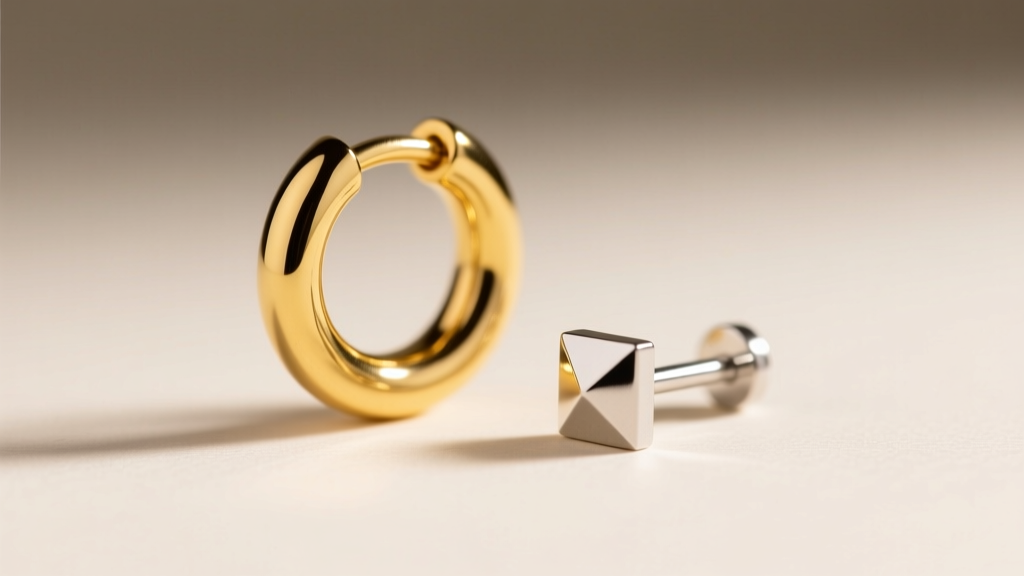
The trend of mixing gold and silver earrings has evolved from a rigid fashion faux pas to a hallmark of modern, curated ear styling. However, beyond the aesthetic appeal of mixed metals lies a complex intersection of metallurgy, skin chemistry, and material science. When you wear a 14k yellow gold helix hoop alongside a sterling silver lobe stud, you are not just combining colors; you are introducing two distinct elemental alloys to the micro-environment of your skin.
From a purely chemical standpoint, wearing gold and silver on the same ear does not cause an immediate destructive reaction, provided the pieces do not physically touch while wet. However, if a silver chain dangle consistently brushes against a gold huggie in the presence of an electrolyte—such as human sweat, which is rich in sodium chloride and lactic acid—a mild galvanic cell can form. In the galvanic series of metals, silver is more anodic (reactive) than gold. This means that if continuous friction and moisture are present, the silver will act as the sacrificial anode and undergo accelerated galvanic corrosion, leading to rapid tarnishing and microscopic pitting on the silver surface.
The Electrochemical Reality of Ear Curations
To mitigate this, professional piercers and jewelers recommend spatial separation when mixing gold and silver earrings. If you are styling a multi-hole lobe setup, ensure there is at least a 5mm to 8mm gap between the gold and silver pieces to prevent friction-induced galvanic wear. For cartilage piercings like the tragus or conch, where movement is minimal, the risk of cross-metal friction is significantly lower, making them ideal zones for experimenting with mixed-metal adjacent placements.
Skin Chemistry and Allergic Reactions
One of the most critical, yet frequently overlooked, aspects of mixing gold and silver earrings is how the specific alloys interact with your skin's unique pH and chemistry. Pure 24k gold and pure 999 silver are both hypoallergenic, but they are far too soft for functional earring posts, which require a minimum hardness to withstand the pressure of insertion. Therefore, alloying metals are introduced, and this is where contact dermatitis often originates.
Sterling silver (stamped 925) consists of 92.5% silver and 7.5% copper. The copper provides structural integrity but is also responsible for the green or black oxidation that can transfer to the skin in highly acidic environments. Conversely, 14k white gold is an alloy of 58.5% gold mixed with bleaching agents like nickel, palladium, or zinc. Nickel is a notorious sensitizer. According to the American Academy of Dermatology, nickel allergy is the most common cause of allergic contact dermatitis, affecting a significant percentage of the population. If you mix a nickel-alloyed white gold stud with a copper-alloyed sterling silver hoop, you are introducing two different potential irritants to the same localized area of the ear.
Material Composition & Reactivity Chart
| Metal / Alloy | Composition | Allergy Risk | Tarnish Profile |
|---|---|---|---|
| Sterling Silver (925) | 92.5% Ag, 7.5% Cu | Low (Copper sensitivity rare) | High (Reacts to sulfur/sweat) |
| Argentium Silver | 93.5% Ag, Germanium | Very Low | Extremely Low (Tarnish resistant) |
| 14k Yellow Gold | 58.5% Au, Ag, Cu, Zn | Low | None |
| 14k White Gold (Nickel) | 58.5% Au, Ni, Cu, Zn | High (Nickel dermatitis) | None (Rhodium plated) |
| 14k White Gold (Palladium) | 58.5% Au, Pd, Ag | Very Low | None |
For those committed to mixing gold and silver earrings without the risk of irritation, the optimal combination is Argentium silver paired with palladium-based white gold or standard 14k/18k yellow gold. Argentium replaces some of the copper with germanium, creating a transparent oxide layer that virtually eliminates tarnishing and copper-induced skin discoloration.
Hardness and Wear: The Vickers Scale Breakdown
When curating an ear with mixed metals, the physical hardness of the jewelry dictates how the pieces will age over time. Jewelers measure this using the Vickers Hardness (HV) scale. Understanding these metrics is vital if you wear a gold and silver piece in the same piercing (such as a two-tone earring) or in adjacent piercings where they might click together.
- Sterling Silver (925): ~65 HV. Relatively soft and highly susceptible to scratching and deformation.
- 14k Yellow Gold: ~130 to 150 HV. Significantly harder and more resistant to surface abrasion.
- 18k Yellow Gold: ~110 to 125 HV. Softer than 14k due to higher pure gold content, but still harder than sterling silver.
- Titanium (Grade 23 / 6Al-4V): ~330 HV. Often used for earring posts, vastly harder than both gold and silver.
If you wear a 14k gold huggie in your primary lobe piercing and a sterling silver drop earring in your secondary lobe piercing, the harder gold will act as an abrasive against the softer silver whenever they collide. Over a period of six to twelve months, you will notice micro-scratches and a dulling of the polish on the silver piece. To counteract this, consider utilizing 20-gauge (0.81mm) titanium posts with interchangeable gold and silver decorative ends. This provides the biocompatibility and structural rigidity of titanium while allowing you to safely swap the visual metals without compromising the post integrity.
Practical Frameworks for Styling Mixed Metals
Styling mixed metals requires an understanding of visual weight and contrast. The Gemological Institute of America (GIA) notes that the color of gold alloys varies wildly based on their trace elements, meaning a warm, copper-heavy 14k rose gold will interact visually with silver very differently than a stark, rhodium-plated white gold.
The Asymmetrical Lobe Strategy
Instead of forcing gold and silver into the same ear, use the ears as a canvas for asymmetry. Dedicate the left ear entirely to warm metals (14k yellow or rose gold) and the right ear to cool metals (sterling silver, white gold, or platinum). This creates a deliberate, high-fashion editorial look that avoids the visual clutter of clashing metals in a single, small geographic area. You can tie the two sides together by matching the silhouettes—such as wearing identical 12mm geometric hoops on both sides, just in different metals.
Two-Tone and Vermeil Alternatives
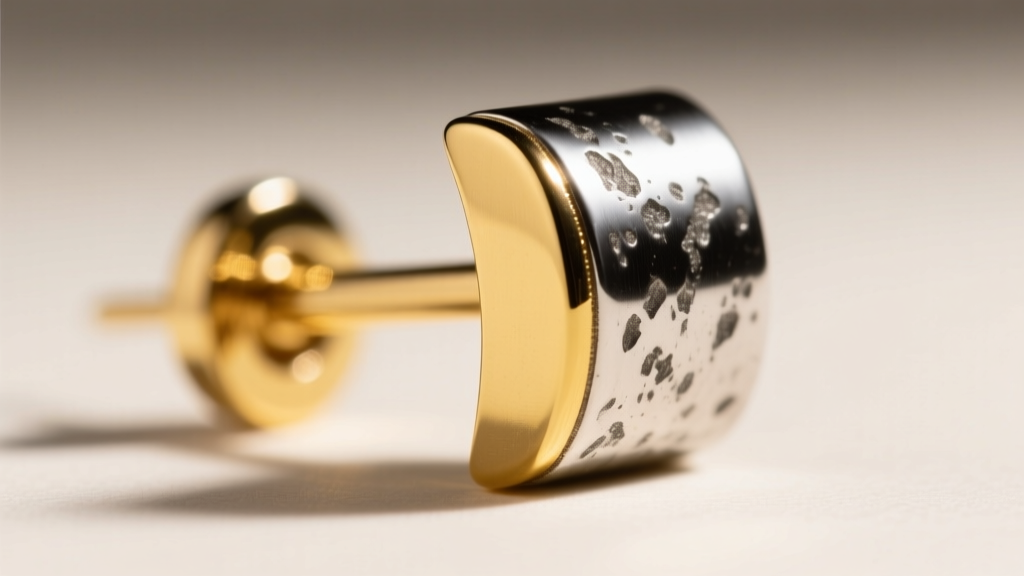
If you want the mixed-metal look within a single piercing, avoid cheap gold-plated silver, which will quickly wear through at the friction points. Instead, invest in gold vermeil (a thick layer of at least 2.5 microns of 10k+ gold over sterling silver) or solid two-tone pieces where the metals are soldered or laser-welded together. In high-quality two-tone earrings, the boundary between the metals is seamless, preventing the galvanic corrosion issues mentioned earlier because the metals are alloyed or joined in a controlled, dry manufacturing environment rather than grinding against each other on the ear.
Maintenance and Storage Protocols
The way you store your mixed-metal collection is just as important as how you wear it. Sterling silver tarnishes when exposed to hydrogen sulfide in the air, forming a black layer of silver sulfide. If you store your silver earrings in the same open jewelry box or fabric-lined tray as your gold pieces, the off-gassing and tarnish transfer can dull the polished finishes of your gold items over time.
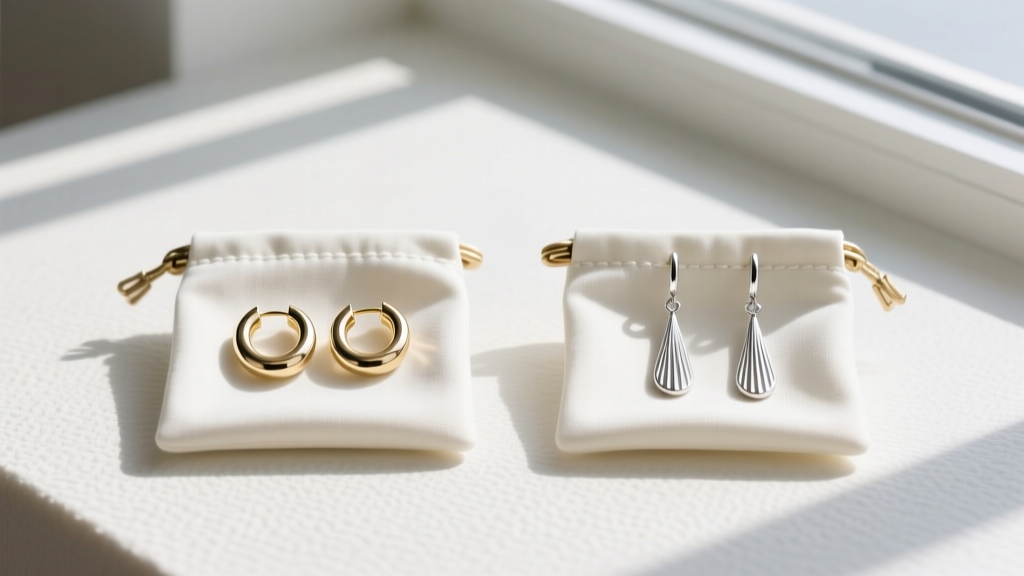
Implement a strict separation protocol: store all sterling silver earrings in individual, airtight polyethylene ziplock bags equipped with 3M anti-tarnish strips. These strips absorb airborne sulfur compounds before they can react with the copper in the silver alloy. Gold earrings, being largely immune to atmospheric tarnish, can be stored in standard soft pouches or fabric-lined compartments. By treating the maintenance of these two metals as distinct chemical processes rather than a singular jewelry chore, you ensure that your curated ear setups remain pristine, structurally sound, and visually striking for decades.


