Moissanite Earrings Value Guide: Are They Worth It in 2026?
Discover if moissanite earrings offer true value in 2026. We analyze pricing, durability, color grades, and compare them to diamonds and lab-grown alternatives.

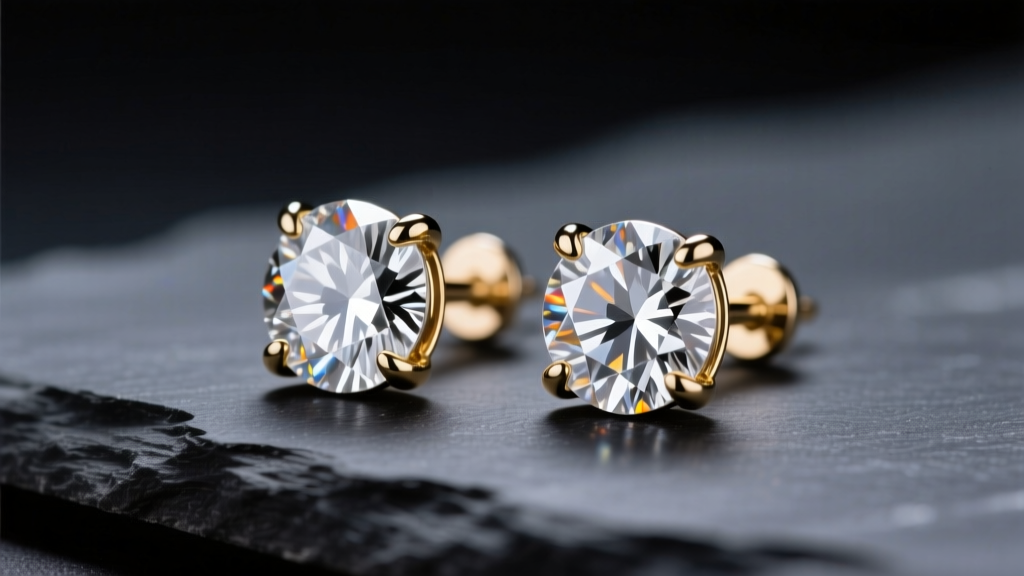
The Real Cost of Moissanite Earrings in 2026
When evaluating fine jewelry, the conversation inevitably turns to value. In 2026, the landscape of gemstone alternatives has matured significantly, and moissanite earrings sit at the center of the budget versus luxury debate. Originally discovered in a meteor crater by Henri Moissan in 1893, silicon carbide (SiC) is incredibly rare in nature. Today, every moissanite gemstone on the market is lab-created. Since Charles & Colvard's original patents expired in 2015, the market has been flooded with overseas manufacturers, driving prices down and quality up. But does a lower price tag equate to true value? To answer this, we must look beyond the initial purchase price and examine optical physics, long-term durability, and metallurgical pairings.
According to the Gemological Institute of America (GIA), moissanite possesses a refractive index of 2.65 to 2.69, significantly higher than a diamond's 2.42. This translates to exceptional brilliance. However, its dispersion (fire) is 0.104, more than double that of a diamond (0.044). This creates the famous "disco ball" effect—intense rainbow flashes. For buyers seeking a diamond simulant, this high dispersion can actually be a detriment, as it immediately signals to a trained eye that the stone is not a diamond. Understanding this optical reality is the first step in assessing whether moissanite offers true aesthetic value for your specific style preferences.
Decoding Moissanite Grades: Color and Cut
Unlike diamonds, which are graded on a strict, universally standardized scale by top-tier laboratories, moissanite grading is largely proprietary and vendor-dependent. The market generally categorizes moissanite into three color tiers:
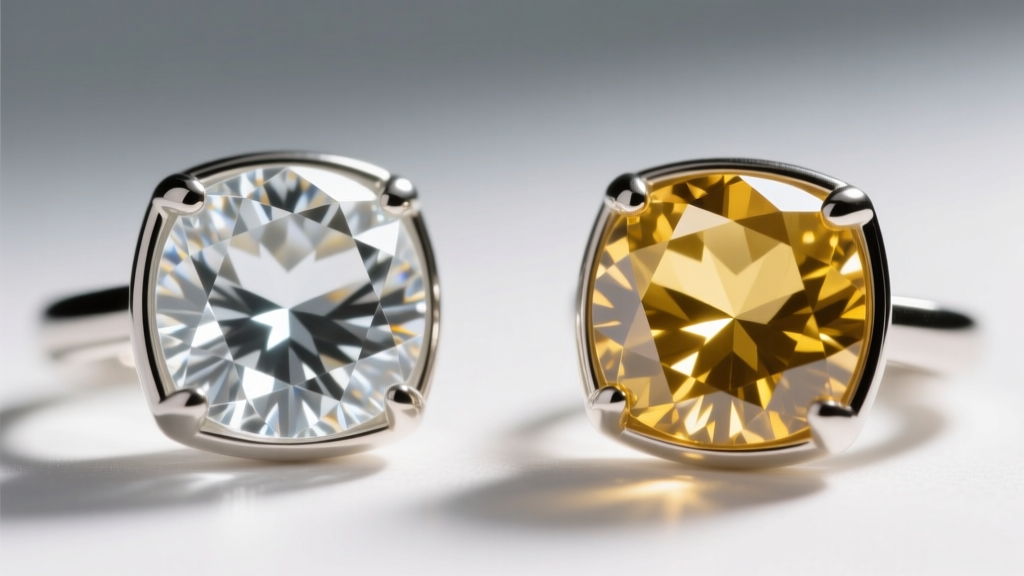
- Colorless (D-E-F): Often branded as "Forever One" or equivalent premium lines. These stones exhibit no visible body color and are the most expensive. They are ideal for white gold or platinum earring settings.
- Near-Colorless (G-H-I): These stones may show a very faint warmth or grayish undertone in certain lighting conditions, particularly in larger carat weights (over 2.0 ctw). They offer excellent value and pair beautifully with yellow gold.
- Faint Color (J-K): Noticeable yellow or green tints. While heavily discounted, these are generally not recommended for stud earrings where the stone is the sole focal point.
The "Crushed Ice" vs. Brilliant Cut Debate
To combat the excessive rainbow fire of traditional brilliant-cut moissanite, manufacturers have developed the "crushed ice" cut. This faceting pattern breaks up the light into smaller, more scattered flashes, closely mimicking the scintillation of a cushion-cut diamond. If your primary goal is to pass the stones off as natural diamonds, a crushed ice cut offers higher social value. However, if you prioritize raw, unadulterated sparkle and rainbow fire, a traditional round brilliant cut remains the superior, and often more affordable, choice.
Aesthetic Value: Proportion and Face Shape
Because moissanite is significantly less expensive than diamond, buyers often fall into the trap of oversizing. Purchasing 3.00-carat total weight (ctw) moissanite studs is financially feasible for most, but aesthetically, it can be a disaster. The value of an earring is deeply tied to how it harmonizes with the wearer's anatomy.
- Round Faces: Large, round brilliant studs will exaggerate the circularity of the face. The better value proposition is a pair of elongated moissanite drop earrings or rectangular dangles that create vertical lines.
- Square Faces: Angular jawlines are softened by round or oval moissanite hoops and huggies. Avoid square princess cuts, which will mirror and emphasize the jaw's natural geometry.
- Heart-Shaped Faces: Teardrop or pear-shaped moissanite dangles balance a wider forehead and narrower chin, offering high aesthetic ROI.
Furthermore, heavy oversized stones (anything over 8mm in diameter) can cause the earlobe to droop, making the earring face downward and obscuring the light return. If you insist on large moissanite studs, investing in specialized earring supports or silicone stabilizers is a mandatory hidden cost to maintain the jewelry's visual value.
Budget Breakdown: Moissanite vs. Lab-Grown vs. Natural Diamond
To truly assess the budget value, we must compare moissanite directly against its closest market competitors. The following table outlines the average retail pricing for round brilliant stud earrings in 14k white gold settings as of early 2026.
| Total Carat Weight (ctw) | Moissanite (DEF) | Lab-Grown Diamond | Natural Mined Diamond |
|---|---|---|---|
| 0.50 ctw | $250 - $350 | $450 - $600 | $1,200 - $1,800 |
| 1.00 ctw | $400 - $550 | $800 - $1,100 | $3,500 - $5,000 |
| 2.00 ctw | $700 - $900 | $1,600 - $2,200 | $10,000 - $15,000 |
| 3.00 ctw | $1,100 - $1,400 | $3,000 - $4,500 | $22,000+ |
As the data illustrates, moissanite offers a massive discount at higher carat weights. However, the American Gem Society (AGS) notes that lab-grown diamonds have also seen aggressive price reductions in recent years. The gap between a 1.00 ctw moissanite and a 1.00 ctw lab-grown diamond has narrowed to roughly $400. For many buyers, this shrinking price delta makes lab-grown diamonds a more compelling choice for authenticity, leaving moissanite as the undisputed king only for those strictly capping their budget under $600 for larger stones.
Setting Metals: Where Budget Meets Longevity
The value of a moissanite earring is only as strong as the metal holding it. Moissanite ranks at 9.25 on the Mohs scale of hardness. While it is exceptionally resistant to scratching, it possesses indistinct cleavage, meaning a sharp, direct impact to the girdle (the stone's outer edge) can cause chipping. Therefore, the setting metal must provide rigid protection.
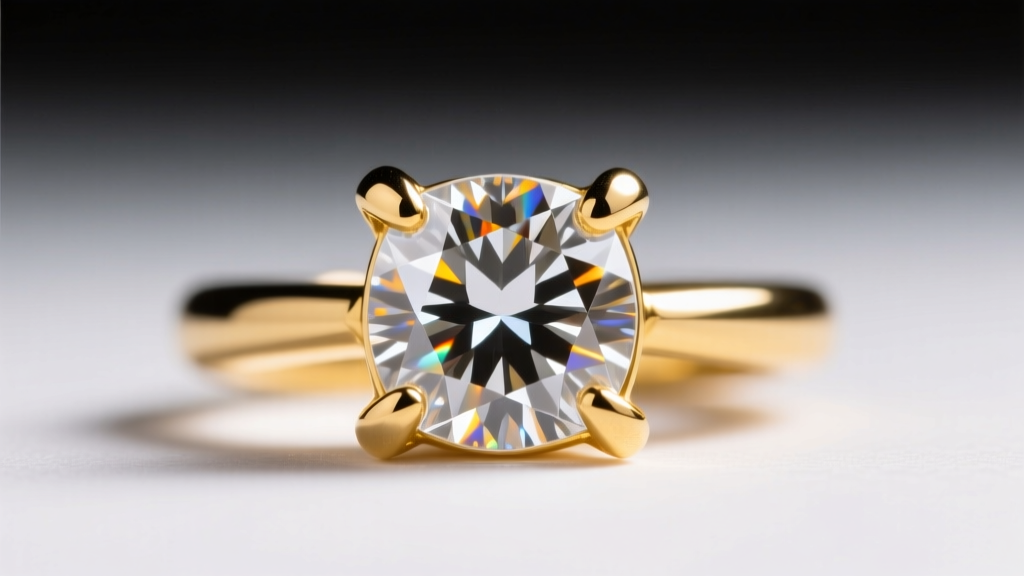
The Hidden Failure Mode: Prong Degradation
Many budget-conscious buyers pair their affordable moissanite with 18k or even 24k gold to maximize the "luxury" feel. This is a critical error for everyday wear earrings. Pure gold and 18k gold are relatively soft metals. Over time, the friction of putting on headphones, brushing hair, and sleeping in earrings will wear down 18k gold prongs, leading to stone loss. For moissanite stud and drop earrings, 14k gold or platinum is the optimal choice. 14k gold contains a higher percentage of alloy metals (like zinc and copper), providing the necessary tensile strength to grip the stone securely for decades.
Securing the Investment: Earring Backs
Do not undervalue the earring back. Standard friction backs (the classic "butterfly" clutch) rely on a small groove in the post. Over time, the tension in the metal clutch relaxes, and the earring will inevitably slide off and be lost. To protect the value of your purchase, upgrade to La Pousette locking backs or precision-threaded screw backs. These mechanical locks ensure that even if the post is bumped, the moissanite remains securely anchored to the earlobe.
Resale Value and the "Investment" Myth
It is vital to address the secondary market. Moissanite earrings possess virtually zero resale value. Unlike natural diamonds, which retain a percentage of their retail price, or even high-end luxury brand jewelry, moissanite is viewed by the secondary market as a consumable fashion good. When you purchase moissanite earrings, you are paying for the optical performance and the immediate joy of ownership, not for an asset that will appreciate or even hold its cash value. If you view jewelry strictly as a financial investment, moissanite is a poor choice. If you view it as an accessible luxury that frees up capital for other life investments, it is an exceptional tool.
Final Verdict: Who Should Buy Moissanite Earrings?
In 2026, moissanite earrings remain a highly strategic purchase for specific consumer profiles. They offer unbeatable value for buyers who prioritize maximum visual size and rainbow fire over diamond authenticity. They are perfect for travel earrings, secondary pairs for cartilage piercings where high-carat natural diamonds would be prohibitively expensive, and for ethical consumers who want a guaranteed conflict-free, low-impact gemstone.
However, if you are seeking a stone that perfectly mimics the white, crisp scintillation of a diamond, or if you care about long-term resale liquidity, the narrowing price gap suggests that lab-grown diamonds may now offer a better holistic value proposition. Ultimately, the true value of moissanite earrings lies in their ability to deliver high-impact luxury aesthetics without the paralyzing financial anxiety associated with traditional fine jewelry.


