The Beginner's Guide to Buying Oval Stud Diamond Earrings
Discover how to choose the perfect oval stud diamond earrings. Learn about cut grades, carat sizes, settings, and pricing in this beginner-friendly guide.

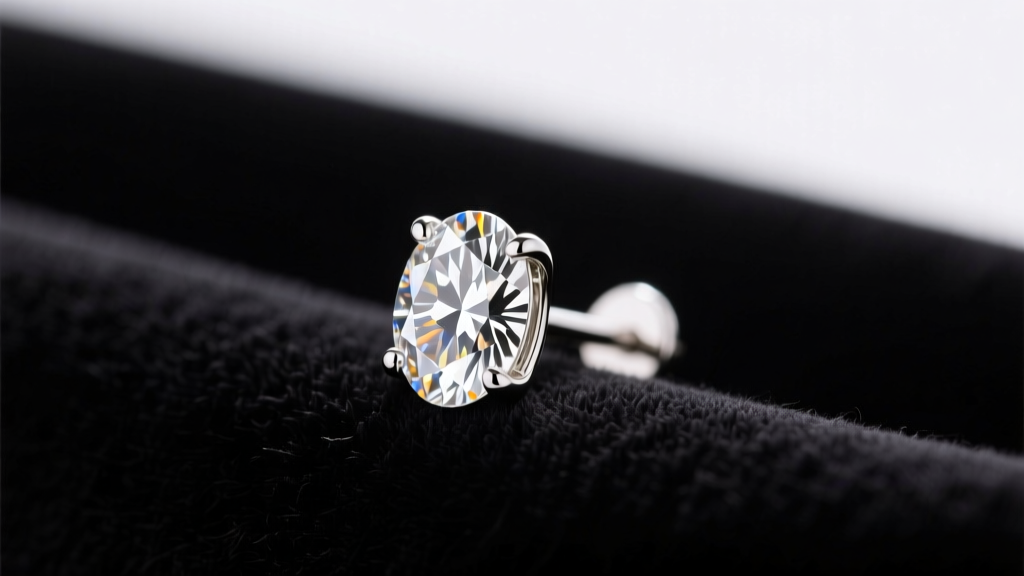
Why Choose Oval Cut Diamonds for Stud Earrings?
When building a foundational jewelry wardrobe, diamond studs are the undisputed starting point. However, while the classic round brilliant often dominates the market, oval stud diamond earrings offer a sophisticated, modern alternative that savvy buyers are increasingly seeking out. The primary advantage of the oval cut is its elongated shape, which provides a larger face-up surface area than a round diamond of the exact same carat weight. This means a 0.90-carat oval will visually rival a 1.00-carat round, often at a 10% to 20% lower price point.
For beginners navigating the diamond market, ovals present a unique set of grading challenges and styling opportunities. Unlike rounds, which have standardized cut grades, oval diamonds require a more nuanced, visual approach to selection. This guide breaks down the exact specifications, setting styles, and market data you need to confidently purchase your first pair of oval diamond studs.
The Anatomy of an Oval Diamond Stud
The most critical metric for any oval diamond is the Length-to-Width (L/W) ratio. This number dictates how elongated or "chubby" the stone appears. According to the GIA Diamond Shape Guide, personal preference plays a massive role here, but for stud earrings, structural integrity and visual balance are paramount.
- Below 1.30: The diamond appears almost round or slightly squarish. It loses the distinct oval silhouette.
- 1.35 to 1.50 (The Sweet Spot): This is the ideal range for earrings. It provides a beautiful, elegant elongation without compromising the stone's structural stability or making it prone to snagging on hair and clothing.
- Above 1.60: The stone begins to look like a marquise cut. While striking in a ring, extremely elongated ovals can look disproportionate on smaller earlobes and are more vulnerable to chipping at the pointed tips.
Navigating the 4Cs for Oval Earrings
Buying diamonds for earrings requires a different strategy than buying an engagement ring. Because earrings are viewed from a distance and are constantly in motion, you can strategically compromise on certain grades to maximize your budget.
Cut Quality and the Bowtie Effect
The GIA does not assign a traditional cut grade to oval diamonds. Instead, you must evaluate the stone's light performance visually. The most common flaw in poorly cut ovals is the bowtie effect—a dark, bowtie-shaped shadow that stretches across the center of the stone. A faint bowtie is normal and can actually add contrast and depth, but a severe, black bowtie will kill the diamond's brilliance. Always request high-definition 360-degree videos from your vendor before purchasing.
Color and Clarity Grading
Because earrings sit on the side of the face and reflect your skin tone and hair color, you do not need to pay a premium for the highest color and clarity grades.
"For diamond studs, the G to H color range is the ultimate sweet spot. The stones will face up completely white to the naked eye, but you will save significantly compared to D-F colorless grades."
Similarly, for clarity, a VS2 or SI1 grade is perfectly acceptable. As long as the diamond is "eye-clean" (no visible black carbon spots to the naked eye), it will sparkle brilliantly. Inclusions located near the girdle can often be hidden by the earring's prongs, making SI1 stones an incredible value.
Settings, Metals, and Hardware Specifications
The way your oval diamond is mounted dictates both its security and its visual impact. Furthermore, the hardware (the post and the backing) must be appropriately sized for the weight of the stone.
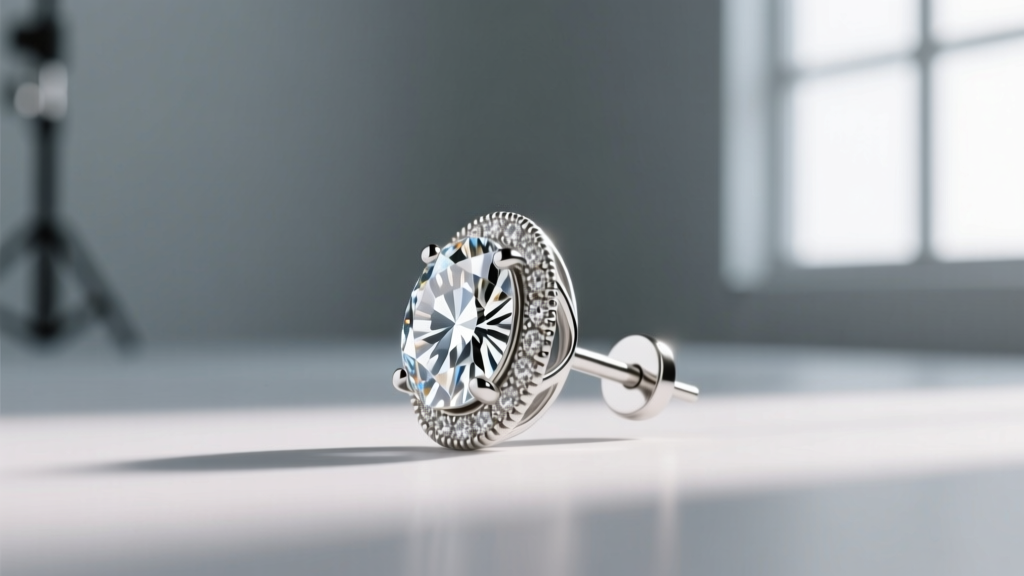
Prong Configurations
- 3-Prong (Martini Setting): Allows maximum light to enter the pavilion of the diamond, enhancing brilliance. It also makes the stone appear slightly larger since less metal is visible. However, it offers slightly less protection to the girdle.
- 4-Prong (Basket Setting): Provides superior security and keeps the diamond sitting flatter against the earlobe. This is the recommended choice for active individuals or for ovals exceeding 1.50 carats total weight.
- Bezel Setting: A rim of metal encircles the diamond. While highly secure and modern, a bezel can reduce the perceived face-up size of an oval by up to 10%.
Post Gauge and Backings
Standard earring posts are typically 20-gauge (0.81mm). However, oval diamonds carry their weight differently than rounds. If you are purchasing a pair with a Total Carat Weight (TCW) over 1.50ct, you should request an 18-gauge (1.02mm) post. Thicker posts prevent the metal from bending under the weight of the elongated stone, which can cause the earring to droop forward on the lobe. Always pair heavier studs with screw-backs or La Pousette (push-back with a locking mechanism) to prevent loss.
2026 Market Pricing and Carat Guide
Understanding current market valuations is crucial for first-time buyers. The table below outlines estimated pricing for natural, earth-mined oval diamond studs based on a G color / VS2 clarity benchmark. (Note: Lab-grown oval diamonds of identical specs currently trade at roughly 20% to 30% of these natural prices, according to Blue Nile's Oval Diamond Education center).
| Total Carat Weight (TCW) | Per-Ear Carat Weight | Approx. MM Dimensions (Per Ear) | Estimated Price Range (Natural) |
|---|---|---|---|
| 0.50 ct | 0.25 ct | 5.0 x 3.5 mm | $600 - $850 |
| 1.00 ct | 0.50 ct | 6.5 x 4.5 mm | $1,800 - $2,500 |
| 1.50 ct | 0.75 ct | 7.5 x 5.0 mm | $3,500 - $4,800 |
| 2.00 ct | 1.00 ct | 8.5 x 5.5 mm | $6,000 - $8,500 |
Styling for Your Earlobe and Face Shape
One of the most unique aspects of oval stud diamond earrings is the ability to choose the orientation of the setting: North-South (vertical) or East-West (horizontal).

North-South (Vertical) Orientation
This is the traditional and most common way to wear oval studs. The vertical alignment draws the eye downward, creating an elongating effect. This orientation is highly recommended for individuals with round or wide face shapes, as well as those with larger, longer earlobes that can support the vertical drop of the stone without the bottom tip hanging off the edge.
East-West (Horizontal) Orientation
Setting the ovals horizontally is a contemporary, fashion-forward choice. This orientation adds visual width and is exceptionally flattering for individuals with very small earlobes, as the stone sits entirely within the boundaries of the lobe tissue. It also beautifully complements long, narrow face shapes by adding a subtle horizontal balancing line.
Expert Purchasing Checklist for Beginners
Before you finalize your purchase, run through this quick E-E-A-T (Experience, Expertise, Authoritativeness, and Trustworthiness) checklist to ensure you are getting a high-quality product:
- Demand Independent Certification: Never buy natural oval diamond studs without a grading report from the GIA or IGI. The report guarantees the color, clarity, and exact measurements.
- Verify the Match: Because ovals vary wildly in shape, the vendor must hand-pick the pair. Ensure the L/W ratio of the left and right diamonds are within 0.05 of each other (e.g., 1.40 and 1.43) so they look like a matched set.
- Check the Metal Purity: Ensure the setting is stamped 14k, 18k, or PT (Platinum). Avoid gold-plated or vermeil settings for fine diamonds, as the plating will eventually wear off and require expensive re-dipping.
- Review the Return Policy: Always buy from a vendor that offers a minimum 30-day, no-questions-asked return policy. Diamonds look different in natural sunlight than they do under a jeweler's halogen lamps; you must be able to evaluate them in your own environment.
By understanding the specific geometry, grading nuances, and hardware requirements of the oval cut, you can confidently invest in a pair of studs that offer superior size, unique brilliance, and timeless elegance.


