Pearl Earring Size Chart: Material & Millimeter Guide
Master our pearl earring size chart comparing Akoya, South Sea, and Freshwater materials. Learn mm dimensions, nacre grades, and styling tips.

Decoding the Pearl Earring Size Chart: Millimeters Matter
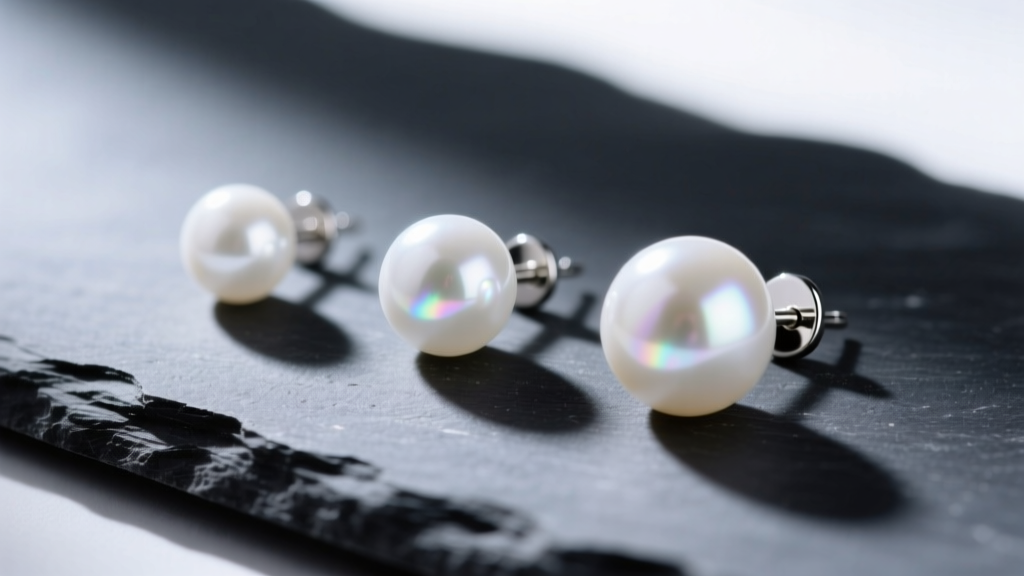
When shopping for pearl jewelry, carat weight is irrelevant. Unlike faceted gemstones, organic pearls are measured by their diameter in millimeters (mm). Consulting a reliable pearl earring size chart is only the first step; understanding how those millimeters interact with the underlying biological material is what separates an informed buyer from a disappointed one. A 1mm increase in diameter does not represent a linear increase in volume or price—it represents an exponential leap in both. For instance, an 8mm pearl has roughly twice the volume of a 6mm pearl, yet it can command three to four times the price depending on the mollusk species that produced it.
To truly master pearl selection, we must map the standard pearl earring size chart against the specific material properties of the world's primary pearl-producing oysters and mussels. This guide breaks down exact dimensions, nacre thickness, structural durability, and the engineering required to set them securely in your ears.
Material Properties: How Pearl Type Dictates Available Sizes
The biological constraints of the host mollusk strictly dictate the maximum size a pearl can achieve. You cannot find a 14mm Akoya pearl, just as you will rarely find a 4mm South Sea pearl. Here is how the material properties align with sizing.
Akoya Pearls (The Classic Stud)
Produced by the Pinctada fucata martensii saltwater oyster, Akoya pearls are the gold standard for classic stud earrings. Their material hallmark is an exceptionally high, mirror-like luster caused by the rapid deposition of crystalline aragonite in cooler Japanese and Vietnamese waters. However, their nacre thickness is relatively thin, typically ranging from 0.2mm to 0.8mm. Because the oyster is small, Akoya pearls rarely exceed 9.5mm. The sweet spot for Akoya studs is 6.5mm to 8.0mm, offering a brilliant, sharp reflection that larger, softer-lustered pearls cannot replicate.
Freshwater Pearls (The Versatile Workhorse)
Cultivated primarily in China using the Hyriopsis cumingii mussel, freshwater pearls are unique because they are typically solid nacre, lacking a bead nucleus. This makes them incredibly durable and resistant to chipping. Standard tissue-nucleated freshwater pearls range from 4mm to 10mm. However, the advent of Edison pearls (bead-nucleated freshwater pearls) has pushed the material limits, producing round specimens up to 15mm. While their luster is generally softer and more satiny than Akoya, their thick, solid-nacre composition makes large sizes highly resilient for daily wear.
South Sea & Tahitian Pearls (The Statement Makers)
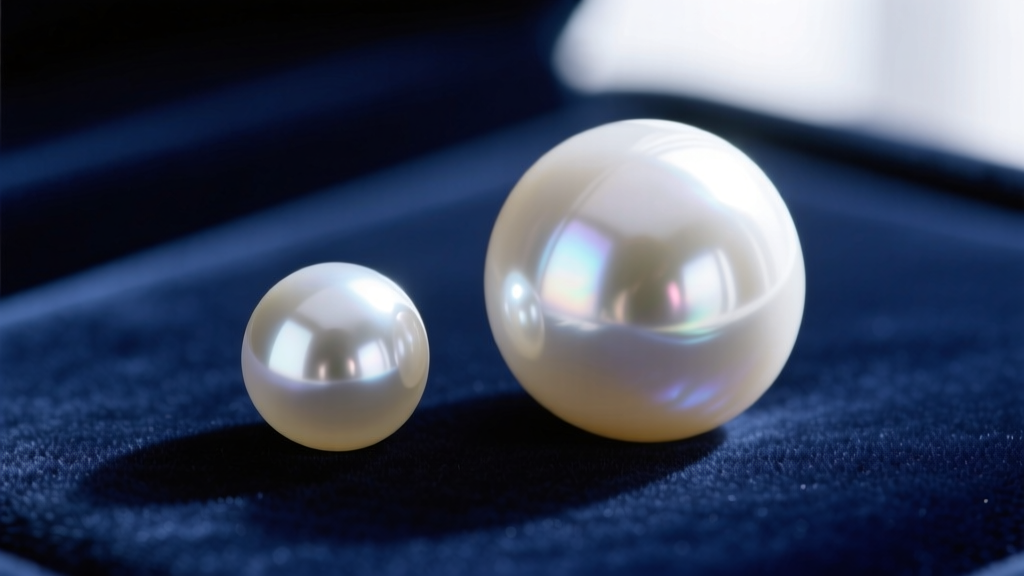
The Pinctada maxima oyster produces White and Golden South Sea pearls, while the Pinctada margaritifera produces Tahitian pearls. These are the giants of the pearl world, starting at 9mm and regularly reaching 16mm to 20mm. Their defining material property is immense nacre thickness—often 2.0mm to 4.0mm—and a soft, satiny luster that glows from deep within rather than reflecting sharply off the surface. Due to the long cultivation period (2 to 4 years), the nacre is dense and highly durable, though the massive size requires specialized earring engineering to prevent drooping.
The Comprehensive Pearl Earring Size Chart & Price Matrix
Use the table below to cross-reference your desired millimeter size with the biological material capable of producing it, along with current market pricing for high-quality stud pairs.
| Pearl Type | Typical Size Range (mm) | Nacre Thickness | Luster Profile | Avg. Price Range (Stud Pair) |
|---|---|---|---|---|
| Akoya | 5.0mm - 9.5mm | 0.2mm - 0.8mm | Sharp, Mirror-like | $250 - $1,200 |
| Freshwater (Standard) | 4.0mm - 10.0mm | Solid Nacre | Soft, Satiny | $40 - $200 |
| Edison (Freshwater) | 10.0mm - 15.0mm | 1.5mm - 3.0mm | Metallic, Bright | $150 - $600 |
| White South Sea | 9.0mm - 16.0mm | 2.0mm - 4.0mm | Deep, Satin Glow | $1,500 - $5,000+ |
| Tahitian | 8.0mm - 14.0mm | 1.5mm - 3.5mm | Peacock, Metallic | $800 - $3,500 |
Nacre Thickness and Durability: Beyond the Diameter
A common mistake when using a pearl earring size chart is assuming that a larger millimeter size automatically equates to a better or more durable pearl. According to the Gemological Institute of America (GIA), nacre quality and thickness are paramount to a pearl's longevity and beauty. In bead-nucleated pearls like Akoya and South Sea, if the nacre is too thin (under 0.3mm), the pearl may exhibit "blinking"—a dull, chalky spot where the underlying shell bead shows through the surface.
A large 12mm South Sea pearl with chalky, thin nacre is vastly inferior in both beauty and structural integrity to a perfectly round, thick-nacre 7mm Akoya pearl. Always prioritize luster and nacre depth over raw millimeter dimensions.
For Akoya pearls, look for the Hanadama certification, which guarantees a minimum nacre thickness of 0.4mm. For Tahitian pearls, the French Polynesian government legally mandates a minimum nacre thickness of 0.8mm for export, ensuring a baseline of material durability regardless of the pearl's overall diameter.
Setting Engineering: Post Gauges and Drill Holes
The physical weight of large pearls introduces mechanical challenges for earring settings. Standard earring posts are 20-gauge (0.81mm thick). While perfectly adequate for 6mm to 8mm Akoya or Freshwater pearls, a 20-gauge post will often bend under the weight of a 13mm South Sea pearl, causing the earring to droop forward on the earlobe.
- Small Pearls (4mm - 8mm): Require standard 20-gauge (0.81mm) friction posts and shallow cup settings. Drill holes in the pearl are typically 0.8mm to 0.9mm.
- Medium Pearls (8.5mm - 11mm): Best secured with 18-gauge (1.02mm) posts. The pearl drill hole is widened to 1.1mm, and a heavier-duty jewelry epoxy is used alongside the peg setting.
- Large Pearls (11.5mm - 16mm+): Demand 16-gauge (1.29mm) or even 14-gauge (1.63mm) custom posts. These require deep, reinforced basket settings or specialized oversized cups to distribute the weight evenly across the earlobe, preventing tissue tearing.
Matching Pearl Sizes to Ear Anatomy & Face Shape
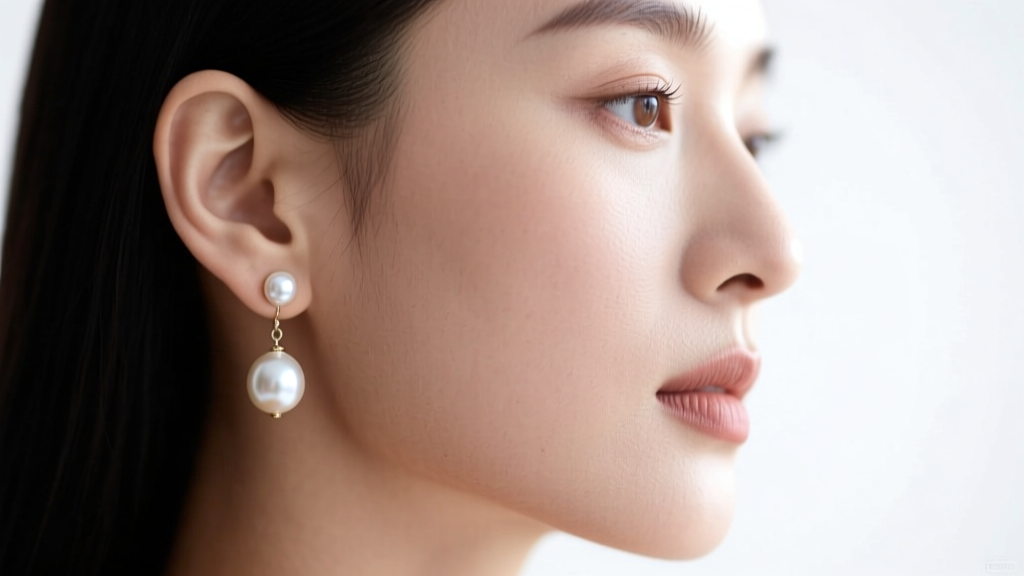
Material properties also dictate where specific sizes should be worn on the ear. Cartilage piercings (like the helix, tragus, or conch) are thinner and more sensitive than the fleshy earlobe. According to the American Gem Society (AGS), the weight of the jewelry must be proportionate to the tissue supporting it.
For cartilage piercings, restrict your selection to 3mm to 5.5mm freshwater or Akoya pearls. The lightweight nature of these smaller sizes prevents migration and rejection of the piercing. For standard lobe piercings, 6.5mm to 9mm is the universal sweet spot, offering presence without dragging the lobe down. If you are opting for statement drop earrings featuring 12mm+ South Sea pearls, ensure the finding includes a secure leverback or omega-back clasp to distribute the heavy material load across the back of the ear, rather than relying solely on the piercing hole.
Expert Troubleshooting: Common Sizing & Material Pitfalls
When buying large pearl earrings, natural material variance becomes a significant factor. Because pearls are organic, finding two perfectly matched 14mm South Sea pearls with identical luster, overtone, and surface cleanliness is exceptionally rare. Jewelers often sort through thousands of pearls to match a single pair. If you find a pair of massive pearls at a suspiciously low price, scrutinize them for heavy blemishes, uneven drill holes, or mismatched undertones (e.g., one pearl leaning silver, the other leaning cream).
Furthermore, be wary of "size inflation" by disreputable vendors who measure the entire earring finding (including the metal cap and post) rather than the naked pearl diameter. Always demand the exact millimeter measurement of the pearl material itself, measured perpendicular to the drill hole, to ensure you are getting the dimensions promised on your pearl earring size chart.


