Rain Cloud Earrings: 2026 Trend Analysis & Styling Guide
Discover the 2026 rain cloud earrings trend. Explore material grades, gauge sizes, styling frameworks, and pricing for this whimsical jewelry staple.

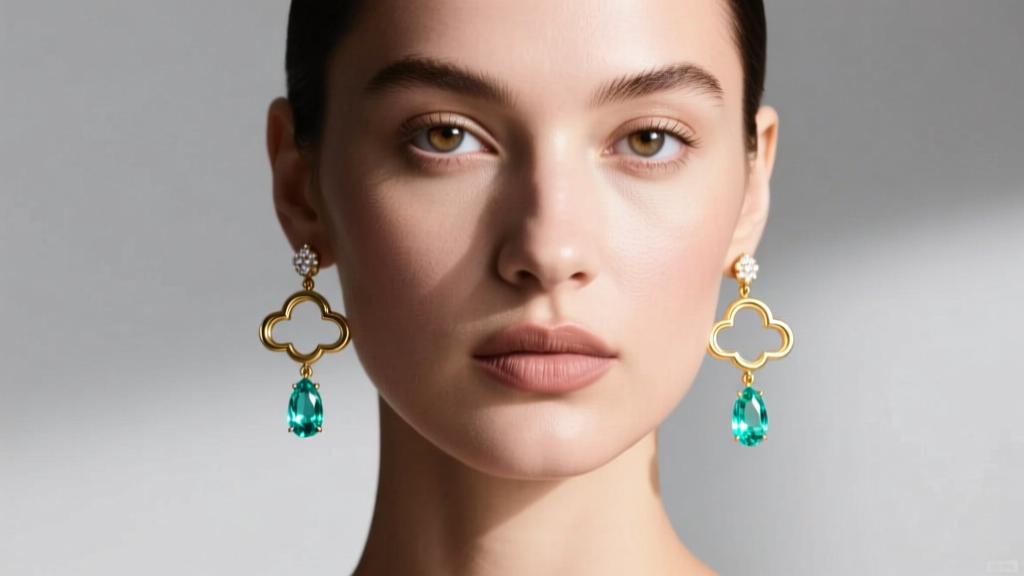
The Meteorological Rise of Rain Cloud Earrings in 2026
The 2026 fine jewelry landscape is decisively shifting away from stark, brutalist minimalism toward whimsical, narrative-driven pieces that evoke emotion and nostalgia. At the absolute forefront of this movement are rain cloud earrings. Once relegated to children's jewelry or novelty accessories, the rain cloud motif has been elevated by high jewelry houses and independent artisan goldsmiths into a sophisticated symbol of renewal, tranquility, and quiet luxury.
Unlike traditional geometric studs or classic hoops, rain cloud earrings combine a textured or enameled "cloud" base with dangling "rain" elements—typically articulated chains terminating in teardrop gemstones. This kinetic design creates subtle movement and captures light dynamically. According to recent industry trend reports, searches for nature-inspired, kinetic ear jewelry have surged by over 140% year-over-year, driven by a consumer desire for "dopamine dressing" and pieces that tell a visual story. Whether styled as a delicate 20-gauge lobe stud or a structured 16-gauge cartilage huggie, the rain cloud earring is the definitive conversation starter of the year.
Anatomy of the Design: Materials and Gemstone Grades
To distinguish a fine jewelry investment from a fast-fashion trinket, one must examine the material integrity of both the cloud formation and the rain droplets. The best designs rely on a stark contrast in textures and precise gemological grading.
The Cloud Base: Vitreous Enamel vs. Pavé Diamonds
The "cloud" portion of the earring serves as the structural anchor. In premium 2026 collections, you will primarily encounter two techniques:
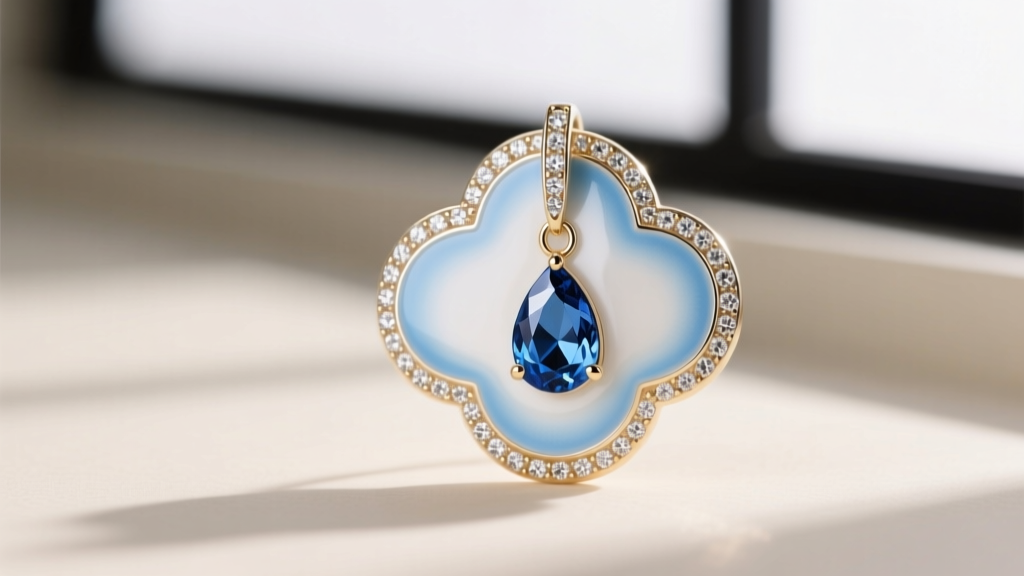
- Vitreous (Hot) Enamel: Fired at temperatures exceeding 800°C, vitreous enamel fuses glass powder to a 14k or 18k gold base. High-end artisans often use guilloché engraving beneath the translucent white or pale grey enamel to create a shimmering, dimensional cloud effect. This method is highly durable and resistant to yellowing.
- Micro-Pavé Diamonds: For evening or bridal styling, the cloud is rendered in solid gold and encrusted with micro-pavé diamonds. Look for stones in the F-G color range and VS clarity to ensure the cloud appears bright and icy, rather than cloudy or dull.
The Rain Drops: Briolette Gemstones
The "rain" is where the earring earns its kinetic charm. The briolette cut—a faceted teardrop shape drilled at the top—is the undisputed standard for high-quality rain drops because it allows for 360-degree light return without the need for a metal setting basket, which would obstruct the stone. According to the Gemological Institute of America (GIA), aquamarine is a premier choice for these drops due to its exceptional clarity and pleochroism, offering a serene, watery blue that perfectly mimics a spring shower. Alternatively, London Blue Topaz provides a deeper, more dramatic ink-blue hue for evening wear, though it requires careful prong or bezel protection if not cut as a briolette.
Technical Specifications: Sizing, Gauge, and Placement
Because rain cloud earrings involve dangling elements, weight distribution and post gauge are critical for comfort and ear health. A poorly balanced earring will pull the lobe forward, ruining the visual effect and causing tissue fatigue. Below is a technical framework for selecting the right hardware based on your piercing placement.
| Piercing Placement | Recommended Gauge | Max Weight per Ear | Best Earring Style |
|---|---|---|---|
| Standard Lobe | 20g (0.8mm) or 18g (1.0mm) | 4.5 grams | Friction-back stud with 15mm articulated drop |
| Upper Lobe / Flat | 18g (1.0mm) | 2.5 grams | Miniature cloud stud with single briolette |
| Helix / Cartilage | 16g (1.2mm) | 3.0 grams | Rain cloud huggie with integrated dangling chain |
Pro-Tip for Lobe Droop: If you are purchasing a heavier 18k gold and diamond pavé cloud earring, ensure the backing is a wide, flat "la pousette" (butterfly) clutch or a silicone O-ring disc. This distributes the weight across a wider surface area of the earlobe, keeping the cloud perfectly upright rather than tilting downward.
Styling Framework: Face Shapes and Wardrobe Pairings
The whimsical nature of rain cloud earrings requires strategic styling to ensure they elevate rather than overwhelm your look. The kinetic movement of the dangling drops draws the eye vertically, making them a powerful tool for balancing facial proportions.
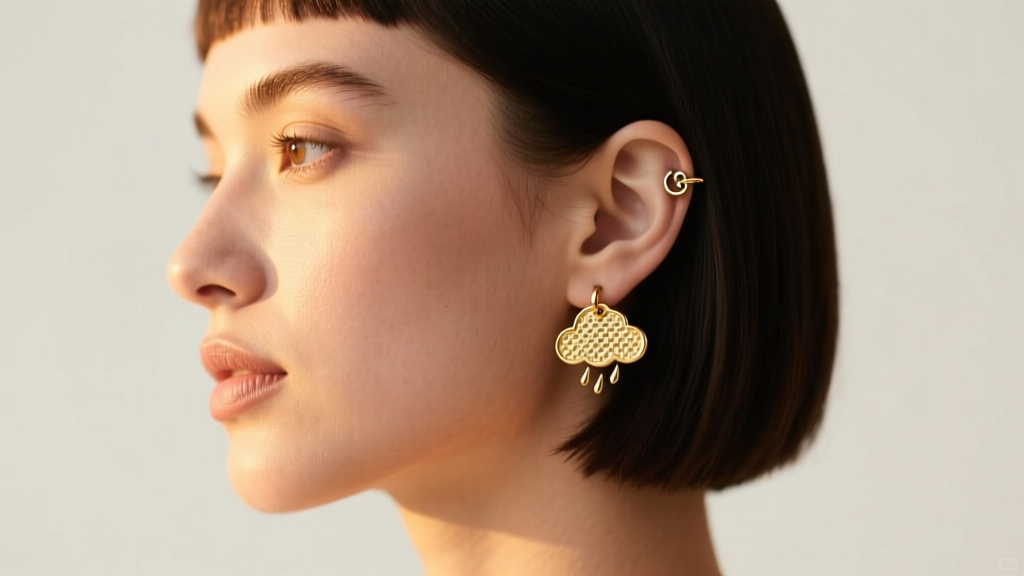
- Round Faces: Opt for elongated, angular rain drops (such as marquise-cut aquamarines) suspended from longer chains (20mm+). The vertical lines will create an illusion of length and structure, contrasting beautifully with soft facial curves.
- Square or Angular Faces: Choose designs with fuller, wider cloud bases and shorter, rounded briolette drops. The soft, curved silhouette of the cloud will gently offset a strong jawline without adding harsh geometric lines.
- Heart-Shaped Faces: Look for inverted triangle balance. A smaller, delicate cloud stud with a single, medium-sized teardrop gemstone draws attention to the cheekbones and balances a narrower chin.
From a wardrobe perspective, rain cloud earrings are the ultimate "high-low" accessory. They pair effortlessly with a crisp, oversized white poplin button-down for a sophisticated office look, or add a touch of magic to a slip dress for a summer garden party. Avoid pairing them with heavily patterned or high-neckline garments, which can visually clutter the neckline and compete with the earring's delicate movement.
Market Pricing & Investment Tiers
Understanding the pricing architecture of the rain cloud trend is essential for savvy collectors. The market is currently segmented into three distinct tiers:
"The true value of a narrative earring lies not just in the carat weight, but in the artisanal labor required to articulate the kinetic joints without compromising the structural integrity of the precious metal." — 2026 Artisan Goldsmith Guild Report
- Entry-Level / Demi-Fine ($65 - $180): Typically crafted in sterling silver with rhodium plating or gold vermeil. The clouds are often made using cold enamel (epoxy resin), which is prone to chipping over time. Rain drops are usually lab-created white sapphires or dyed quartz. Excellent for trend-testing, but not heirloom quality.
- Mid-Tier / Solid Gold ($350 - $850): The sweet spot for everyday luxury. These feature solid 14k gold, genuine vitreous enamel, and natural, ethically sourced aquamarine or blue topaz briolettes. The jump rings connecting the drops are laser-welded for security.
- Fine / High Jewelry ($1,800 - $4,500+): Master-crafted in 18k gold or platinum. The clouds are fully micro-pavé with VS/F-G natural diamonds, and the rain drops feature rare Santa Maria-grade aquamarines or custom-cut rose-cut diamonds. These pieces are often produced in limited, numbered capsules.
Care and Maintenance for Delicate Drops
The very elements that make rain cloud earrings beautiful—articulated chains, delicate briolette drill holes, and glass enamel—also make them vulnerable to improper care. Never place vitreous enamel or briolette gemstones in an ultrasonic cleaner. The high-frequency vibrations can easily shatter the delicate drill hole of a briolette or cause micro-fractures in fired enamel.
Instead, clean your earrings using a few drops of pH-neutral dish soap in lukewarm water. Use a baby-soft toothbrush to gently sweep behind the cloud base where skin oils and cosmetics accumulate. Dry thoroughly with a lint-free microfiber cloth, ensuring no moisture is trapped in the tiny jump rings connecting the rain chains, which can lead to localized oxidation over time. Store them flat in a velvet-lined box to prevent the chains from tangling or bending the delicate suspension wires.


