Red Earrings Hoops: 2026 Budget & Value Assessment
Evaluate the true cost of red earrings hoops in 2026. We compare enamel, gemstone, and acrylic materials, plus hardware grades, to find real value.

When navigating the contemporary jewelry market for red earrings hoops, consumers are frequently confronted with a dizzying array of price points. A quick search yields options ranging from $12 acrylic fast-fashion hoops to $450 solid gold and ruby designer pieces. But how do you determine where the actual value lies? In 2026, smart jewelry buyers are moving away from pure brand-name markup and focusing on material integrity, metallurgical standards, and cost-per-wear ratios.
This comprehensive budget and value assessment breaks down the anatomy of red hoop earrings, examining the hidden costs of cheap manufacturing, the longevity of various red coloring agents, and the hardware specifications that dictate whether your favorite hoops will last a season or a lifetime.
The Anatomy of Value: What Makes Red Hoops Worth Your Money?
Value in the jewelry sector is rarely synonymous with the lowest initial price tag. Instead, professional jewelers and stylists evaluate value through the lens of structural lifespan and material safety. A $25 pair of brass hoops with cold-painted red resin may seem like a bargain, but if the e-coating peels within three weeks and causes contact dermatitis, the cost-per-wear is astronomically high.
True jewelry value is calculated by dividing the purchase price by the number of safe, tarnish-free wears before structural or aesthetic failure occurs.
To accurately assess red earrings hoops, we must separate the coloring medium (what makes it red) from the structural hardware (what holds it in your ear). Both elements must meet a baseline of quality to be considered a sound financial investment.
Material Breakdown: Gemstone vs. Enamel vs. Acrylic
The vibrant crimson, cherry, or burgundy hues in hoop earrings are achieved through three primary methods. Each carries a distinct pricing tier and degradation timeline.
1. Vitreous vs. Cold Enamel
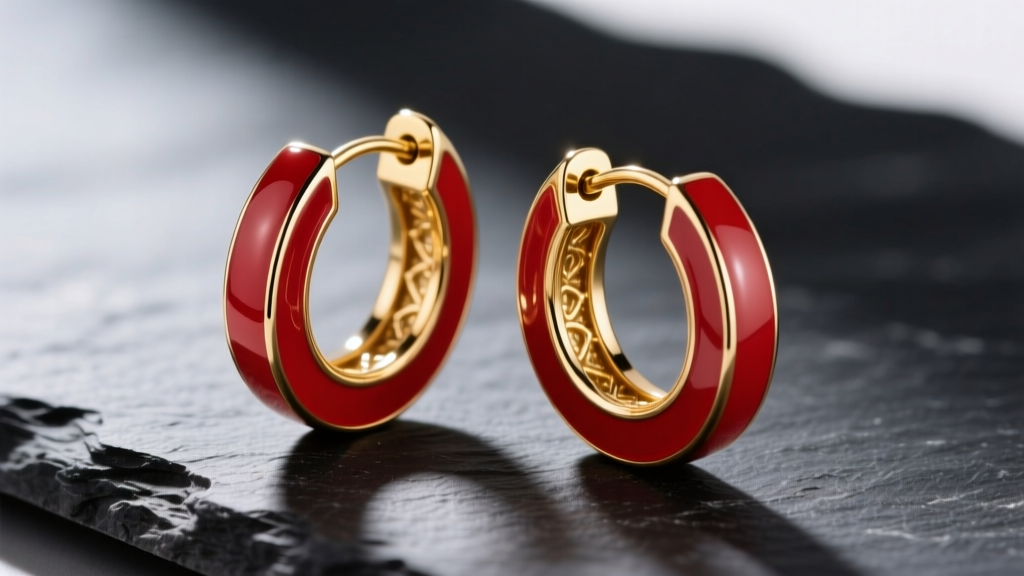
Enamel is a highly popular choice for bold, opaque red hoops. However, not all enamel is created equal. Cold enamel (essentially a two-part epoxy resin) is inexpensive and widely used in budget jewelry. While initially vibrant, cold enamel is highly susceptible to UV yellowing and will chip if dropped on a hard surface. Vitreous enamel, on the other hand, is powdered glass fused to metal in a kiln at over 1,400°F. It is virtually impervious to UV fading and scratches, justifying its mid-to-high-tier price point.
2. Natural Garnet vs. Lab-Created Ruby
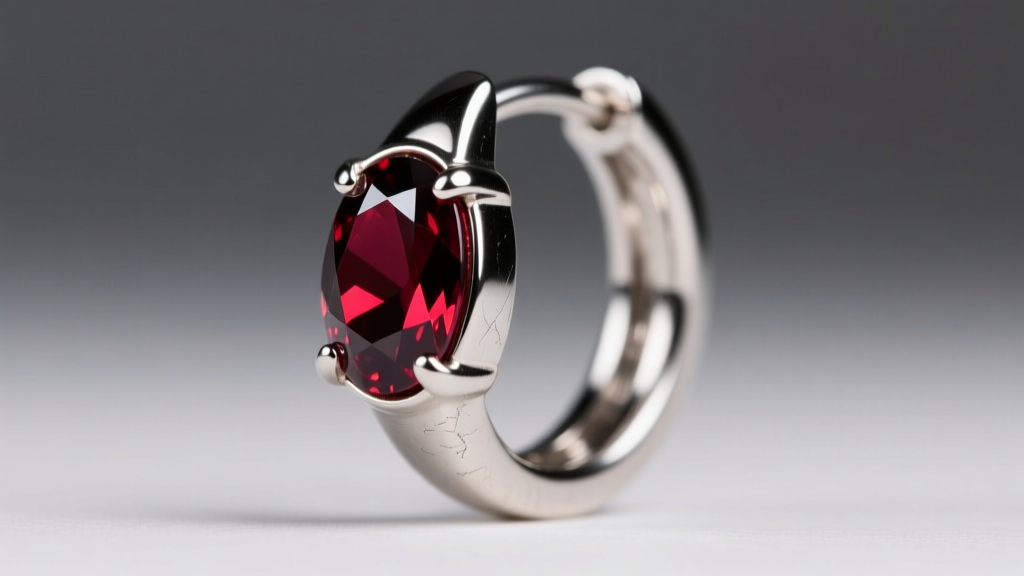
For those seeking the brilliance of red gemstones set into hoop wires, the market is dominated by Mozambique garnets and lab-created rubies. According to the Gemological Institute of America (GIA), natural red garnets offer exceptional value, providing deep, untreated red hues at a fraction of the cost of natural rubies. Lab-created rubies offer the vivid 'pigeon blood' saturation and flawless clarity of high-end natural rubies but are priced accessibly for everyday hoop settings. Avoid 'red quartz' or 'dyed agate' sold as premium stones, as the dye will inevitably bleed when exposed to cosmetics and sweat.
3. Acrylic and Resin Composites
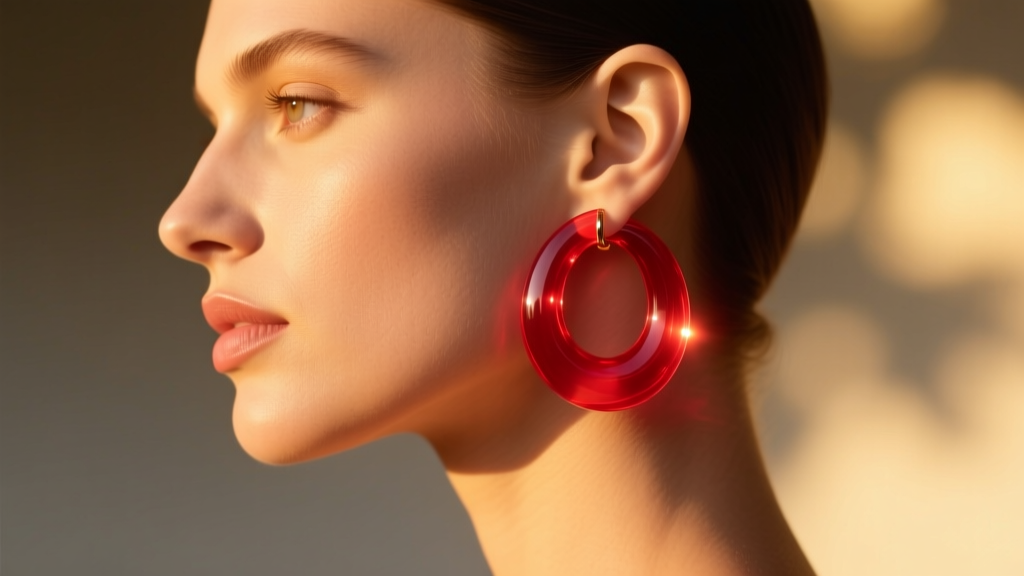
Acrylic hoops are the undisputed champions of the ultra-budget category. They allow for massive, oversized red hoop silhouettes without the punishing weight of glass or stone. However, acrylic is prone to micro-scratches that cloud the material's transparency over time, making it a seasonal purchase rather than a long-term investment.
Price vs. Longevity Matrix
The following table illustrates the expected return on investment for the most common red hoop materials available in 2026.
| Material Type | Average Price Range | Expected Lifespan | Primary Failure Mode |
|---|---|---|---|
| Dyed Acrylic / Resin | $12 - $35 | 6 - 12 Months | Surface scratching, snapping at stress points |
| Cold Enamel on Plated Brass | $25 - $60 | 1 - 2 Years | Enamel chipping, base metal tarnishing/greening |
| Garnet Cabochon on 316L Steel | $45 - $95 | 5+ Years | Bezel prong loosening, clasp tension loss |
| Vitreous Enamel on Gold Vermeil | $85 - $180 | 10+ Years | Vermeil wear on high-friction clasp areas |
| Lab Ruby on Solid 14k Gold | $250 - $600+ | Lifetime / Heirloom | Bending of thin gauge wires if snagged |
Hardware & Gauge: The Hidden Costs of Cheap Metals
The most critical point of failure in any hoop earring is the hardware. The wire that passes through your earlobe and the clasp mechanism dictate the safety and comfort of the piece.
Understanding Metal Grades and Plating
Budget hoops often utilize a brass or zinc alloy base, plated with a microscopic flash of gold or silver, and sealed with a chemical e-coating. Once this coating wears off—usually within weeks of daily wear—the underlying brass reacts with the acidity of human skin, causing the dreaded 'green ear' effect and potential allergic contact dermatitis.
For optimal value, look for 316L Surgical Stainless Steel or Sterling Silver (925) bases. If you prefer a gold tone, Gold Vermeil is the minimum acceptable standard. The Federal Trade Commission (FTC) Jewelry Guides mandate that vermeil must consist of a sterling silver base plated with at least 2.5 microns of gold. In 2026, premium accessible brands are pushing this to 3 or 4 microns, drastically increasing the lifespan of the gold finish before the silver core is exposed.
Gauge Sizing and Earlobe Health
The thickness of the hoop wire (the gauge) is frequently overlooked in budget assessments. Thinner wires are cheaper to produce but pose structural and health risks.
- 18-Gauge (1.0mm): The gold standard for medium-to-large hoops. It provides enough structural rigidity to prevent the hoop from warping when inserted, and it distributes the weight of heavy red enamel or stone settings evenly across the earlobe piercing, preventing migration or tearing.
- 20-Gauge (0.8mm): Acceptable for lightweight, small-diameter huggies or minimalist wire hoops. However, if an 18k gold or heavy enamel hoop is made with 20-gauge wire, the constant bending required to open and close the clasp will eventually cause metal fatigue and snapping.
- 22-Gauge (0.6mm): Avoid for any hoop featuring heavy red gemstones or thick enamel. This gauge is strictly for ultra-lightweight, budget-friendly minimalist wires.
2026 Market Pricing Tiers for Red Hoops
To help you allocate your budget effectively, we have categorized the current market for red earrings hoops into three distinct tiers based on manufacturing origin and material sourcing.
The Fast-Fashion Tier ($10 - $35): Dominated by acrylic, resin, and cold-enamel pieces on brass bases. These are highly trendy, featuring oversized silhouettes and vibrant cherry-red tones. Value Verdict: Buy only for seasonal events or temporary trends. Do not expect longevity.
The Accessible Artisan Tier ($45 - $130): The sweet spot for value. This tier features 316L stainless steel, heavy gold vermeil (3+ microns), vitreous enamel, and natural garnet cabochons. Brands in this space often utilize secure bezel settings and reinforced hinge clasps. Value Verdict: The highest cost-per-wear ratio. Ideal for daily wear and office environments.
The Fine Jewelry Tier ($150 - $500+): Solid 14k or 18k gold (yellow, rose, or white) paired with precision-cut lab-created rubies or high-grade vitreous guilloché enamel. Value Verdict: An investment in heirloom-quality pieces that will never tarnish, cause allergic reactions, or degrade aesthetically.
Maintenance and Failure Modes: Protecting Your Investment
Even mid-tier and premium red hoops require specific maintenance to preserve their value. Understanding common failure modes allows you to troubleshoot and prevent premature ruin.
- Clasp Tension Loss: Hoops that rely on a simple wire-and-tube snap clasp often lose tension over time. If your hoop feels loose, gently bend the post wire upward by a fraction of a millimeter to restore the friction fit. Avoid doing this repeatedly, or the wire will snap.
- Enamel Chipping at the Seam: Red enamel hoops are most vulnerable where the colored section meets the metal clasp. Always store them in a soft pouch to prevent the metal clasp of one earring from striking the enamel body of another.
- Chemical Degradation: Hairsprays, perfumes, and acidic lotions can dull the polish of natural red garnets and degrade the e-coating on budget metals. Always follow the 'jewelry last, jewelry first' rule—put your hoops on after cosmetics have dried, and remove them before showering.
Final Verdict: Where to Allocate Your Budget
When shopping for red earrings hoops, the most intelligent budget allocation prioritizes biocompatible hardware over expensive gemstones. A pair of hoops featuring affordable, natural red garnets set in 316L surgical steel or heavy gold vermeil will outlast and outperform a pair featuring lab-rubies set in thinly plated brass every single time. By focusing on 18-gauge wires, secure bezel settings, and stable coloring agents like vitreous enamel or untreated stones, you secure a vibrant, eye-catching accessory that respects both your personal style and your wallet.


