How to Fix Fading and Lobe Strain in Purple Beaded Earrings
Learn how to troubleshoot fading, lobe strain, and broken wirework in purple beaded earrings with expert cleaning and repair techniques.

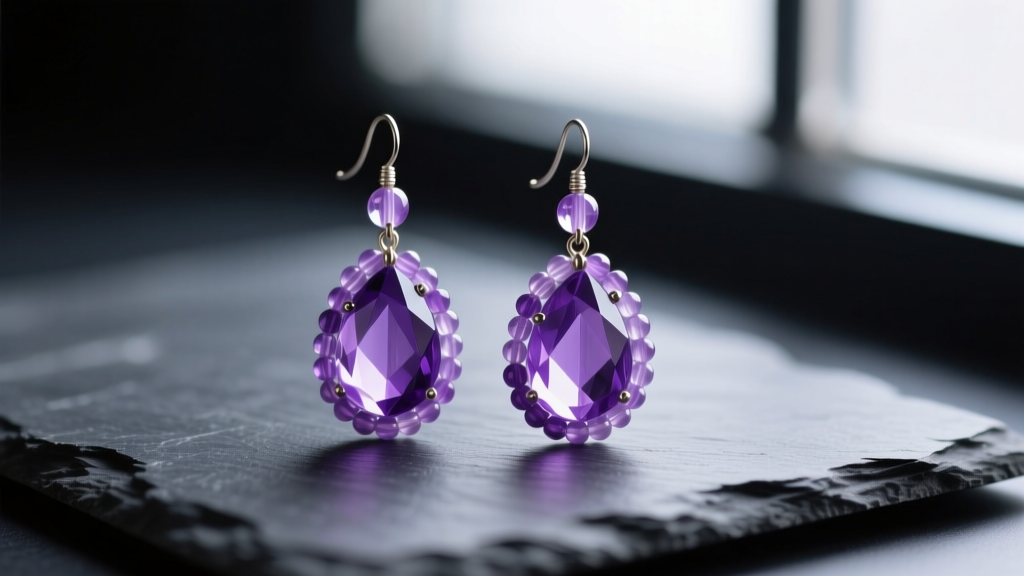
Purple beaded earrings are a staple in both bohemian and fine jewelry collections, offering a rich pop of color that ranges from deep violet amethyst to playful lilac seed beads. However, their vibrant aesthetics often mask underlying structural and chemical vulnerabilities. Whether you are dealing with a prized pair of vintage amethyst drops losing their saturation or heavy glass beaded dangles tearing through your earlobes, troubleshooting these accessories requires a blend of gemological knowledge and jewelry engineering. In this comprehensive guide, we break down the exact failure modes of purple beaded earrings and provide professional-grade solutions to restore their color, reinforce their hardware, and restring broken wirework.
The Hidden Vulnerabilities of Purple Bead Materials
Not all purple beads are created equal, and the root cause of your earring's deterioration depends entirely on its material composition. The three most common culprits for damage in purple beaded jewelry are UV degradation, solvent-induced dye bleed, and mechanical stress from improper wire gauges. Before attempting any cleaning or repair, you must accurately identify the bead material to avoid causing irreversible damage. For instance, treating a dyed howlite bead with an ultrasonic cleaner will strip its purple coloration in seconds, while using harsh chemicals on natural amethyst can dull its natural luster.
Diagnosing and Reversing Color Fading
Color loss is the most frequent complaint among owners of purple beaded earrings. The restoration protocol varies drastically based on whether the purple hue is intrinsic to the crystal lattice or applied via surface treatments.
| Bead Material | Primary Fading Trigger | Safe Cleaning Protocol | Restoration Potential |
|---|---|---|---|
| Natural Amethyst | Prolonged UV / Heat Exposure | Warm water, mild dish soap, soft brush | Low (Requires professional re-irradiation) |
| Dyed Howlite | Alcohol, Perfume, Acetone | Dry microfiber cloth only | None (Must be professionally re-dyed) |
| Czech Glass | Coating abrasion / Friction | Glass cleaner on a Q-tip (avoid coatings) | Moderate (Polishing uncoated glass) |
| Miyuki Seed Beads | Skin acids, lotions | Gentle wipe with damp cloth | None (Galvanized finish cannot be restored) |
Amethyst Care and UV Damage
According to the Gemological Institute of America (GIA), amethyst is a variety of quartz (Mohs hardness 7) that gets its purple color from iron impurities and natural irradiation. However, prolonged exposure to direct sunlight or high heat can cause these color centers to degrade, leading to a washed-out, grayish appearance. If your amethyst purple beaded earrings have faded due to UV exposure, there is no safe at-home chemical fix. You must store them in a dark, velvet-lined box when not in use to prevent further degradation. For cleaning, use only lukewarm water and a phosphate-free dish soap, avoiding ultrasonic cleaners if the stones have any visible fracture inclusions.
Managing Dyed Stones and Glass
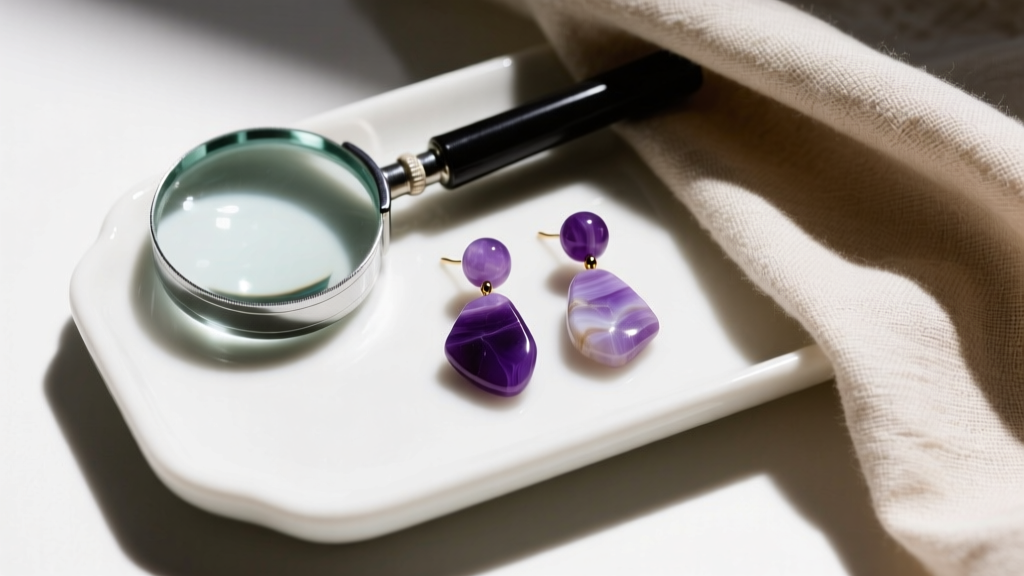 Many affordable purple beaded earrings utilize dyed howlite or quartz to mimic high-end gems. These dyes are highly sensitive to the alcohol found in perfumes, hand sanitizers, and hairsprays. If your dyed beads are transferring purple residue onto your skin or looking patchy, the dye has been chemically stripped. To prevent this, always apply your cosmetics and fragrances at least 15 minutes before putting on your earrings. Once the dye is compromised, the beads cannot be polished back to life; they must be replaced or sent to a lapidary for a professional re-dyeing process.
Engineering Solutions for Lobe Strain and Droop
Heavy purple beaded earrings—especially those featuring dense glass beads or large clusters of natural amethyst—create a significant fulcrum effect on the earlobe. Standard 22-gauge French wire hooks will warp under the weight, bending into an oval shape that easily slips out of the piercing, leading to lost earrings and stretched lobes.
Upgrading the Hardware
To solve mechanical droop, you must upgrade the earring findings. If you are wire-wrapping your own beads or taking them to a jeweler for modification, request a switch to 20-gauge or 18-gauge leverback findings. Leverbacks feature a locking mechanism that prevents the earring from falling out, even when the heavy beads pull the wire forward. According to jewelry manufacturing standards, a 20-gauge wire (0.81mm diameter) provides roughly 30% more tensile strength than a 22-gauge wire (0.64mm), drastically reducing the bending that causes lobe strain.
Utilizing Supportive Backings
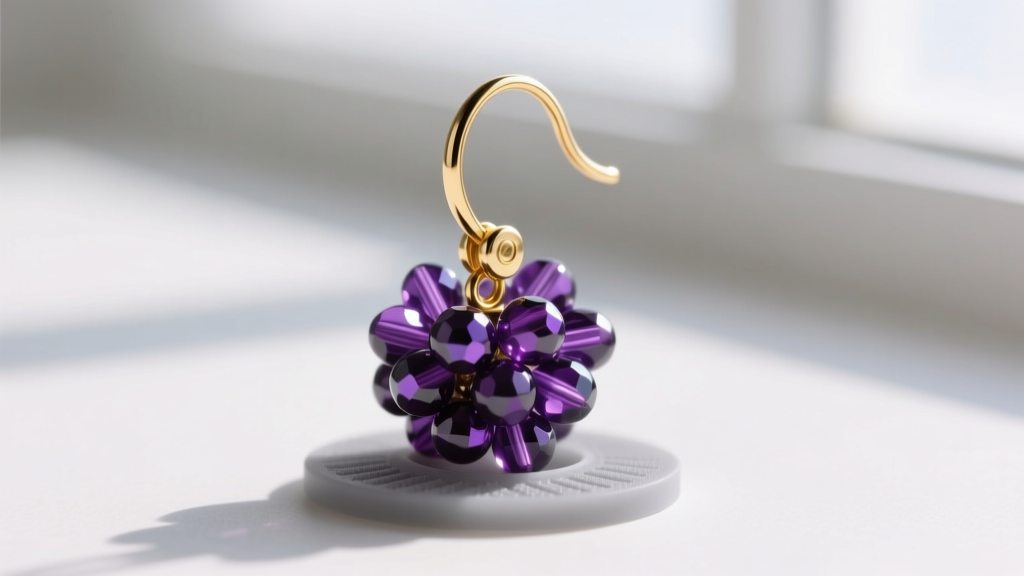 If you cannot replace the French wires, you must increase the surface area distributing the weight behind the earlobe. Standard butterfly push-backs are insufficient for heavy beaded dangles. Instead, invest in jumbo silicone earring backs (measuring at least 6mm in diameter) or specialized ear lift patches (like the popular Lobe Wonder brand). These adhesive patches feature a reinforced plastic disc that sits against the back of the earlobe, providing a rigid backstop that prevents the heavy purple beads from pulling the piercing downward and tearing the tissue.
Professional Restringing Techniques for Broken Wirework
The most catastrophic failure in beaded earrings is the snapping of the stringing material, which sends expensive amethyst or glass beads scattering across the floor. Many mass-produced beaded earrings are strung on cheap nylon thread or single-strand tiger tail wire, which degrades rapidly when exposed to skin oils and friction against metal crimp beads.
The 49-Strand Wire Upgrade
When restringing your purple beaded earrings, discard nylon thread entirely. The Fire Mountain Gems beading wire encyclopedia recommends using a 49-strand stainless steel beading wire coated in nylon, specifically in a .019-inch diameter. The 49 micro-strands provide superior drape and flexibility, allowing the heavy purple beads to hang naturally without kinking the wire, while the .019-inch thickness ensures it can support the weight of dense glass and stone beads without shearing.
Step-by-Step Crimping Protocol
- Step 1: Cut a 6-inch length of .019-inch 49-strand beading wire.
- Step 2: Thread a 2x2mm sterling silver crimp tube onto the wire, followed by a wire guardian (French wire protector) to prevent the metal earring hook from sawing through the nylon coating.
- Step 3: Pass the wire back through the crimp tube, leaving a 1-inch tail.
- Step 4: Use a specialized 1-step crimping plier to compress the tube. First, place the tube in the U-shaped notch and squeeze to create a divot. Then, move it to the outer notch and squeeze again to fold the tube in half, encasing the wire securely.
- Step 5: String your purple beads, ensuring you leave a 2mm gap at the top so the beads have room to move without creating tension on the wire.
Long-Term Preservation Framework
Preventing future damage to your purple beaded earrings requires a disciplined storage and wear routine. Never toss beaded earrings into a communal jewelry box where the hard metal findings of other pieces can scratch the surface of dyed howlite or chip the edges of Czech glass beads. Store them individually in soft flannel pouches or compartmentalized acrylic organizers. Furthermore, adopt the 'jewelry last, jewelry first' rule: put your earrings on after your makeup, perfume, and hairspray have completely dried, and remove them the moment you return home to minimize their exposure to environmental pollutants and skin acids. By understanding the specific material science and mechanical physics of your earrings, you can ensure your favorite purple beaded designs remain vibrant and structurally sound for years to come.


