Sakura Flower Earrings: Metal Grades, Enamel Types & Fit Guide
An expert technical guide to sakura flower earrings, covering base metal grades, vitreous vs. cold enamel, gauge sizing, and structural failure modes.

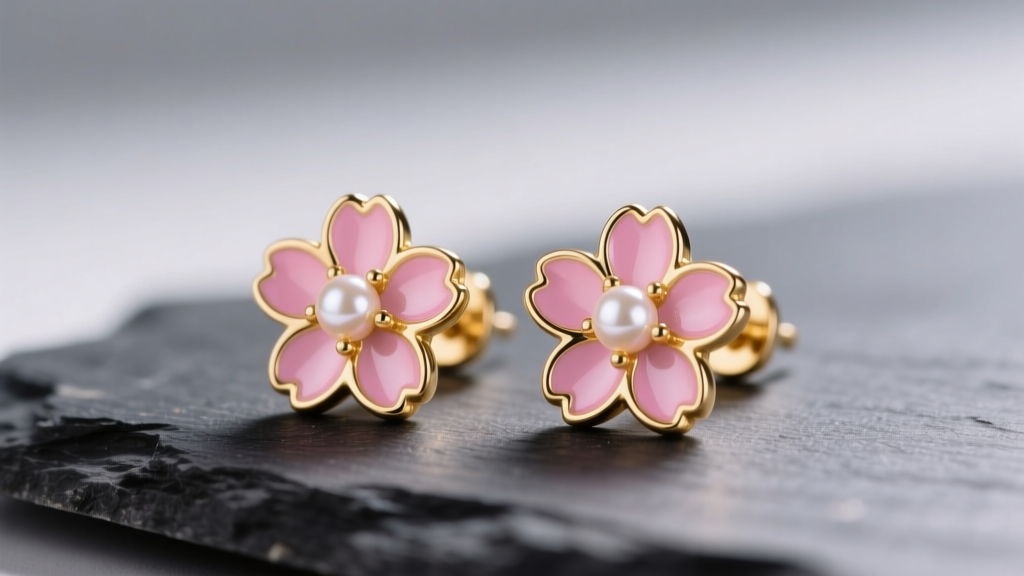
When evaluating sakura flower earrings, the untrained eye focuses solely on the pastel pink hues and the delicate five-petal silhouette. However, from a metallurgical and structural engineering perspective, the cherry blossom motif presents unique manufacturing challenges. The signature cleft at the tip of each petal creates natural stress concentrators in the metal framework, while the expansive surface area required for enamelwork demands precise thermal management. As of 2026, the market is flooded with both mass-produced epoxy replicas and master-crafted vitreous enamel heirlooms. This technical deep dive dissects the material science, anatomical engineering, and structural failure modes of sakura flower earrings to help you make an informed, expert-level purchase.
Base Metal Selection: Structural Integrity vs. Hypoallergenic Needs
The foundation of any high-quality sakura earring is its base metal, which must support the weight of the enamel and gemstone accents without warping. The metal choice also dictates the earring's biocompatibility, particularly for wearers with contact dermatitis or nickel allergies.
Implant-Grade Titanium (ASTM F136)
For sensitive lobes and cartilage piercings, Ti-6Al-4V ELI (Extra Low Interstitial) titanium, certified to ASTM F136 standards, is the gold standard. Unlike commercially pure titanium (Grade 2), Grade 23 titanium offers a higher strength-to-weight ratio. This is critical for sakura designs because the flower head can be relatively wide (8mm–12mm). A lighter metal prevents 'post droop'—the plastic deformation of the earring post caused by the continuous downward torque of a heavy flower head. Furthermore, titanium's natural oxide layer makes it entirely hypoallergenic, eliminating the need for rhodium plating.
14k and 18k Gold Alloys
For heirloom pieces, 14k and 18k gold remain the premier choices. However, the alloy composition matters immensely when pairing metal with pink enamel. 18k yellow gold (75% pure gold, alloyed with copper and silver) provides a warm undertone that enhances the soft pink hues of sakura enamel. Conversely, if you prefer white gold, ensure the alloy is palladium-based rather than nickel-based. Nickel-white gold requires thick rhodium plating (ideally 0.75 to 1.0 microns) to prevent skin irritation, and as the plating wears away from friction against the earlobe, the underlying yellowish-gray alloy will disrupt the visual continuity of the sakura design.
Sterling Silver and the Tarnish Variable
Sterling silver (92.5% silver, 7.5% copper) is highly affordable but notoriously reactive. The copper content reacts with sulfur in the air and human sweat to form silver sulfide (tarnish). Because sakura earrings feature intricate crevices between the petals where polishing cloths cannot reach, tarnish will quickly accumulate in the recesses, turning the metal black. If purchasing silver sakura earrings, verify that they have been treated with a high-micron rhodium flash or an anti-tarnish nano-ceramic coating.
The Art and Science of Sakura Enameling
The vibrant, translucent petals of premium sakura flower earrings are achieved through enameling—the fusion of glass powder to metal. The technique used drastically alters the piece's price, durability, and light transmission. According to historical and technical overviews by the Gemological Institute of America (GIA), enameling requires a deep understanding of the coefficient of thermal expansion (CTE) to prevent the glass from cracking as the metal cools.
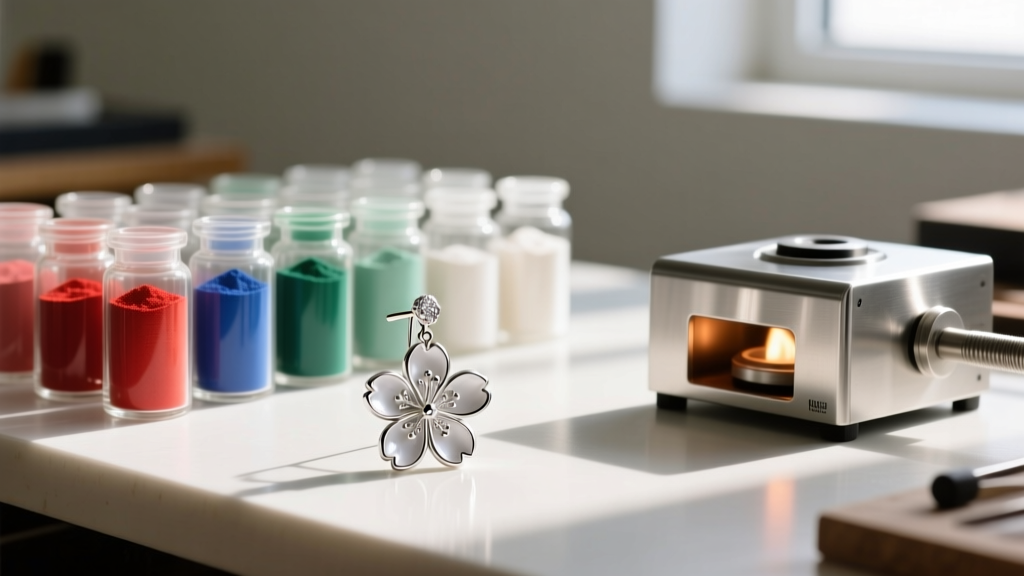
Vitreous Enamel (Fired Glass)
True vitreous enamel involves firing silica-based glass powder in a kiln at temperatures between 1380°F and 1560°F (750°C–850°C). The result is a completely UV-stable, scratch-resistant surface that will not yellow or fade over decades. The primary technical challenge with vitreous enamel on sakura designs is 'crazing'—micro-fractures in the glass caused by a CTE mismatch between the glass and the base metal. Master jewelers mitigate this by applying a 'counter-enamel' layer on the back of the earring to balance the physical tension.
Plique-à-Jour (The Stained Glass Effect)
The most coveted and expensive technique for sakura earrings is plique-à-jour. Translating to 'letting in daylight,' this method involves suspending translucent enamel within the metal petal framework without a metal backing. Light passes directly through the pink glass, giving the cherry blossom an ethereal, glowing quality. Because there is no backing to support the glass, the metal walls (cloisons) must be engineered with microscopic buttresses. Plique-à-jour sakura earrings are highly fragile; a simple drop onto a tile floor will shatter the enamel.
Cold Enamel (Epoxy Resin)
Mass-market sakura earrings typically utilize cold enamel, which is essentially a two-part epoxy resin tinted with pigments. It cures at room temperature and requires no kiln. While modern 2026 formulations have improved UV inhibitors, cold enamel will inevitably undergo photo-oxidation, yellowing slightly after 18 to 36 months of heavy sun exposure. It is also highly susceptible to chemical degradation from perfumes, hairsprays, and chlorine.
| Technique | Material Base | Firing Temp | UV Stability | Impact Resistance | Price Range (Stud Pair) |
|---|---|---|---|---|---|
| Vitreous (Cloisonné) | Silica Glass | 1450°F | Permanent | Moderate | $150 – $400 |
| Plique-à-Jour | Silica Glass | 1400°F | Permanent | Very Low | $450 – $1,200+ |
| Guilloché | Silica Glass | 1500°F | Permanent | Moderate | $300 – $800 |
| Cold Enamel | Epoxy Resin | None (Cures) | 18-36 Months | High | $25 – $80 |
Anatomical Engineering: Gauges, Stems, and Petal Architecture
The structural viability of sakura flower earrings relies heavily on wire gauge selection and weight distribution. A standard cherry blossom design spans 8mm to 12mm in diameter. If the earring is a drop style, featuring a dangling stem with a pearl 'stamen' at the terminus, the physics of the pendulum effect come into play.
Post and Wire Gauge Sizing
Standard lobe piercings are typically 20-gauge (0.812mm) or 18-gauge (1.024mm). For lightweight, flat-back sakura studs, a 20G post is sufficient. However, if the design incorporates heavy enamelwork, a 1.5mm seed pearl, and micro-pavé diamond accents on the calyx, an 18G post is mandatory. Using a 20G or 22G post for a heavy sakura drop earring will result in the post bending backward under the dynamic load of walking or jogging, eventually leading to metal fatigue and shear failure at the solder joint.
For the decorative 'stems' in dangle sakura earrings, jewelers should utilize dead-soft wire for shaping, but then work-harden the metal or use a half-hard temper to ensure the stem does not bend out of shape when the wearer removes the jewelry. According to technical guidelines from major jewelry suppliers like Rio Grande, half-hard 14k gold wire provides the optimal balance of malleability during fabrication and rigidity during wear.
Cartilage and Helix Considerations
Sakura motifs are incredibly popular for helix, tragus, and conch piercings. However, standard butterfly-back posts are entirely unsuitable for cartilage. The uneven pressure of the butterfly backing can cause pressure necrosis on the rigid cartilage ridge. Instead, sakura earrings designed for cartilage must utilize flat-back labret posts (typically 16G or 18G, with a 6mm or 8mm post length) featuring internal or external threading. Threadless (push-pin) titanium posts are currently the industry preferred standard for cartilage, as they eliminate the risk of the flower head unscrewing and getting lost in the hair.
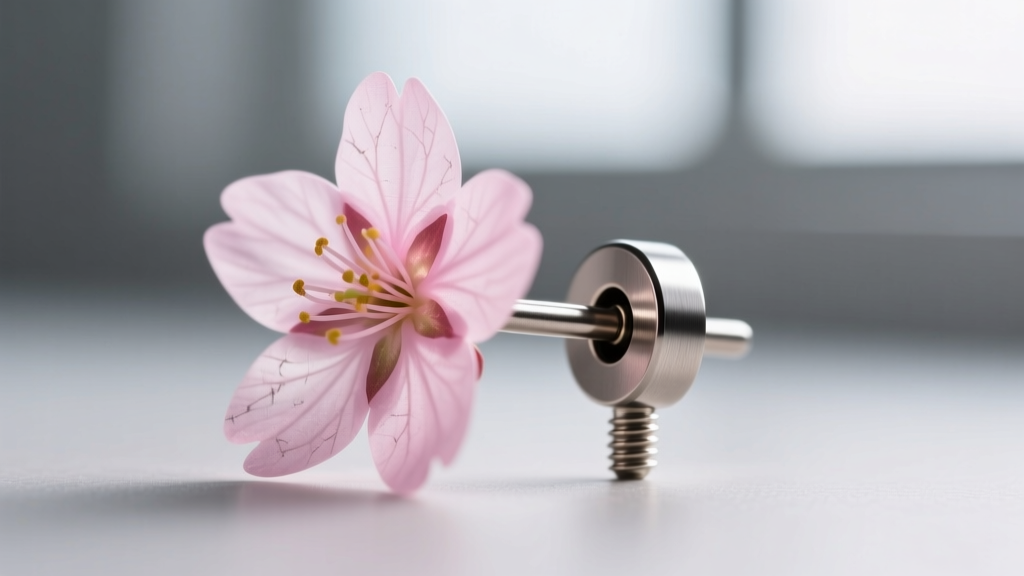
Common Failure Modes and Preventative Maintenance
Even the most meticulously engineered sakura flower earrings are subject to specific failure modes dictated by their intricate geometry.
- Enamel Pop-Out: Caused by extreme thermal shock. Wearing vitreous enamel sakura earrings in a hot sauna and then jumping into a cold plunge pool can cause the metal to contract faster than the glass, ejecting the enamel from the cloison. Prevention: Remove jewelry before extreme temperature cycling.
- Cleft Fracturing: The V-shaped notch at the tip of the sakura petal is a structural weak point. If the earring is dropped directly on its tip, the metal can fold inward. Prevention: Store in a hard-shell jewelry box with individual compartments, never loose in a bag.
- Solder Joint Degradation: In drop earrings, the jump ring connecting the sakura flower to the ear wire experiences constant friction. Over years of wear, this friction can saw through the jump ring. Prevention: Have a jeweler inspect the jump ring and ear wire connection annually, and ensure the jump ring is soldered shut rather than merely pinched closed.
Final Verdict: Matching the Metal to the Lifestyle
Selecting the perfect pair of sakura flower earrings requires aligning the manufacturing technique with your daily lifestyle. For everyday, low-maintenance wear in active environments, opt for ASTM F136 titanium bases with high-quality cold enamel or micro-prong set pink sapphires instead of glass. For collectors and those seeking generational heirlooms, invest in 18k gold with vitreous cloisonné or plique-à-jour enameling, accepting the higher price point and the need for careful, temperature-controlled maintenance. By understanding the metallurgy and engineering beneath the beautiful floral facade, you ensure your cherry blossoms bloom indefinitely.


