Is It Bad to Sleep With Earrings In? A Beginner's Safety Guide
Wondering if it bad to sleep with earrings in? Discover the risks, safe materials like titanium, and which styles to keep in overnight.

The Short Answer: Is It Bad to Sleep With Earrings In?
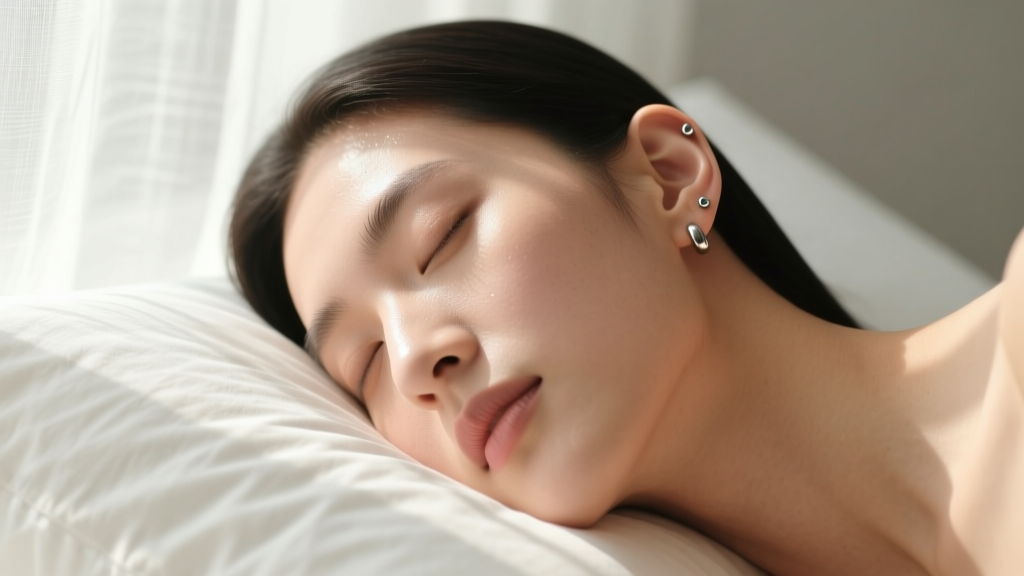
If you are a beginner navigating the world of ear styling, you have likely asked yourself: is it bad to sleep with earrings in? The short answer is that it depends entirely on the style of the earring, the material it is made from, and the healing status of your piercing. For the vast majority of fashion jewelry—especially hoops, dangles, and standard butterfly-back studs—sleeping in them is a recipe for tissue trauma, allergic reactions, and bacterial infections. However, if you are wearing specific sleep-safe styles like flat-back labrets made from implant-grade titanium, keeping them in overnight is not only safe but often recommended for maintaining the health of your piercing.
In this comprehensive guide, we will break down the exact physics, metallurgy, and mechanics of sleeping in earrings, giving you a clear framework to protect your earlobes and cartilage.
The Hidden Risks of Sleeping in Your Jewelry
When you lay your head on a pillow, the pressure exerted on your ear is concentrated directly onto the jewelry and the fistula (the piercing hole). This creates three primary risks that beginners often overlook.
1. Tearing and the 'Cheese-Cutter' Effect
Sleeping in large hoops or dangle earrings poses an obvious snagging hazard. However, the more insidious risk comes from thin-wire earrings. Standard fashion studs are often 20-gauge (0.81mm) or even 22-gauge (0.64mm). When you sleep on a thin wire hoop, the weight of your head against the pillow creates high tension on a microscopic surface area. In the professional piercing community, this is known as the 'cheese-cutter effect.' Over time, this continuous pressure can cause the jewelry to slowly slice through the earlobe tissue, leading to irreversible migration or a complete tear that requires surgical repair.
2. Contact Dermatitis and Nickel Allergies
Your body temperature rises slightly while you sleep, and your skin naturally produces sweat and sebum. If your earrings contain nickel—a common allergen found in cheap alloys and unregulated 'surgical steel'—the combination of heat, moisture, and friction accelerates the leaching of nickel ions into your skin. According to the American Academy of Dermatology, prolonged contact with nickel is a leading cause of allergic contact dermatitis, resulting in itchy, red, and flaky earlobes.
3. Bacterial Buildup and Pressure Necrosis
Standard 'butterfly' or friction earring backs feature multiple tiny crevices that trap dead skin cells, soap residue, and bacteria. When pressed firmly against the mastoid area (the skin behind your ear) for eight hours a night, these backs cut off local blood circulation. This pressure necrosis, combined with a bacterial breeding ground, frequently leads to painful, localized infections.
Which Earrings Are Actually Safe for Sleep?
Not all earrings are created equal when it comes to bedtime. Below is a decision matrix to help you determine which styles should be removed before your head hits the pillow, and which can stay in 24/7.
| Earring Style | Sleep Safety Rating | Why? (The Science) |
|---|---|---|
| Flat-Back Labrets | ✅ Excellent | The flat disc sits flush against the back of the ear, distributing pressure evenly and eliminating poke hazards. |
| Small Huggies | ⚠️ Moderate | Safe only if they are thick (16G or 14G), feature a secure clicker closure, and fit snugly without pinching. |
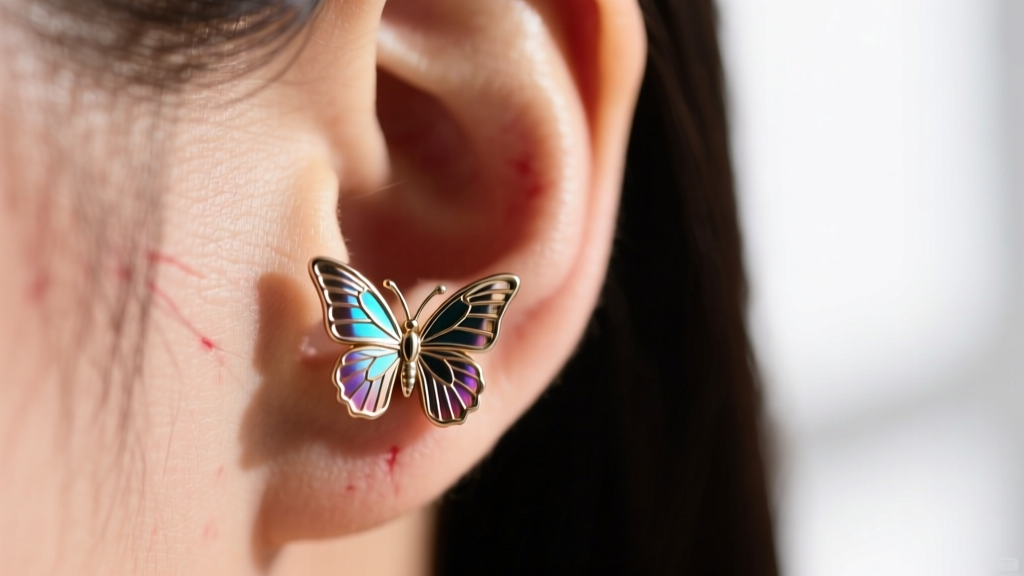
| Butterfly Studs | ❌ Poor | The sharp post and uneven back trap bacteria and dig into the skin behind the ear, causing pressure sores. |
| Hoops & Dangles | ❌ Poor | High risk of snagging on bedding, leading to sudden trauma, tearing, or the cheese-cutter migration effect. |
| Ear Cuffs | ❌ Poor | Non-pierced cuffs rely on tension; sleeping will inevitably bend the metal, ruining the fit and pinching the cartilage. |
The Metallurgy of Sleep-Safe Jewelry
Material selection is the most critical factor in determining if it is bad to sleep with earrings in. When jewelry is subjected to the warm, moist environment of a bed, inferior metals degrade rapidly. Here is what you need to look for:
- ASTM F-136 Implant-Grade Titanium: This is the gold standard for 24/7 wear. It contains zero nickel and forms a passive chromium-oxide layer that prevents bacterial adhesion and corrosion. It is highly recommended by the Association of Professional Piercers (APP) for both healing and long-term sleep wear.
- Niobium: A highly biocompatible, nickel-free reactive metal that is exceptionally soft and safe for sensitive sleepers, though slightly heavier than titanium.
- 14k or 18k Solid Gold (Nickel-Free): Ensure the gold is alloyed with silver or palladium, not nickel. Avoid gold-plated or gold-filled jewelry for sleep, as the friction from your pillowcase will eventually wear away the thin outer layer, exposing the reactive base metal underneath.
Expert Warning: Beware of the term 'Surgical Steel.' It is an unregulated marketing term, not a specific metallurgical grade. Many items labeled as surgical steel contain 8% to 12% nickel, which will trigger severe allergic reactions when worn overnight.
The Mechanics of Earring Backs: Friction vs. Threadless
The anatomy of the earring post dictates your comfort level while sleeping. Standard friction posts rely on a butterfly backing that pushes onto a grooved post. This creates a gap between the back of the earlobe and the backing, where sebum and Staphylococcus aureus bacteria accumulate.
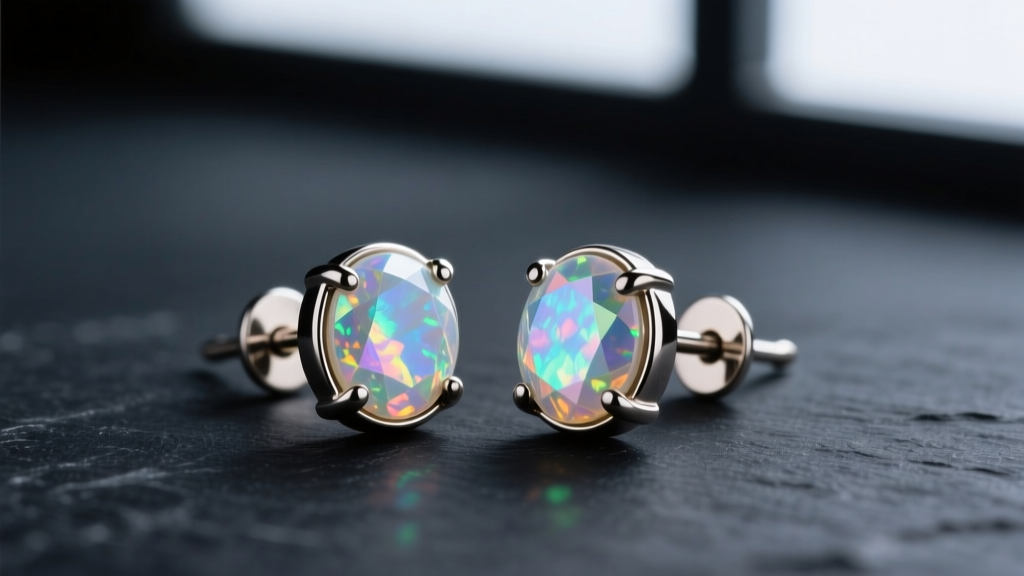
For sleep-safe wear, professionals recommend threadless (press-fit) jewelry. In a threadless system, a solid titanium post with a flat back is inserted into the ear. The decorative front features a slightly bent pin that slides into the hollow post. The tension of the bent metal holds the two pieces together securely. Because there are no threads to trap debris and no sharp post ends protruding past the earlobe, threadless flat-backs are virtually undetectable when you sleep on your side.
How to Transition to 24/7 Wear (Healing vs. Healed)
Your approach to sleeping in earrings must change based on the age of your piercing.
Fresh Piercings (The 24/7 Rule)
If your piercing is fresh, you must never remove the jewelry to sleep. Piercings are essentially puncture wounds; removing the jewelry, even for a few hours, can cause the fistula to shrink or close entirely, trapping bacteria inside.
- Earlobes: Require 6 to 8 weeks of continuous 24/7 wear.
- Cartilage (Helix, Conch, Tragus): Require 6 to 12 months of continuous 24/7 wear.
Pro-Tip for Side Sleepers: If you are healing a fresh cartilage piercing and are wondering how to sleep comfortably, use a U-shaped travel neck pillow. Place your ear in the center hole to completely eliminate pressure and friction on the healing tissue.
Fully Healed Piercings
Once your piercing is fully matured, you have the freedom to remove your jewelry at night. However, if you prefer the convenience of leaving them in, you must downgrade to sleep-safe styles (flat-back labrets) and ensure the jewelry is cleaned weekly with sterile saline to prevent sebum buildup.
Expert Troubleshooting: What to Do If You Wake Up in Pain
If you accidentally slept in the wrong earrings and wake up with a swollen, tender, or bleeding earlobe, follow these immediate triage steps:
- Do Not Force the Back Off: If the ear is swollen, the butterfly back may be embedded in the tissue. Forcing it will cause severe tearing.
- Apply a Warm Saline Compress: Soak a sterile gauze pad in warm, sterile 0.9% sodium chloride solution and hold it against the ear for 5 minutes. This reduces swelling and softens any dried lymph fluid trapping the backing.
- Lubricate the Post: Apply a tiny drop of sterile saline or a water-based lubricant to the front of the post to help the backing slide off smoothly.
- Downsize and Rest: Once removed, clean the area gently. If the piercing is fully healed, leave it bare for 24 hours to allow the pressure sores to recover before inserting a fresh, sterilized titanium flat-back.
Ultimately, knowing the answer to 'is it bad to sleep with earrings in' comes down to respecting the biology of your skin and the physics of your jewelry. By investing in high-quality, implant-grade titanium flat-backs, you can enjoy the convenience of 24/7 wear without compromising the health and aesthetics of your ears.


