Spike Ball Earrings: The 2026 Edgy Fine Jewelry Trend
Discover how spike ball earrings are redefining 2026 edge. Explore styling frameworks, material grades, weight distribution, and gauge specs.

The Anatomy of the 2026 Spike Ball Revival
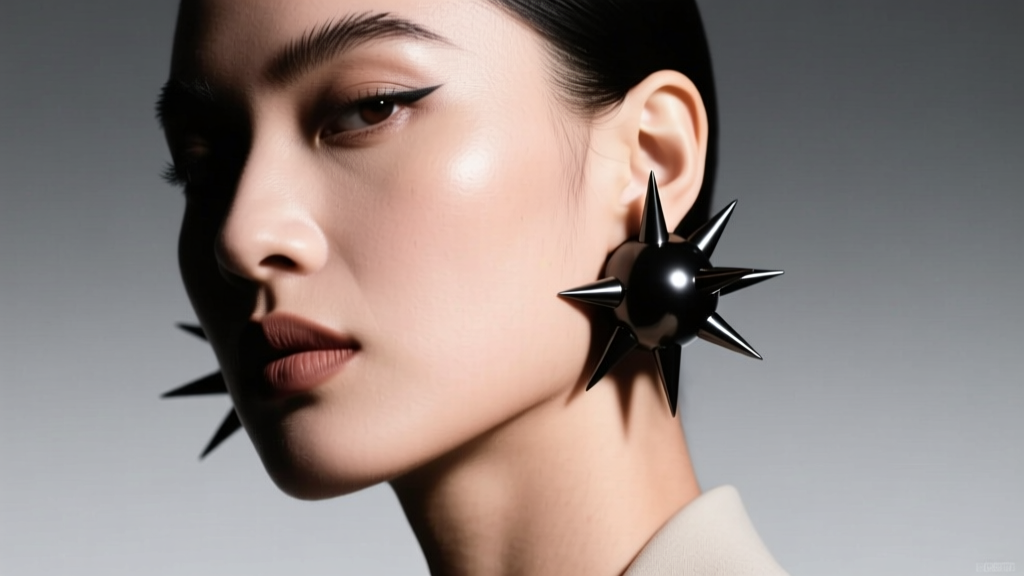
The trajectory of alternative aesthetics into high jewelry has reached a fascinating apex in 2026. No longer confined to the underground punk scenes of the 2010s or the costume jewelry racks of fast fashion, spike ball earrings have been reimagined through the lens of architectural fine jewelry. This year’s trend is defined by a juxtaposition of aggressive, geometric silhouettes with luxurious, skin-safe materials. Designers are moving away from the flat, two-dimensional spikes of the past decade, favoring fully three-dimensional spherical bases with radiating, precision-cast points.
According to trend forecasters at The Business of Fashion, the "neo-hardware" movement is a direct response to the hyper-minimalism that dominated the early 2020s. Consumers are seeking tactile, statement-making pieces that convey individuality. The spike ball earring perfectly encapsulates this shift, offering a bold, sculptural profile that catches the light—and the eye—from every angle. However, transitioning this aggressive silhouette into wearable, everyday fine jewelry requires a deep understanding of metallurgy, weight distribution, and ear anatomy.
Material Grades & Weight Distribution: A Technical Breakdown
The primary challenge with spike ball earrings is physics. A spherical design with protruding spikes inherently possesses a high center of gravity and significant mass. A solid 12mm brass spike ball can easily weigh between 8 to 11 grams per earring. When worn in a standard lobe piercing, this concentrated weight causes the earring to droop forward, creating an unflattering silhouette and, over time, leading to irreversible lobe stretching or tearing.
To combat this, 2026’s leading demi-fine and fine jewelry brands are utilizing advanced manufacturing techniques like electroforming and 3D-printed titanium casting to create hollow-core structures. This maintains the imposing visual volume of a 14mm spike ball while reducing the weight to a manageable 2.5 grams.
| Material Grade | Weight Profile | Allergy Risk | Best Application |
|---|---|---|---|
| Grade 23 Titanium (Ti-6Al-4V) | Ultra-Light (Hollow-core) | Zero (Hypoallergenic) | Cartilage, Helix, Heavy Lobe Studs |
| 316L Surgical Steel | Medium to Heavy | Low (Trace Nickel) | Standard Lobe Dangles, Budget-Friendly |
| 14k/18k Solid Gold | Heavy (unless electroformed) | Very Low | Fine Jewelry Studs, Heirloom Pieces |
| Brass with Gold Vermeil | Very Heavy | Moderate to High | Occasional Wear, Runway Styling Only |
For those with sensitive skin, avoiding base metals is non-negotiable. The American Academy of Dermatology notes that contact dermatitis from nickel is one of the most common causes of jewelry-related skin reactions, a risk heightened by the friction of heavy earrings pulling against the piercing fistula. Opting for nickel-free alloys or pure titanium is essential for daily wear.
Gauge Sizing & Backing Mechanisms for Heavy Loads
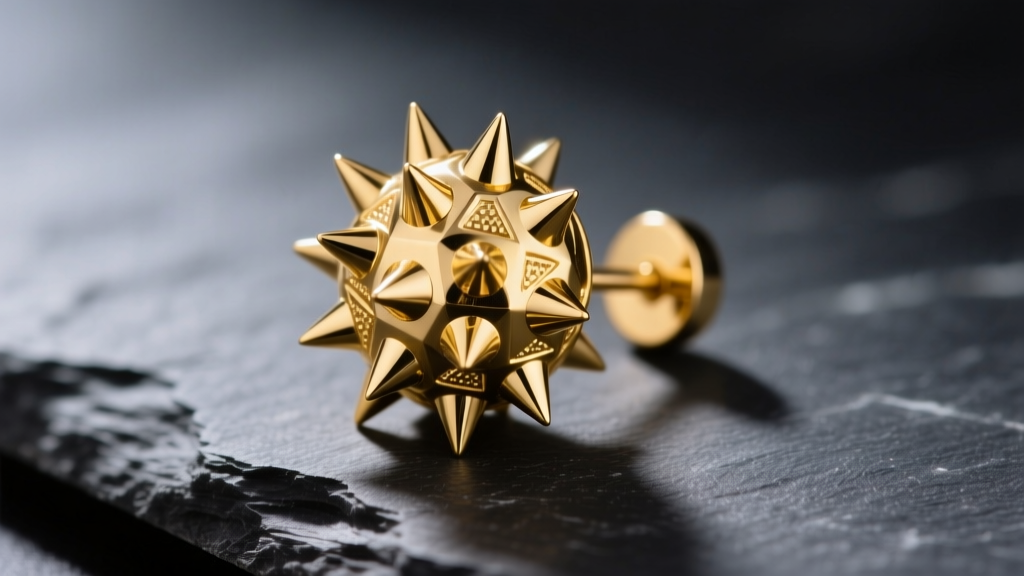
The structural integrity of your piercing is only as strong as the post and backing supporting the earring. Standard fashion earrings typically utilize a 20-gauge (0.81mm) post with a simple friction-backed butterfly clutch. This setup is entirely inadequate for the dynamic weight of spike ball earrings, which swing and catch on hair and clothing.
Upgrading the Post Gauge
For spike ball studs exceeding 10mm in diameter, the post must be upgraded to an 18-gauge (1.02mm) or even a 16-gauge (1.29mm) thickness. This thicker wire resists bending under the torque created by the spiked sphere. If your piercing is currently stretched to accommodate a 20G post, a reputable jeweler can easily taper the fistula to accept an 18G post over a few weeks, providing a much more secure foundation for heavy architectural pieces.
Locking Backs vs. Friction Clutches
Butterfly clutches rely on tension, which degrades over time. For heavy spike ball drops or dangles, you must demand mechanical security. Look for:
- Screw-Backs: The post is threaded, and the backing screws on. This is the gold standard for heavy studs, ensuring the earring cannot be pulled off by a snagged spike.
- La Pousette (Locking) Clutches: Utilizes a spring-loaded mechanism that clicks into a groove on the post, offering superior grip without the threading required for screw-backs.
- Hinged Latch-Backs: Essential for spike ball hoop hybrids, ensuring the wire doesn't slip out of the ear when the weight shifts.
The Cartilage Conundrum: Helix vs. Lobe Placement
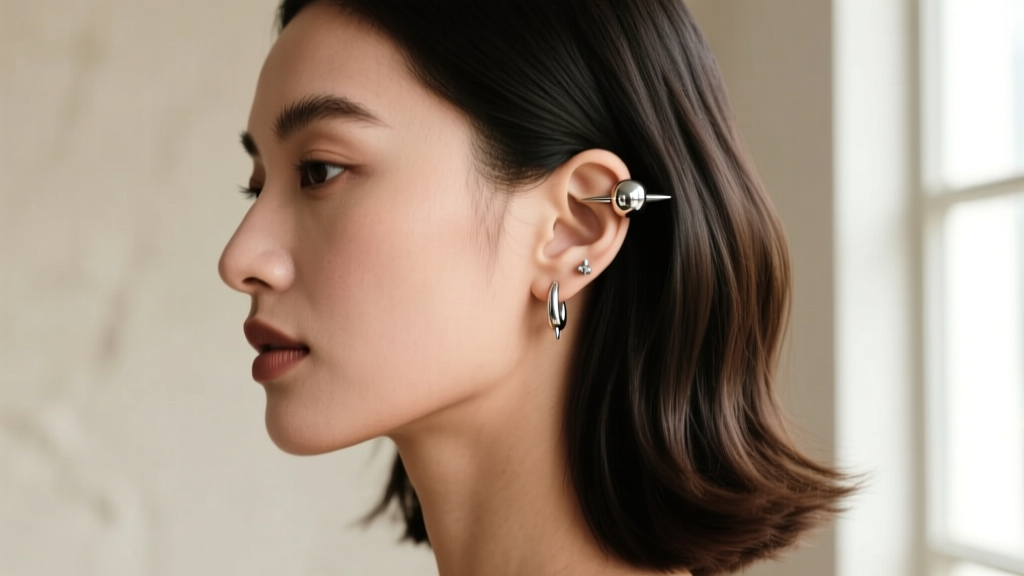
While the lobe is the traditional home for heavy jewelry, the 2026 trend cycle has seen a massive surge in cartilage placements for spike ball earrings, specifically in the helix and flat regions. However, cartilage is significantly less forgiving than the fleshy lobe.
A solid spike ball resting against the helix can create pressure necrosis if the backing is too tight or the post is too short. Swelling in cartilage piercings can last for months. Therefore, if you are commissioning or buying spike ball earrings for cartilage, the post length must be at least 8mm to 10mm to accommodate the thickness of the upper ear ridge and the flat base of the spike ball. Furthermore, the spikes themselves should be slightly blunted (a "soft-spike" finish) to prevent scratching the ear or catching on headphones and masks.
Face Shape Geometry: Styling the Spike Ball Silhouette
The visual weight and aggressive geometry of spike ball earrings can dramatically alter the perceived proportions of the face. Applying basic geometric styling principles ensures the trend enhances rather than overwhelms your features.
- Round Faces: Avoid perfectly spherical, wide spike ball studs, which will echo and widen the face's natural curves. Instead, opt for elongated spike ball dangles or drop earrings where the spiked sphere hangs 1.5 to 2 inches below the lobe. This creates a vertical line that slims and elongates the jawline.
- Square Faces: The goal is to soften a strong, angular jaw. Medium-sized (8mm to 10mm) spike ball studs with slightly rounded, "tamed" spikes add a textural contrast without introducing harsh, competing angles. Avoid boxy or overly aggressive, long spikes.
- Heart-Shaped Faces: With a wider forehead and narrow chin, heart faces benefit from bottom-heavy volume. Look for inverted triangle arrangements or spike ball huggie earrings where the spiked charm rests at the very bottom of the hoop, drawing the eye downward and balancing the chin.
- Oval Faces: The universal canvas. Oval faces can carry the most extreme iterations of the trend, including oversized 15mm asymmetric spike ball clusters and dramatic ear cuffs that wrap the entire outer helix.
Price Tiers & Investment Value in the Current Market
As the trend matures, the market has stratified into distinct pricing tiers, each offering different levels of longevity and material integrity.
"The hardware trend of 2026 isn't about looking like you raided a costume shop; it's about investing in sculptural, micro-architecture that happens to be sharp. Consumers are willing to pay a premium for pieces that won't turn their skin green or tear their lobes." — Senior Jewelry Analyst, Global Trend Forecasting Report 2026
Fast Fashion & Costume ($15 - $45): Typically cast from zinc alloys or brass with thin flash plating. The spikes are often hollow but prone to denting, and the posts are usually 20G steel. Best reserved for single-night events. Expect the plating to wear off the high-friction spikes within a month of regular use.
Demi-Fine ($85 - $250): The sweet spot for the 2026 trend. These pieces utilize 316L surgical steel or sterling silver bases with heavy 3-micron 14k gold vermeil. Brands in this tier often employ hollow-core casting to keep weights under 4 grams and include upgraded locking clutches. Excellent for daily rotation.
Fine Jewelry ($400 - $1,500+): Cast in solid 14k or 18k gold, or forged from aerospace-grade titanium. The spikes are meticulously finished by hand to ensure they are sharp in silhouette but smooth to the touch. These are heirloom-quality investments that will never tarnish and can be passed down as artifacts of the 2020s neo-punk revival.
Maintenance: Cleaning the Crevices
The intricate topography of a spike ball earring makes it a magnet for sebum, dead skin cells, and hair product buildup. Wiping the surface with a cloth is insufficient. For demi-fine and fine metals, an ultrasonic jewelry cleaner is the most effective method to dislodge debris from the deep valleys between the spikes. If an ultrasonic cleaner is unavailable, soak the earrings in a solution of warm water and a few drops of mild, phosphate-free dish soap for ten minutes, then agitate gently with a soft-bristled baby toothbrush. Never use harsh chemical dips on vermeil or oxidized titanium, as this will strip the intentional patinas and plating that give the 2026 spike ball its signature edge.
Final Verdict
The spike ball earring has successfully graduated from a subcultural trope to a mainstream staple of modern, architectural jewelry. By prioritizing advanced materials, respecting the physics of weight distribution, and selecting the correct gauge and backing mechanisms, you can safely integrate this fierce trend into your daily wardrobe. Whether you opt for a subtle 6mm titanium stud or a dramatic 14mm gold dangle, the key to mastering the 2026 edge lies in the precision of the craftsmanship and the intentionality of the styling.


