Gift Guide: Finding the Standard Earring Size for Every Occasion
Discover how to choose the standard earring size for gifting. Our occasion-based guide covers gauge, millimeters, and material grades.

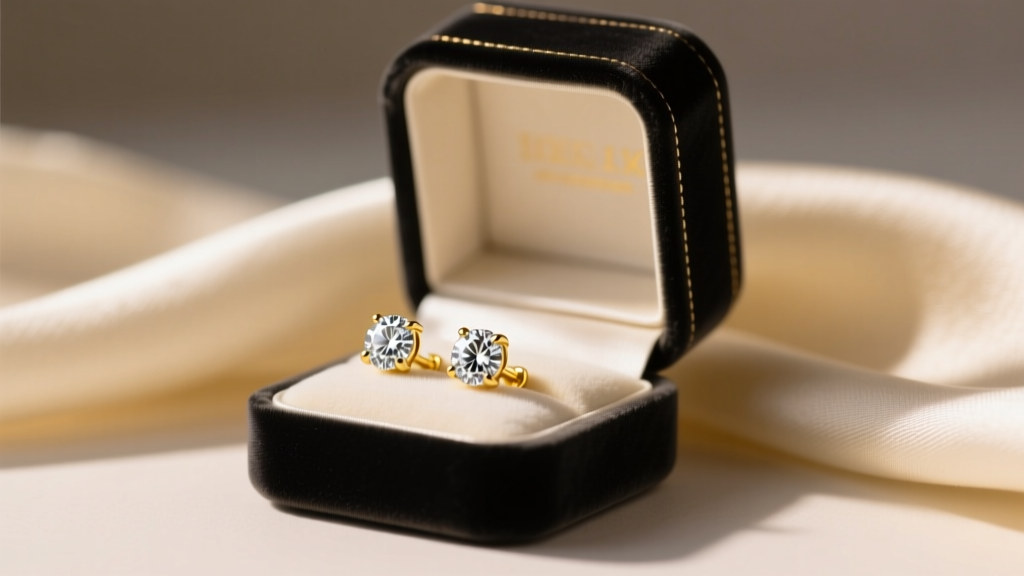
Gifting earrings feels like a foolproof endeavor. Unlike rings, which require precise finger sizing, or necklaces, which demand careful length considerations, earrings are often assumed to be a one-size-fits-all accessory. However, as any seasoned jeweler will tell you, the concept of a "standard earring size" is one of the most pervasive myths in the jewelry industry. When you are shopping for a milestone birthday, a romantic anniversary, or a professional celebration, guessing the wrong dimensions can turn a thoughtful gift into an unwearable trinket.
In 2026, the landscape of ear styling is more diverse than ever. From curated ear projects featuring multiple cartilage piercings to minimalist lobe styling, understanding the exact metrics of earring sizing is crucial for gifters. This comprehensive guide will decode the terminology, map specific sizes to gifting occasions, and provide actionable frameworks to ensure your next jewelry gift is a flawless fit.
The Gifter's Dilemma: What Does 'Standard' Actually Mean?
When consumers search for the standard earring size, they are usually conflating two entirely different measurements: post thickness (gauge) and visual diameter (millimeters). A gift buyer might assume a "standard" hoop is 20mm, while a piercer defines "standard" as the 20-gauge thickness of the wire that passes through the earlobe. Confusing these two metrics is the primary failure mode for jewelry gifters.
If you purchase a beautifully crafted 16-gauge (1.29mm) huggie hoop for a partner whose lobes were pierced at a standard 20-gauge (0.81mm), the jewelry simply will not fit without forcing it, which can cause micro-tears, irritation bumps, and eventual rejection of the piercing. Conversely, buying a delicate 22-gauge wire for a cartilage piercing will result in a flimsy piece that bends easily and fails to provide the structural support the thicker tissue requires.
Decoding Post Thickness vs. Visual Diameter
To gift confidently, you must first understand the anatomy of earring sizing. The Association of Professional Piercers (APP) outlines strict guidelines for jewelry thickness based on piercing placement. Here is the definitive conversion chart every gift buyer needs to bookmark:
| Gauge (Thickness) | Millimeter Equivalent | Standard Placement | Gifting Suitability |
|---|---|---|---|
| 22g | 0.64mm | Vintage/Clip-ons | Avoid for modern pierced gifts (too fragile) |
| 20g | 0.81mm | Standard Earlobes | The universal standard for lobe studs and small hoops |
| 18g | 1.02mm | Earlobes / Some Cartilage | Excellent for sturdy lobe hoops and huggies |
| 16g | 1.29mm | Helix / Tragus / Conch | The absolute standard for cartilage gifting |
| 14g | 1.63mm | Industrial / Daith | Niche cartilage piercings; verify before buying |
The Golden Rule for Gifting: If you are buying for a standard earlobe and cannot verify her exact gauge, default to 20g or 18g posts, or opt for a huggie with a slightly tapered hinge that accommodates minor gauge variances.
Occasion-Based Gift Guide: Matching Size to the Moment
Once you have secured the correct gauge, the visual diameter (measured in millimeters) dictates the style and appropriateness for the occasion. Here is how to match the physical footprint of the earring to the emotional weight of the event.
Milestone Birthdays & Graduations: The 5mm - 6mm Stud
For 18th birthdays, college graduations, or Sweet Sixteens, the gift should signify permanence and transition into adulthood. The 5mm to 6mm round brilliant stud is the undisputed champion of this category. While a 3mm stud can look lost on the earlobe and a 9mm stud leans heavily into evening-wear territory, the 5mm-6mm range offers a substantial, visible sparkle that remains appropriate for daily wear, from university lecture halls to entry-level corporate offices.
2026 Market Insight: Thanks to the continued stabilization of lab-grown diamond pricing, gifters can now comfortably upgrade from a traditional 4mm earth-mined stone to a flawless 6mm lab-grown alternative within the $400 to $600 sweet spot, maximizing visual impact without compromising on material quality.
Romantic Anniversaries: The 10mm - 12mm Diamond Huggie
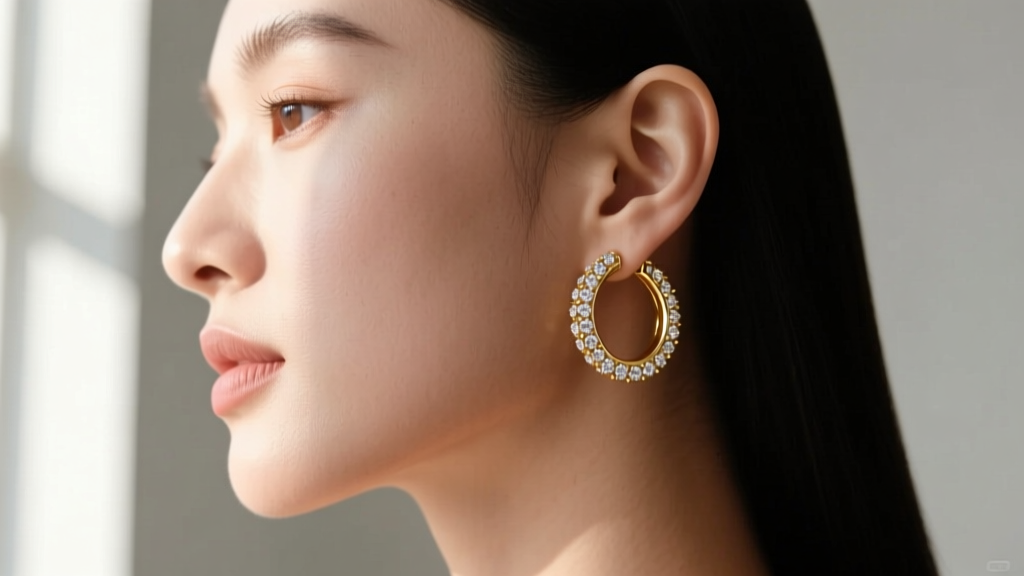
Anniversary gifts require a balance of intimacy and luxury. The 10mm to 12mm huggie hoop—specifically one featuring a pave diamond setting and a secure clicker hinge—has become the modern standard for romantic milestones. Unlike traditional drop earrings, which can snag on hair and clothing, huggies wrap snugly around the lobe. They are designed to be worn 24/7, serving as a constant, tactile reminder of the giver. When shopping for huggies, ensure the inner diameter is at least 10mm; anything smaller will pinch the earlobe and cause discomfort over time.
Professional Milestones: The 15mm - 20mm Small Hoop
Celebrating a promotion, a closed real estate deal, or a new business venture calls for jewelry that projects confidence and polish. A 15mm to 20mm seamless or continuous hoop in solid 14k or 18k gold hits the exact right note. It is large enough to be noticed across a boardroom table but restrained enough to maintain professional decorum. Avoid textured or heavily hammered finishes for corporate gifts; a high-polish or satin-brushed finish reflects light elegantly and pairs seamlessly with professional attire.
Material Grades & 2026 Pricing Realities
The physical size of the earring is only half the equation; the metallurgical integrity dictates its longevity. When gifting, never compromise on material grades to afford a larger millimeter size. A massive pair of gold-plated brass hoops will inevitably tarnish, turn the wearer's skin green, and end up in a landfill. Instead, adhere to these premium material standards:
- 14k Solid Gold (Yellow, White, or Rose): The industry workhorse for fine jewelry gifting. It offers the perfect ratio of pure gold content (58.3%) to alloy durability. Expect to pay $150–$250 for quality 12mm huggies and $400+ for diamond studs.
- 18k Solid Gold: Richer in color and hypoallergenic, but slightly softer. Ideal for studs and low-impact huggies. Pricing typically starts 30% higher than 14k equivalents.
- ASTM F136 Implant-Grade Titanium: If your recipient has a history of metal sensitivities or recently received a new piercing, titanium is non-negotiable. It is entirely nickel-free and biocompatible. Brands like BVLA and Maria Tada specialize in high-end titanium pieces that rival precious metals in aesthetic beauty.
- Platinum: The ultimate heirloom metal. Dense, naturally white, and impervious to tarnish. Reserve platinum for high-stakes milestones like 10th or 20th anniversaries, with stud pricing generally starting above $800 due to the metal's density and market value.
Troubleshooting: What If You Don't Know Her Piercings?
Perhaps the most stressful scenario for a gift buyer is wanting to purchase ear jewelry for a partner whose piercing layout is a mystery. Does she have a second lobe piercing? Is her helix pierced at 16g or 18g? If you cannot discreetly check her jewelry box or ask her best friend, you must pivot to universally adaptable sizing.
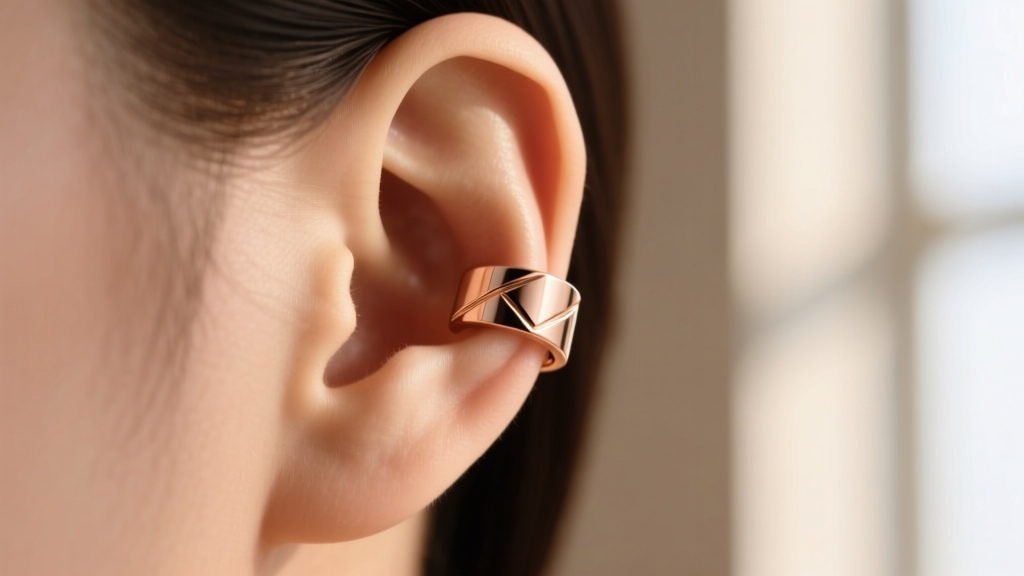
The ultimate workaround is the ear cuff. Modern ear cuffs are designed to wrap around the upper cartilage or the mid-lobe without requiring any piercings whatsoever. They are entirely adjustable; the wearer can gently squeeze or pull the metal to achieve a custom, secure fit. A minimalist 18k gold ear cuff provides the illusion of a curated ear project with zero commitment and zero risk of gauge incompatibility. Alternatively, consider tension-set cartilage clips or magnetic stud alternatives, though high-quality, adjustable wrap cuffs remain the most elegant and secure choice for unpierced gifting.
The Foolproof Pre-Checkout Checklist
Before you finalize your purchase, run your selection through this expert checklist to guarantee a successful gift:
- Verify the Gauge: Are you buying 20g/18g for lobes, or 16g for cartilage? When in doubt, buy studs with standard 20g friction posts or adjustable ear cuffs.
- Measure the Millimeters: Hold a ruler up to your own ear or visualize the mm size on a piece of paper before clicking 'Add to Cart'. A 30mm hoop is much larger than most buyers anticipate.
- Check the Closure Mechanism: For huggies, seek out a 'clicker' hinge that audibly snaps shut. For studs, opt for secure screw-backs or silicone O-rings to prevent loss.
- Confirm the Material: Ensure the product description explicitly states 'Solid 14k/18k Gold' or 'Platinum'. Avoid terms like 'gold vermeil' or 'gold-filled' for milestone gifts, as they have a limited lifespan.
- Review the Diamond Metrics: If buying diamond studs, consult the GIA Diamond Buying Guide to ensure you are prioritizing cut quality over sheer carat weight, which dictates the actual sparkle and visual size of the stone.
Gifting earrings is an intimate gesture that shows you pay attention to the recipient's daily style and personal comfort. By moving beyond the vague idea of a standard earring size and embracing the precise metrics of gauge, diameter, and material grade, you transform a simple accessory into a perfectly tailored, deeply meaningful treasure.


