Sterling Silver Feather Earrings: Metallurgy & Design Guide
Explore the metallurgy, casting techniques, and structural design of sterling silver feather earrings. Expert tips on alloys, weight, and care.

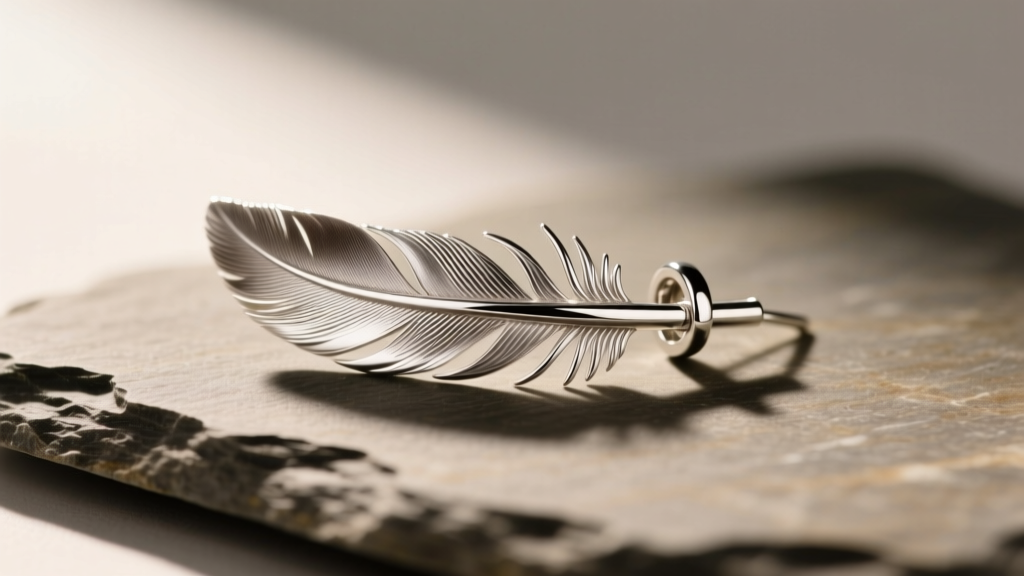
When evaluating sterling silver feather earrings, most consumers focus solely on the aesthetic appeal of the intricate barbs and the delicate central shaft. However, from a metallurgical and structural engineering perspective, a high-quality feather earring is a masterclass in micro-casting, weight distribution, and alloy selection. The deep crevices required to mimic the natural texture of a feather present unique challenges in manufacturing, finishing, and long-term maintenance. In this expert deep dive, we deconstruct the technical specifications that separate mass-produced costume jewelry from heirloom-grade sterling silver feather designs.
The Metallurgy of Sterling Silver in Intricate Castings
Standard sterling silver is an alloy composed of 92.5% pure silver and 7.5% copper. While the copper provides the necessary tensile strength to prevent the soft pure silver from deforming, it introduces a significant vulnerability in intricate designs: firescale and accelerated tarnishing. According to The Silver Institute, the copper content reacts with oxygen during the high-heat casting process, forming cupric oxide (firescale) deep within the microscopic grooves of a feather design.
To combat this, advanced jewelers crafting premium sterling silver feather earrings often turn to Argentium Silver (typically 93.5% or 96% silver). By replacing a portion of the copper with germanium, Argentium forms a transparent, protective layer of germanium dioxide on the surface. This not only drastically reduces firescale during the casting phase—allowing for sharper, more defined feather barbs—but also provides exceptional resistance to silver sulfide tarnishing, which is critical for textured surfaces that are difficult to polish.
Lost-Wax Casting vs. Stamping: Manufacturing Realities
The vast majority of detailed sterling silver feather earrings are produced via lost-wax casting rather than metal stamping. Stamping is limited to flat, two-dimensional profiles, whereas a realistic feather requires varying depths, undercuts, and a three-dimensional central rachis (shaft).
The Spruing and Flow Dynamics
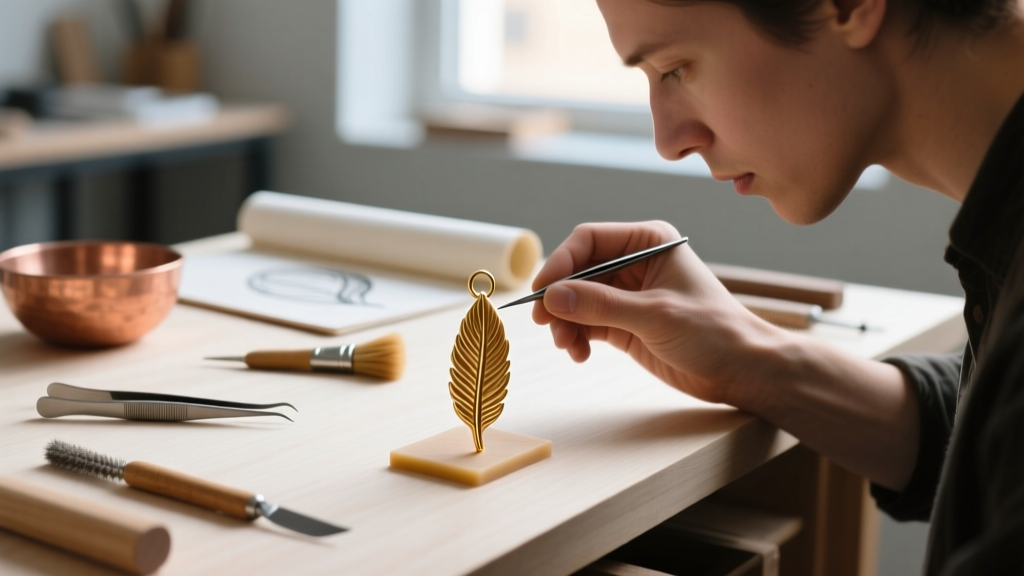
In lost-wax casting, the wax model of the feather is attached to a central wax tree via 'sprues' (channels for the molten metal). The placement of these sprues is critical. If placed at the delicate tip of the feather, the metal may cool too quickly, resulting in a 'misrun' or incomplete cast. Expert casters place the main sprue at the thickest point—usually the calamus (base) of the feather—to ensure a continuous, laminar flow of molten silver through the narrow barbs. As noted in Rio Grande's Metals Guide, maintaining a precise flask temperature and utilizing a centrifugal or vacuum casting machine ensures the silver reaches the finest extremities of the feather mold before solidifying.
Structural Integrity: Wire Gauges and Weight Distribution
A feather earring is inherently asymmetrical and top-heavy. If the center of gravity is not properly calibrated, the earring will constantly flip forward or pull uncomfortably on the earlobe. The structural success of the piece relies heavily on the ear wire and the jump ring connection.
- 20-Gauge (0.81mm) Wire: The industry standard for drop earrings. It provides sufficient rigidity to support a medium-sized silver feather (approx. 4-6 grams) without bending when the wearer pulls a sweater over their head.
- 22-Gauge (0.64mm) Wire: Used only for ultra-lightweight, hollowed-back, or miniature feather studs. It is prone to work-hardening and snapping if subjected to lateral stress.
- 18-Gauge (1.02mm) Wire: Reserved for heavy, oversized statement feathers or when the design incorporates additional gemstone settings along the shaft.
Lobe vs. Cartilage Load-Bearing Limits
When designing sterling silver feather earrings for cartilage piercings (such as the helix or conch), weight becomes a primary medical concern. A standard earlobe can comfortably support 15 to 20 grams indefinitely. Cartilage, however, lacks the same vascularization and tissue density. A heavy silver feather earring exceeding 6 grams in a cartilage piercing can cause 'migration'—a slow rejection process where the body pushes the jewelry outward, leading to scarring and tissue tearing. For cartilage-specific feather designs, jewelers must aggressively hollow out the back of the wax model to reduce the final silver weight to under 4 grams.
Tarnish Dynamics and Rhodium Plating in High-Crevice Designs
The defining feature of a feather earring is its texture, but those deep, shadowed grooves are prime environments for tarnish accumulation. Silver reacts with hydrogen sulfide in the atmosphere to form silver sulfide ($Ag_2S$), a black compound that settles into the lowest points of the casting. Because polishing cloths cannot reach into the microscopic barbs of a feather, many manufacturers apply a rhodium plating.
| Material / Finish | Tarnish Resistance | Crevice Detail Retention | Estimated Cost Premium |
|---|---|---|---|
| Standard 925 Sterling (Unplated) | Low | Excellent (Natural Patina) | Base Price |
| 925 Sterling + Rhodium (0.3μm) | High | Moderate (Can pool in deep grooves) | +15% to 25% |
| Argentium 935 (Unplated) | Very High | Excellent (No plating required) | +20% to 30% |
| Silver-Plated Brass | Very Low (Prone to flaking) | Poor (Plating obscures fine details) | -40% (Budget tier) |
While rhodium plating (typically applied at 0.1 to 0.5 microns) prevents tarnish, it can pool in the deep crevices of a feather design during the electroplating process, slightly softening the sharp edges of the barbs. For purists who demand razor-sharp casting details, unplated Argentium silver is the superior technical choice.
Authentication: Decoding Hallmarks on Delicate Findings
Authenticating sterling silver feather earrings requires locating the '925' or 'Sterling' hallmark. Due to the organic, curved nature of a feather shaft, stamping a hallmark directly onto the body of the earring is often impossible without distorting the metal or ruining the visual illusion of the design.
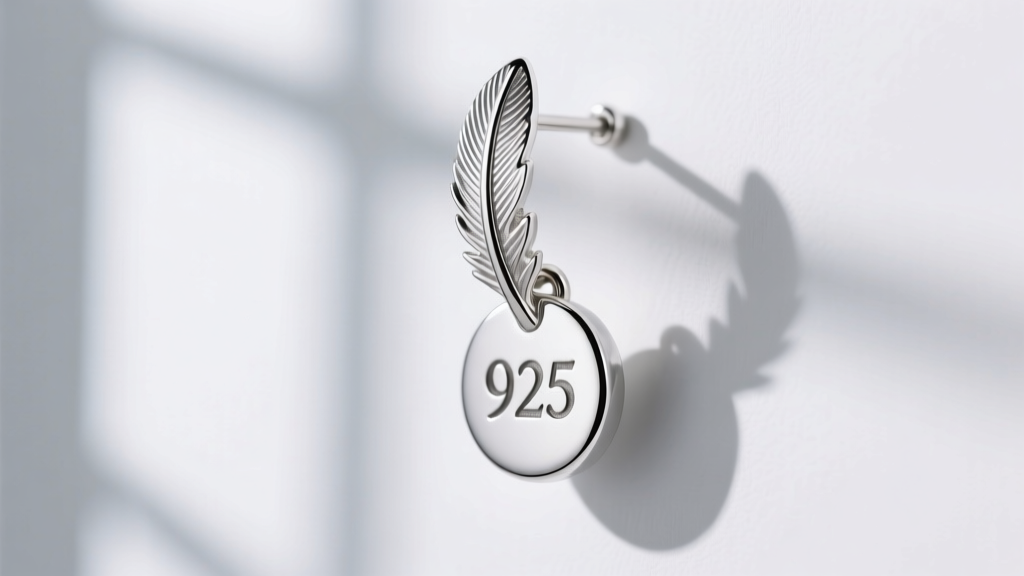
Expert jewelers solve this by engineering a small, flat 'pad' or 'tag' either on the back of the calamus (the base where the feather meets the ear wire) or directly onto the flat wire of the French hook. When inspecting a piece, use a 10x jeweler's loupe. A genuine stamped hallmark will show slight displacement of the surrounding metal, whereas a laser-engraved or cast-in hallmark (which often looks muddy or shallow) may indicate a lower-tier manufacturing process or a counterfeit piece.
Expert Maintenance Protocol for Filigree and Textured Silver
Cleaning sterling silver feather earrings requires a departure from standard jewelry maintenance. Traditional silver polishing pastes and creams are strictly prohibited for textured feather designs; the abrasive compounds will become permanently lodged in the deep barbs, leaving a chalky white residue that is nearly impossible to extract.
Instead, utilize a chemical reduction bath. Line a glass bowl with aluminum foil, add boiling water, a tablespoon of baking soda, and a pinch of salt. Submerge the earrings for exactly 60 to 90 seconds. The electrochemical reaction transfers the silver sulfide from the deep crevices of the feather onto the aluminum foil, restoring the bright silver finish without any mechanical abrasion. Immediately rinse with distilled water and dry with a forced-air blower or a microfiber cloth wrapped around a wooden skewer to reach the tightest grooves. By understanding the metallurgy and structural physics behind these pieces, collectors and wearers can ensure their sterling silver feather earrings remain pristine for generations.


