Two Tone Huggie Earrings: A Technical Guide to Metals & Clasps
Discover the metallurgy, clasp mechanics, and plating standards behind high-quality two tone huggie earrings in this expert technical deep dive.

The Metallurgy of Two-Tone Huggies: Plating vs. Soldering
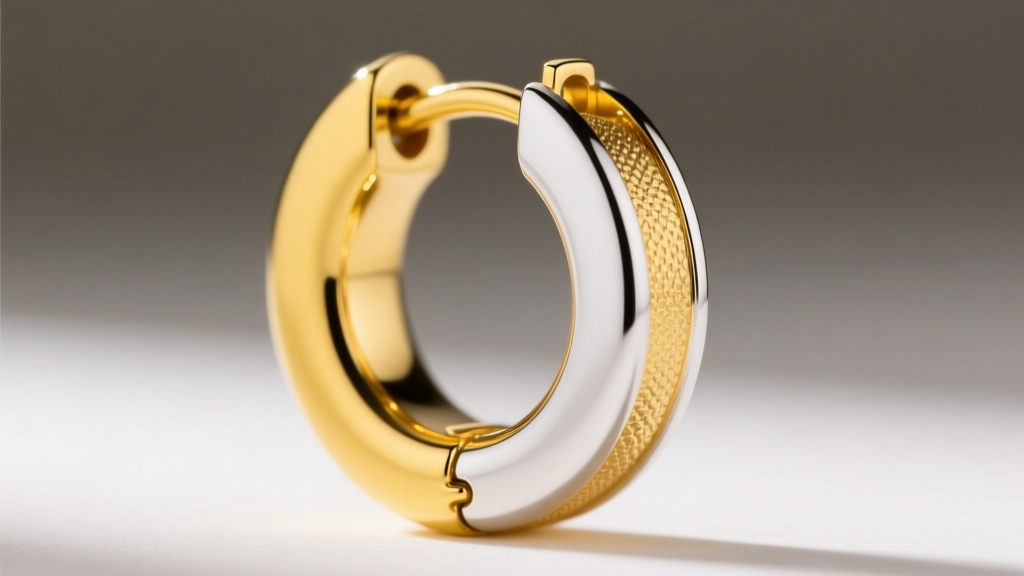
When evaluating two tone huggie earrings, the first technical consideration is how the dual-metal aesthetic is achieved. The market is flooded with visually identical pieces that possess vastly different structural integrities. True two-tone construction relies on either precision soldering of two distinct solid alloys or advanced electroplating techniques.
In high-end manufacturing, jewelers use laser welding to join 14k or 18k yellow gold with white gold. Laser welding is critical here; traditional torch soldering requires a filler metal that often leaves a visible, lower-karat seam prone to tarnishing. Laser welding fuses the metals at a microscopic level without altering the surrounding alloy's color. According to the Federal Trade Commission Jewelry Guides, any piece marketed as 'two-tone solid gold' must not rely on surface plating to achieve its color contrast.
Conversely, plated two-tone huggies start with a single base metal (usually brass or sterling silver) and undergo selective electroplating. For the white gold illusion, rhodium is plated over specific masked areas. The longevity of this contrast depends entirely on plating thickness. Flash plating (0.175 microns) will wear through in weeks of daily huggie use. Heavy Gold Electroplate (HGE) or high-micron rhodium plating (minimum 1.0 to 2.5 microns) is required for the friction-heavy environment of a huggie hinge and clasp.
Gauge Thickness, Post Taper, and Hinge Mechanics
Huggies sit flush against the earlobe, meaning the structural wire must withstand constant lateral pressure without warping. The industry standard for premium huggies is a 1.2mm to 1.6mm wire diameter (approximately 16-gauge to 14-gauge). Anything thinner than 1.0mm (18-gauge) risks permanent deformation when the wearer sleeps in them or accidentally snags the hoop.
The post itself requires a specific taper. A well-engineered two tone huggie earring features a post that is 1.2mm at the hinge for structural rigidity, tapering down to 0.9mm or 1.0mm at the tip to allow frictionless insertion through a standard 20-gauge or 18-gauge ear piercing.
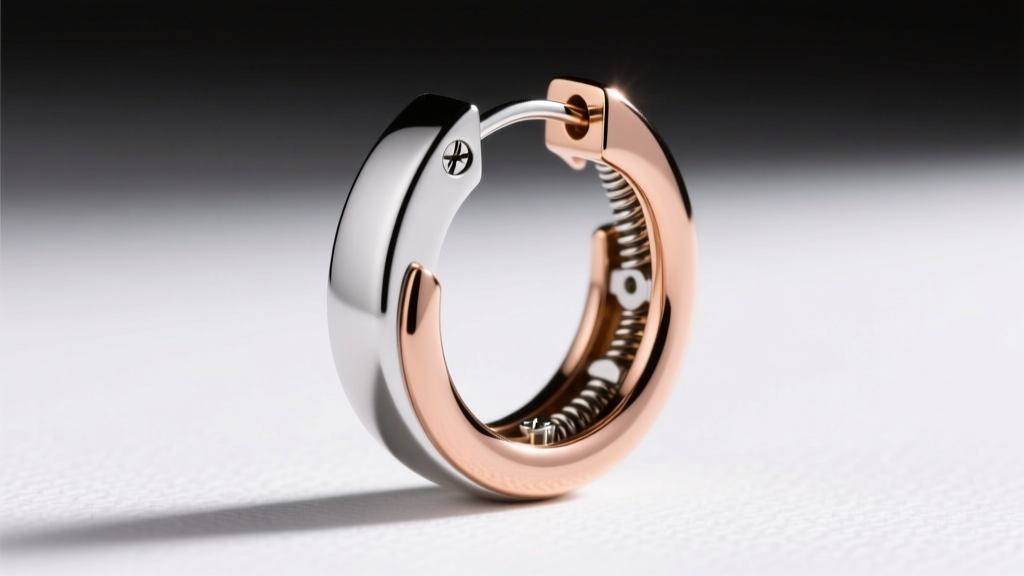
The hinge mechanism dictates the lifespan of the earring. Standard barrel hinges are common in budget pieces but are prone to seizing when exposed to cosmetic oils and dead skin cells. Premium pieces utilize a hidden European hinge. This mechanism houses a microscopic spring-loaded lever inside the hollowed back half of the huggie. The spring tension must be calibrated to roughly 1.5 to 2.0 Newtons—enough to keep the earring securely closed against the earlobe's weight, but not so tight that it snaps the catching post upon closure.
Clasp Engineering: Tension, Tolerance, and Failure Modes
The satisfying 'click' of a huggie is not just an auditory luxury; it is a mechanical indicator of precise CNC milling. The catch notch on the receiving end of the hoop and the groove on the post must meet with a tolerance of less than 0.05mm.
The most common failure mode in two tone huggie earrings is 'clicker creep.' This occurs when the post groove is milled too shallow, or the catch notch wears down due to friction between dissimilar metals (e.g., a rhodium-plated post clicking into a solid yellow gold catch). Over time, the lateral pressure of the earlobe pushes the post out of the shallow notch, causing the earring to spontaneously open. To prevent this, expert jewelers mill a 'double-lock' or deep-V catch notch, ensuring the post seats fully and requires deliberate downward pressure to release.
Galvanic Corrosion and Skin Reactions
When two dissimilar metals meet in the presence of an electrolyte (like human sweat), galvanic corrosion can occur. This is a critical consideration for two tone huggie earrings, as the earlobe is a high-heat, high-moisture environment.
According to research highlighted by the Gemological Institute of America (GIA), metal allergies are frequently triggered not by the gold itself, but by the alloying metals used to create white gold, such as nickel or copper.
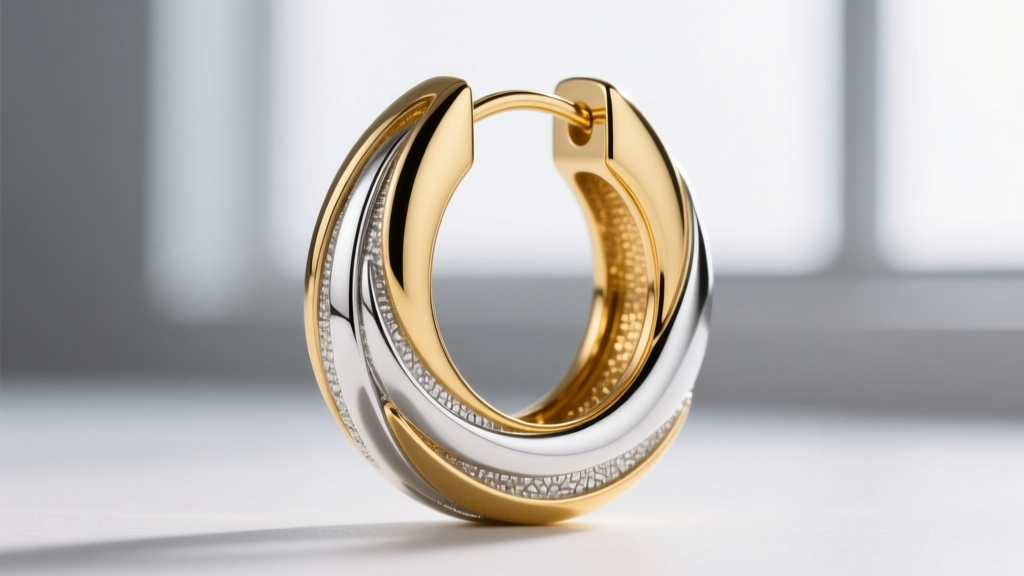
In soldered two-tone pieces, if the white gold alloy contains nickel, the galvanic reaction between the nickel-white gold and the yellow gold can accelerate localized tarnishing at the solder seam. To circumvent this, high-end manufacturers use palladium-alloyed white gold. Palladium is hypoallergenic, highly resistant to tarnish, and eliminates the galvanic corrosion risk at the bi-metal junction. If you are purchasing plated two-tone huggies, ensure the base metal is nickel-free brass or sterling silver, and that the rhodium barrier is at least 1.0 microns thick to prevent sweat from penetrating to the base metal.
Maintenance: Ultrasonic Risks and Rhodium Degradation
Cleaning two tone huggie earrings requires an understanding of how different metals and treatments react to modern cleaning methods. Ultrasonic cleaners, while excellent for removing sebum and dead skin from hinge mechanisms, pose a severe threat to plated two-tone pieces. The high-frequency cavitation bubbles can literally strip rhodium plating at the microscopic level, especially along the sharp edges where the two colors meet. If your two-tone huggies are plated, stick to a mild dish soap and a soft-bristled baby toothbrush.
For solid, laser-welded two-tone huggies, ultrasonic cleaning is generally safe, provided there are no tension-set gemstones. However, prolonged exposure to harsh chemical dips (like silver tarnish removers) can permanently discolor the copper alloys present in the yellow gold segments. Always use a neutral pH jewelry cleaning solution and ensure the hinge is fully blown out with compressed air after rinsing to prevent water spots and internal corrosion.
Buying Framework: Construction Methods Compared
Use the following technical matrix to evaluate two tone huggie earrings before purchasing. This framework separates heirloom-quality engineering from fast-fashion disposability.
| Specification | Premium / Heirloom Grade | Mid-Tier / Commercial | Budget / Fast Fashion |
|---|---|---|---|
| Construction Method | Laser-welded solid alloys | Torch-soldered alloys | Selective electroplating |
| Wire Gauge | 1.2mm - 1.6mm (16g-14g) | 1.0mm - 1.2mm (18g-16g) | < 1.0mm (Hollow tube) |
| Hinge Type | Hidden European spring hinge | Standard barrel hinge | Friction push-pin |
| White Metal Source | Palladium white gold or Platinum | Nickel white gold | Rhodium flash plating |
| Expected Price Range | $250 - $600+ | $120 - $240 | $25 - $80 |
Investing in properly engineered two tone huggie earrings means paying for the microscopic tolerances of the clicker hinge, the structural integrity of a 16-gauge wire, and the metallurgical stability of palladium-alloyed contrasts. By understanding these technical specifications, you can curate a jewelry collection that maintains its mechanical snap and visual contrast for decades.


