How to Get Rid of Earring Infection: Safe Jewelry Buying Guide
Learn how to get rid of earring infection by choosing the right hypoallergenic metals, safe threading, and proper aftercare products.

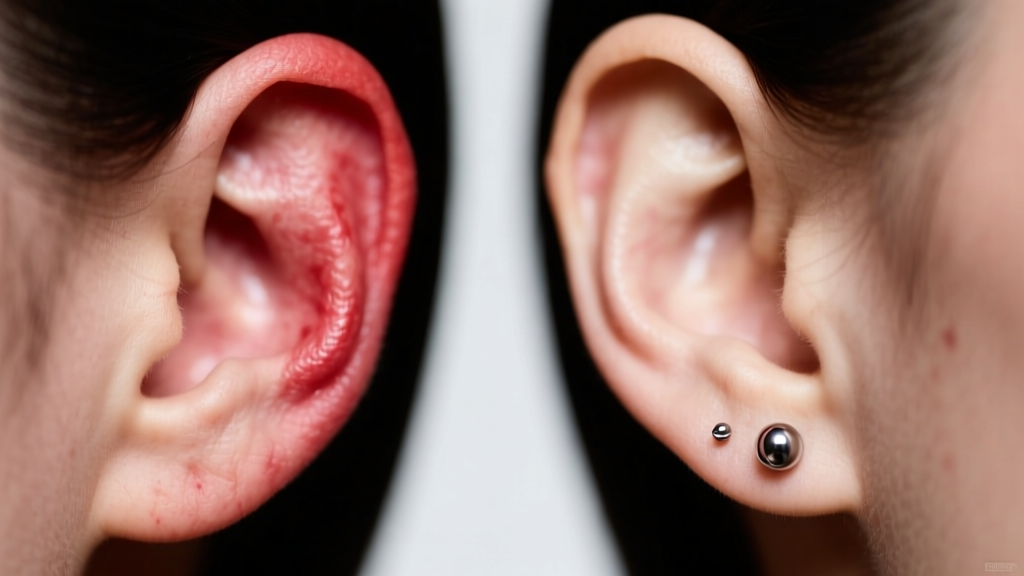
If you are desperately searching for how to get rid of earring infection, the first step is often not found in a medicine cabinet, but in your jewelry box. Many persistent piercing issues are not true bacterial infections, but rather severe allergic contact dermatitis or mechanical irritation caused by poor-quality metals and improper jewelry design. As a buying guide tailored for sensitive ears and healing piercings, this article will help you identify the exact materials, threading types, and finishes you need to purchase to stop the cycle of irritation and allow your fistula to heal properly.
The Root Cause: Allergic Reaction vs. Bacterial Infection
According to the American Academy of Dermatology, nickel allergy is the most common cause of allergic contact dermatitis, affecting up to 18% of adults. When you wear cheap alloy earrings or standard "surgical steel" (which contains 8-10% nickel), your immune system triggers an inflammatory response. This results in redness, weeping clear fluid, swelling, and itching—symptoms that perfectly mimic a bacterial infection. True bacterial infections, characterized by thick yellow/green pus, severe localized heat, and radiating pain, are actually quite rare in established piercings and usually require oral antibiotics prescribed by a doctor. For the vast majority of our readers, the "infection" is a biocompatibility failure.
What to Look For: The Infection-Safe Jewelry Buying Guide
To permanently resolve irritation, you must upgrade to biocompatible materials. The Association of Professional Piercers (APP) strictly recommends specific materials for fresh, healing, or chronically irritated piercings. When shopping, ignore marketing buzzwords like "hypoallergenic" or "surgical grade" and look for these exact metallurgical specifications:
| Material Grade | Nickel Content | Biocompatibility | Best Use Case |
|---|---|---|---|
| ASTM F-136 Implant Grade Titanium | 0% (Nickel-Free) | Exceptional (MRI Safe) | Active irritation, fresh piercings, sensitive lobes |
| Unalloyed Niobium (ASTM F-352) | 0% (Nickel-Free) | Excellent | Cartilage hoops, custom bent seamless rings |
| Solid 14k/18k Gold (Palladium-based) | 0% (Nickel-Free) | Very Good | Healed, stable piercings (avoid in open wounds) |
| 316L Surgical Steel | 8% - 10.5% | Poor (High Allergy Risk) | Avoid entirely if experiencing irritation |
Notice that 316L Surgical Steel is explicitly marked to avoid. Many commercial jewelry brands sell surgical steel as a "safe" alternative, but the nickel content is more than enough to sustain chronic inflammation in a compromised fistula.
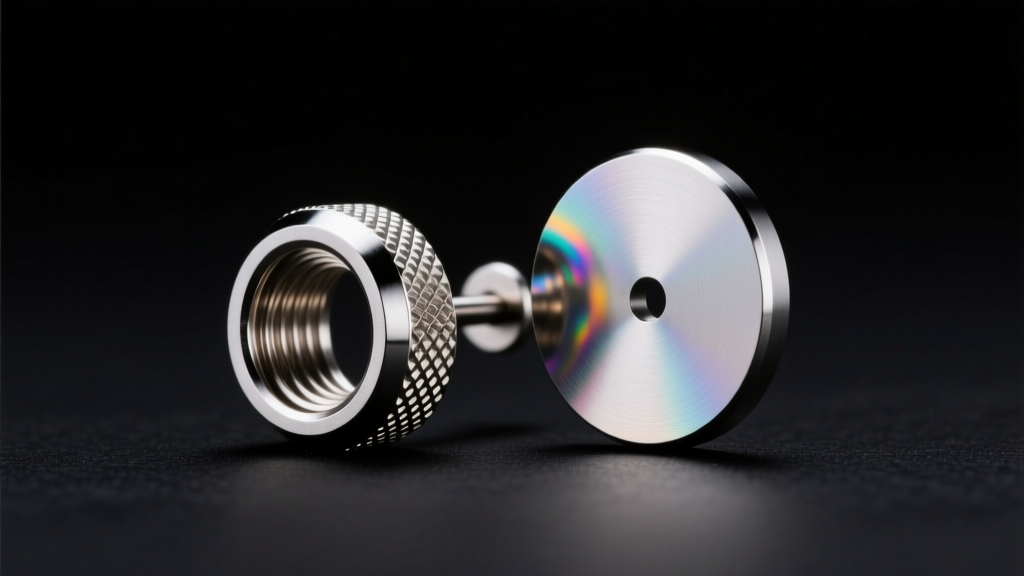
Gauge, Threading, and Finish: The Hidden Infection Triggers
Material is only half the battle. The physical construction of the earring plays a massive role in tissue trauma, which creates micro-tears where bacteria can thrive.
1. Threading Mechanism
Never buy externally threaded earrings (where the screw is on the post that passes through the ear). The sharp threads act like a cheese grater on the delicate fistula lining, causing micro-trauma and introducing surface bacteria deep into the tissue. Instead, purchase internally threaded jewelry (where the screw is on the decorative end) or threadless (push-pin) jewelry. Threadless jewelry uses tension to stay secure and offers the smoothest insertion possible, making it the gold standard for irritated cartilage and lobes.
2. Surface Finish (Ra Value)
Bacteria and dead skin cells cling to microscopic scratches. High-end body jewelry brands polish their titanium and gold to a mirror finish, achieving a surface roughness (Ra) of less than 0.2 micrometers. Cheap mall-kiosk earrings often have a matte or slightly pitted finish under magnification, providing a breeding ground for biofilm. Always buy from reputable body jewelry manufacturers that guarantee a mirror polish.
3. Proper Gauge and Post Length
Wearing an earring post that is too long allows the jewelry to move, snag, and introduce debris. A post that is too short will compress the tissue, cutting off circulation and causing necrosis or severe swelling. For standard lobes, an 18-gauge (1.0mm) or 16-gauge (1.2mm) post is standard. For cartilage (helix, conch, tragus), 16-gauge is the professional standard. You must measure your tissue thickness and buy posts in precise 0.5mm increments (e.g., 5mm, 5.5mm, 6mm) to ensure a flush fit once swelling subsides.
Step-by-Step Protocol: How to Get Rid of Earring Infection Fast
Once you have secured high-quality, internally threaded or threadless implant-grade titanium jewelry, follow this strict protocol to calm the tissue. This aligns with the Mayo Clinic's guidelines for piercing care and professional piercer consensus.
- Step 1: The Downsizing Swap. Have a professional piercer swap your irritating jewelry for the titanium piece mentioned above. Do not attempt to swap jewelry in a highly swollen, active infection yourself, as you may trap the bacteria or lose the piercing hole.
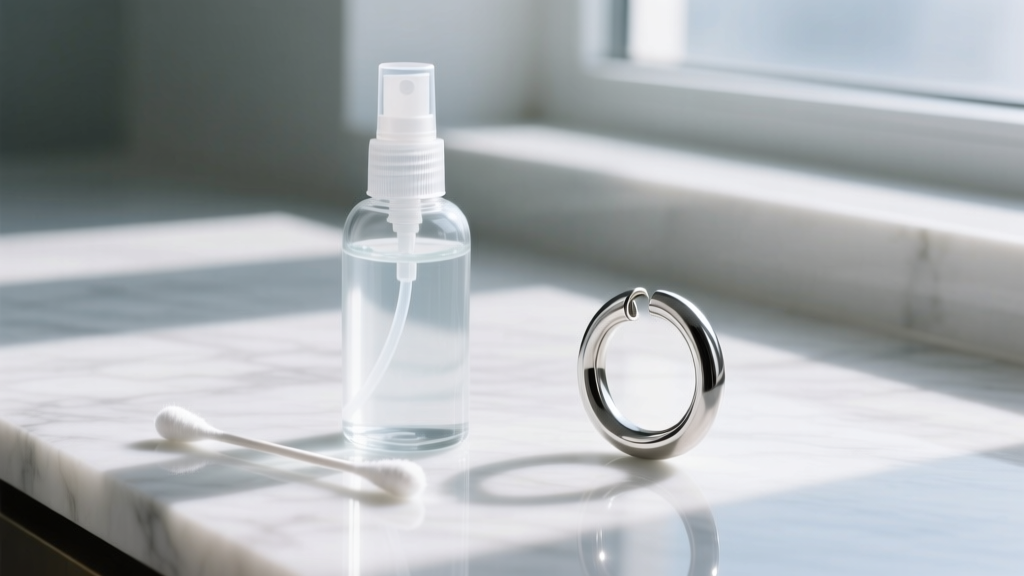
- Step 2: Sterile Saline Only. Purchase a canister of sterile wound wash containing exactly two ingredients: 0.9% sodium chloride and water. Brands like NeilMed or Piercingshop are ideal. Spray the front and back of the piercing twice daily. Do not use rubbing alcohol, hydrogen peroxide, tea tree oil, or antibiotic ointments—these destroy healthy healing cells and trap bacteria.
- Step 3: The LITHA Method. LITHA stands for "Leave It The Hell Alone." Stop touching, twisting, or sleeping on the earring. Use a travel pillow to keep pressure off your ear while sleeping.
- Step 4: Warm Compresses. If the area is tender and swollen, apply a sterile gauze soaked in warm (not hot) sterile saline for 5 minutes to encourage blood flow and natural lymphatic drainage.
"If you experience systemic symptoms like a fever, chills, or red streaks radiating from the ear cartilage, bypass the jewelry store and go directly to an urgent care clinic. Cartilage infections (perichondritis) can cause permanent ear deformation if not treated with prescription systemic antibiotics."
Trusted Brands to Buy for Sensitive Ears
To guarantee you are getting genuine ASTM F-136 titanium and true mirror finishes, avoid fast-fashion retailers and invest in professional body jewelry brands. While the initial cost is higher, the medical-grade quality is non-negotiable for resolving infections.
- BVLA (Body Vision Los Angeles): The pinnacle of luxury body jewelry. Their solid 14k/18k gold and titanium threadless ends are meticulously crafted. Expect to pay $60 to $200+ per decorative end, plus $15-$25 for the titanium post.
- Anatometal: Renowned for their precision machining and mirror finishes. Their internally threaded titanium flat-back labrets are a staple for healing irritated cartilage. Posts range from $25-$40, and ends from $30-$100.
- NeoMetal: The pioneer of threadless (push-pin) technology. Their titanium snap-together jewelry is incredibly secure and easy for professional piercers to insert into swollen tissue. Complete pieces generally range from $35 to $80.
By shifting your purchasing habits away from cheap alloys and toward medically sound, precision-machined jewelry, you will drastically reduce your need to search for how to get rid of earring infection. Invest in your body's biocompatibility, and your piercings will reward you with a lifetime of comfortable, beautiful wear.


