Troubleshooting Sports Earrings: Safety Rules & Injury Fixes
Solve common sports earring problems. Learn NFHS rules, sweat-proof materials, secure backings, and how to prevent cartilage tears on the field.

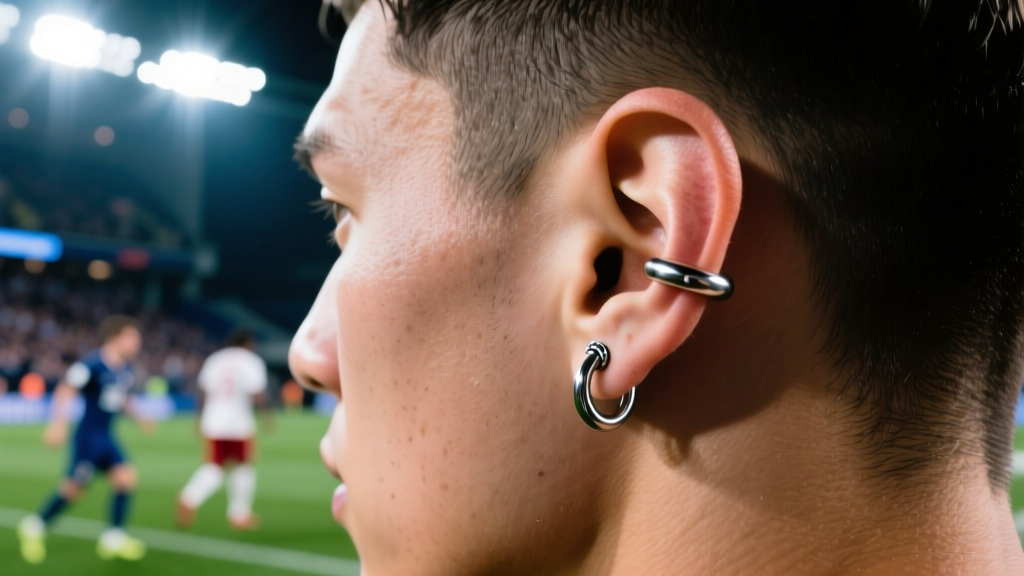
For athletes who refuse to compromise on their personal style, navigating the intersection of body modification and competitive sports is a persistent headache. Whether you are a high school point guard, a collegiate swimmer, or a weekend martial arts competitor, wearing sports earrings introduces a unique matrix of compliance issues, material science challenges, and biomechanical risks. In 2026, athletic associations have cracked down on outdated workarounds, and the jewelry industry has responded with advanced, snag-proof engineering. This guide bypasses generic advice to troubleshoot the exact mechanical and regulatory failures associated with athletic earring wear, providing actionable, expert-level solutions.
The Rulebook Reality: NFHS and NCAA Compliance
The most common problem athletes face isn't physical injury; it's being benched by a referee. The National Federation of State High School Associations (NFHS) and the NCAA maintain strict, often uncompromising stances on jewelry. According to the NFHS official rulebooks for sports like soccer, basketball, and wrestling, all jewelry is generally prohibited during competition. The rationale is twofold: player safety (preventing lacerations from snagged metal) and opponent safety (preventing blunt force trauma from hard metal objects).
The Taping Myth: Why Referees Are Banning the Band-Aid Workaround
For decades, the standard troubleshooting fix for sports earrings was to simply tape over the stud with athletic tape or a bandage. As of recent rule updates, this practice has been widely outlawed across multiple sports federations. Referees now recognize that taping does not eliminate the blunt-force hazard of a rigid metal post beneath the tape, nor does it prevent the earring from catching on the tape itself and tearing the tissue upon impact. If your sport strictly enforces a 'no jewelry' policy, the only compliant troubleshooting method is complete removal prior to stepping onto the field or court.
Sweat Chemistry: How Lactic Acid Destroys Base Metals
If your sport permits small, flush-fitting studs (such as swimming, track, or fitness training), your next enemy is biochemistry. Human sweat is not just water; it is a complex, corrosive fluid with a pH ranging from 4.5 to 7.0, containing lactic acid, urea, and high concentrations of sodium chloride. When athletes wear earrings made of brass, copper alloys, or low-grade stainless steel (like 304L), the acidic environment triggers rapid galvanic corrosion.
This corrosion leads to two major failures: the structural degradation of the earring post (making it prone to snapping inside the fistula) and the leaching of nickel ions into the piercing channel, which triggers severe allergic contact dermatitis. To troubleshoot sweat-induced irritation and jewelry degradation, you must upgrade your material profile.
| Material Grade | Sweat Resistance | Chlorine Resistance | Athletic Verdict |
|---|---|---|---|
| Surgical Steel (316L) | Moderate | Poor (Pitting risk) | Avoid for daily swimmers |
| Implant-Grade Titanium (ASTM F136) | Excellent | Excellent | The Gold Standard for athletes |
| Niobium (99.9% Pure) | Excellent | Excellent | Great for flexible hoops/huggies |
| PVD-Coated Titanium | Excellent | Good (Coating may wear) | Safe for color, avoid heavy friction |
As outlined by the Association of Professional Piercers (APP), ASTM F136 implant-grade titanium (Ti6Al4V ELI) is entirely biocompatible, non-magnetic, and impervious to the corrosive effects of both heavy sweat and chlorinated pool water. If you are experiencing chronic itching, weeping, or green discoloration around your piercing after workouts, the immediate fix is to discard your current jewelry and switch to certified implant-grade titanium.
Mechanical Failures: Lost Backs and Snag Hazards
The physical mechanics of traditional earrings are fundamentally incompatible with high-velocity sports. The standard 'butterfly' or friction back relies on a small metal scroll that grips the post via tension. During contact sports, or even repetitive motions like running and swimming, friction backs are subjected to micro-vibrations and lateral shear forces. This inevitably causes the backing to slide off, resulting in lost earrings and exposed, sharp posts that can scratch the athlete's neck or shoulders.
The Solution: Threadless and Internally Threaded Flat-Backs
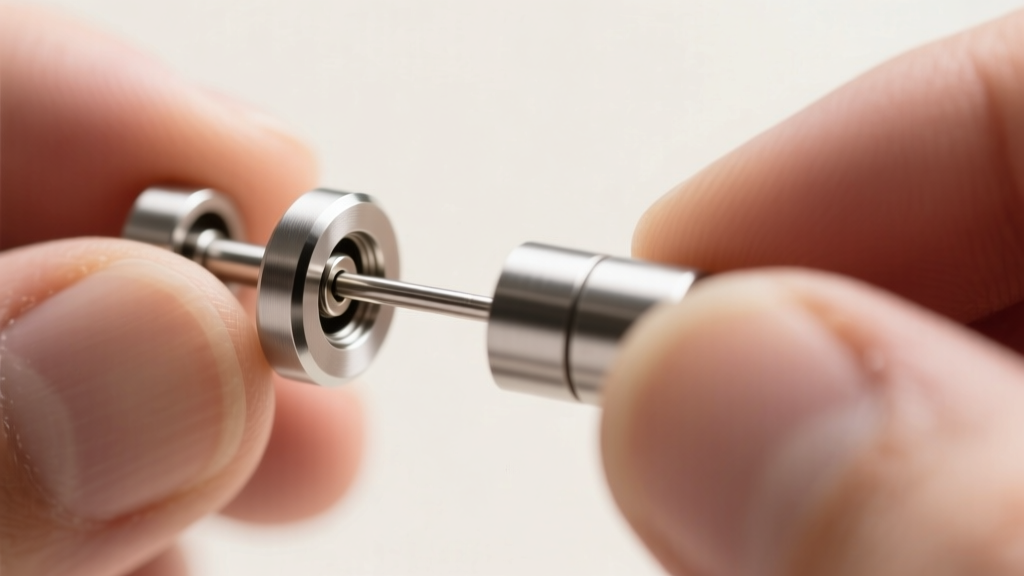
To troubleshoot the issue of lost backings and snag hazards, athletes must transition to flat-back labret studs utilizing either internal threading or threadless (push-pin) technology.
- Threadless (Push-Pin) Systems: The decorative end features a slightly bent pin that inserts into the hollow post. The tension of the bent metal against the inner wall of the post creates a secure, custom fit that actually tightens when pulled. This is the ultimate snag-proof mechanism for sports.
- Internally Threaded Posts: The screw threads are on the decorative end, passing smoothly through the tissue, while the receiving back is a flat disc. This eliminates the sharp external threads that can tear the fistula during insertion or removal.
- Flat-Back Profile: Unlike traditional posts that protrude 6mm to 10mm behind the earlobe, athletic flat-backs are measured precisely to the millimeter (usually 5mm to 8mm for lobes) so the disc sits entirely flush against the back of the ear. This eliminates the 'catch-point' where helmets, jerseys, or towels typically snag.
Biomechanics of a Snag: Rotational Force vs. Shear Force
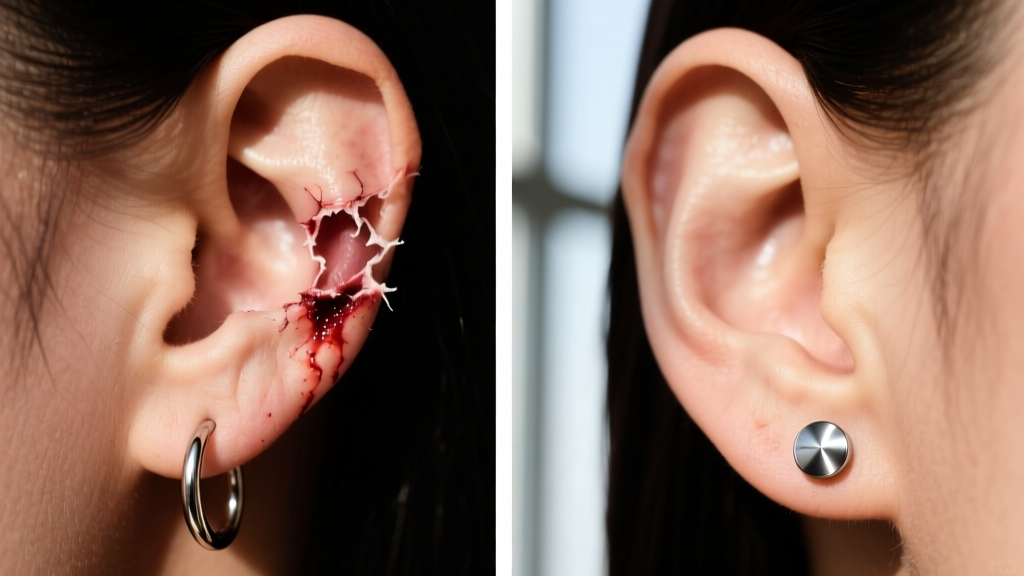
Hoops, huggies, and dangle earrings introduce catastrophic rotational force to a piercing channel. When a basketball catches the edge of a 10mm hoop, the force is not merely pulling the earring down (shear force); it is twisting the rigid metal through the delicate, tubular scar tissue of the fistula. This rotational torque is what causes the infamous 'cheese-cutter effect,' where the earring slowly or instantly slices through the earlobe or cartilage.
If your sport allows hoops, the only safe troubleshooting method is to wear continuous segment rings made of niobium or titanium that lack a clasp or hinge, or to wear specialized athletic silicone retainers that will snap or stretch rather than tear the tissue under extreme load. However, for cartilage piercings (like the helix or tragus), hoops should be strictly avoided during contact sports entirely, as cartilage lacks the elastic give of lobe tissue and will shatter or tear irreparably under torque.
Acute Injury Protocol: What to Do When a Snag Occurs
Despite the best precautions, accidents happen. If an earring snags and causes a partial or full tear to the earlobe or cartilage, immediate and correct troubleshooting is vital to save the piercing and prevent disfigurement.
- Do Not Rip It Out: If the jewelry is embedded in the torn tissue, pulling it out blindly will cause massive secondary tissue damage. If it is hanging by a thread of skin, stabilize it.
- Apply Direct Pressure: Use a sterile gauze pad to apply firm, continuous pressure to the bleeding site for a full 10 minutes without peeking.
- Cleanse with Sterile Saline: Once bleeding is controlled, flush the area with sterile 0.9% sodium chloride wound wash. Do not use alcohol, hydrogen peroxide, or iodine, as these destroy healthy fibroblasts and delay healing.
- Assess the Damage: If the tear extends to the margin of the earlobe (a split lobe), the piercing channel is permanently compromised. You must remove the jewelry, allow the lobe to heal as an open wound, and consult a plastic surgeon or specialized piercer for a surgical repair or re-piercing protocol once the scar tissue has matured (typically 6 to 12 months).
"The most common athletic piercing trauma we see isn't from direct impact, but from athletes wearing rigid, protruding jewelry under tight sports helmets. The repeated friction creates micro-tears that become infected with Staphylococcus aureus from the locker room environment."
The 2026 Buyer’s Checklist for Athletic Earrings
Before purchasing your next pair of sports earrings, run them through this rigorous troubleshooting checklist to ensure they meet the demands of athletic performance:
- Gauge Thickness: Is it 18g (1.0mm) or 16g (1.2mm)? Thicker posts resist bending and snapping under impact better than flimsy 20g or 22g wires.
- Material Certification: Does the manufacturer explicitly state 'ASTM F136 Titanium' or 'Fused Silica/Glass'? Beware of unverified 'surgical steel' claims.
- Backing Mechanism: Is it a flat-back with a threadless push-pin or internal thread? If it uses a friction butterfly back, reject it for sports use.
- Surface Topography: Are there prong-set gemstones with sharp metal claws? Opt for bezel-set stones or smooth, polished metal domes that will glide off fabric rather than catch it.
By treating your sports earrings as specialized athletic equipment rather than mere accessories, you eliminate the regulatory friction, material failures, and biomechanical hazards that plague active individuals. Upgrade your hardware, respect the rulebook, and keep your focus where it belongs: on the game.


