How to Choose True Nickle Free Earrings for Sensitive Piercings
Discover the metallurgy behind true nickle free earrings. Learn which implant-grade metals prevent contact dermatitis and how to avoid marketing traps.

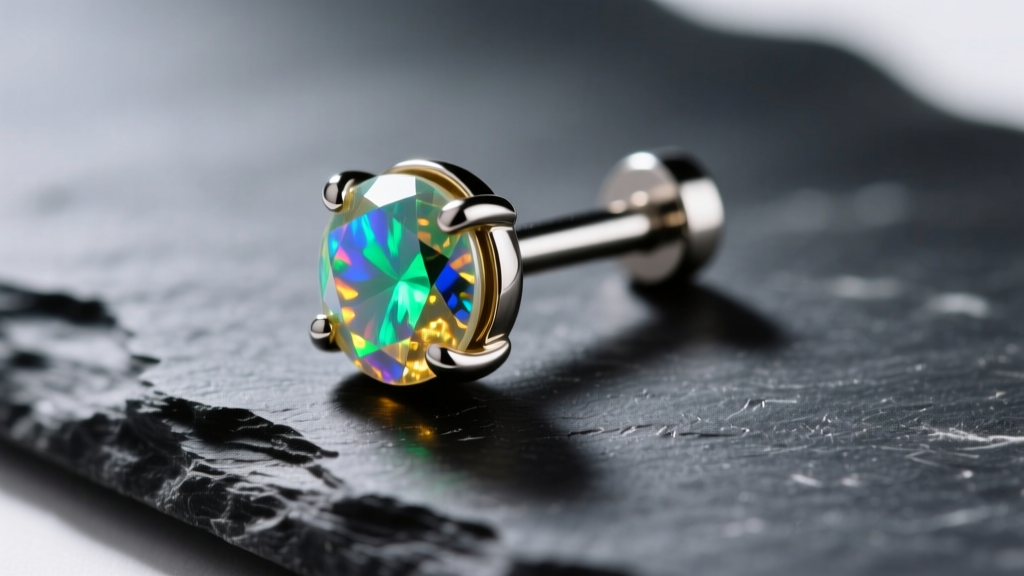
When consumers search for nickle free earrings, they are usually battling the frustrating, itchy aftermath of contact dermatitis. The jewelry market is flooded with misleading labels, making it incredibly difficult to find pieces that will not trigger an immune response in sensitive lobes or freshly healed cartilage. While the correct metallurgical spelling is "nickel," the vast majority of buyers use the phonetic spelling when hunting for safe, hypoallergenic jewelry. Regardless of how you spell it, finding genuinely safe metals requires looking past marketing buzzwords and understanding the actual elemental composition of your jewelry.
In this comprehensive buying guide, we break down the exact material grades, gauge specifications, and industry standards you need to know to build a safe, irritation-free earring collection in 2026.
The "Hypoallergenic" Trap: Why Marketing Terms Fail
The most dangerous word in the jewelry industry is "hypoallergenic." In the United States, the Federal Trade Commission (FTC) does not strictly regulate this term for jewelry. A brand can legally stamp "hypoallergenic" on a pair of earrings made from 316L surgical stainless steel. The problem? 316L steel contains between 8% and 10.5% nickel. While the chromium oxide layer on the steel's surface can temporarily trap the nickel, everyday wear, sweat, and friction will eventually break down this passive layer, releasing nickel ions directly into your piercing fistula.
"Nickel allergy is the most frequent contact allergy worldwide, affecting approximately 15% to 20% of the general population, with a significantly higher prevalence in women due to piercing and jewelry exposure." — National Center for Biotechnology Information (NCBI)
To avoid this trap, you must stop looking for "hypoallergenic" and start demanding specific metallurgical certifications. True safety lies in elemental purity and implant-grade manufacturing standards.
The Metallurgy of Safe Piercings: What to Actually Buy
If you want guaranteed safety, you need to limit your purchases to three specific materials. Each has distinct advantages depending on whether you are buying standard lobe studs, seamless cartilage hoops, or heavy statement dangles.
1. Implant-Grade Titanium (ASTM F136 / F67)
Not all titanium is created equal. Commercial-grade titanium used in cheap aerospace or bicycle parts may contain alloying elements that cause reactions. For piercings, you must look for ASTM F136 (Ti6Al4V ELI) or ASTM F67 (Commercially Pure Titanium). These are the exact alloys used for medical bone screws and joint replacements. They contain exactly 0% nickel. Titanium is also incredibly lightweight, making it the superior choice for heavy drop earrings or stretched lobe gauges where metal weight can cause tissue migration.
2. Niobium: The Elemental Alternative
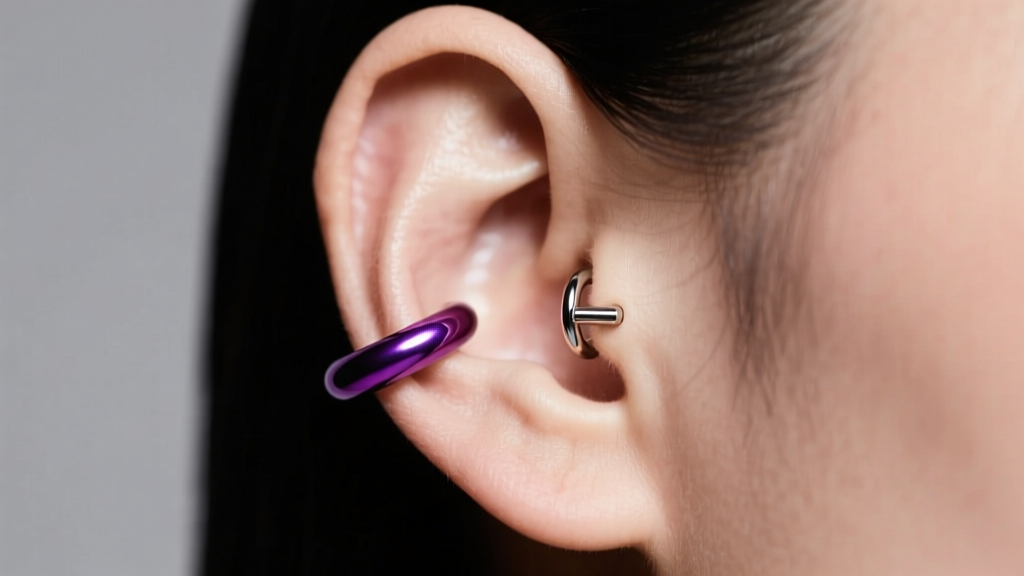
Niobium is a pure elemental metal, meaning it is not an alloy and contains no hidden nickel, lead, or cadmium. It is highly malleable and reacts beautifully to anodization, allowing jewelers to create vibrant, permanent colors (like iridescent purples and golds) without using toxic paints or platings. Because it is softer than titanium, niobium is the absolute best material for seamless rings and clicker hoops in the helix or daith, as it can be easily adjusted for a perfect fit without snapping.
3. The Truth About Gold Alloys (14k & 18k)
Pure 24k gold is entirely nickel-free, but it is far too soft for earring posts; a 20-gauge 24k gold wire will bend and snap under the pressure of a heavy lobe. Therefore, gold must be alloyed. Yellow and Rose Gold (14k and 18k) are typically alloyed with copper, silver, and zinc, making them generally safe. However, White Gold is a massive hidden danger. Traditional white gold is alloyed with nickel to achieve its silver color. If you prefer the look of white gold, you must specifically seek out Palladium-alloyed white gold, which uses palladium instead of nickel to bleach the yellow hue of the pure gold.
Material Comparison & Pricing Matrix
Use this matrix to benchmark pricing and ensure you are getting the correct material for your specific piercing placement.
| Material | Nickel Content | Best Use Case | Standard Gauges | Price Range (Per Pair) |
|---|---|---|---|---|
| ASTM F136 Titanium | 0% | Fresh piercings, heavy dangles, threadless studs | 18G, 16G, 14G | $25 - $85 |
| Pure Niobium | 0% | Seamless hoops, clickers, cartilage rings | 20G, 18G, 16G | $30 - $90 |
| 14k/18k Yellow Gold | 0% (Usually) | Everyday lobe studs, heirloom pieces | 20G, 18G | $120 - $450+ |
| 14k Palladium White Gold | 0% | High-end diamond studs, wedding jewelry | 18G, 16G | $200 - $800+ |
| 316L "Surgical" Steel | 8% - 10.5% | AVOID (High allergy risk) | Varies | $10 - $30 |
How to Verify Claims Before Checkout
When shopping online or in-person, do not rely on the product description alone. Reputable body jewelers will provide a mill certificate or explicitly state their ASTM compliance. If you are buying from a traditional fine jeweler, ask them directly: "Is your white gold alloyed with palladium or nickel?" and "Can you provide the exact alloy breakdown for your 14k gold?"
In Europe, the EU Nickel Directive (EN 1811) strictly limits nickel release from post assemblies to 0.2 µg/cm²/week. If you are purchasing from European artisans, asking if their pieces are "EN 1811 compliant" is an excellent way to filter out low-quality importers who use cheap, nickel-heavy brass alloys disguised as gold-plated fashion jewelry.
Troubleshooting: When "Safe" Metals Still Cause Reactions
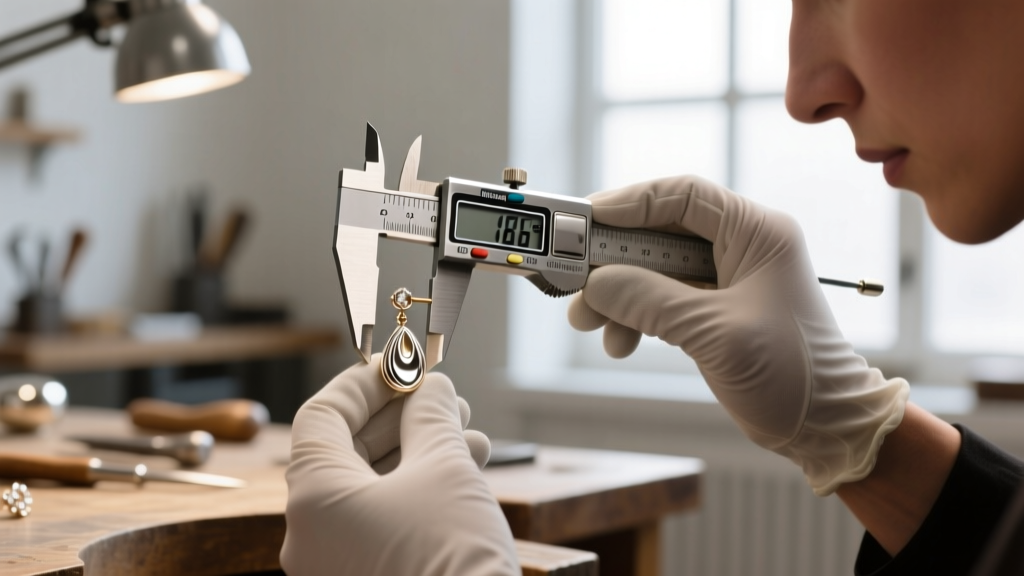
If you have verified that your earrings are genuinely elemental titanium or pure gold, but your ears are still red, swollen, or weeping, you are likely not experiencing a metal allergy. Instead, you are dealing with mechanical irritation or finish defects.
- The Gauge Mismatch (Cheese Cutter Effect): Standard lobe piercings are usually done at 20G (0.81mm) or 18G (1.02mm). Cartilage piercings (helix, conch) are typically done at 16G (1.29mm). If you wear a thin 20G wire earring in a 16G cartilage hole, the thin wire will act like a cheese cutter, migrating through the tissue and causing severe inflammation that mimics an allergic reaction.
- Poor Surface Polish: Implant-grade metals must have a mirror finish. Matte or satin-finished posts have microscopic grooves that harbor bacteria and create friction when inserting the earring, leading to micro-tears in the fistula.
- Clasp and Backing Allergens: You may have bought a pure titanium stud, but if you are securing it with a cheap, nickel-containing "butterfly" friction back, the nickel will leach onto your skin. Always use threadless or internally threaded titanium push-pins or flat-back labrets.
- Chemical Irritants: Cleaning your jewelry with rubbing alcohol, hydrogen peroxide, or harsh soaps can strip the skin's acid mantle, causing contact dermatitis that is frequently misdiagnosed as a metal allergy. Stick to sterile saline spray.
Final Verdict for Sensitive Lobes and Cartilage
Finding authentic, safe jewelry requires a shift in how you shop. Stop trusting the word "hypoallergenic" and start demanding ASTM F136 titanium, pure niobium, or palladium-alloyed gold. By understanding the elemental reality of your jewelry and ensuring your gauge sizes match your specific piercing anatomy, you can entirely eliminate contact dermatitis and enjoy a comfortable, irritation-free collection.


