Vintage Green Earrings: Steely Dan Era 70s Resin & Brass Care Guide
Discover expert care, cleaning, and preservation tips for vintage 1970s green resin and brass earrings from the iconic Steely Dan era.

The 1970s Aesthetic: Understanding Steely Dan Era Jewelry
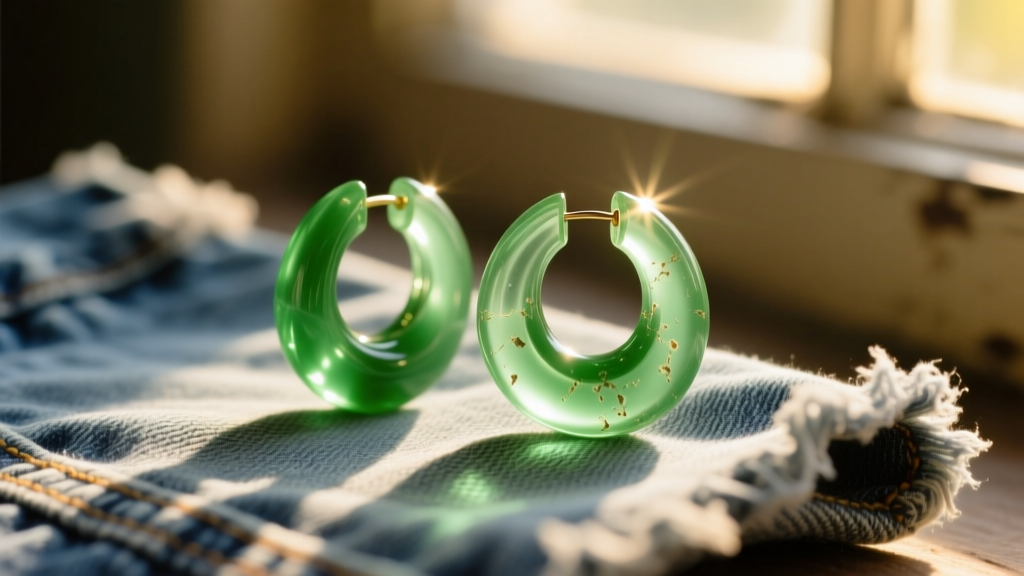
When curating a vintage jewelry collection, the 1970s represent a golden era of experimental materials and bold, unapologetic color palettes. For music historians and pop-culture collectors, the search for specific tour-worn or era-defining accessories is a niche pursuit. In fact, dedicated archivists hunting for authentic 1970s stage and fan memorabilia will occasionally use highly specific search strings like 'green earrings steely dan' to locate the exact translucent resin and brass pieces favored by the jazz-rock fusion scene during the Pretzel Logic and Aja album cycles. These pieces are characterized by their oversized geometric shapes, vibrant jade and emerald acrylics, and unsealed brass hardware.
However, caring for these specific vintage artifacts requires a deep understanding of mid-century polymer chemistry and base-metal oxidation. Unlike modern surgical steel or platinum, 1970s fashion jewelry was built for visual impact, not longevity. The green resins used during this decade were often early formulations of polymethyl methacrylate (PMMA) or cellulose acetate, which are highly susceptible to UV degradation, solvent melting, and micro-scratching. Meanwhile, the brass posts and clutch-backs were frequently left unsealed, leading to the inevitable formation of verdigris—a toxic, powdery green copper acetate that forms when copper alloys react with moisture, oxygen, and the natural acids in human skin.
Material Breakdown & Vulnerabilities
Before applying any liquid or abrasive to your vintage finds, you must correctly identify the materials. Misidentifying cellulose acetate as modern acrylic can lead to catastrophic melting if the wrong solvent is used. Below is a diagnostic matrix for 1970s green resin and brass earrings.
| Material Component | Common 1970s Formulation | Primary Vulnerability | Safe Cleaning Agent |
|---|---|---|---|
| Translucent Green Body | Cellulose Acetate / Early Lucite | Acetone melting, UV yellowing | Mild dish soap & distilled water |
| Opaque Green Body | Polyester Resin with Pigment | Micro-scratching, chemical clouding | Microfiber cloth, Novus 1 Plastic Clean |
| Earring Posts & Wires | Unsealed Brass / Copper Alloy | Verdigris buildup, structural snapping | Isopropyl alcohol (91%), mild brass polish |
| Adhesive Bindings | Early Cyanoacrylate or Epoxy | Brittle failure, heat sensitivity | Dry dusting only; avoid liquid immersion |
Step-by-Step Cleaning Protocol
Phase 1: Dry Preparation and Assessment
Never immediately submerge vintage 1970s earrings in water. The adhesive bonds securing the resin cabochons to the brass stampings are likely over forty years old and highly compromised. Begin by using a soft-bristled makeup brush or a clean, dry air blower to dislodge loose dust, skin cells, and cosmetic residue from the crevices where the metal meets the plastic. Inspect the earring posts under a jeweler's loupe (10x magnification). If you see any hairline fractures at the base of the post where it solders to the backplate, stop cleaning and proceed directly to structural reinforcement.
Phase 2: The Damp Wipe (Resin Only)
To clean the green resin elements without risking the metal, isolate the plastic. Dampen a lint-free cotton pad with distilled water and a single drop of pH-neutral dish detergent (such as Dawn Free & Clear). Gently wipe the surface of the resin in circular motions. According to conservation guidelines from the Victoria and Albert Museum, early plastics can suffer from 'weeping' or plasticizer migration, which leaves a sticky, acidic film on the surface. If your cotton pad picks up a yellowish or brownish sticky residue, you are witnessing plasticizer breakdown. Wipe gently until the surface is smooth, then immediately dry with a separate microfiber cloth to prevent water spots.
Phase 3: Verdigris Eradication on Brass Hardware
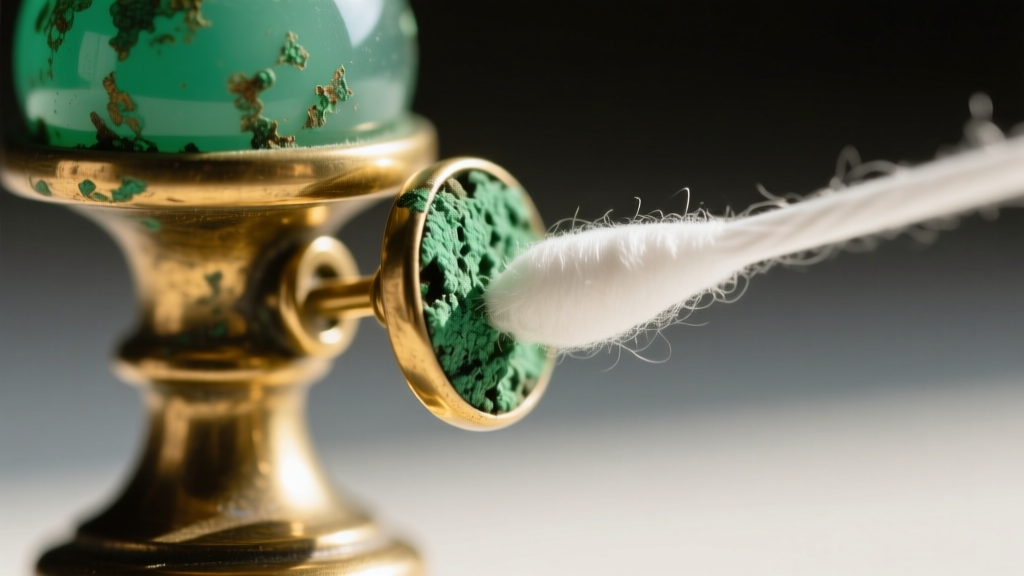
The green, crusty buildup on the brass posts is verdigris. It is not only unsightly but can cause severe contact dermatitis and ear lobe infections if worn. To remove it without dissolving the adjacent green resin, you must use a targeted application method.
- Isolate the Metal: Use painter's tape or a tiny strip of parafilm to mask off the resin body, leaving only the brass post and clutch-back exposed.
- Apply Solvent: Dip a wooden toothpick or a tightly wound cotton swab into white vinegar (5% acetic acid). The mild acid will break down the copper acetate.
- Scrape Gently: Use the toothpick to mechanically lift the softened verdigris away from the brass threads and post base. Avoid metal tools, which will gouge the soft vintage brass.
- Neutralize: Wipe the post with a swab dipped in baking soda and water to neutralize the acid, followed by a final wipe with 91% isopropyl alcohol to displace moisture.
For severe corrosion that has pitted the metal, a specialized jeweler's rouge or a microscopic application of Brasso can restore the shine, but be warned: polishing removes a microscopic layer of metal, which can thin already fragile 20-gauge vintage posts.
Archivist's Warning: Never use ultrasonic cleaners on 1970s resin and brass jewelry. The high-frequency cavitation bubbles will shatter brittle vintage adhesives and can cause micro-fractures in aged cellulose acetate, permanently clouding the vibrant green hue.
Storage & Environmental Controls
Proper storage is the cornerstone of vintage jewelry preservation. The Gemological Institute of America (GIA) notes that organic and synthetic gem materials require strict climate control to prevent structural degradation. For your 1970s green resin earrings, UV exposure is the primary enemy. Prolonged sunlight will cause the green pigments to fade into a sickly yellow-brown, and will accelerate the cross-linking of the polymer chains, making the resin brittle.
- Lighting: Store in opaque, acid-free archival boxes. Avoid clear acrylic display cases unless they are coated with UV-blocking film.
- Humidity: Maintain a relative humidity (RH) between 40% and 50%. High humidity accelerates brass oxidation and verdigris formation, while extremely low humidity can cause early resins to crack.
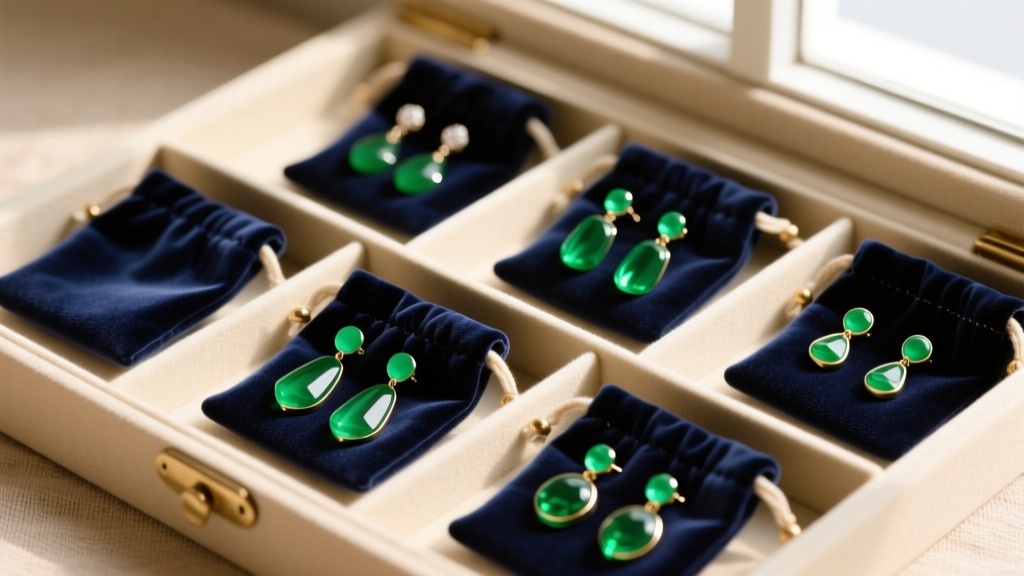
- Separation: Store each pair in individual anti-tarnish flannel pouches. The friction of multiple pieces tumbling together will cause irreversible micro-scratches on the high-gloss resin surfaces.
Troubleshooting Common Failure Modes
Even with meticulous care, 50-year-old fashion jewelry will experience mechanical failures. Here is how to address the most common issues specific to this era's construction methods.
Post Detachment and Adhesive Failure
It is incredibly common for the brass post to snap off the flat brass backplate, or for the backplate to detach from the resin cabochon. Do not attempt to reattach these components with standard cyanoacrylate (Super Glue). Super glue cures brittle and leaves a white, frosty residue that will permanently ruin the visual depth of translucent green resin. Instead, use a two-part clear epoxy, such as JB Weld ClearWeld. Mix the resin and hardener in a precise 1:1 ratio, apply a microscopic bead using a toothpick, and clamp the pieces together with silicone-tipped tweezers for 24 hours. Ensure you clean any squeeze-out immediately with a cotton swab dipped in isopropyl alcohol.
The Green Ear Phenomenon
If you intend to wear these vintage pieces, you must address the unsealed brass posts. Unsealed brass reacts with the slightly acidic pH of human sweat, resulting in the dreaded 'green ear' effect. To prevent this without altering the historical integrity of the earring, apply a micro-thin coat of clear, flexible nail polish or a specialized jewelry barrier coating (like Eurotool's ProtectaClear) to the post and the back of the clutch. This creates an invisible, biocompatible shield that prevents metal-to-skin contact while allowing the earring to remain authentic to its 1970s origins.
Sourcing Authentic Replacement Parts
If a vintage brass clutch-back is lost or too corroded to save, avoid using modern stainless steel or silicone friction backs, as they will visually clash with the patina of the 1970s brass. Seek out New Old Stock (NOS) vintage brass butterfly backs from specialized jewelry supply houses or horology salvage dealers. These will match the gauge (typically 18G or 20G) and the aesthetic profile of the original Steely Dan era hardware, ensuring your archival piece remains as historically accurate as possible.


