Earring Hole Closed? How Jewelry Materials Affect Healing
Discover why your earring hole closed based on jewelry materials. Learn how titanium, glass, and bioplast affect fistula healing, shrinkage, and tissue.

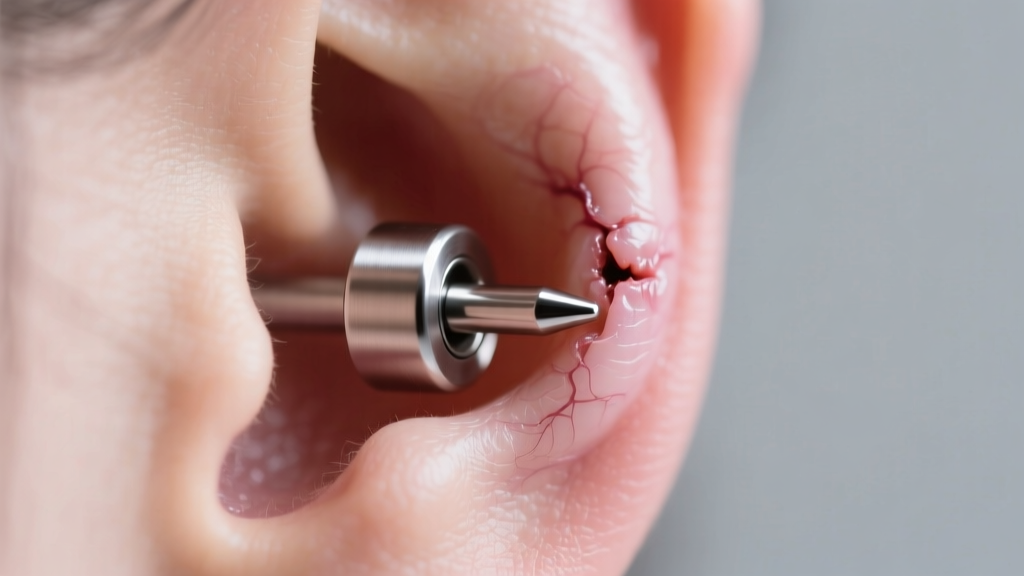
The Biology of an Earring Hole Closed
When a client or enthusiast searches for solutions because their earring hole closed, they are usually battling the body's natural biological imperative: wound healing. A healed piercing is not merely a hole; it is a fistula, a structured tube of stratified squamous epithelium that the body forms around a foreign object. When that object is removed, the body immediately recognizes the void as a tissue deficit and initiates the proliferative phase of wound healing.
During this phase, myofibroblasts contract the wound edges, while epithelial cells migrate across the moist surface at a rate of approximately 0.5mm per day to seal the tract. However, the speed and severity of this closure are heavily dictated by the material properties of the jewelry that was previously occupying the space, as well as the retainer used to keep it open. Understanding material science is the key to managing tissue memory and preventing premature fistula retraction.
Material Properties That Accelerate Closure
It is a common misconception that all ear holes close at the same rate. In reality, the material you wear dictates the microscopic health of the fistula, which in turn determines how aggressively the tissue shrinks upon removal.
- Surface Roughness (Ra): Materials with a high Ra value (above 0.8 µm), such as low-grade surgical steel or scratched acrylic, harbor bacteria and cause chronic micro-trauma. This leads to localized edema (swelling). When you remove the jewelry, the swelling subsides, making the hole appear to "shrink" or close rapidly. In reality, the hole was never as large as the swollen tissue made it seem.
- Porosity and Degradation: Organic materials like wood, bone, or porous plastics absorb sebum and dead skin cells. This triggers an immune response, causing the fistula to thicken and contract as a defense mechanism.
- Allergic Contact Dermatitis: Alloys containing nickel or copper cause inflammatory responses. According to the American Academy of Dermatology, chronic inflammation from cheap metals leads to hypertrophic scarring, which physically narrows the piercing channel.
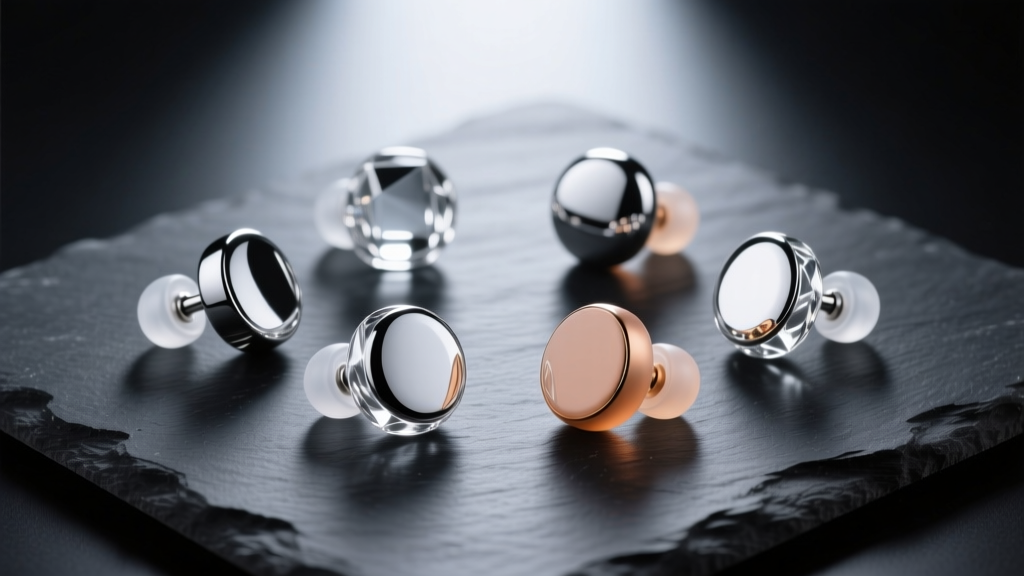
The Best Materials to Prevent Closure (Retainers & Sleepers)
If you need to remove your jewelry for surgery, sports, or professional reasons, selecting the correct retainer material is critical to ensuring your earring hole doesn't close. The Association of Professional Piercers (APP) strictly recommends only highly biocompatible, non-porous materials for long-term wear.
| Material | Surface Roughness (Ra) | Biocompatibility | Tissue Reaction | Closure / Shrinkage Risk |
|---|---|---|---|---|
| ASTM F136 Titanium | < 0.2 µm (Mirror) | Excellent | None (Inert) | Lowest |
| Borosilicate Glass | < 0.1 µm | Excellent | None (Inert) | Low (Weight keeps tract open) |
| PTFE (Teflon) | ~ 0.5 µm | Good | Minimal | Moderate (Flexes, can compress) |
| Bioplast / PLA | > 1.5 µm (Degrades) | Poor (Long-term) | Irritation / Swelling | High (Swelling masks true size) |
| Sterling Silver | Variable | Poor (Tarnishes) | Argyria / Inflammation | High (Causes tissue contraction) |
For standard lobe piercings (20G to 14G), a polished ASTM F136 titanium labret or a glass retainer is the gold standard. For stretched lobes, borosilicate glass plugs are superior because their natural weight provides a gentle, consistent downward pressure that physically prevents the elastin and collagen fibers in the fistula from contracting.
Gauge Size and the "Earring Hole Closed" Phenomenon
The diameter of the piercing—measured in gauges—fundamentally alters the physics of closure. Tissue memory behaves differently across various anatomical sites and sizes:
Standard Lobe Piercings (20G - 14G)
At 0.81mm (20G) to 1.6mm (14G), the fistula is incredibly delicate. Without a biocompatible retainer, the epithelial lining can bridge the gap in as little as 12 to 48 hours. The high vascularity of the earlobe promotes rapid healing, meaning the body quickly treats the empty channel as a laceration to be sealed.
Cartilage Piercings (Helix, Conch, Tragus)
Cartilage lacks its own direct blood supply, relying on the perichondrium for nutrients. When a cartilage earring hole closes, it often does so permanently and aggressively. The body replaces the empty void with dense fibrous connective tissue. Attempting to force jewelry back into a shrunken cartilage fistula frequently results in a "blowout" or severe perichondritis.
Stretched Lobes (8G to 00G and beyond)
Once an earlobe is stretched past 2G (6mm), the tissue has undergone permanent structural alteration. While the hole will shrink significantly when left empty, it will rarely close completely due to the loss of underlying adipose tissue and the permanent stretching of the dermal matrix. However, the opening can shrink small enough to prevent standard jewelry insertion, requiring careful tapering.
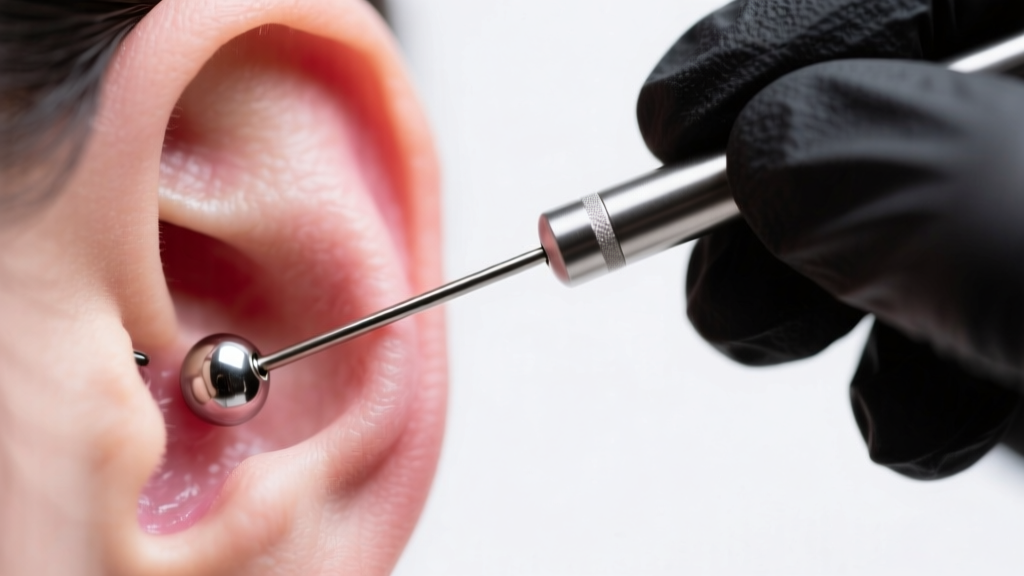
Safely Reopening a Closed Fistula Based on Material
If your earring hole closed while you were wearing a subpar material, or if you simply left it empty for too long, reopening it requires an understanding of tissue mechanics. Never use brute force, and never use porous materials like acrylic tapers to stretch a shrunken hole.
- Assess the Epithelial Bridge: Look closely at the hole under bright light. If you see a thin layer of skin completely bridging the opening, the fistula has fully healed shut. No amount of tapering will safely open this; it requires a professional repiercing with a hollow beveled needle.
- Use a Polished Steel Taper: If the hole is merely shrunken (the epithelial tube is intact but contracted), use a mirror-polished 316L stainless steel or titanium insertion taper. The low friction coefficient prevents micro-tearing of the fragile new skin cells.
- Lubrication is Mandatory: Apply a sterile, water-based lubricant or pure jojoba oil. Avoid petroleum-based products, which can trap anaerobic bacteria inside the narrow, oxygen-deprived fistula.
- Upsize Gradually: If your 14G hole has shrunk to accommodate only an 18G wire, insert the 18G titanium piece first. Wear it for two weeks to allow the inflammation to subside and the tissue to relax before attempting to taper back to 14G.
Expert Insight: The "breathing" myth is dangerous. Many believe that leaving a hole empty for a few hours allows the tissue to "breathe" and prevents buildup. In reality, exposing the fistula to air dries out the mucosal lining, triggering rapid cellular desquamation (shedding) and accelerating the closure process. A fistula thrives in a stable, humid, and inert environment—best provided by a continuous wear of polished glass or titanium.
Expert Takeaways for Long-Term Fistula Health
The frustration of finding an earring hole closed is almost always a failure of material science, not a biological anomaly. By upgrading your sleepers and retainers to ASTM F136 implant-grade titanium or borosilicate glass, you eliminate the chronic micro-inflammation that causes tissue contraction. Remember that the surface roughness of your jewelry dictates the cellular behavior of your fistula. Treat your piercing not as a simple accessory hole, but as a living biological tube that requires an inert, mirror-polished stent to maintain its structural integrity over a lifetime.


