Ultimate Care Guide for Double Eyebrow Piercing Jewelry
Master the aftercare and maintenance of double eyebrow piercing jewelry. Learn cleaning routines, material upgrades, and rejection prevention.

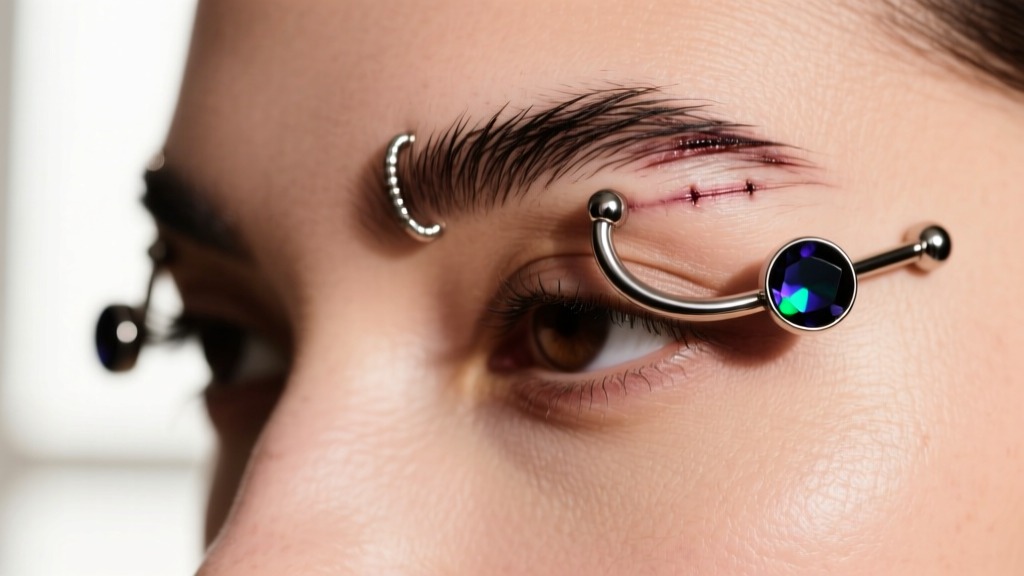
Getting a double eyebrow piercing is a bold, symmetrical statement that instantly elevates your facial aesthetic. However, managing two adjacent puncture channels introduces unique biomechanical challenges that a single piercing simply does not have. When it comes to selecting and maintaining double eyebrow piercing jewelry, the margin for error is remarkably slim. The tissue in the brow area is notoriously shallow, making it highly susceptible to migration, rejection, and irritation bumps if the jewelry is too heavy, the wrong shape, or improperly cleaned.
As we navigate the advanced aftercare standards of 2026, the professional piercing community has completely overhauled its approach to surface and facial piercing maintenance. Gone are the days of harsh antibacterial soaps, tea tree oil, and homemade sea salt soaks. Today, preserving your double eyebrow piercing jewelry requires a meticulous, science-backed approach focused on biocompatibility, tension management, and sterile wound care. This comprehensive guide will walk you through the exact protocols needed to keep both piercings thriving.
The Anatomy and Tension Dynamics of Double Piercings
Before diving into cleaning routines, it is critical to understand why double eyebrow piercings require specialized attention. The eyebrow is a surface piercing, meaning the jewelry enters and exits the same plane of tissue rather than passing through a distinct flap or cartilage shelf. When you place two curved barbells side-by-side, the swelling from the initial trauma can cause the tissue between the two puncture sites to compress.
If your initial jewelry is too short, this compression will cause the barbells to press against the healing fistula (the tube of tissue forming around the jewelry). Conversely, if the jewelry is too long, it will snag on towels, hair, and clothing, introducing micro-tears to the delicate healing channel. According to the Association of Professional Piercers (APP), managing this initial swelling is the single most important factor in preventing early-stage rejection. For a double setup, piercers typically start with 14-gauge (1.6mm) or 16-gauge (1.2mm) curved barbells, utilizing a 3/8-inch (10mm) length to accommodate swelling before eventually downsizing.
The 2026 Daily Cleaning Protocol
The modern consensus among elite piercers and dermatologists is that less is more. Over-cleaning your double eyebrow piercing jewelry will strip the area of beneficial microbiome bacteria and delay the epithelialization process. Your daily routine should be simple, sterile, and consistent.
Step 1: Sterile Saline Wound Wash
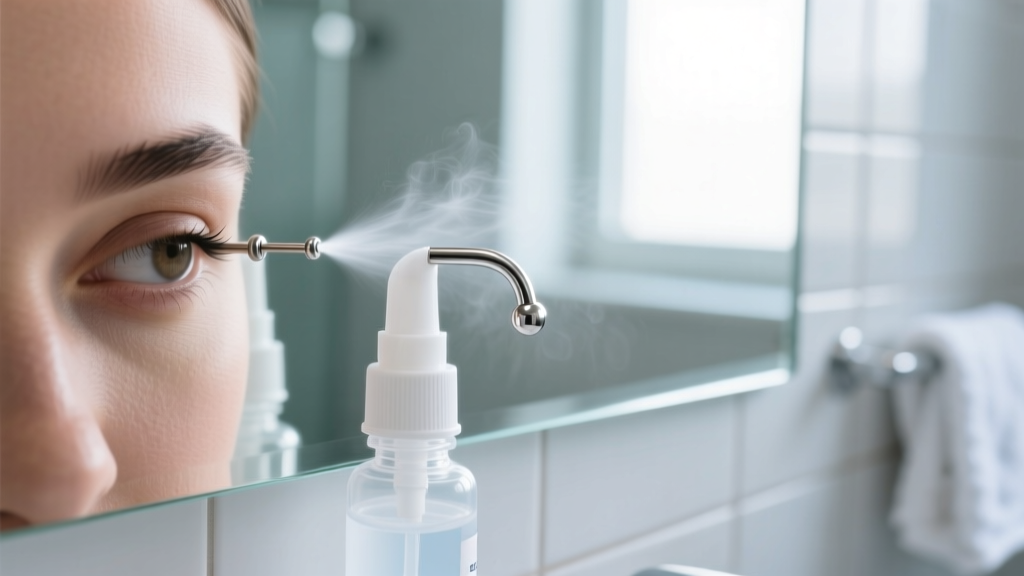
You must use a sterile, 0.9% sodium chloride wound wash with no additives, preservatives, or fragrances. Spray the solution directly onto the entry and exit points of both piercings for three to five seconds. Allow the saline to sit and soften any dried lymph fluid (commonly referred to as 'crusties') for about two minutes. Never pick or force these crusties off, as doing so will rip the newly formed epithelial cells inside the fistula.
Step 2: Gentle Drying and Debridement
Moisture trapped around the beads of your double eyebrow piercing jewelry is a breeding ground for bacteria and yeast. After spraying, gently pat the area dry using non-woven sterile gauze. Avoid cotton balls or cotton swabs at all costs; the tiny cotton fibers easily wrap around the threads or the gemstone settings, leading to severe snags and irritation.
Step 3: The 'Leave It Alone' Rule
Do not twist, rotate, or slide your curved barbells back and forth. The outdated advice of 'moving the jewelry to clean it' causes blunt force trauma to the healing tissue. Let the saline do the chemical work, and let your body do the biological work.
Material Upgrades: What Should Touch Your Skin?
When managing two piercings in a high-migration zone, the material of your double eyebrow piercing jewelry is non-negotiable. Low-quality metals leach nickel and other allergens, which triggers an immune response that manifests as itching, dark discoloration, and ultimately, tissue rejection.
| Material Grade | Pros | Cons | Price Range (Per Barbell) |
|---|---|---|---|
| ASTM F-136 Titanium | Hypoallergenic, lightweight, MRI safe, ideal for fresh piercings. | Limited natural color (usually anodized). | $25 - $50 |
| 14k / 18k Solid Gold | Highly biocompatible, premium aesthetic, excellent for healed fistulas. | Heavy, expensive, soft metal can scratch. | $80 - $250+ |
| Niobium | Hypoallergenic, highly malleable, great for custom bends. | Heavier than titanium, harder to source. | $30 - $60 |
| Surgical Steel (316L) | Inexpensive, widely available. | Contains nickel; high risk of allergic contact dermatitis. | $10 - $20 |
For the initial healing phase, which can take anywhere from 4 to 6 months for a double setup, ASTM F-136 implant-grade titanium is the absolute gold standard. Once fully healed, you can safely transition to high-polish 14k or 18k solid gold ends, provided they are threadless or internally threaded.
Troubleshooting: Rejection vs. Irritation
Because you have two pieces of jewelry sitting in close proximity, you must be able to differentiate between a standard irritation bump and the early stages of piercing rejection. Rejection is an immune response where the body treats the jewelry as a foreign splinter and slowly pushes it to the surface of the skin.
Signs of Impending Rejection
- Visible Thinning: The tissue between the entry and exit holes appears translucent or noticeably thinner.
- Widening Holes: The puncture sites begin to elongate into vertical slits rather than tight, round circles.
- Surface Proximity: You can see the bar of the curved barbell resting just beneath the top layer of skin.
If you notice these signs on one of your double piercings, you must consult a professional piercer immediately. In many cases, removing the rejecting jewelry is the only way to save the adjacent piercing from experiencing a sympathetic rejection response. For a deeper understanding of tissue migration, refer to the APP Jewelry Standards and Complications Guide.
Dealing with Irritation Bumps
Irritation bumps (hypertrophic scarring) are usually localized, red or flesh-colored nodules that sit right next to the exit hole. These are almost always caused by mechanical friction, sleeping on the piercing, or using jewelry that is too long. To resolve this, apply a sterile, warm saline compress for five minutes a day to increase blood flow, and ensure your jewelry has been properly downsized to eliminate movement.
The Crucial Downsizing Timeline
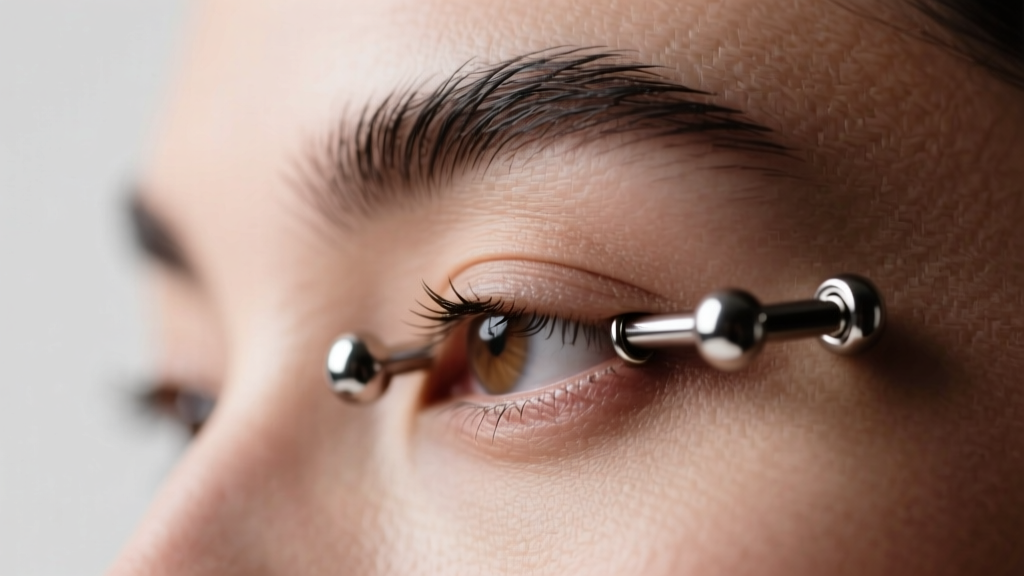
One of the most common mistakes clients make with double eyebrow piercing jewelry is failing to downsize the barbell length. Your piercer intentionally uses a longer bar (usually 3/8" or 10mm) during the initial appointment to account for the inevitable swelling that peaks around days three through five.
Once the swelling has completely subsided—typically between weeks four and eight—you must return to the studio to have the bars swapped to a shorter length (usually 1/4" or 5/16"). Leaving the long bars in place creates a fulcrum effect; if the top bead is bumped, the bottom bead acts as a lever, tearing the delicate internal fistula. With a double piercing, this lever effect is compounded, as the longer jewelry is far more likely to catch on hats, hoods, and pillowcases.
"Surface piercings like the eyebrow demand absolute precision in jewelry fit. A millimeter of extra length can be the difference between a lifelong piercing and a rejected scar." — APP Certified Piercer Guidelines
Sleeping Habits and Snag Prevention
Nighttime is when the majority of double eyebrow piercing trauma occurs. The friction from your pillowcase can harbor bacteria and cause micro-abrasions. To protect your investment, invest in a silk or satin pillowcase, which creates significantly less friction than cotton. Furthermore, train yourself to sleep on your back or on the opposite side of your face. If you are a restless sleeper, consider using a specialized piercing pillow (a U-shaped travel pillow) that allows you to rest your face in the hollow center, completely eliminating pressure on your brow.
Final Thoughts on Long-Term Maintenance
Maintaining double eyebrow piercing jewelry is a test of patience and discipline. By strictly adhering to a sterile saline cleaning routine, upgrading to implant-grade titanium or solid gold, and respecting the downsizing timeline, you drastically reduce the statistical likelihood of rejection. Listen to your body, monitor the tissue thickness between the two channels, and never hesitate to consult a professional if the geometry of your piercings begins to shift. With the right care, your double brow setup will remain a stunning, permanent fixture of your personal style.
Related stories
By Body Part
Organize On A Budget: Practical, Proven Strategies That Save Money and Space

By Body Part
Budget Trends 2026: Strategic Shifts, AI Integration, and Real-World Fiscal Discipline
By Body Part